
In today’s fiercely competitive business landscape, standing out is more important than ever. A well-crafted competitive differentiation strategy can be the key to success, helping your company carve out a unique position in the market.
At JBI Consulting, we’ve seen firsthand how effective differentiation can drive growth and customer loyalty. This blog post will guide you through the process of developing and implementing a strategy that sets your business apart from the competition.
What Sets Your Business Apart?
The Essence of Competitive Differentiation
Competitive differentiation is the unique factor that distinguishes your business in a crowded marketplace. It’s not merely about being different; it’s about excelling in ways that matter to your customers. A strong differentiation strategy can transform a company from a market participant to a market leader.
The Impact of Perception
Your differentiation strategy molds customer perception of your brand. It becomes the driving force behind their choice to select you over competitors. Effective differentiation can result in higher profit margins, increased customer loyalty, and a stronger market position. Bain & Company emphasizes five enduring strategy principles to drive sustainable growth, master leadership economics, and stay resilient in a changing world.
Key Components of Differentiation
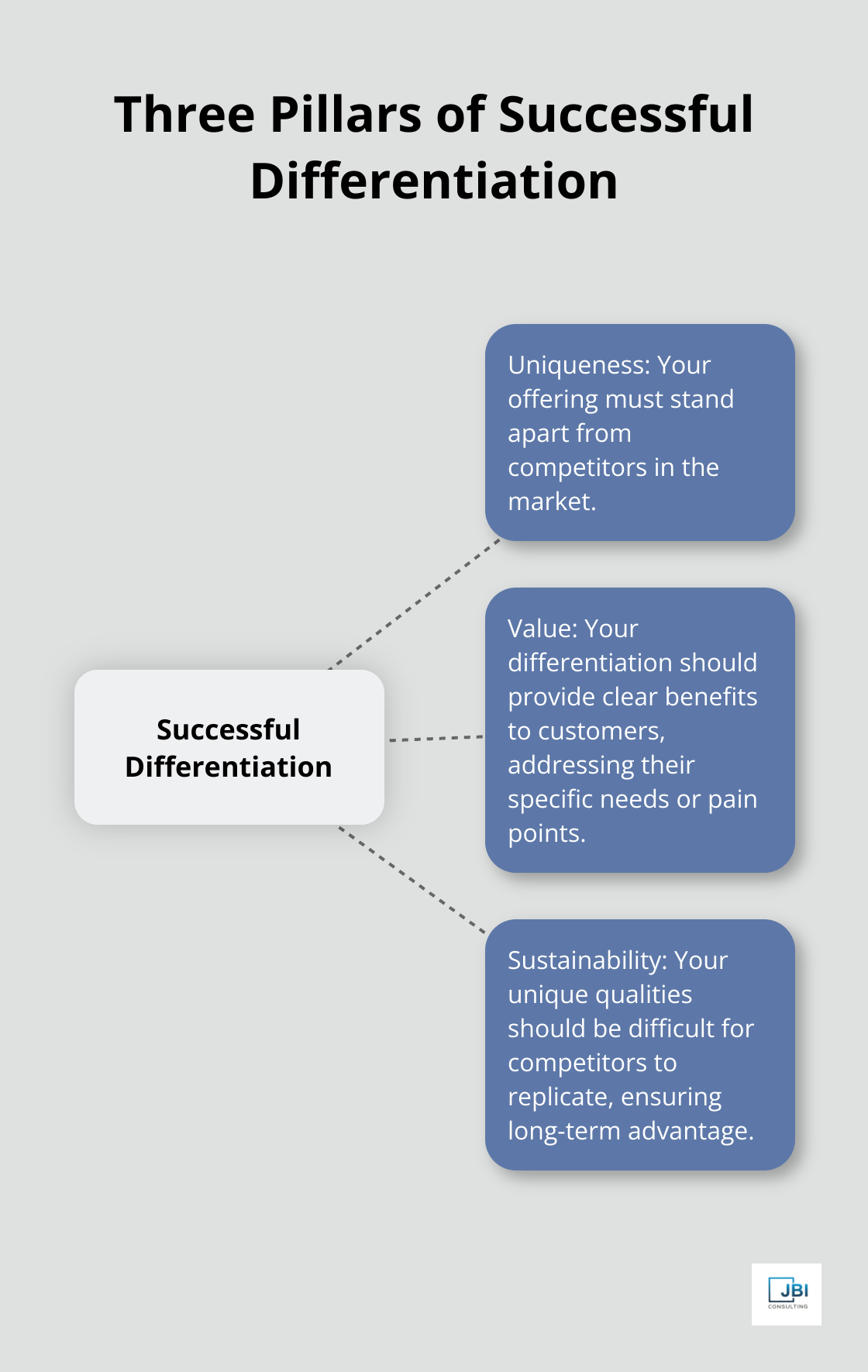
A successful differentiation strategy rests on three pillars: uniqueness, value, and sustainability. Your offering must stand apart from competitors, provide clear benefits to customers, and resist easy replication. Apple’s ecosystem of products and services (which creates a unique and valuable experience) serves as a prime example of this principle in action.
Steering Clear of Common Mistakes
Many businesses attempt to cater to everyone, which dilutes their message and confuses customers. Another frequent error involves focusing on features rather than benefits. Customers don’t purchase products; they invest in solutions to their problems. Your communication should always highlight how your unique qualities address specific customer pain points.
Evaluating Differentiation Success
To assess the effectiveness of your strategy, monitor metrics such as customer acquisition cost, customer lifetime value, and market share. McKinsey outlines six key business growth strategies that can have lasting impact in today’s uncertain economic climate.
Embracing Market Evolution
The market constantly changes, and your differentiation strategy should evolve accordingly. Regular reassessment of your position and readiness to pivot are essential. Netflix’s transformation from a DVD rental service to a streaming giant exemplifies successful adaptation to market changes.
As we move forward, let’s explore how to analyze your market and competitors effectively. This crucial step will lay the foundation for developing a differentiation strategy that truly sets your business apart.
How to Analyze Your Market and Competition
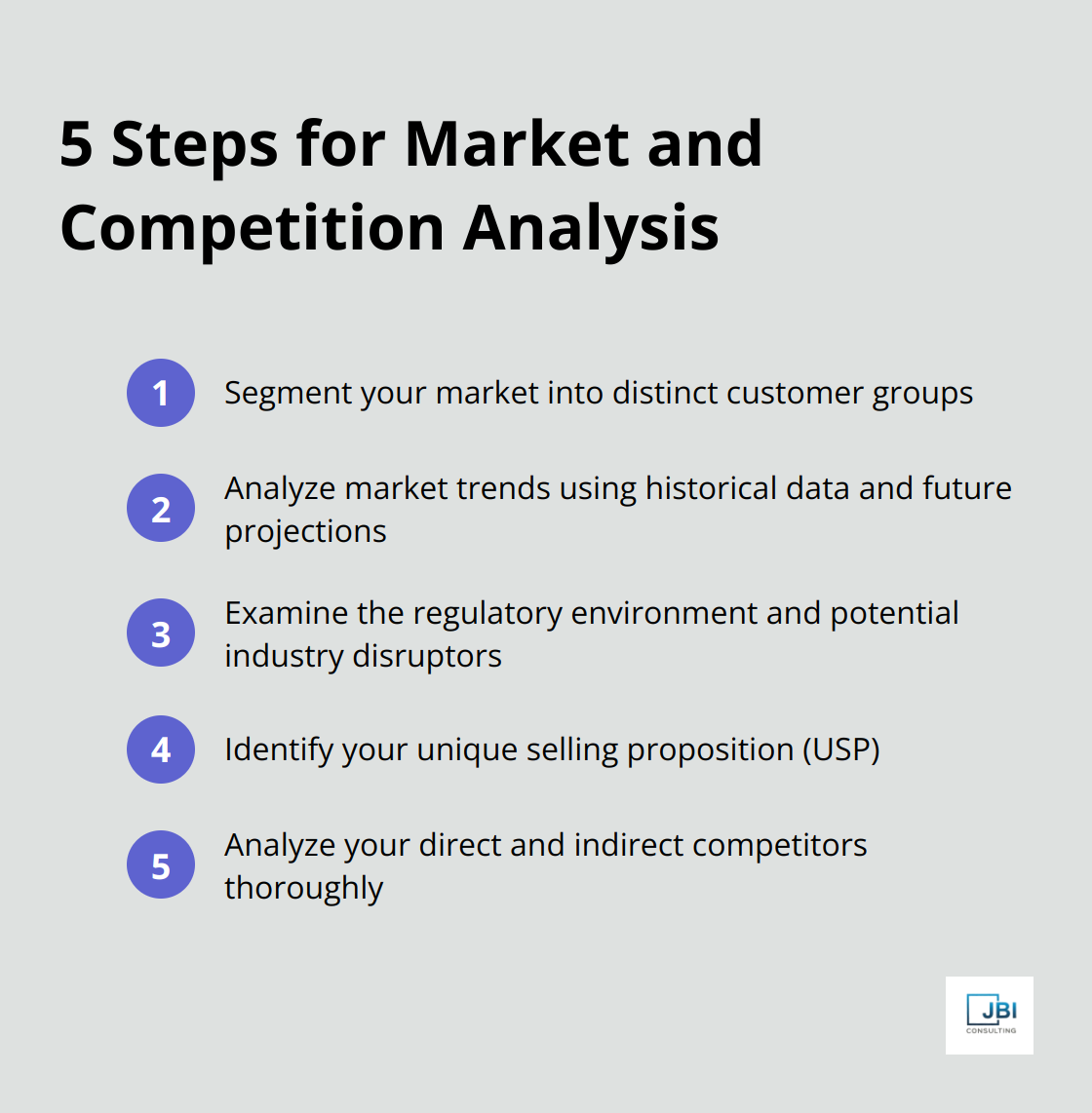
Segment Your Market
Start your market analysis by identifying distinct groups of customers with similar needs, preferences, or characteristics. This segmentation allows you to tailor your offerings and messaging to specific groups, which increases your relevance and appeal.
Analyze Market Trends
Examine historical data, current patterns, and future projections to understand market trends. Tools like Google Trends provide valuable insights into shifting consumer interests. This analysis helps you stay ahead of key business trends and identify sectors poised for continued growth in the coming years.
Examine the Regulatory Environment
The regulatory landscape and potential disruptors in your industry can significantly impact your market position and differentiation strategy. Stay informed about these factors to adapt your strategy accordingly.
Identify Your Unique Selling Proposition (USP)
Your USP sets you apart from competitors. List all your product or service features, then translate these features into benefits for your customers. Ask yourself: Which of these benefits are unique to your offering? Which solves a problem that your competitors can’t or don’t address? The answers form the foundation of your USP.
A strong USP isn’t just about being different; it’s about being different in a way that matters to your customers. For example, while many consulting firms offer sales training, JBI Consulting’s program stands out by focusing on shifting mindsets from lead nurturing to proactive opportunity hunting.
Analyze Your Competition
Conduct a thorough competitive analysis. Identify your direct and indirect competitors. Examine their product offerings, pricing strategies, marketing messages, and customer reviews. Use tools to analyze your competitors’ online presence and marketing strategies. Look at their social media engagement, content marketing efforts, and search engine rankings.
Pay special attention to how your competitors position themselves. What claims do they make? What unique benefits do they promise? This information helps you identify gaps in the market that you can fill.
Don’t just focus on weaknesses; understanding your competitors’ strengths is equally important. It helps you anticipate potential threats and informs your own strategy development.
This thorough analysis of your market and competition equips you with the knowledge to craft a differentiation strategy that truly sets your business apart. In the next section, we’ll explore how to implement your differentiation strategy effectively.
How to Implement Your Differentiation Strategy
Craft a Compelling Brand Story
Your brand story encapsulates your unique value proposition. It should resonate with your target audience and clearly communicate what sets you apart. For example, Patagonia’s brand story centers on environmental sustainability, which appeals to eco-conscious consumers and distinguishes them from other outdoor clothing brands.
To create an effective brand story:
- Identify your core values
- Align these values with customer needs
- Develop a narrative that showcases how your products solve specific problems uniquely
Your story should be concise, memorable, and emotionally engaging.
Align Your Offerings with Your Strategy
Ensure every aspect of your products or services reinforces your differentiation strategy. This might involve refining existing offerings or developing new ones that better align with your unique value proposition.
For instance, if your strategy focuses on superior customer service, you could implement a 24/7 support line or a personalized onboarding process for new clients. If you differentiate based on innovation, introduce new features or products regularly to showcase your cutting-edge approach.
Create a Consistent Customer Experience
Consistency reinforces your differentiation strategy across all customer touchpoints. This includes your website, social media presence, customer service interactions, and even your physical store layout (if applicable).
Train your team thoroughly on your differentiation strategy and how to embody it in their daily work. Develop clear guidelines for communication, visual branding, and customer interactions to ensure a unified experience.
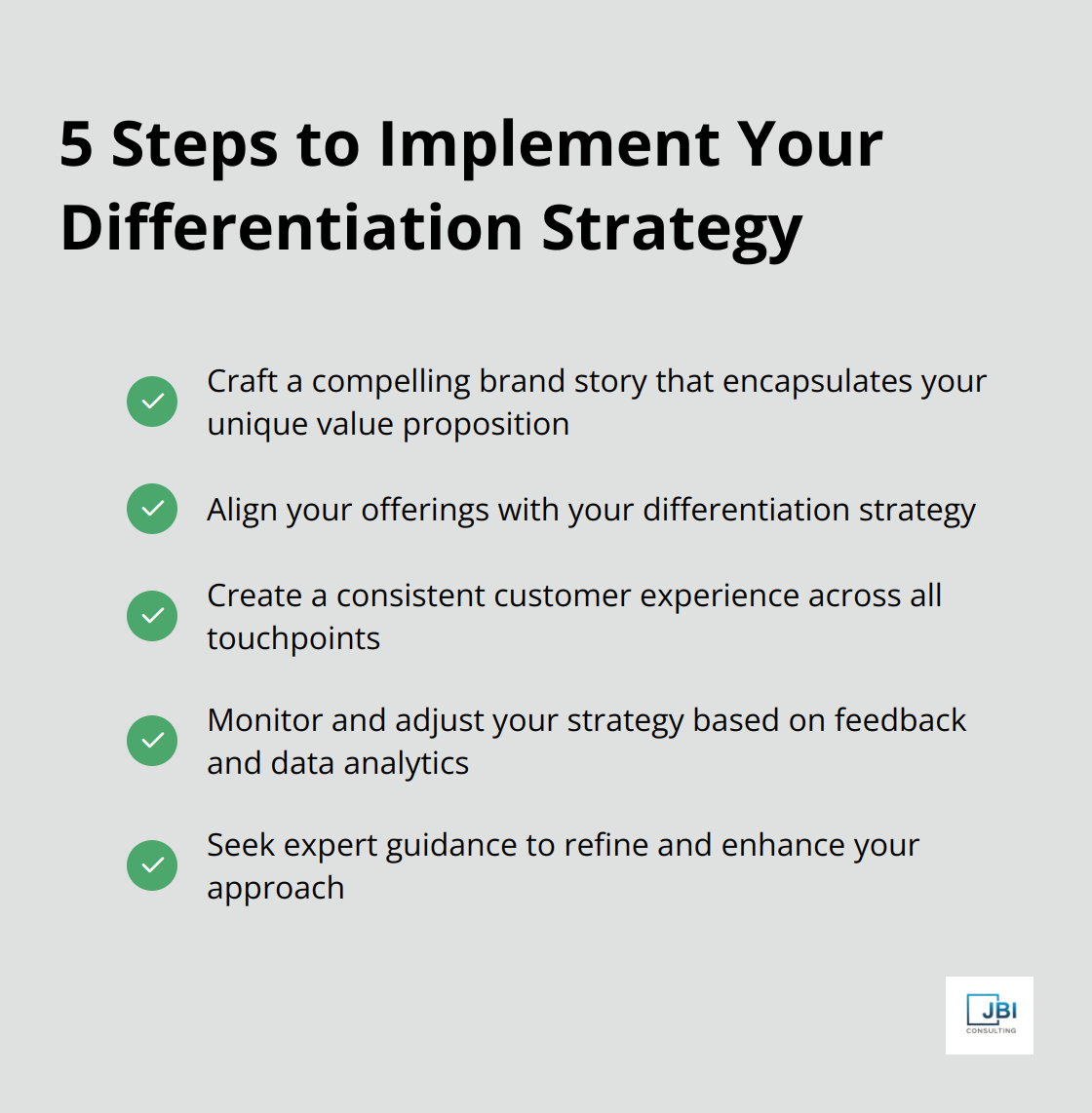
Monitor and Adjust Your Strategy
Implementing a differentiation strategy requires constant monitoring and adjustment. Use customer feedback and data analytics to continually refine and improve the experience you deliver.
Conduct regular audits of your customer touchpoints to identify any inconsistencies. This process helps maintain the effectiveness of your strategy in a dynamic market environment.
Seek Expert Guidance
While many consulting firms offer sales training, JBI Consulting’s program stands out. It focuses on improving outcomes, attracting new patients, and increasing revenue through insurance, cash-based services, and retail sales.
Final Thoughts
A competitive differentiation strategy requires careful planning, execution, and continuous refinement. Companies must understand their market, analyze competition, and identify their unique selling proposition to set themselves apart. This strategy should be implemented through a compelling brand story, aligned offerings, and consistent customer experiences to reinforce a unique market position.
The business landscape evolves rapidly, necessitating regular evaluation of market position, customer feedback, and competitive landscape. This ongoing process ensures that differentiation remains relevant and effective in driving business growth and customer loyalty. Companies must adapt their strategies to stay ahead in today’s dynamic marketplace.
For businesses aiming to elevate their sales approach and stand out, JBI Consulting’s transformative program offers a unique solution. Led by Michael Hinkle, this program shifts mindsets from passive lead nurturing to proactive opportunity hunting (with over two decades of experience). JBI Consulting’s methodology helps refine sales skills, enhance client relationships, and increase deal closure rates.