
At JBI Consulting, we’ve seen firsthand how a well-crafted sales strategy can transform a business. The importance of developing sales strategies cannot be overstated in today’s competitive market.
A robust sales strategy aligns your team’s efforts with your company’s goals, maximizes resource efficiency, and provides a clear roadmap for success. In this post, we’ll explore why creating a solid sales strategy is essential and how you can develop one that drives results for your business.
Why a Strong Sales Strategy Matters
Aligning Goals with Actions
A well-defined strategy aligns marketing objectives with business goals while providing a roadmap for implementation. It transforms company-wide objectives into tangible, actionable steps for the sales team. For example, a goal to increase market share by 10% in the next year might translate into specific strategies such as targeting new industries or intensifying outreach to potential clients.
Empowering Sales Teams
A clear strategy equips sales teams with direction and purpose. It eliminates guesswork and allows team members to concentrate on high-impact activities. This shift from a passive lead-nurturing approach to an active opportunity-hunting mindset (as advocated by sales experts) can significantly boost team performance.
Optimizing Resource Allocation
A well-crafted sales strategy ensures efficient use of resources (time, money, and manpower). It helps prioritize leads, allocate budgets effectively, and focus efforts on the most promising opportunities. Analysis of past sales data might reveal that certain client types or industries yield higher returns, allowing for strategic resource allocation to these high-potential areas.
Adapting to Market Changes
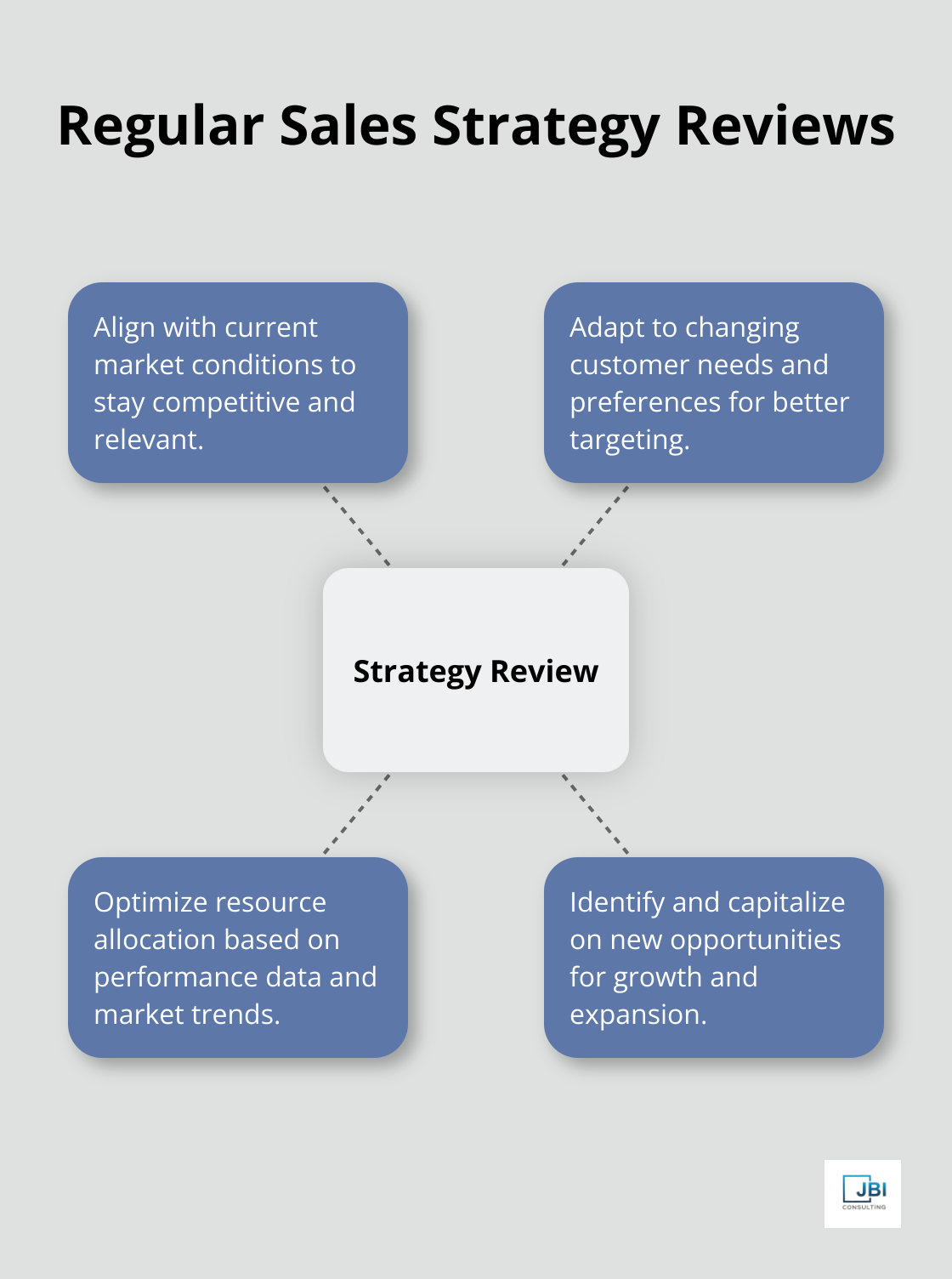
The business landscape is ever-changing, and a robust sales strategy must evolve accordingly. Regular reviews and adjustments keep the strategy relevant and effective. Your strategy needs to be revamped every three to six months to ensure that sales efforts remain aligned with current market conditions and customer needs.
Measuring and Improving Performance
A comprehensive sales strategy includes key performance indicators (KPIs) and metrics for success. These measurements provide valuable insights into the effectiveness of various sales tactics and allow for data-driven decision-making. Teams can identify areas for improvement and replicate successful approaches across the organization.
The development of a strong sales strategy sets the stage for the next critical step: implementing and executing these strategies effectively. This process involves training sales teams, leveraging technology, and continuously refining approaches based on real-world results.
Building Blocks of a Winning Sales Strategy
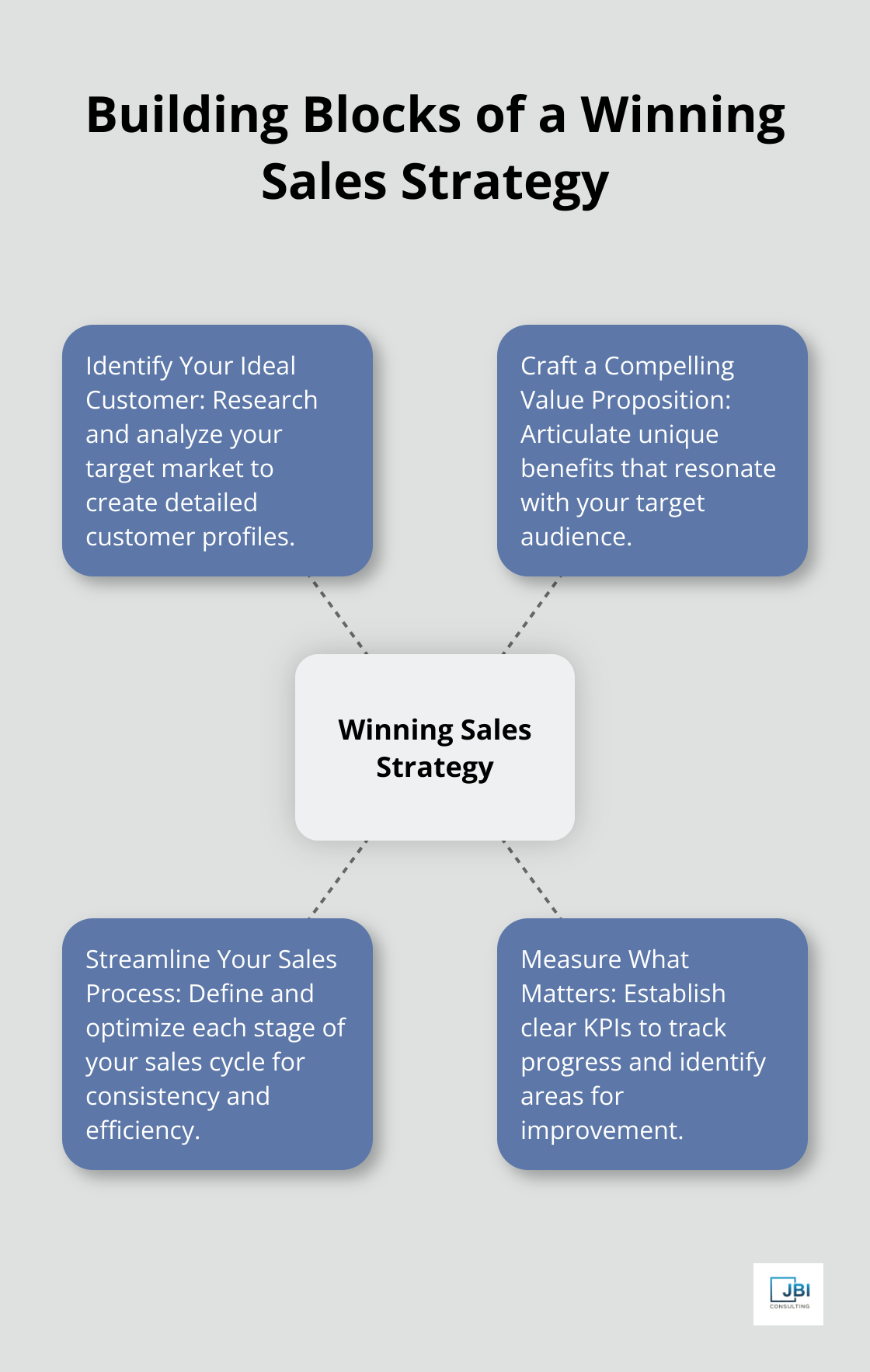
Identify Your Ideal Customer
The first step to creating a winning sales strategy involves the identification of your target market. This process requires thorough research and analysis of your current customer base, market trends, and competitor positioning.
Start with an analysis of your existing customers. Gather demographic information to better understand opportunities and limitations for gaining customers. This could include population data on age, wealth, and other relevant factors. Customer surveys and interviews can offer valuable insights into their product choice and what they value most.
Use market research to identify potential new segments that align with your offering. This may include analysis of industry reports, attendance at trade shows, or conducting focus groups. The objective is to construct a detailed profile of your ideal customer, including their needs, challenges, and buying behaviors.
Craft a Compelling Value Proposition
After you identify your target market, the next step is to develop a unique value proposition that resonates with them. This is where you articulate why a potential customer should select your product or service over competitors.
Your value proposition should be clear, concise, and focused on the specific benefits you offer. Avoid generic statements like “we provide quality service.” Instead, highlight what makes you unique. For example, “We help mid-size manufacturing companies reduce waste by 30% through our proprietary AI-driven process optimization software.”
To develop an effective value proposition, consider these questions:
- What specific problem does your product or service solve?
- How does your solution differ from competitors?
- What tangible results can customers expect?
Streamline Your Sales Process
A well-defined sales process is essential for consistency and efficiency. It provides a roadmap for your sales team, which ensures that every prospect receives the same high-quality experience.
Map out each stage of your current sales process, from initial contact to deal closure. Identify bottlenecks or areas where deals frequently stall. Are there steps that you could automate or simplify?
Consider the implementation of a CRM system to track and manage leads throughout the sales cycle. This can help you identify which tactics are most effective at each stage and where you might need additional resources.
Measure What Matters
The final component of an effective sales strategy is the establishment of clear performance metrics and KPIs. These provide a way to measure progress and identify areas for improvement.
While revenue is important, it shouldn’t be the only metric you track. Consider the inclusion of:
- Conversion rates at each stage of the sales funnel
- Average deal size
- Sales cycle length
- Customer acquisition cost
- Customer lifetime value
Review these metrics regularly with your team and use the insights to refine your strategy. The goal isn’t just to hit targets, but to improve your sales process continuously.
As you build these foundational elements of your sales strategy, the next critical step is to put this strategy into action. The implementation and execution of your sales strategy will determine its ultimate success. Let’s explore how to effectively bring your strategy to life in the next section.
How to Execute Your Sales Strategy
Empower Your Sales Team
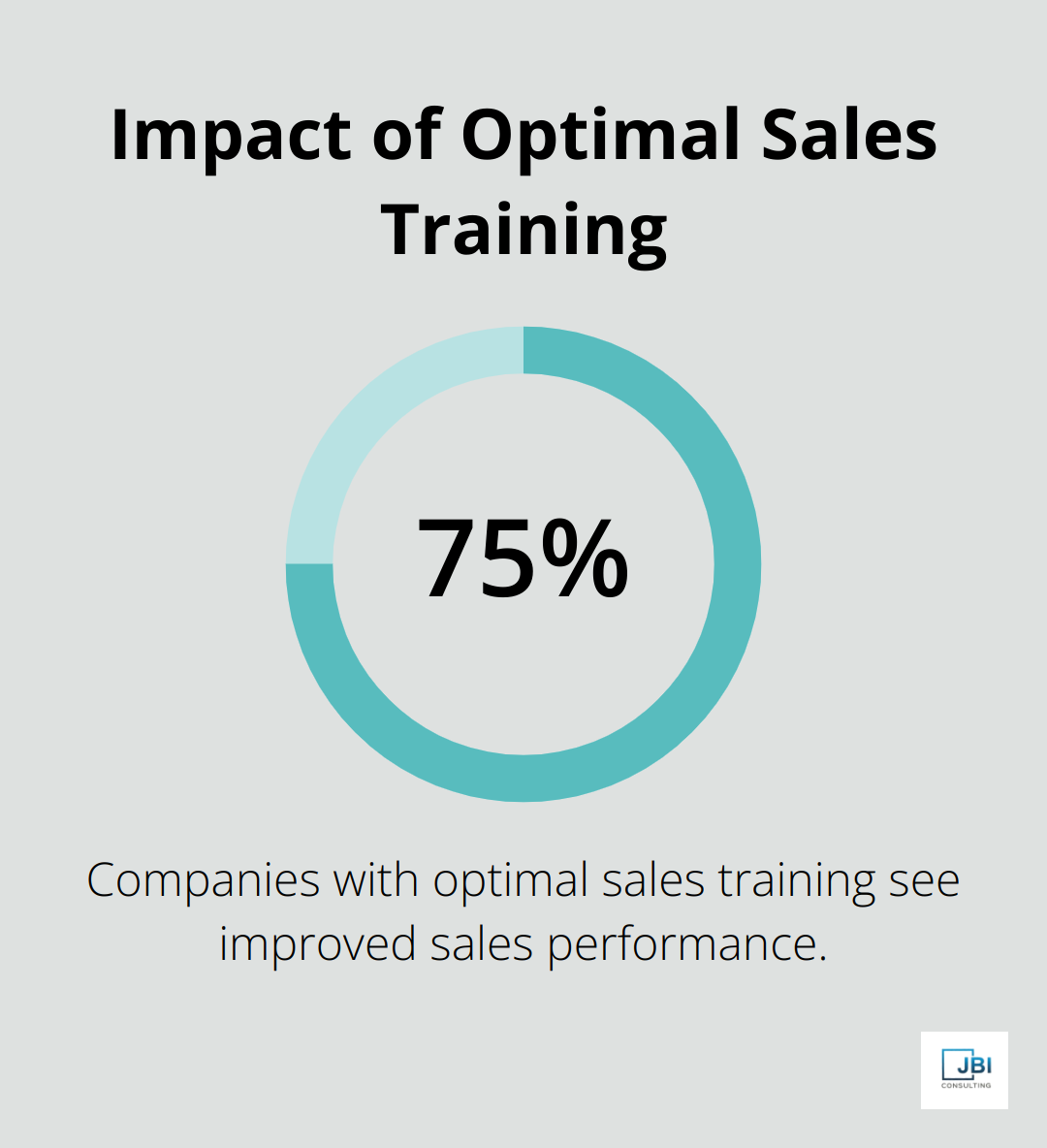
The backbone of any successful sales strategy is a well-trained, motivated team. Invest in ongoing training programs that focus on both hard and soft skills. According to recent statistics, companies that provide optimal sales training see improved sales performance.
Consider implementing a mentorship program where seasoned sales professionals guide newer team members. This can accelerate skill development and foster a culture of continuous learning. Additionally, regular role-playing exercises can help your team practice handling objections and refine their pitch in a low-stakes environment.
Harness Technology for Sales Success
In today’s digital age, leveraging the right technology can give your sales team a significant edge. A robust Customer Relationship Management (CRM) system is essential. It centralizes customer data, tracks interactions, and provides valuable insights for personalizing your approach.
Sales enablement platforms (like Seismic or Showpad) can streamline content delivery, ensuring your team always has the most up-to-date materials at their fingertips.
AI-powered sales tools are also gaining traction. Platforms that use conversation intelligence to analyze sales calls provide actionable insights to improve performance. For example, Allego Conversation Intelligence is designed to help companies increase their sales and revenue.
Maintain Strategic Flexibility
While a solid strategy provides direction, the ability to adapt quickly to changing market conditions is vital. Implement a system for regular strategy reviews – monthly or quarterly, depending on your industry’s pace. These reviews should involve analyzing key performance indicators (KPIs) and gathering feedback from your sales team.
Make data-driven adjustments. If certain tactics don’t yield results, pivot. For instance, if your outbound cold-calling efforts fall flat, you might shift resources to inbound marketing or social selling strategies.
Stay attuned to industry trends and competitor movements. Attend industry conferences, subscribe to relevant publications, and encourage your team to share insights from their interactions with customers. This collective intelligence can help you spot emerging opportunities or threats early.
Leverage Expert Guidance
To truly elevate your sales strategy execution, consider partnering with experts in the field. JBI Consulting’s transformative program by Michael Hinkle stands out as a top choice. This program shifts your mindset from nurturing existing leads to proactively hunting new opportunities. With over 20 years of experience, Hinkle’s methodology enhances client relationships, refines sales skills, and boosts deal closure rates.
Final Thoughts
A robust sales strategy aligns efforts with business objectives and provides clear direction to your team. It optimizes resource allocation, enables swift adaptation to market changes, and allows effective performance measurement. The importance of developing sales strategies cannot be overstated, as it drives sustained growth and success through regular refinement.
We encourage you to take action on your sales strategy development now. Your investment will yield improved sales performance and business growth. A great strategy requires proper execution, so empower your team, use technology to streamline processes, and maintain a flexible approach.
To elevate your sales performance, consider expert guidance. JBI Consulting’s transformative program offers a proven methodology to shift your sales mindset and boost results. This proactive, opportunity-hunting approach can position your business for long-term success in today’s competitive landscape.