
At JBI Consulting, we know that strong client relationships are the backbone of any successful business. A well-designed client engagement program can transform these relationships, boosting loyalty and driving growth.
In this post, we’ll show you how to create an effective client engagement program that keeps your customers coming back. We’ll cover strategies, tools, and metrics to help you build and measure a program that works.
What Is Client Engagement?
Definition and Importance
Client engagement refers to the ongoing interaction between a business and its customers. It involves active participation from both parties to build a meaningful relationship. Effective client engagement directly impacts a company’s bottom line. A study by Gallup reveals that companies that successfully engage their B2B customers reported 63% lower customer attrition. These statistics underscore the financial significance of maintaining involved and satisfied clients.

Key Elements of Successful Engagement
To create a robust client engagement program, businesses should focus on these critical areas:
- Communication: Establish regular, clear, and personalized communication channels. This includes emails, phone calls, or face-to-face meetings. The frequency and method should align with client preferences.
- Value Delivery: Provide value beyond core products or services consistently. This can include educational content, industry insights, or exclusive offers. (For example, some consulting firms offer personalized assessments to tailor development plans for each client.)
- Feedback Loop: Implement a system to collect and act on client feedback regularly. This demonstrates that you value their input and commit to improving their experience.
- Proactive Problem-Solving: Address potential issues before they escalate. This proactive approach can set a company apart from its competitors.
Measuring Engagement Success
To evaluate the effectiveness of engagement efforts, companies should track metrics such as:
- Net Promoter Score (NPS)
- Customer retention rates
- Upsell/cross-sell success
Bain & Company research shows that improving NPS by just 10 points can lead to a 20% increase in sales. This statistic emphasizes the importance of customer satisfaction and loyalty.
The Impact of Personalization
Personalization plays a crucial role in client engagement. Tailoring interactions and offerings to individual client needs can significantly enhance the engagement experience. This approach requires a deep understanding of each client’s unique challenges, goals, and preferences.
As we move forward, we’ll explore specific strategies for developing a client engagement program that leverages these key elements and principles. The next section will provide actionable steps to create a program that not only retains clients but also transforms them into advocates for your business.
How to Build a Winning Client Engagement Program
Define Clear Objectives
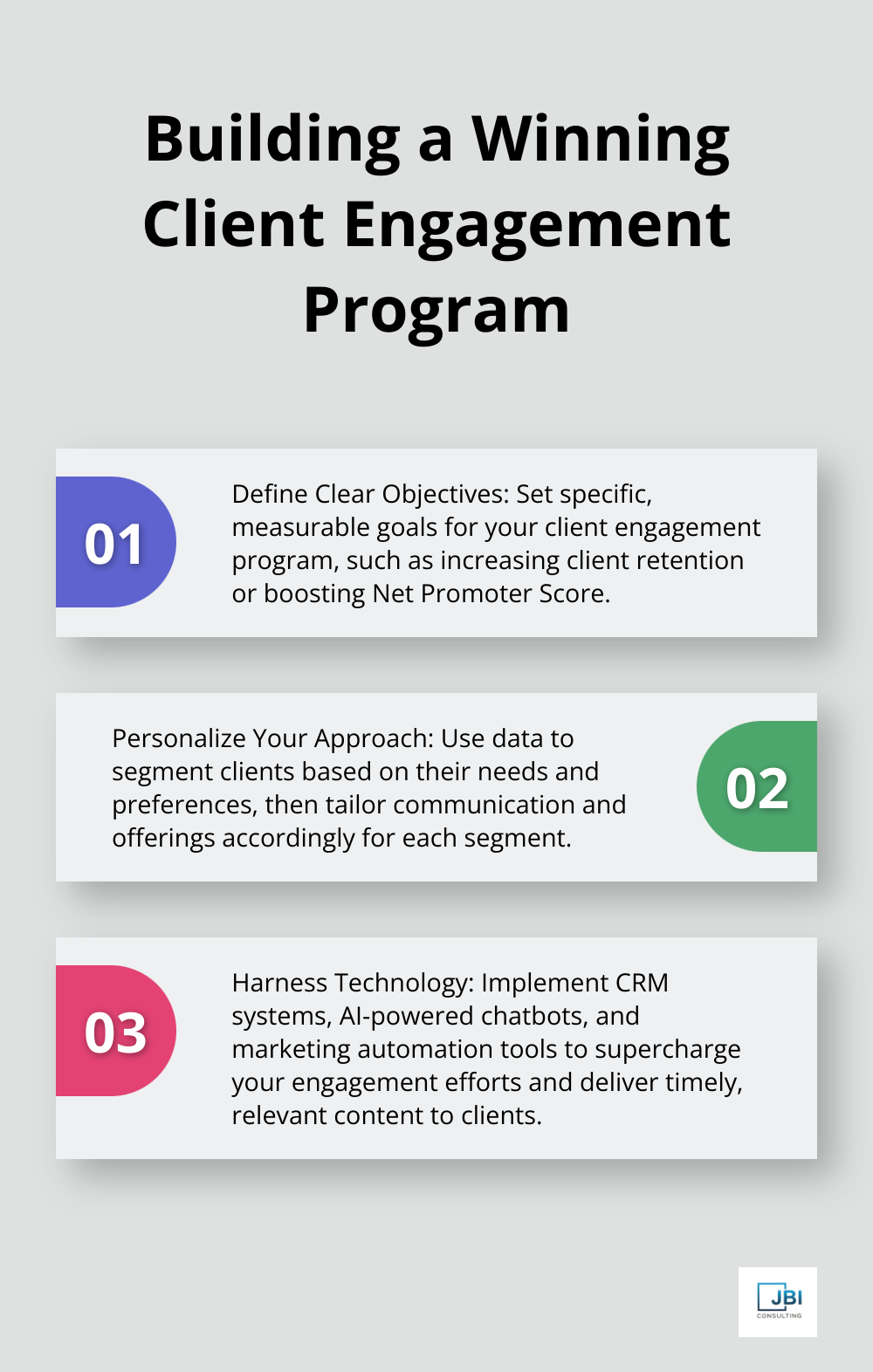
Start your program by setting specific, measurable goals. Do you want to increase client retention by 20%? Or perhaps boost your Net Promoter Score by 15 points? Clear objectives will guide your strategy and help you track progress effectively.
Personalize Your Approach
Client engagement isn’t one-size-fits-all. Use data to segment your clients based on their needs, preferences, and behaviors. Then, tailor your communication and offerings accordingly. For example, a software company might offer personalized onboarding for new clients and advanced feature workshops for long-term users.
Harness Technology
The right tools can supercharge your engagement efforts. Customer Relationship Management (CRM) systems help unify data, standardize processes, and give teams across sales, marketing, and service a shared view of client information. Consider using AI-powered chatbots for 24/7 support or marketing automation tools to deliver timely, relevant content to your clients.
Create Valuable Content
Content plays a key role in client engagement. Focus on creating materials that solve real problems for your clients. Consider producing how-to guides, industry reports, or case studies that showcase your expertise. A financial services firm, for instance, could produce a monthly market analysis report to help clients make informed investment decisions.
Establish a Robust Feedback System
Your clients’ voices are invaluable. Set up regular surveys, conduct quarterly review calls, and create easy channels for clients to share their thoughts. But don’t stop at collecting feedback- act on it. When clients see their input leading to improvements, it strengthens their connection to your brand.
Building an effective client engagement program requires constant refinement based on client feedback and changing market conditions. With these strategies in place, you’ll create lasting, profitable client relationships. In the next section, we’ll explore how to measure the success of your client engagement efforts and use those insights to drive continuous improvement.
How to Measure Client Engagement Success
Select the Right KPIs
Choosing appropriate Key Performance Indicators (KPIs) is essential to gauge the effectiveness of your client engagement efforts. Consider these vital metrics:
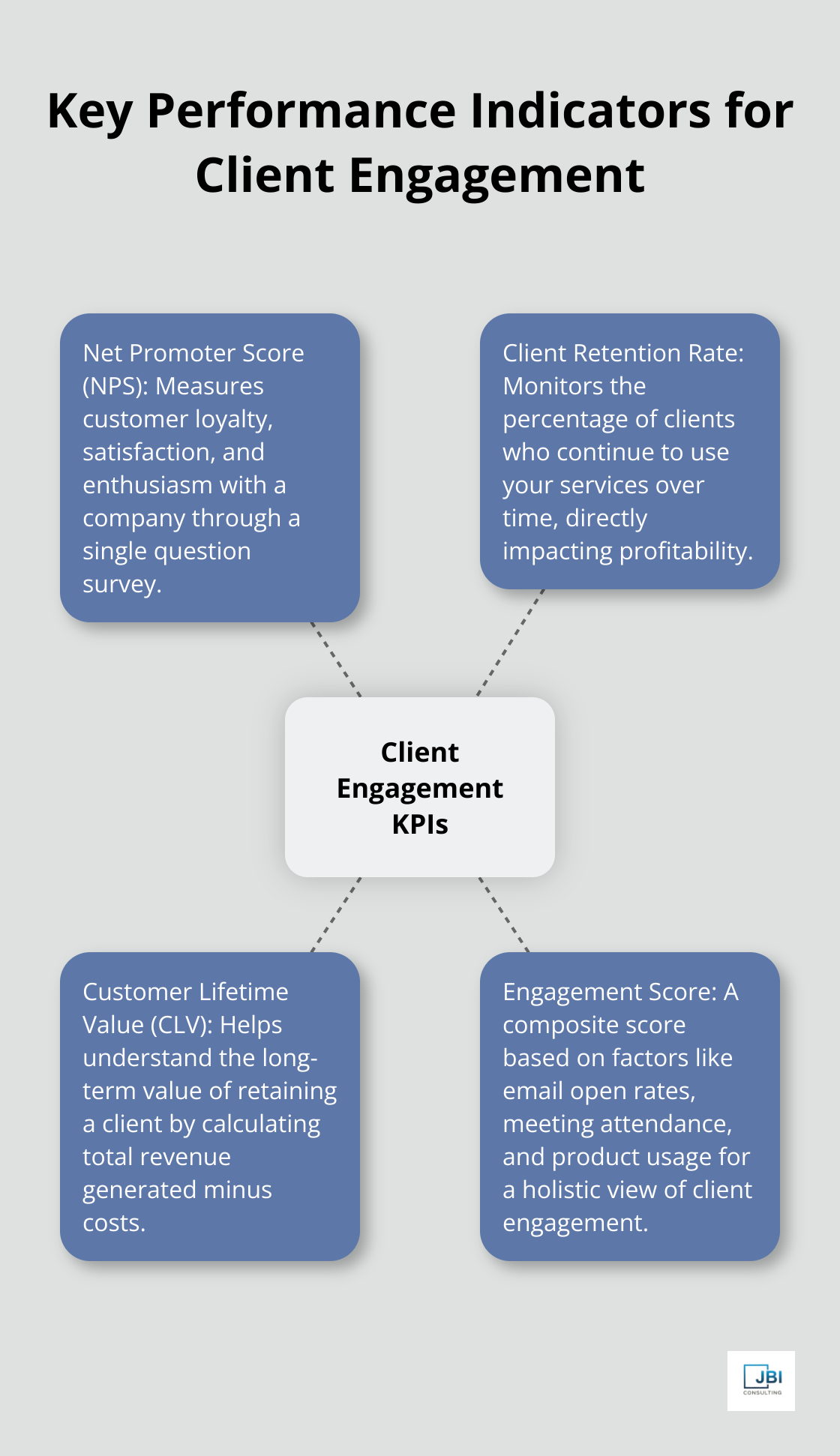
- Net Promoter Score (NPS): This metric measures customer loyalty, satisfaction, and enthusiasm with a company. It’s calculated by asking customers one question.
- Client Retention Rate: Monitor the percentage of clients who continue to use your services over time. A 5% increase in customer retention rates can lead to a 25% to 95% increase in profits (Frederick Reichheld, Bain & Company).
- Customer Lifetime Value (CLV): This metric helps you understand the long-term value of retaining a client. It’s usually calculated by adding all the revenue generated by a customer (or the average customer) throughout their relationship with the business, minus the costs.
- Engagement Score: Create a composite score based on factors like email open rates, meeting attendance, and product usage for a holistic view of client engagement.
Use Technology for Tracking
To track these metrics effectively, implement technology solutions:
- CRM Systems: Platforms like Salesforce or HubSpot centralize client data and automate tracking of interactions and engagement metrics.
- Survey Tools: Use tools like SurveyMonkey or Qualtrics to collect client feedback regularly and calculate NPS.
- Analytics Platforms: Google Analytics or Mixpanel help track client behavior on your website or product, providing insights into engagement patterns.
Turn Data into Action
Collecting data is only the first step. The real value comes from analysis and action:
- Schedule Regular Reviews: Plan monthly or quarterly reviews of your engagement metrics. Look for trends and patterns over time.
- Segment Your Data: Analyze metrics by client segments to identify which groups are most engaged and which need more attention.
- Perform Correlation Analysis: Search for relationships between different metrics. For example, does an increase in engagement score correlate with higher retention rates?
- Create Action Plans: Develop specific action plans based on your analysis. If you notice a drop in NPS for a particular segment, create targeted strategies to address their concerns.
Refine Your Approach
The goal of measuring client engagement extends beyond data collection. Use these insights to improve your program continuously:
- Identify Areas for Improvement: Pinpoint aspects of your engagement strategy that underperform based on your metrics.
- Test New Strategies: Implement new engagement tactics (e.g., personalized content, more frequent check-ins) and measure their impact on your KPIs.
- Adjust Resource Allocation: Based on your findings, reallocate resources to the most effective engagement channels and strategies.
- Set New Targets: As you achieve your initial goals, set new, more ambitious targets to drive continuous improvement in your client engagement efforts.
Final Thoughts
An effective client engagement program transforms businesses in today’s competitive landscape. Companies build lasting relationships through personalized communication, technology, and consistent value delivery. These strategies form the foundation of a strong program, but their power lies in continuous measurement and refinement.
Client engagement requires dedication, adaptability, and commitment to understanding client needs. It demands the selection of appropriate KPIs, utilization of tracking tools, and conversion of data into actionable insights. This ensures engagement strategies remain effective and relevant over time.
JBI Consulting understands the challenges of building strong client relationships. Our transformative program helps teams shift from nurturing leads to seeking new opportunities. We enhance client engagement efforts, refine sales skills, and boost success in closing deals.