
At JBI Consulting, we know that effective sales strategies are the backbone of business success.
In this post, we’ll explore proven techniques to boost your sales performance and drive growth.
From understanding your target market to mastering essential sales skills, we’ll cover the key elements that can transform your sales approach.
Who Is Your Ideal Customer?
The Power of Market Research
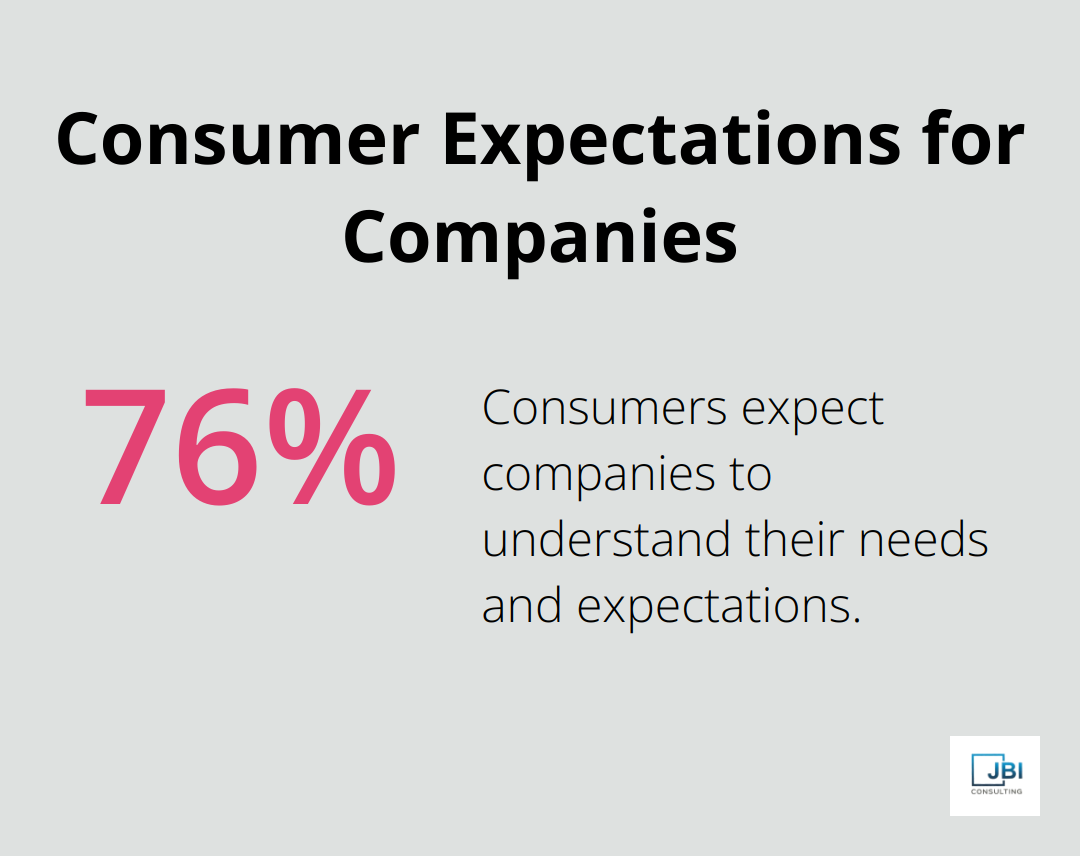
Effective sales strategies start with a deep understanding of your target market. Companies that know their customers outperform competitors. To gain this insight, gather data on your industry, competitors, and potential customers. Use tools like Google Trends, social media analytics, and industry reports to identify patterns and opportunities. A Salesforce study found that 76% of consumers expect companies to understand their needs and expectations, highlighting the importance of thorough research.
Create a Detailed Customer Profile
Paint a vivid picture of your perfect customer. Look beyond basic demographics and focus on their goals, challenges, and decision-making processes. HubSpot reports that companies exceeding revenue goals are 2.3 times more likely to use buyer personas than those missing their targets. This statistic underscores the value of well-crafted customer profiles.
Analyze Customer Behavior
Examine how customers interact with your brand. Utilize website analytics, customer surveys, and sales data to map their journey. A McKinsey report revealed that companies using customer behavior insights outperform peers by 85% in sales growth. This statistic demonstrates the significant impact of behavioral analysis on sales success.
Personalize Your Approach
Apply the insights you’ve gathered to customize your approach. Boston Consulting Group found that personalization can increase sales by up to 20%. This might involve tailoring your product offerings, adjusting your messaging, or even changing your sales channels based on customer preferences.
Adapt and Evolve
Understanding your target market is an ongoing process. Update your research regularly and adjust your strategies accordingly. Businesses that continuously refine their understanding of their target market tend to be more agile and responsive to changes in customer needs.
The knowledge you gain about your ideal customer forms the foundation for effective sales techniques. In the next section, we’ll explore how to develop a strong sales process that leverages this customer insight to drive results.
How to Build a Powerful Sales Engine
Map Your Customer’s Journey
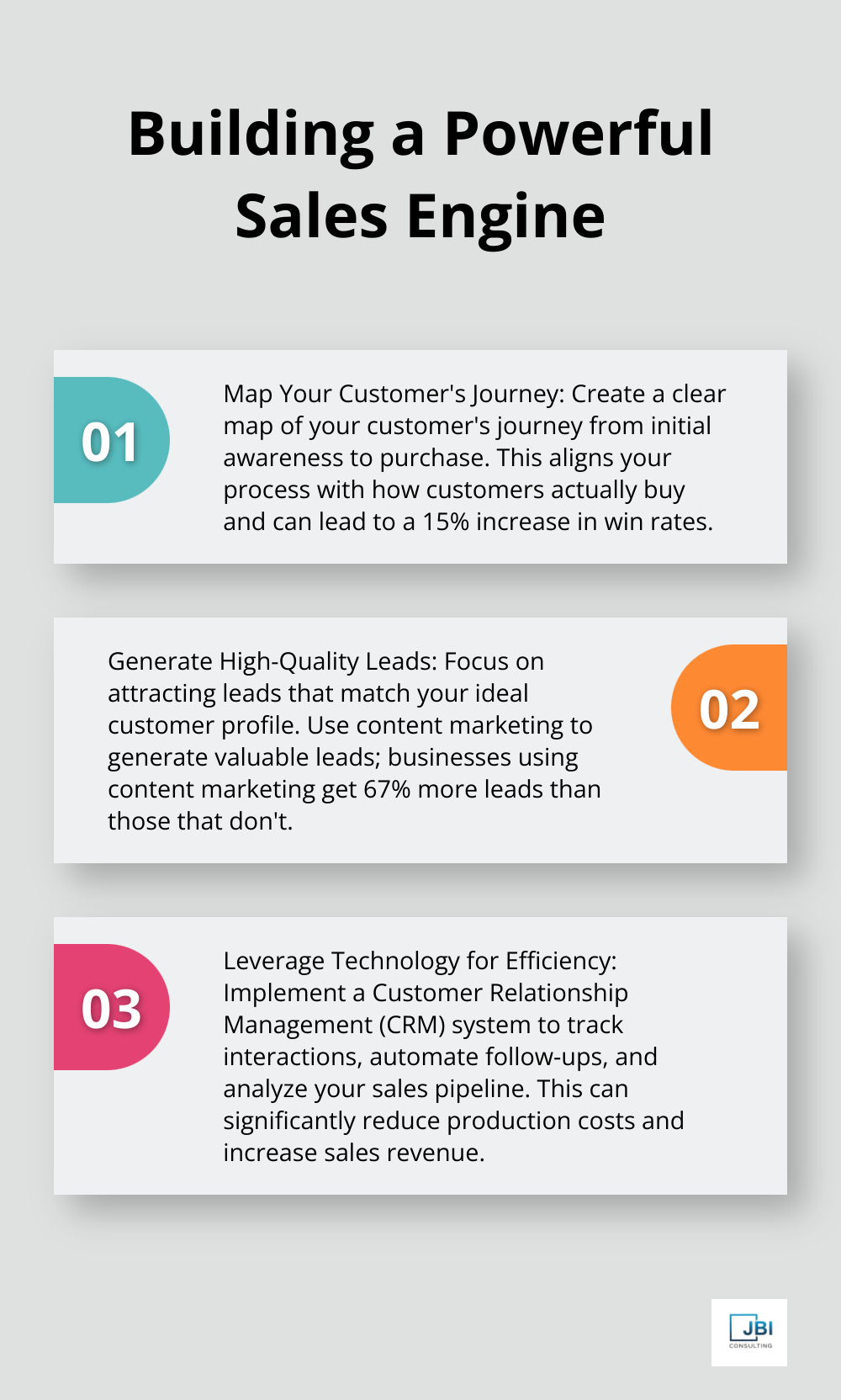
Start with a clear map of your customer’s journey from initial awareness to purchase. This approach aligns your process with how customers actually buy. Companies that align their sales processes with the customer journey see a 15% increase in win rates (Salesforce).
To create this map, engage with your existing customers. Ask about their decision-making process, required information at each stage, and encountered obstacles. Use these insights to design a sales process that addresses customer needs at every step.
Generate High-Quality Leads
Lead generation fuels your sales process. Focus on attracting leads that match your ideal customer profile. Content marketing proves effective here; businesses using content marketing get 67% more leads than those that don’t (HubSpot).
Create valuable resources (whitepapers, webinars, industry reports) that address your target market’s pain points. Place this content behind a simple form to capture lead information. Prioritize quality over quantity -10 highly qualified leads trump 100 lukewarm prospects.
Leverage Technology for Efficiency
A Customer Relationship Management (CRM) system is crucial for effective sales process management. It tracks interactions, automates follow-ups, and analyzes your sales pipeline. Since order processing and preparing quotes is automated in CRM, sales teams are able to reduce production costs and increase sales revenue.
Select a CRM that integrates with your other business tools and customize it to fit your specific sales process. Thoroughly train your team on CRM use and make data entry a non-negotiable daily task. Consistent CRM use provides insights to refine your sales strategies and improve forecasting accuracy.
Implement a Consistent Follow-Up System
Poor follow-up often leads to lost sales. Implement a system that ensures no lead falls through the cracks. This might involve automated email sequences, scheduled check-ins, or both. Most leads go with the vendor that responds first, so answering promptly is essential.
Your follow-up system should provide value at every touchpoint, not just check-in. Share relevant content, offer industry trend insights, or provide product/service updates. Each interaction should move the prospect closer to a buying decision.
Continuously Optimize Your Process
Your sales process requires regular analysis and refinement. Examine your sales data to identify bottlenecks and improvement opportunities. Look for stages where deals stall or types of leads that convert at higher rates. Use these insights to refine your approach.
Consider A/B testing in your sales process. Test different email subject lines, call scripts or pricing structures. Small improvements often lead to significant gains over time (a 22% increase in close rates isn’t uncommon after implementing a series of small optimizations).
As you build and refine your sales engine, the next critical step involves mastering essential sales techniques. These skills will help you maximize the effectiveness of your newly optimized sales process. AI-powered recommendation engines can be particularly effective in suggesting products based on customer behavior and profiles.
How to Master Essential Sales Skills

The Power of Active Listening
Active listening transforms sales interactions. By actively listening, salespeople can uncover the pain points of their prospects and, in turn, boost their performance by up to 30%. To enhance your active listening:
- Give full attention to the speaker, and eliminate distractions.
- Use non-verbal cues (e.g., nodding) to show engagement.
- Restate key points to confirm understanding.
- Ask insightful follow-up questions.
Apply these techniques in all interactions to rapidly improve your listening skills.
Create a Compelling Value Proposition
A strong value proposition clearly articulates why prospects should choose your product or service. 80% of customers consider the company experience as important as its products or services (Salesforce). To develop a powerful value proposition:
- Pinpoint your unique selling points.
- Identify your customer’s pain points.
- Demonstrate how you solve these problems better than competitors.
- Provide quantifiable benefits where possible.
Experiment with different versions of your value proposition and monitor which ones resonate most with prospects. Refine continuously based on feedback and results.
Handle Objections and Close Deals
Objection handling often determines sales outcomes. Top performers dedicate 39% more time to discussing the next steps compared to average representatives (Gong.io study). To improve your objection handling and closing abilities:
- Prepare responses for common objections.
- Utilize the “feel, felt, found” method to empathize and offer solutions.
- Keep relevant case studies or testimonials at hand.
- Practice asking for the sale in low-pressure environments.
Closing starts from the first interaction, not as a one-time event. Each conversation should guide the prospect towards a decision.
Leverage Technology in Sales
Modern sales professionals must harness technology to stay competitive. Customer Relationship Management (CRM) systems prove invaluable for managing interactions and analyzing sales pipelines. Select a CRM that integrates with your existing tools and customize it to fit your specific sales process. (Thorough team training on CRM usage is essential.)
Develop a Consistent Follow-Up System
Poor follow-up often results in lost sales opportunities. Implement a system to ensure no lead slips through the cracks. This might include automated email sequences, scheduled check-ins, or a combination of both. Respond promptly to inquiries, as most leads choose the vendor who responds first.
These techniques require consistent practice and refinement. Successful sales strategies require a proactive approach, strong client relationships, and continuous skill refinement. JBI Consulting’s program, led by Michael Hinkle, offers personalized coaching to help you master these skills and transition from a passive to a proactive sales approach.
Final Thoughts
Effective sales strategies form the foundation of business success. We explored key elements that transform sales approaches and drive growth, from understanding target markets to developing robust sales processes. Mastering essential skills like active listening and crafting compelling value propositions creates a powerful formula for closing deals and exceeding targets.
The sales landscape constantly evolves, requiring continuous improvement and adaptation. Regular reassessment of strategies and staying updated with industry trends ensures sales techniques remain sharp in a competitive environment. Small, persistent efforts often lead to significant improvements over time.
For those seeking to enhance their sales performance, professional guidance can provide valuable insights. JBI Consulting offers a transformative sales program led by Michael Hinkle, designed to shift mindsets from passive lead nurturing to proactive opportunity hunting. This program aims to refine sales skills and improve client relationships, setting the stage for long-term business success.