
At JBI Consulting, we know that mastering negotiation strategies in sales is a game-changer for business success.
Effective negotiation skills can significantly boost your close rates, improve deal terms, and foster long-term client relationships.
In this post, we’ll share proven techniques to enhance your sales negotiations, from thorough preparation to overcoming common objections.
How to Prepare for Sales Negotiations
Know Your Prospect Inside Out
Start by researching your prospect’s business thoroughly. Look beyond their website and examine industry reports, financial statements, and recent news. Understanding their challenges, goals, and market position gives you leverage in negotiations. If you discover they’re expanding into a new market, you can tailor your pitch to address specific needs related to that expansion.
Master Your Value Proposition
Knowing your product features isn’t enough. You need to articulate how your offering solves your prospect’s specific problems. Quantify the benefits wherever possible. For example, “I increased sales by 25% within 6 months” is more compelling than a vague statement about improving efficiency. This concrete approach makes your value proposition more compelling (and harder to dismiss).
Set Clear Objectives and Alternatives
Before entering negotiations, define your ideal outcome and your walk-away point. This clarity helps you stay focused and avoid making hasty decisions under pressure. Additionally, develop your BATNA (Best Alternative to a Negotiated Agreement). Knowing you have solid alternatives strengthens your position and gives you the confidence to hold firm on key points.
Analyze the Competition
Study your competitors’ offerings and pricing strategies. This knowledge allows you to highlight your unique selling points and address potential objections proactively. (For instance, if a competitor offers a lower price, you can emphasize your superior customer support or additional features.)
Practice Your Pitch
Rehearse your negotiation strategy with colleagues or mentors. This practice helps you refine your arguments, anticipate objections, and improve your delivery. Try to simulate various scenarios to prepare for unexpected turns in the conversation.
Thorough preparation sets the stage for successful negotiations. It equips you with the knowledge and confidence to navigate challenges and seize opportunities. This proactive approach aligns perfectly with the opportunity-hunting mindset that many successful sales professionals adopt. Now, let’s explore the key negotiation techniques that will help you leverage this preparation effectively.

How to Excel in Sales Negotiations
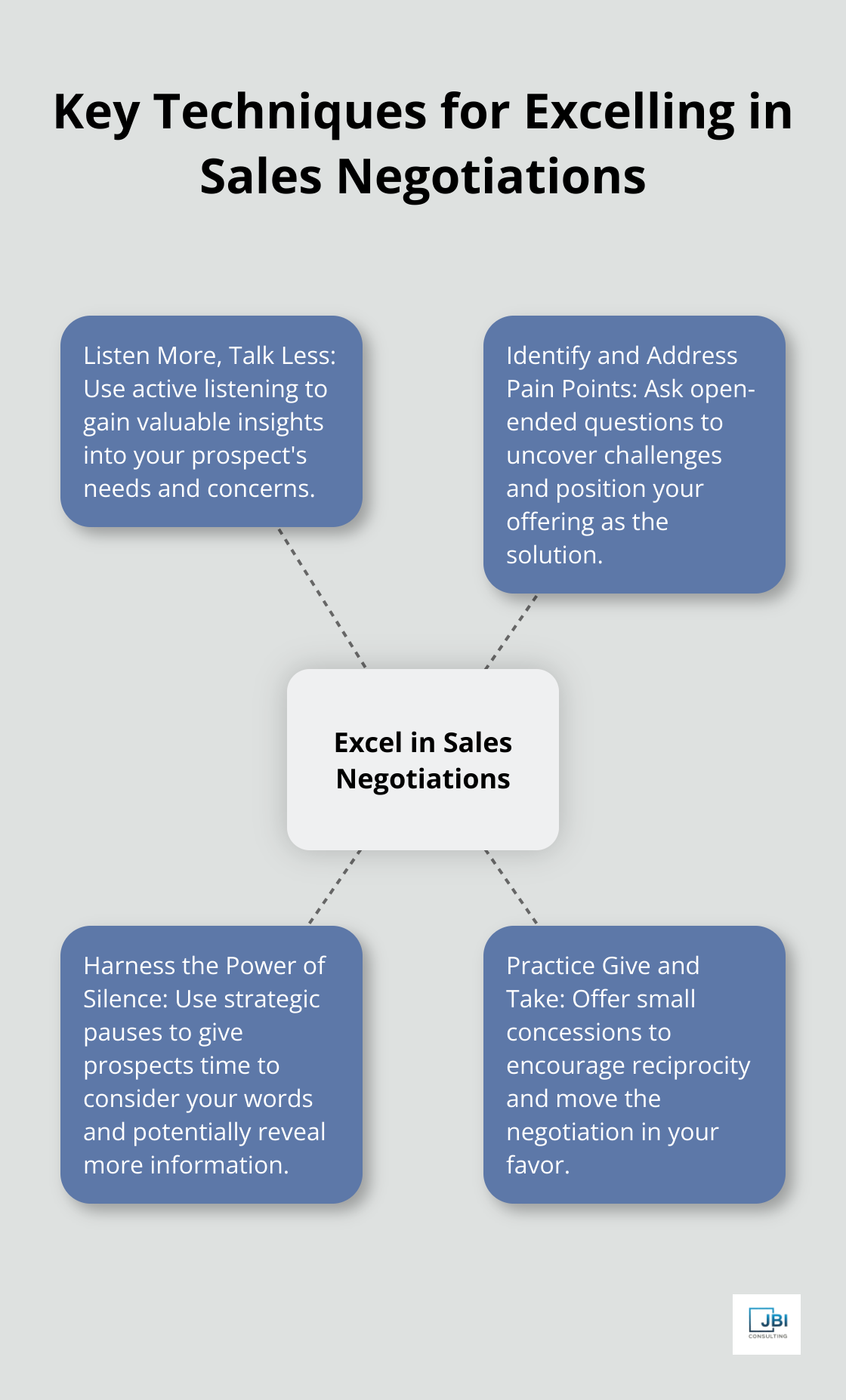
Listen More, Talk Less
Active listening forms the foundation of successful negotiations. When you truly listen to your prospect, you gain valuable insights into their needs, concerns, and motivations. This information helps you tailor your pitch and address objections effectively.
Try this technique: After your prospect speaks, paraphrase their words before responding. This action shows your engagement and ensures you’ve understood their point correctly. It also gives them a chance to clarify if needed.
Identify and Address Pain Points
Your prospect’s pain points present opportunities for you to shine. Accurate identification and addressing of these issues position your product or service as the solution they seek.
A practical approach involves asking open-ended questions that encourage your prospect to elaborate on their challenges. For example, “What’s the biggest obstacle you face in achieving your goals this quarter?” Their answer will guide you in framing your offering as the ideal solution.
Harness the Power of Silence
Silence can be an incredibly powerful tool in negotiations. Many salespeople feel uncomfortable with silence and rush to fill it, often weakening their position in the process.
Try this in your next negotiation: After making an offer or addressing an objection, stay silent. Count to ten in your head if needed. This pause gives your prospect time to consider your words and often leads them to continue the conversation, potentially revealing more information or even accepting your offer.
Practice Give and Take
The principle of reciprocity is deeply ingrained in human psychology. When you offer something of value, people naturally want to reciprocate. In sales negotiations, this can be a powerful tool.
Consider offering a small concession early in the negotiation. This could be as simple as flexibility on delivery dates or a minor add-on service. This gesture often prompts the prospect to make a concession in return, moving the negotiation in your favor.
These techniques prove most effective when used authentically and in conjunction with thorough preparation. Successful sales is a treasure hunt, involving proactively seeking opportunities and building strong relationships. The incorporation of these negotiation strategies into your approach will equip you to turn more prospects into satisfied clients.
Now that we’ve covered how to excel in sales negotiations, let’s move on to addressing common objections you might encounter during these discussions.
How to Handle Common Sales Objections
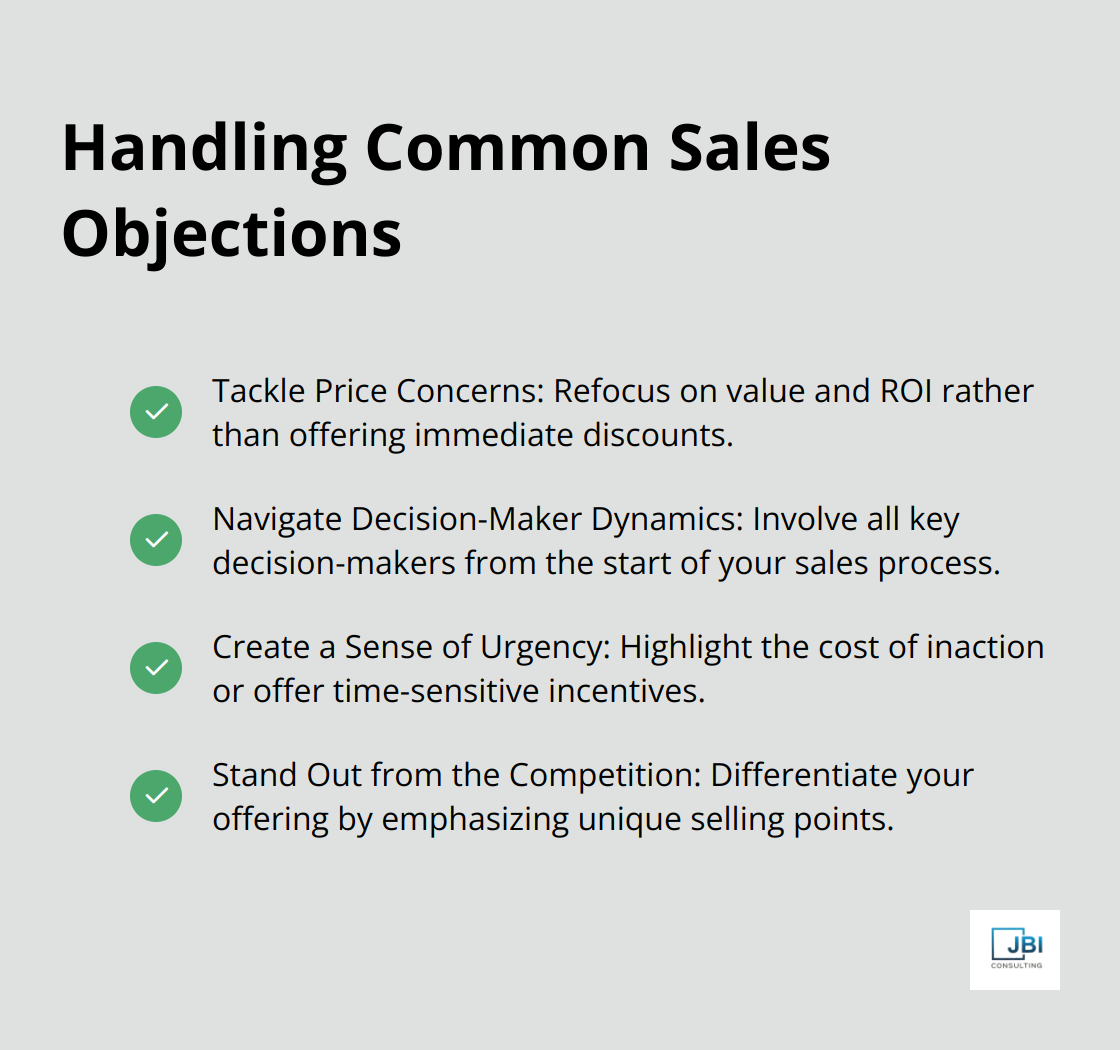
Tackle Price Concerns
When a prospect questions your pricing, don’t immediately offer discounts. Instead, refocus the conversation on the value your product or service provides. Highlight the return on investment (ROI) they can expect. For example, if your software solution costs $10,000 but saves the company $50,000 in labor costs annually, that’s a 400% ROI in the first year alone.
Use case studies and testimonials to illustrate this value. Share specific examples of how similar companies have benefited from your offering. Numbers speak louder than words, so quantify the benefits whenever possible.
Navigate Decision-Maker Dynamics
You’ll often hear “I need to run this by my boss” or “I don’t have the authority to make this decision.” To avoid this roadblock, involve all key decision-makers from the start of your sales process.
During your initial discovery calls, ask questions like “Who else will be involved in this decision?” or “Who else would benefit from joining our next conversation?” This proactive approach ensures you present to the right people and address their specific concerns throughout the negotiation.
Create a Sense of Urgency
When prospects say they’re not ready to buy or want to revisit the opportunity in the future, create urgency without applying undue pressure. One effective method is to highlight the cost of inaction. Calculate and present the potential losses or missed opportunities if they delay their decision.
Another strategy is to offer time-sensitive incentives. This could be a limited-time discount, additional features, or priority onboarding. Just ensure these offers align with your company’s policies and don’t undervalue your product.
The goal is to motivate action, not to manipulate. Always be honest about why acting now is in their best interest.
Stand Out from the Competition
When prospects mention they’re considering other options, view this as an opportunity to differentiate your offering. Start by acknowledging that it’s smart to explore alternatives. Then, ask pointed questions about what they’re looking for in a solution.
Use their answers to highlight your unique selling points. If they mention that another provider offers a lower price, emphasize your superior customer support, more comprehensive features, or better integration capabilities.
Don’t badmouth competitors. Instead, focus on what makes your solution the best fit for their specific needs. Share success stories of clients who chose you over competitors (and the positive outcomes they experienced).
Final Thoughts
Mastering negotiation strategies in sales requires dedication and continuous practice. You will enhance your sales performance when you prepare thoroughly, employ key techniques, and handle common objections skillfully. Every interaction presents an opportunity to improve your negotiation skills, so analyze what works well and where you can enhance your approach.
We encourage you to apply these strategies in your next sales conversation. Start with thorough prospect research, clear value articulation, and preparation for potential objections. You will likely see improvements in your close rates and client relationship quality as you implement these techniques.
JBI Consulting helps sales professionals reach new heights in their careers. Our transformative sales program shifts your mindset from nurturing existing leads to hunting new opportunities proactively. We provide the tools and strategies you need to excel in today’s competitive sales landscape (with over two decades of experience).