
At JBI Consulting, we know that mastering strategy and competitive analysis is essential for business success. These skills allow companies to make informed decisions and stay ahead in today’s fast-paced markets.
In this post, we’ll explore the key components of effective strategic planning and provide practical tools for conducting competitive analysis. We’ll also share actionable insights on how to turn this analysis into a real competitive advantage for your business.
What Drives Business Success?
The Foundation of Strategic Planning
Strategic planning forms the bedrock of business success. It’s not merely about setting goals; it’s about making informed decisions that propel your business forward. A well-crafted strategy aligns your resources, capabilities, and actions with your long-term objectives. This alignment creates the difference between reacting to market changes and proactively shaping your future.
Competitive Analysis: Your Market Radar
Competitive analysis acts as your window into the market. This process involves the systematic gathering and analysis of information about your rivals. It reveals their strengths, weaknesses, and strategies. Armed with this knowledge, you can identify opportunities, anticipate threats, and make data-driven decisions that keep you ahead of the curve.
Key Elements of Effective Strategic Planning
- Clear Vision: Define your business’s future destination.
- Market Understanding: Know your customers, competitors, and industry trends inside out.
- Resource Allocation: Align your people, finances, and assets (both tangible and intangible) with your goals.
- Measurable Objectives: Set specific, achievable targets to track your progress.
- Adaptability: Build in the capacity to adjust to changing market conditions.

The Impact on Decision-Making
Strategy and competitive analysis are not theoretical exercises; they directly impact your day-to-day business decisions. For example, a thorough competitive analysis might uncover an untapped market segment, leading to a strategic decision to develop new products or services.
Strategy is more than a plan. Leading companies hone their strategies, build support, and deliver results.
Putting It Into Practice
We recommend conducting a competitive analysis at least annually, with quarterly updates. This practice ensures your strategy remains relevant and responsive to market changes.
The mastery of strategy and competitive analysis requires ongoing commitment. However, the payoff in terms of business growth and resilience is substantial. As we move forward, we’ll explore specific tools and techniques to enhance your competitive analysis skills, providing you with a practical toolkit for success in today’s dynamic business environment.
Practical Tools for Competitive Edge
SWOT Analysis: Your Strategic Compass
SWOT analysis helps define a company’s competitive position, assesses internal and external issues, and evaluates its current and future potential. This simple yet powerful tool requires you to list your Strengths and Weaknesses (internal factors you control), and identify external Opportunities and Threats in your market.
Consider a tech startup with innovative AI technology (Strength) but limited funding (Weakness). They might face a growing market for AI solutions (Opportunity) alongside increasing regulation in the AI space (Threat).
The effectiveness of SWOT analysis hinges on brutal honesty. Don’t sugarcoat weaknesses or overstate strengths. Use hard data to support your claims. For instance, if you claim “excellent customer service” as a strength, support it with customer satisfaction scores or retention rates.
Porter’s Five Forces: Understanding Market Dynamics
Porter’s Five Forces are used to identify and analyze the forces that shape the competitive nature and intensity of a market or industry. The model examines:
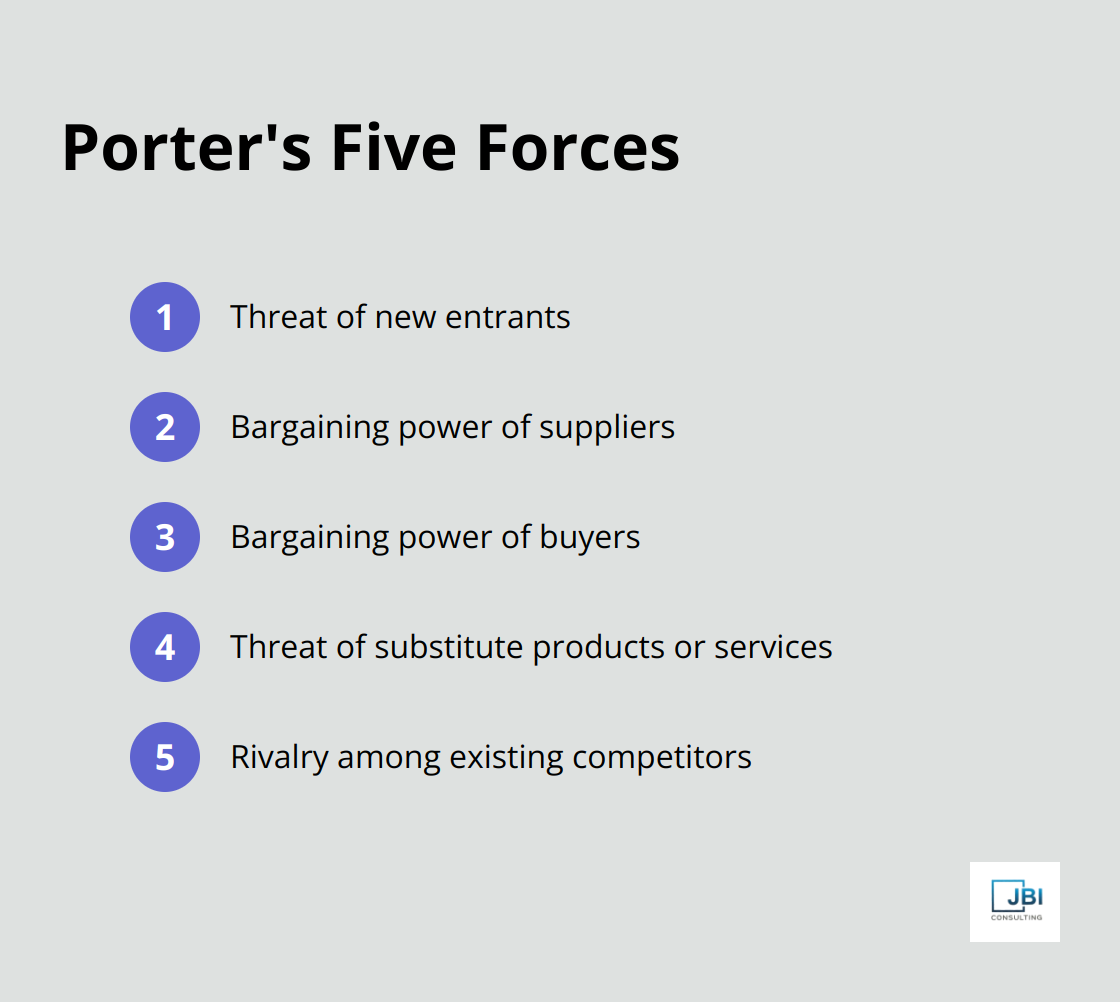
Take the airline industry as an example. The threat of new entrants remains low due to high capital requirements. Suppliers (like aircraft manufacturers) wield high bargaining power due to limited options. Buyers possess moderate power, influenced by price comparison sites. The threat of substitutes varies by route (e.g., high-speed rail on short routes). Rivalry often leads to intense price wars.
This analysis helps identify areas of leverage and vulnerability. It proves particularly useful when entering new markets or facing disruptive competitors.
Competitor Profiling: Know Your Rivals
Effective competitor profiling extends beyond a simple list of competitors. It involves creating detailed profiles including:
- Market share and financial performance
- Product/service offerings and pricing strategies
- Target customer segments
- Marketing and distribution channels
- Technological capabilities
- Corporate culture and leadership
An effective technique involves creating a “day in the life” of your competitor’s customer. This approach helps you understand their value proposition from the customer’s perspective.
Your closest competitor isn’t always who you think it is. Sometimes, the biggest threat emerges from adjacent industries or new technologies.
Market Segmentation: Targeting Your Efforts
Market segmentation allows you to divide your market into distinct groups with similar needs or characteristics. This process helps you:
- Identify underserved segments
- Tailor your offerings to specific customer needs
- Allocate resources more effectively
- Develop targeted marketing strategies
Try to segment your market based on demographics, psychographics, behavior, or geography (or a combination of these factors).
As we move forward, we’ll explore how to transform these analytical insights into actionable strategies that drive your business forward. The next section will focus on implementing strategic insights and creating a sustainable competitive advantage.
How to Transform Analysis into Action
Create a Clear Action Plan
We start by prioritizing insights from competitive analysis. We focus on the top three areas for maximum impact. For each area, we define specific, measurable goals with deadlines. For instance, if analysis reveals a customer service gap, we might aim to improve satisfaction scores by 15% within six months.
We then break down each goal into actionable steps. We assign responsibilities to team members and establish regular check-ins to track progress. This approach ensures that strategy becomes an active part of daily operations (rather than a forgotten document).
Leverage Unique Strengths
Competitive advantage lies in differentiation. We identify unique strengths and invest in them. If analysis shows unmatched product customization, we might allocate more resources to R&D or implement advanced manufacturing technologies.
We avoid trying to be everything to everyone. Instead, we focus on excelling in a niche. This targeted approach allows outperformance where it matters most to core customers.
Adapt Quickly to Market Changes
In today’s fast-paced business world, quick adaptation is key. We set up systems to monitor market indicators and competitor activities continuously. This might involve competitor intelligence tools, regular customer surveys, or industry report subscriptions.
When we detect significant changes, we prepare to pivot. This could mean adjusting product roadmaps, shifting marketing strategies, or exploring new markets. For example, if a competitor gains traction with a new feature, we might accelerate our development timeline or find ways to differentiate our offering.
We try to balance long-term strategy adherence with flexibility to seize new opportunities or mitigate emerging threats. Companies that master this balance thrive in dynamic markets.
Foster a Culture of Agility
Effective implementation requires a mindset shift across the organization. We promote a culture of agility, continuous learning, and data-driven decision-making. This involves:

Align Resources with Strategic Goals
We ensure that our resources (human, financial, and technological) align with our strategic objectives. This might involve:
- Restructuring teams to better support key initiatives
- Investing in new technologies that enhance competitive advantage
- Reallocating budget to high-priority areas identified in the analysis
By aligning resources, we increase the likelihood of successful strategy implementation and create a more cohesive, focused organization.
Final Thoughts
Strategy and competitive analysis form the cornerstone of business success in today’s dynamic markets. These skills enable companies to anticipate shifts, identify opportunities, and mitigate threats proactively. We encourage you to apply these concepts within your own business context, starting with a comprehensive SWOT analysis or an application of Porter’s Five Forces to your industry.
At JBI Consulting, we help businesses unlock their full potential through strategic sales approaches. Our program, led by Michael Hinkle, transforms passive lead nurturing into active opportunity hunting. We refine methodologies that enhance client relationships, sharpen sales skills, and improve deal closure rates.
Strategy and competitive analysis require ongoing commitment and adaptation. Consistent application of these skills will position your business for long-term success (even in challenging competitive landscapes). Embrace this journey of continuous improvement and watch your business thrive.