
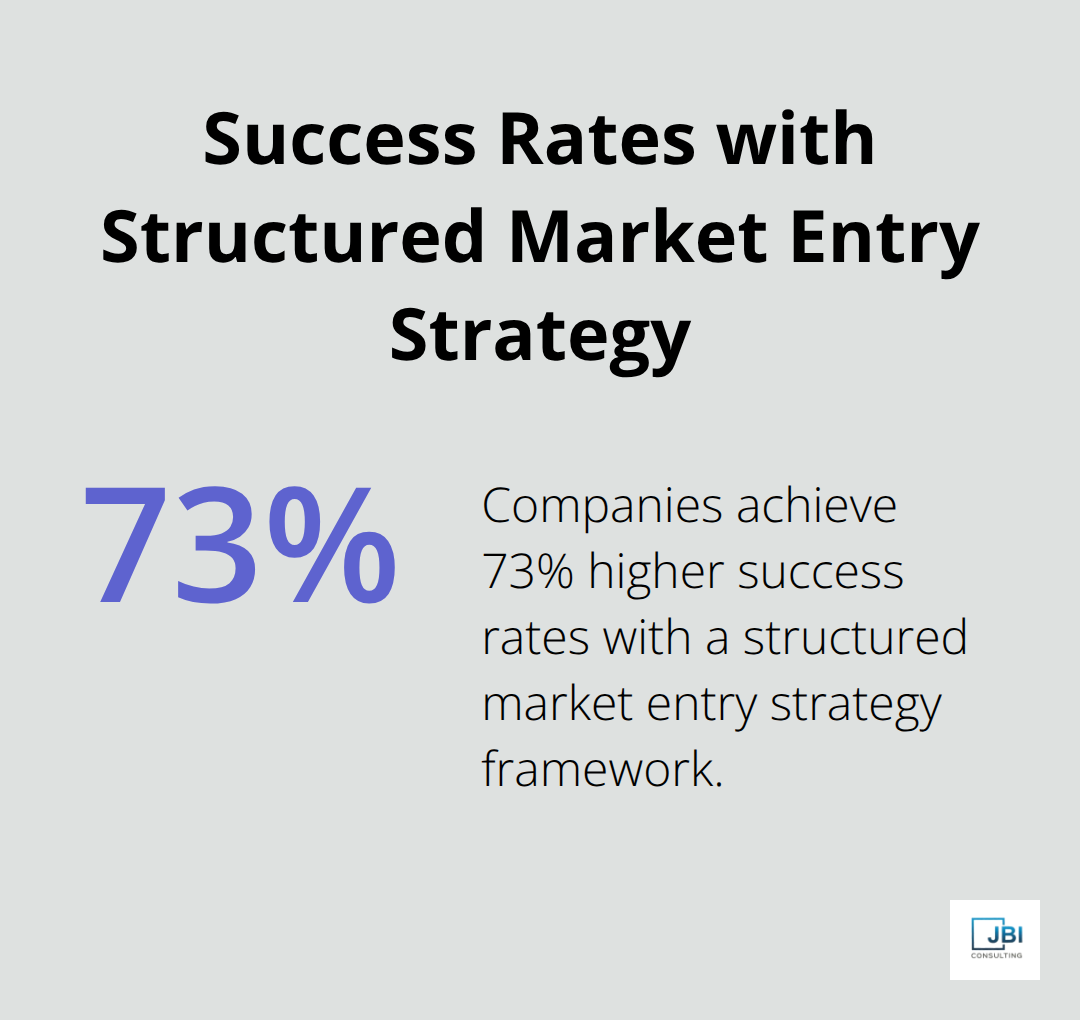
Expanding into new markets requires a systematic approach that minimizes risk while maximizing growth potential. Companies that follow a structured market entry strategy framework achieve 73% higher success rates than those using ad-hoc methods.
At JBI Consulting, we’ve seen businesses fail because they skip fundamental planning steps. This comprehensive framework guides you through three phases that transform market expansion from guesswork into strategic advantage.
How Do You Analyze Your Target Market
Market research forms the foundation of successful expansion, yet many companies that enter new markets conduct insufficient analysis. Smart businesses invest 6-12 months in comprehensive market intelligence before they make entry decisions. This phase determines whether your expansion succeeds or becomes an expensive lesson.
Understanding Your Competition
Competitive analysis goes beyond direct competitor identification. Map indirect competitors, substitute products, and emerging players that disrupt your target market. Amazon Web Services analyzed not just cloud providers but also traditional IT infrastructure companies before it expanded into new regions.
Study competitor pricing strategies, customer acquisition costs, and market share trends over the past three years. Focus on competitors that gain market share rather than established players that lose ground. Track their marketing channels, partnership strategies, and customer complaints on review platforms. This intelligence reveals market gaps and positioning opportunities your competitors miss.
Identifying High-Value Customer Segments
Customer segmentation requires behavioral data, not demographic assumptions. Netflix discovered that viewing patterns predicted market success better than age or income demographics when it expanded internationally. Analyze purchase frequency, average transaction values, and customer lifetime value across different segments.
Interview 20-30 potential customers in each segment to understand buying triggers and decision-making processes. Test your value proposition with small customer groups before full market entry. Companies that use this approach achieve 34% higher customer acquisition rates compared to broad-market strategies.
Calculating Market Opportunity
Market sizing demands specific metrics, not industry estimates. Calculate addressable market through bottom-up analysis: multiply target customer segments by average annual spending and market penetration rates. Spotify used this method to identify markets with 15%+ annual music streaming growth before expansion.
Analyze market maturity through adoption curves and competitor growth rates. Focus on markets that show 10%+ compound annual growth rates with fragmented competition. Evaluate regulatory barriers, tax implications, and infrastructure requirements that affect market accessibility (markets that require significant infrastructure investment need 40% higher profit margins to justify entry costs).
With solid market intelligence in hand, the next phase transforms this research into actionable strategic plans that allocate resources effectively and minimize expansion risks.
How Do You Choose Your Entry Strategy
Strategic planning transforms market intelligence into executable expansion plans that minimize risk and optimize resource allocation. Companies that develop comprehensive strategic frameworks before market entry achieve 45% faster break-even points than those that plan incrementally.
Entry Mode Selection and Risk Assessment
Entry mode selection represents the most critical strategic decision because it determines your operational flexibility, financial exposure, and competitive positioning for years ahead. Joint ventures deliver the highest success rates for complex markets, with 80% of financial institutions implementing fintech partnerships compared to 41% for wholly-owned subsidiaries.
Starbucks used joint ventures to enter 23 international markets, which reduced cultural risks while accelerating market penetration. Direct investment works best when you possess deep market knowledge and can commit $2-5 million in initial capital. Licensing requires minimal upfront investment but limits control over brand positioning and customer experience.
McKinsey research shows that companies entering emerging markets through partnerships face 32% lower regulatory compliance costs than those establishing independent operations.
Budget Planning and Financial Projections
Budget planning must account for hidden costs that destroy profitability projections. Regulatory compliance consumes 15-25% of total entry budgets in regulated industries like healthcare and financial services. Marketing costs typically require 40% higher investment than domestic campaigns due to brand awareness gaps and cultural adaptation needs.
Working capital requirements increase by 60% when you establish international supply chains and inventory management systems. Companies often underestimate these operational costs, which leads to cash flow problems during the first 12 months of operations.
Timeline Development and Milestone Setting
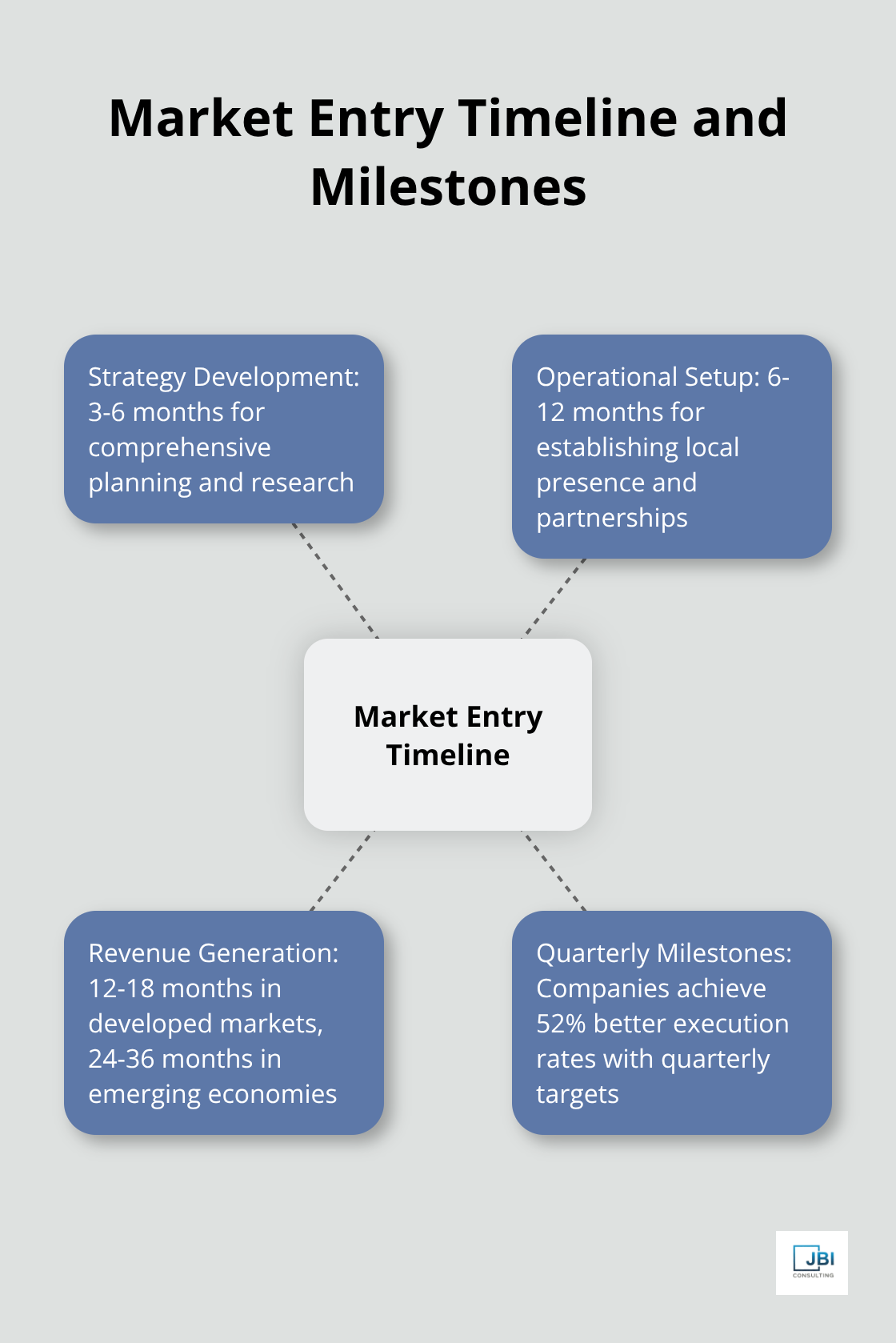
Timeline development separates successful expansions from failed attempts through realistic milestone setting. Market entry requires 12-18 months from strategy development to revenue generation in developed markets (extending to 24-36 months in emerging economies).
Companies that set quarterly milestones achieve 52% better execution rates than those using annual targets. Tesla took 14 months to establish manufacturing operations in China, which demonstrates that even experienced companies need substantial lead times for complex market entries.
Strategic planning creates the foundation, but successful market entry depends on flawless execution that transforms plans into profitable operations through go-to-market strategy implementation.
How Do You Execute Market Entry
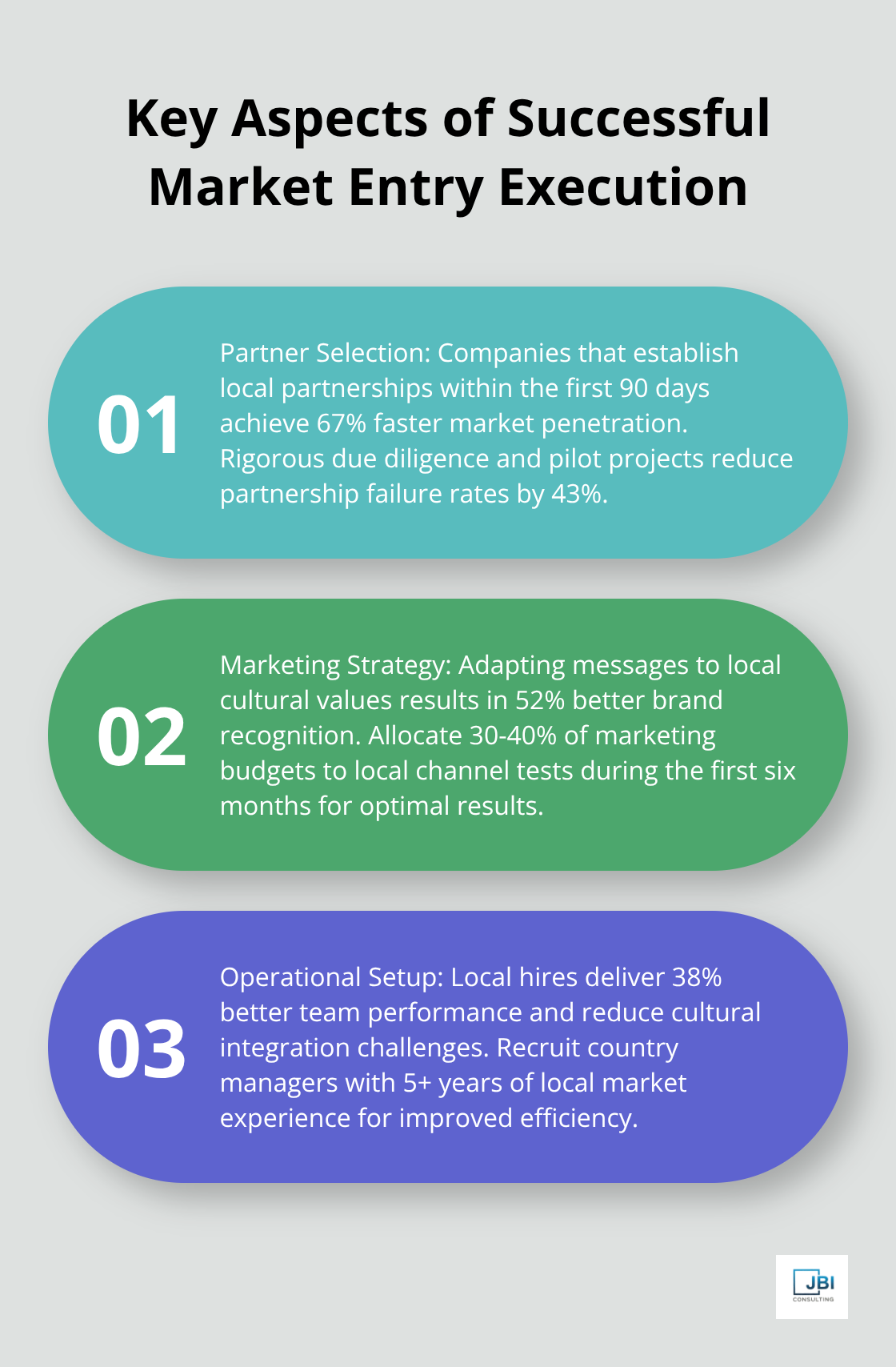
Execution separates successful market entries from expensive failures. Companies that establish local partnerships within the first 90 days achieve 67% faster market penetration than those that attempt solo entry. Partner selection demands rigorous due diligence because wrong partnerships destroy market position and waste years of preparation.
Partner Selection and Due Diligence
Partner evaluation requires financial stability verification, market reputation assessment, and cultural alignment tests. Examine potential partners’ financial statements for the past three years, focus on cash flow patterns and debt-to-equity ratios. Partners with revenue declines or high debt loads create operational risks that jeopardize your expansion timeline.
McDonald’s partnership with Connaught Plaza Restaurants in India demonstrates how local expertise accelerates market entry when partners possess deep regulatory knowledge and established supply chains. Test partnership compatibility through small pilot projects before you commit to long-term agreements. This approach reduces partnership failure rates by 43% compared to immediate full-scale commitments.
Marketing Strategy Deployment
Marketing deployment requires local market tests before full campaign launches. Airbnb tested 15 different messages in each new market before it selected final campaigns, which resulted in 28% higher conversion rates than standardized global content. Social media preferences vary dramatically across markets (LinkedIn dominates B2B marketing in Germany while WeChat drives business engagement in China).
Allocate 30-40% of marketing budgets to local channel tests during the first six months. Companies that adapt messages to local cultural values achieve 52% better brand recognition than those that use translated global campaigns. Track customer acquisition costs weekly because they fluctuate significantly during market entry phases.
Operational Setup and Team Assembly
Operational setup determines your ability to scale profitably after initial market entry. Establish local banking relationships and legal compliance systems before you begin hiring because regulatory delays cost 2-3 months of operational readiness. Netflix began its international expansion in 2010 with its launch in Canada, which enabled immediate local programming that differentiated its offering from global competitors.
Recruit country managers with 5+ years of local market experience rather than relocate headquarters staff who lack cultural understanding. Local hires deliver 38% better team performance and reduce cultural integration challenges that slow operational efficiency (companies save an average of $150,000 annually on cultural training costs when they hire locally).
Final Thoughts
This market entry strategy framework provides the systematic approach companies need to expand successfully into new markets. The three-phase process transforms expansion from risky ventures into calculated strategic moves that deliver measurable results. Market research establishes the foundation through competitive assessment, customer segmentation, and market opportunity evaluation.
Strategic planning converts intelligence into actionable plans through entry mode selection, budget allocation, and timeline development. Implementation executes these plans through partner selection, marketing deployment, and operational setup. Companies that follow this structured approach achieve 73% higher success rates because they address critical factors that determine expansion outcomes.
Success requires commitment to each framework component without shortcuts. Market entry demands 12-18 months of dedicated effort, substantial financial investment, and local market expertise (companies that underestimate these requirements face expensive failures that damage long-term growth prospects). We at JBI Consulting help businesses develop the sales capabilities needed to capitalize on new market opportunities through our transformative program that shifts teams from passive lead nurturing to proactive opportunity hunting.