
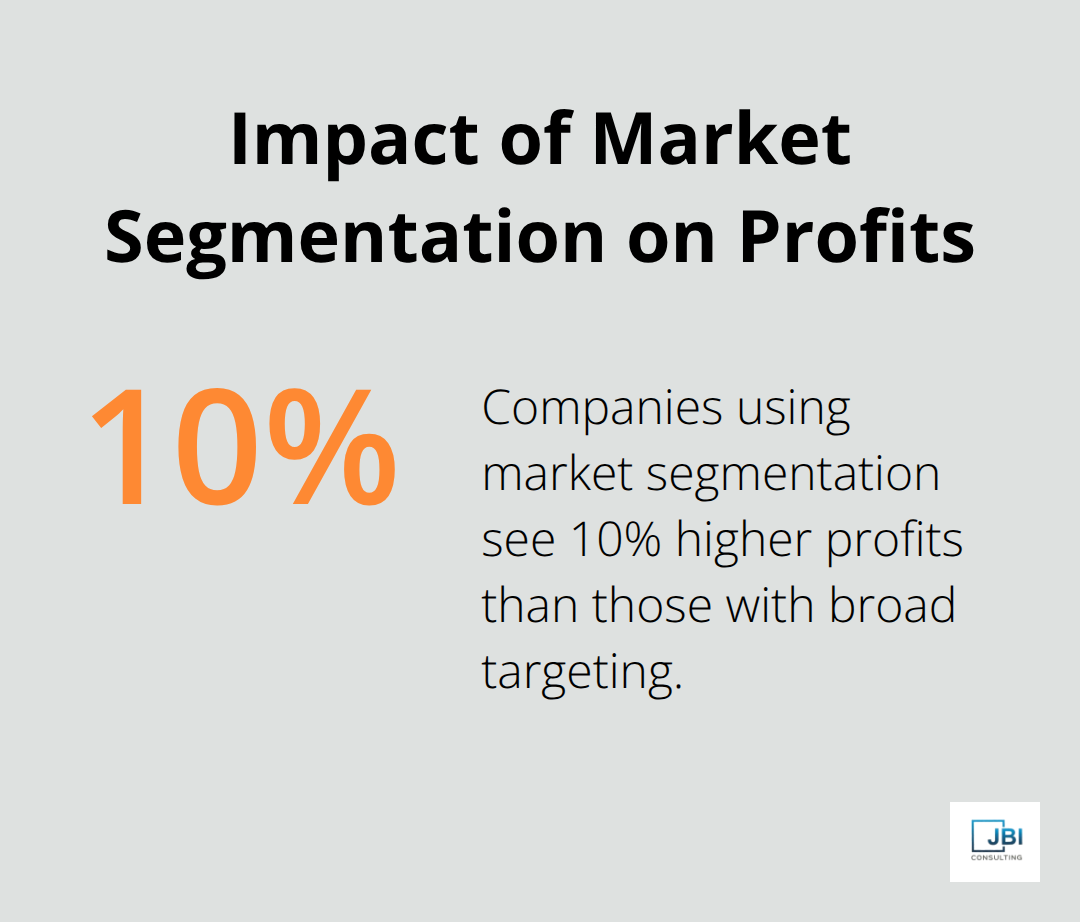
Companies that master market segmentation see 10% higher profits than those using broad targeting approaches. This targeted method transforms generic campaigns into personalized experiences that resonate with specific customer groups.
At JBI Consulting, we’ve seen businesses increase conversion rates by up to 760% when they implement proper market segmentation marketing strategy techniques. The difference lies in understanding your audience at a granular level rather than treating all customers the same.
What Makes Market Segmentation Work
Market segmentation divides your customer base into distinct groups based on shared characteristics, behaviors, or needs. This process moves beyond basic demographics to examine purchase patterns, lifestyle choices, and decision triggers. McKinsey research shows companies that adopt AI in sales can expect to see an average increase of 10-15% in sales revenue compared to competitors who rely on traditional methods. The most effective approach combines demographic data with behavioral insights and psychographic information to create comprehensive customer profiles.
The Four Segmentation Methods That Drive Results
Demographic segmentation remains the foundation and uses age, income, education, and family status to group customers. Geographic segmentation targets location-based preferences and regional habits. Behavioral segmentation tracks purchase history, brand loyalty, and usage patterns to predict future actions. Psychographic segmentation examines values, interests, and lifestyle choices that influence decisions. Companies that combine all four methods see better campaign performance than those who rely on single-method approaches.

How Segmentation Multiplies Marketing Returns
Targeted campaigns generate 6x higher transaction rates according to Salesforce data. Segmented email campaigns produce higher revenue per email sent compared to generic broadcasts. Resource allocation becomes more efficient when marketing budgets focus on high-value segments rather than broad audiences. Customer acquisition costs drop when companies implement data-driven segmentation strategies with retention rates improving when messages align with specific segment preferences.
Advanced Segmentation Techniques for Modern Markets
Technographic segmentation categorizes customers based on their technology adoption patterns and digital behaviors. Firmographic segmentation helps B2B companies target organizations by industry, company size, and revenue. Value segmentation identifies customers by their spending patterns and lifetime value potential. These advanced methods work best when combined with traditional approaches to create multi-dimensional customer profiles that reveal hidden opportunities.
The next step involves translating these segmentation insights into actionable marketing strategies that identify your most profitable customer groups.
How Do You Turn Segmentation Data Into Action
Effective market research starts with clear objectives before you collect data. Companies that establish specific research goals see better campaign performance according to HubSpot studies. Start with first-party data from your CRM, website analytics, and customer service interactions. Google Analytics 4 provides behavioral insights while tools like Hotjar reveal user experience patterns. Survey platforms such as Typeform or SurveyMonkey capture direct customer feedback (response rates improve when surveys contain fewer than 10 questions).
Research Methods That Generate Actionable Insights
Combine quantitative surveys with qualitative interviews to build comprehensive customer profiles. Focus groups work best when you test message concepts while one-on-one interviews reveal deeper motivations. Social listening tools like Brandwatch or Sprout Social track brand mentions and sentiment across platforms. Website heat maps show exactly where visitors click and scroll. Customer journey maps identify pain points and opportunities at each touchpoint. Conduct research quarterly to capture behavior changes and preference shifts.
Tools That Transform Raw Data Into Customer Intelligence
Customer data platforms (CDPs) integrate information from multiple touchpoints to create 360-degree customer profiles. Advanced analytics tools process large datasets to identify patterns that manual analysis might miss. AI-powered segmentation tools update customer groups in real-time based on new interactions and behaviors. Marketing automation platforms like HubSpot or Marketo score leads based on segment characteristics and engagement levels.
Customer Personas That Drive Strategic Decisions
Transform research data into 3-5 detailed personas that represent your core segments. Include demographic information, behavioral patterns, pain points, and preferred communication channels. Netflix uses viewer data to create content personas that guide programming decisions. Each persona should include specific details like preferred social media platforms, purchase habits, and decision triggers. Personas work best when they include direct quotes from customer interviews and specific behavioral data points (update personas every six months based on new customer interactions and market changes).
These research-backed personas become the foundation for targeted campaigns that speak directly to each segment‘s unique needs and preferences. The key is transforming analysis into action through systematic implementation of your segmentation insights.
What Kills Your Segmentation Strategy
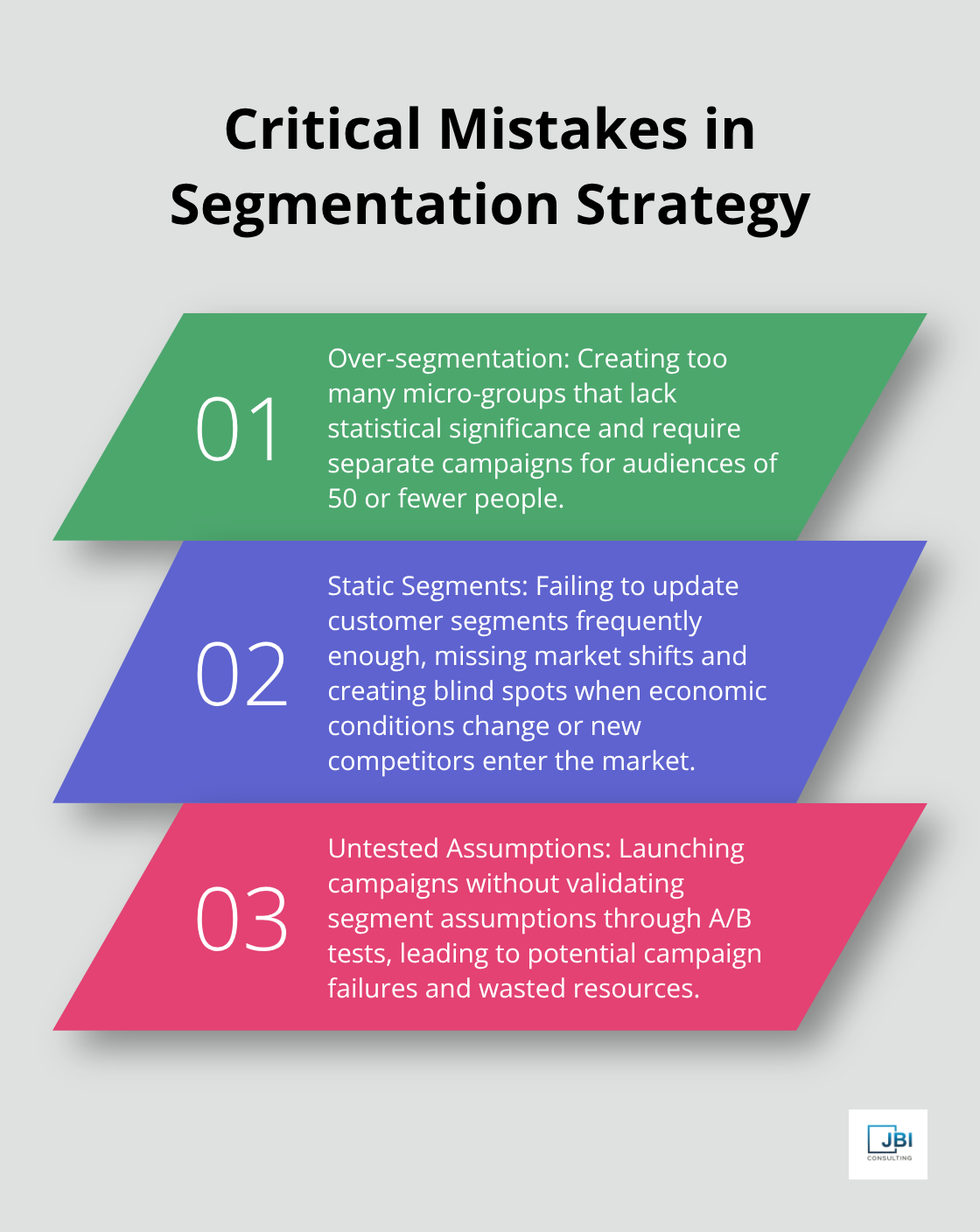
Most companies sabotage their segmentation efforts through three critical mistakes that drain resources and kill campaign performance. Over-segmentation creates too many micro-groups that lack statistical significance and require separate campaigns for audiences of 50 or fewer people. Marketing teams waste resources when they manage segments that generate minimal revenue. The opposite problem happens when businesses create segments so broad they lose precision. Effective segments contain 1,000-5,000 customers minimum to justify dedicated campaigns and targeted messages.
Static Segments Miss Market Shifts
Customer behaviors change every 6-12 months but most companies update their segments annually or less frequently. This lag creates massive blind spots when economic conditions shift or new competitors enter the market. Amazon updates customer segments weekly based on purchase patterns and browser behavior while traditional retailers stick with year-old demographic data. Social media preferences shift rapidly with TikTok users who move to different platforms within months. Companies that refresh segments quarterly see better campaign performance than those who use static annual updates. Real-time behavioral data through website analytics and purchase records reveals preference changes before they become market trends.
Untested Assumptions Lead to Campaign Failures
The biggest mistake involves campaigns that launch without validation of segment assumptions through A/B tests. Teams create detailed personas based on surveys but never test whether these groups respond differently to messages or offers. Split-test your segments with different email subject lines, pages, and call-to-action buttons to measure actual response differences. Segments that show less than 15% performance variation should combine into larger groups (failed campaigns often target segments that exist in spreadsheets but not in real customer behavior patterns). Test messages across segments with small sample sizes before you commit full marketing strategies budgets.
Final Thoughts
Market segmentation marketing strategy transforms generic campaigns into targeted experiences that drive measurable results. Companies that implement proper segmentation see 10% higher profits and conversion rates that jump by up to 760%. The key lies in how you combine demographic data with behavioral insights to create actionable customer profiles.
Success requires you to avoid common pitfalls like over-segmentation and static customer groups. Update your segments quarterly based on real behavioral data rather than annual demographic reviews. Test assumptions through A/B campaigns before you commit full budgets to untested segments (this approach prevents costly mistakes and validates your strategy).
We at JBI Consulting help businesses implement transformative sales programs that shift teams from lead nurturing to proactive opportunity hunting. Our methodology enhances client relationships and boosts deal closure through personalized assessments and dynamic sales approaches. Start by auditing your current segmentation approach and identify your most profitable customer groups.