
Most startups fail because they skip the planning phase and jump straight into selling. Without a clear roadmap, even great products struggle to find their market.
We at JBI Consulting have seen companies waste millions on poorly executed launches. Learning how to create a go-to-market strategy changes everything – it’s the difference between guessing and winning.
What Makes Your Go-to-Market Foundation Solid
Your go-to-market strategy succeeds or fails based on three non-negotiable elements that most companies get wrong from day one.
Define Your Customer Segments With Precision
Start with laser-focused customer segments that use data, not assumptions. Companies that define their Total Addressable Market and then narrow down to their Serviceable Obtainable Market see improved revenue growth through precise market targeting. Create detailed buyer personas through real customer interviews, purchase behavior data, and demographic analysis.
Skip the generic personas. Your ideal customer profile should be specific enough that your sales team can identify prospects within 30 seconds of contact. Document their pain points, budget constraints, and decision-makers (typically 3-5 people in B2B purchases). This precision transforms your sales approach from spray-and-pray to surgical strikes.
Map Your Competitive Reality
Competitive analysis goes beyond surface-level feature comparisons. The global semiconductor market reached $683.37 billion in 2024, demonstrating the importance of rigorous competitive intelligence that tracks pricing, partnership strategies, and market positioning changes quarterly.
Study your competitors’ customer reviews, pricing models, sales processes, and marketing channels. Identify gaps where competitors fail customers – these become your differentiation opportunities. Document their strengths honestly because ignoring them leads to strategic blindness. Track their hiring patterns and product updates to anticipate their next moves.
Set Revenue Metrics That Drive Decisions
Revenue goals without supporting metrics are wishful thinking. Track Customer Acquisition Cost, Monthly Recurring Revenue growth rate, and sales cycle length from week one. Companies with clear GTM strategies reduce time-to-market through focused measurement of key performance indicators.
Set specific targets like achieving $100K ARR within 12 months or reducing CAC by 20% quarter-over-quarter. Link every marketing campaign and sales activity to these core metrics. Your success depends on weekly progress measurement, not quarterly reviews when it’s too late to pivot and boost sales revenue.
With your foundation solid, you can now build the framework that turns strategy into executable tactics.
How Do You Transform Strategy Into Sales Results
Your go-to-market framework transforms those solid foundations into revenue systems that generate results. Start with your value proposition that speaks directly to customer pain points, not product features. HubSpot achieved 0 million in annual recurring revenue by 2012, just six years after its launch, by positioning themselves as the solution to marketing complexity, not just another software tool.
Your message should address specific problems your prospects lose sleep over – budget constraints, process inefficiencies, or productivity gaps. Test your value proposition with actual customers through interviews and A/B tests to validate market resonance before you scale operations.
Pick Channels That Convert, Not Impress
Channel selection determines success more than perfect messaging. Slack reached significant growth through freemium models that targeted tech-savvy SMBs, while Intel maintains 15.6% semiconductor market share through robust channel partner strategies.
Choose channels based on where your customers actively seek solutions, not where you prefer to market. B2B software companies see higher conversion rates through LinkedIn and industry publications, while consumer products perform better on social media and influencer partnerships.
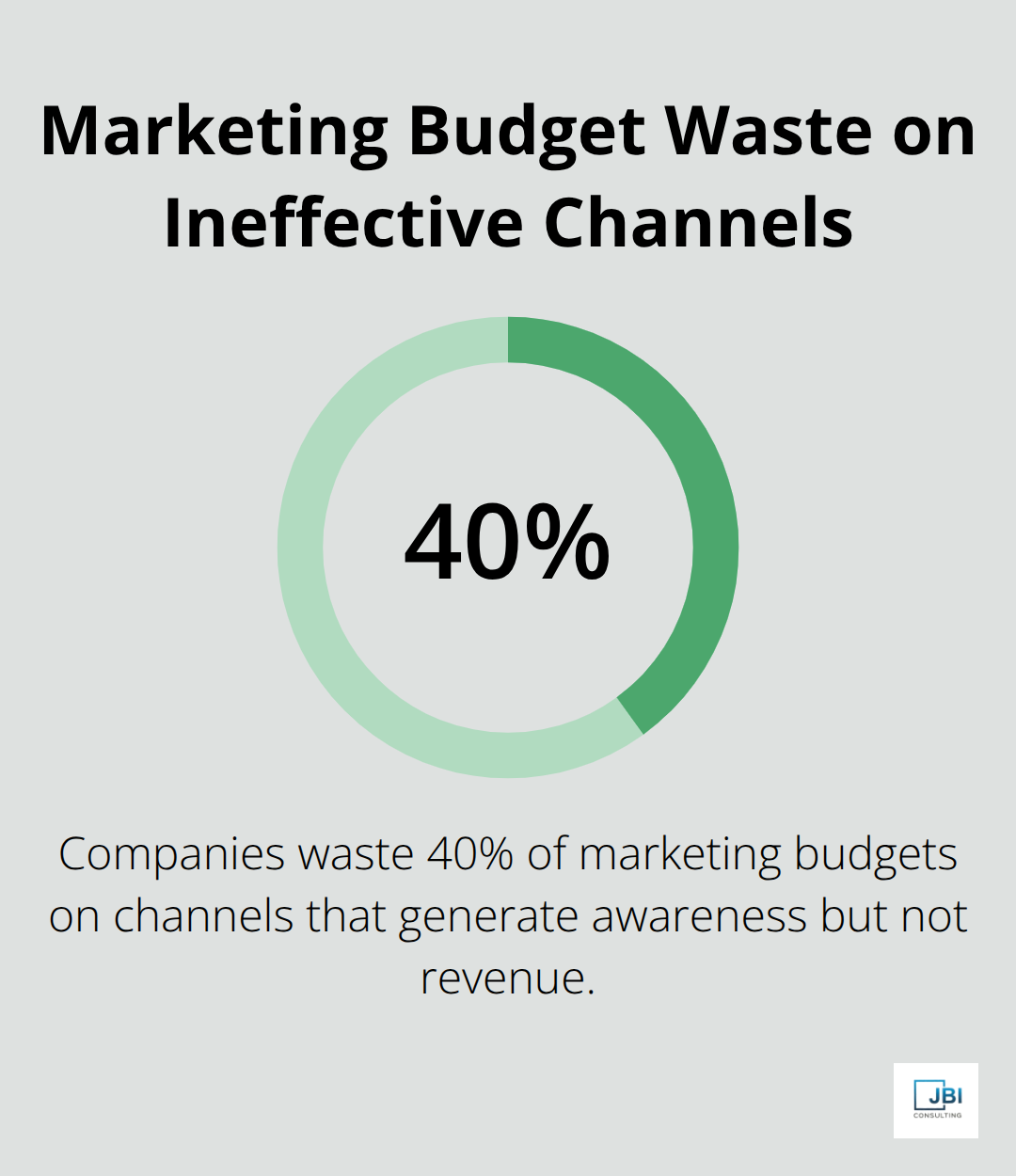
Track Customer Acquisition Cost across each channel weekly and eliminate underperformers ruthlessly. Companies waste 40% of marketing budgets on channels that generate awareness but not revenue.
Price For Profit, Not Market Entry
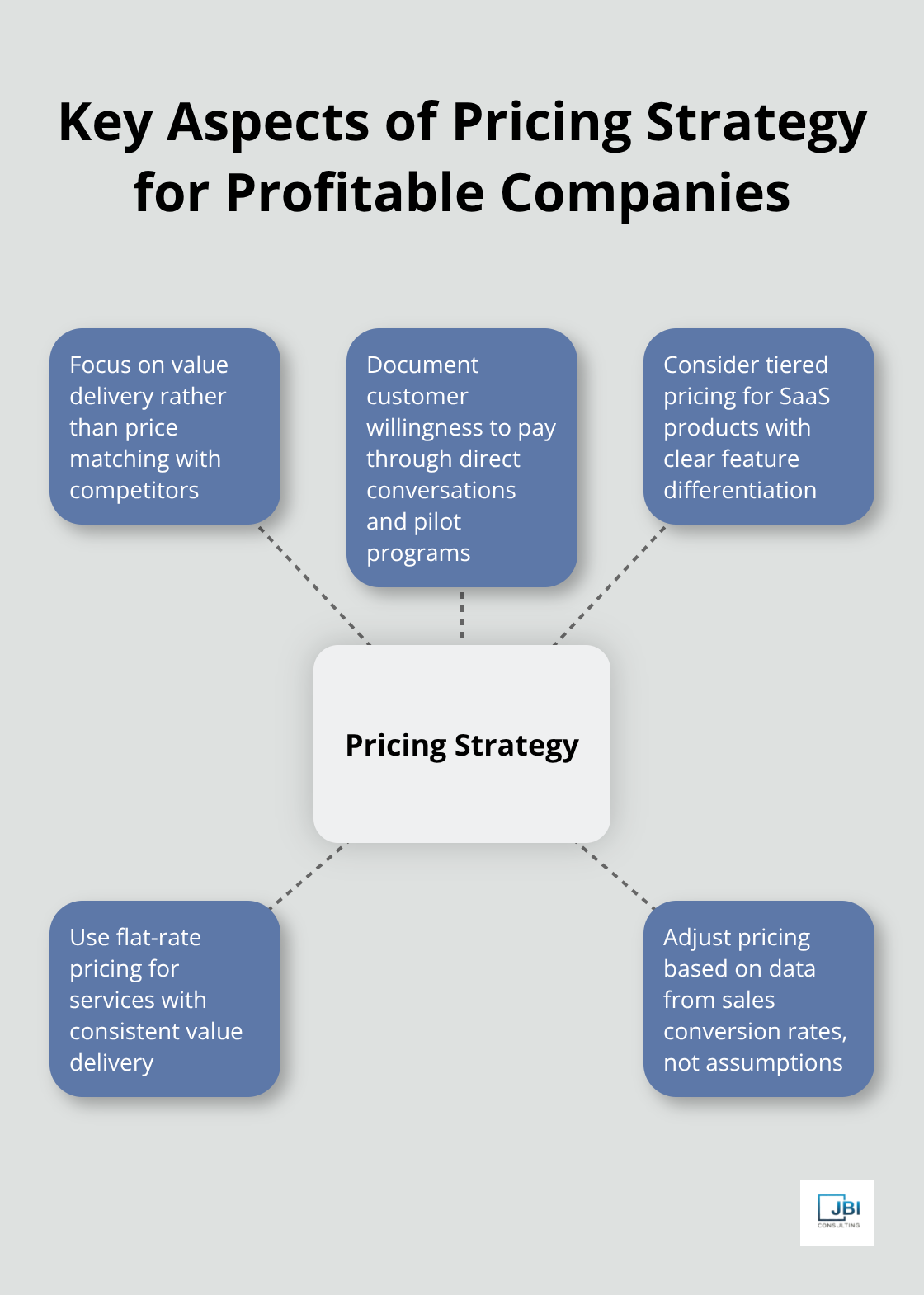
Pricing strategy separates profitable companies from those that scale to bankruptcy. Study competitor pricing models, but focus on value delivery rather than price matching. Document customer willingness to pay through direct conversations and pilot programs.
Tiered pricing works for SaaS products with clear feature differentiation, while flat-rate pricing suits services with consistent value delivery. Monitor sales conversion rates at different price points and adjust based on data, not assumptions.
Track metrics like average deal size and sales cycle length to optimize pricing for maximum revenue impact. Your pricing decisions directly influence cash flow and growth trajectory (making this one of your most critical strategic choices).
With your framework established, the next phase focuses on execution – where strategy meets reality and teams align to drive results.
How Do You Execute Launch Without Losing Momentum
Execution separates successful launches from expensive failures. Sales and marketing teams must work as one unit, not separate departments that fight for resources. Companies suffer from critical misalignment between sales and marketing data, with 79% of organizations experiencing this issue even when leadership believes teams are aligned.
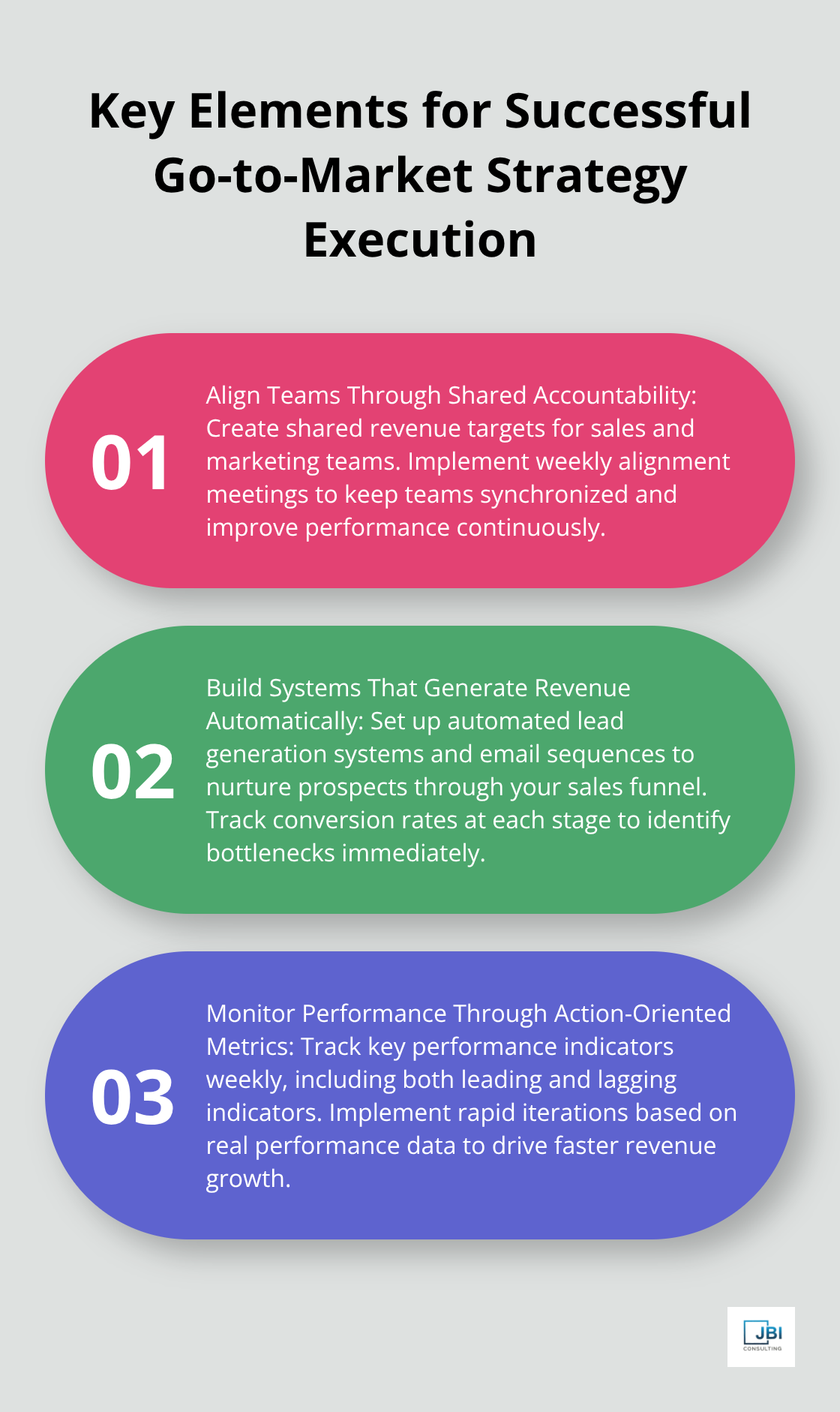
Create shared revenue targets that both teams own together. Sales should contribute to lead qualification criteria while marketing owns lead volume metrics. Weekly alignment meetings with specific agenda items – pipeline review, content performance, and prospect feedback – keep teams synchronized.
Align Teams Through Shared Accountability
Marketing generates qualified leads based on sales input about ideal customer characteristics. Sales provides feedback on lead quality to improve targeting accuracy. This creates a feedback loop that improves performance continuously rather than quarterly blame sessions that waste time and energy.
Both teams must track the same core metrics and report progress weekly. When marketing delivers 100 qualified leads but sales converts only 5%, investigate the disconnect immediately. Either lead quality needs improvement or sales processes require adjustment.
Build Systems That Generate Revenue Automatically
Lead generation systems run on automation, not hope. Companies that use marketing automation see significant improvements in lead quality and volume. Set up email sequences that nurture prospects through your sales funnel with specific touchpoints at days 1, 3, 7, 14, and 30 after initial contact.
Track conversion rates at each stage of your funnel weekly. Monitor metrics like email open rates, click-through rates, and meeting rates to identify bottlenecks immediately. Sales teams should have clear handoff processes when marketing qualified leads become sales qualified leads (with documented criteria that both teams agree on).
Monitor Performance Through Action-Oriented Metrics
Performance monitoring drives decisions, not reports. Track Customer Acquisition Cost, sales cycle length, and win rates weekly instead of monthly. Companies that monitor GTM performance weekly achieve faster revenue growth compared to those that review quarterly.
Measure leading indicators like demo requests, trial signups, and proposal sent rates alongside lagging indicators like closed revenue. When metrics decline, investigate within 48 hours and implement corrections immediately. Your GTM strategy succeeds through rapid iteration based on real performance data, not theoretical projections that sound good in meetings.
Final Thoughts
Successful go-to-market strategies combine precise customer targets, competitive intelligence, and measurable revenue goals. Companies that master how to create a go-to-market strategy see faster growth because they focus on execution over perfection. Your foundation determines everything – detailed buyer personas, honest competitive analysis, and weekly performance tracking separate winners from those who burn through resources without results.
The biggest mistake involves treating sales and marketing as separate functions instead of unified revenue teams. When teams share accountability for the same metrics and communicate weekly, conversion rates improve dramatically. Another common pitfall includes choosing marketing channels based on preferences rather than customer behavior data (track Customer Acquisition Cost across every channel and eliminate underperformers immediately).
Your next step requires weekly metric reviews that drive immediate action. Monitor leading indicators like demo requests alongside revenue metrics to spot problems before they impact growth. We at JBI Consulting help sales teams shift from nurturing existing leads to proactively hunting new opportunities through proven methodologies that enhance client relationships and boost deal closure rates.