
At JBI Consulting, we know that standing out in today’s crowded marketplace is essential for business success. A well-crafted competitive positioning strategy can make all the difference in attracting and retaining customers.
In this post, we’ll explore how to develop a strategy that sets your business apart from the competition. We’ll guide you through the process of understanding your market, identifying your unique strengths, and creating a compelling value proposition that resonates with your target audience.
What Is Competitive Positioning?
The Strategic Edge in Business
Competitive positioning forms the cornerstone of a company’s market strategy. It defines how a business distinguishes itself from competitors in the minds of customers. At its core, positioning creates a unique space for a brand in a crowded marketplace.
The Impact of Differentiation
In today’s saturated markets, excellent products or services alone don’t guarantee success. Companies must carve out a distinct identity to capture customer attention. Effective positioning highlights a company’s unique strengths and communicates why customers should choose them over alternatives.
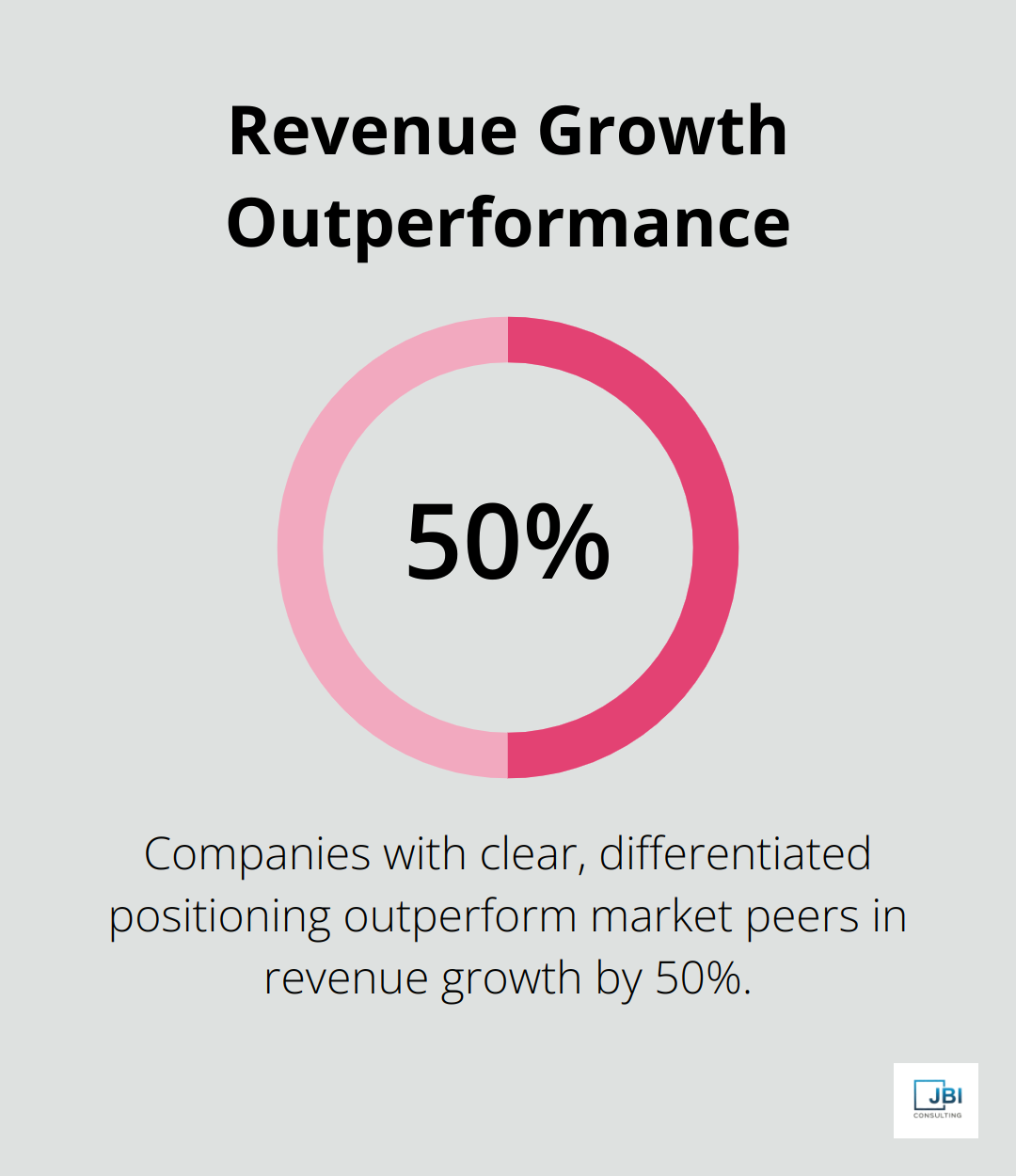
A 2023 McKinsey & Company study revealed that companies with clear, differentiated positioning outperform their market peers in revenue growth by 50%. This statistic underscores positioning’s critical role in driving business success.
Essential Elements of Strong Positioning
To develop a robust competitive position, companies should focus on these key components:
- Customer-Centric Approach: Companies must understand their target audience’s needs, pain points, and desires. This insight forms the foundation of an effective positioning strategy.
- Unique Value Proposition: Businesses need to articulate their distinctive qualities clearly. This could involve superior quality, innovative features, exceptional service, or a combination of factors.
- Competitor Analysis: A thorough understanding of the competition allows companies to identify and capitalize on market gaps.
- Consistent Messaging: Effective positioning requires consistent communication across all touchpoints – from marketing materials to customer service interactions.
Practical Steps to Define Your Position
- Conduct customer interviews to gather insights about preferences and decision-making processes.
- Use perceptual mapping to visualize your company’s position relative to competitors on key attributes.
- Test different positioning statements with focus groups to identify which resonates most strongly with your target audience.
Positioning isn’t a static concept. Markets evolve, customer preferences shift, and new competitors emerge. Regular reassessment and refinement of a company’s position are necessary to maintain relevance and competitiveness.
The Role of Expert Guidance
While many companies attempt to develop positioning strategies independently, expert guidance can significantly enhance the process. Consultancy firms specialize in business consultation, financial advisement, and risk management. These experts bring valuable outside perspectives and proven methodologies to the table.
As we move forward, we’ll explore how to analyze your market and competitors effectively – a critical step in developing a winning competitive positioning strategy.
How to Analyze Your Market and Competitors
Effective market analysis forms the backbone of a successful competitive positioning strategy. Let’s explore practical steps to gain a comprehensive understanding of your market landscape.
Leveraging Data for Market Insights
Start by gathering quantitative data about your market. Use Google Trends to track brand search patterns and identify media placements that drive growth. The U.S. Census Bureau offers free demographic data that can help you understand your target audience better. For industry-specific information, consider subscribing to reports from firms like IBISWorld or Statista.
Don’t overlook qualitative data. Conduct in-depth interviews with current and potential customers. Ask about their pain points, decision-making processes, and what they value most in a product or service. This information proves invaluable for shaping your positioning strategy.
Mapping Your Competitive Landscape
Identifying your competitors extends beyond listing companies offering similar products. Create a competitive matrix that includes direct competitors (those with similar offerings) and indirect competitors (those solving the same problem differently).
For each competitor, analyze their:
- Market share
- Pricing strategy
- Key messaging and positioning
- Strengths and weaknesses
- Customer reviews and sentiment
Tools like SEMrush or Ahrefs provide insights into competitors’ online presence and marketing strategies. Social listening tools (such as Brandwatch) help you gauge public perception of your competitors.
Conducting a Comprehensive SWOT Analysis
A SWOT analysis is a simple but powerful tool to evaluate a company’s strengths, weaknesses, opportunities, and threats. To make it truly effective, go beyond surface-level observations.
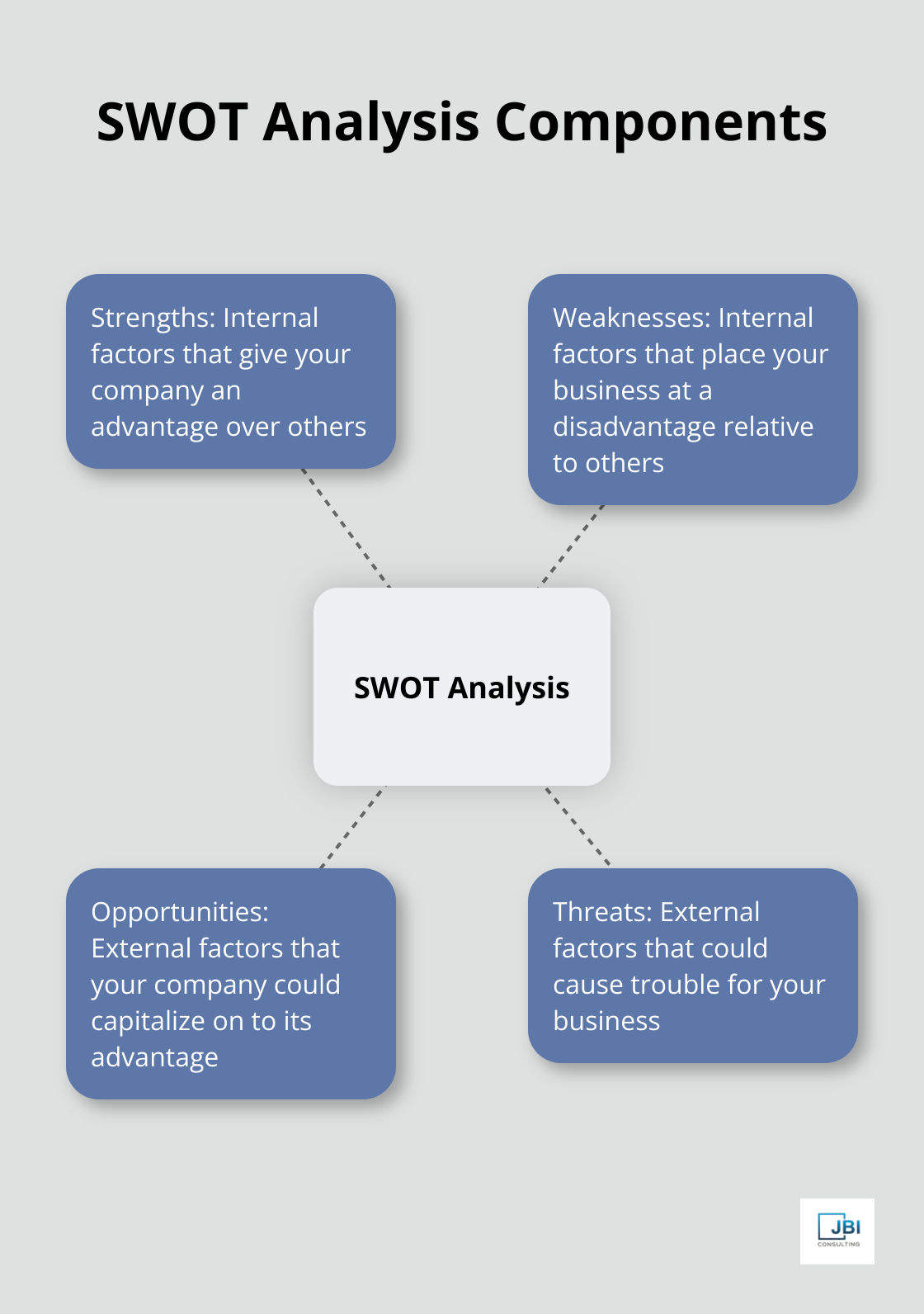
For Strengths and Weaknesses, gather concrete data. If you believe customer service is a strength, back it up with metrics like response times or customer satisfaction scores. For weaknesses, be brutally honest. If your product lacks a feature that competitors offer, acknowledge it.
When identifying Opportunities, look for emerging trends in your industry. The World Economic Forum’s annual reports can serve as a great source for spotting future opportunities. For Threats, consider not just current competitors but potential market entrants or disruptive technologies.
Conduct a SWOT analysis for your key competitors as well. This comparative analysis can reveal gaps in the market that you can exploit.
Turning Analysis into Action
Market analysis aims to inform decision-making, not just gather information. Use your findings to:
- Refine your target audience definition
- Identify underserved market segments
- Spot gaps in competitors’ offerings that you can fill
- Understand which of your strengths are truly unique in the market
A thorough analysis of your market and competitors equips you to create a unique value proposition that resonates with your target audience. This foundation sets the stage for our next chapter, where we’ll explore how to craft a compelling value proposition that truly sets you apart in the marketplace.
Crafting Your Unique Value Proposition
Define Your Ideal Customer
The first step in creating a unique value proposition (UVP) is to identify your target audience. Start by creating detailed buyer personas based on demographic data, psychographic information, and behavioral patterns.
Use Google Analytics to understand your website visitors’ demographics and interests. Conduct surveys with SurveyMonkey to gather direct feedback from current customers. Analyze your CRM data to identify patterns among your most profitable clients.
Your target audience might surprise you. A B2B software company discovered their most profitable customers were in a different industry than initially targeted. This insight led to a complete brand repositioning and a significant increase in qualified leads.
Uncover Your Competitive Edge
Your key differentiators make your offering unique in the marketplace. These could include product features, service quality, pricing strategy, or company culture. Focus on aspects that are important to your target audience and difficult for competitors to replicate.
Conduct a feature comparison analysis with your top competitors. Use Airtable to create a comprehensive matrix. Look beyond features – consider factors like customer support response times, implementation processes, or your company’s values and mission.
A cybersecurity firm found their key differentiator wasn’t their advanced technology (which most competitors also claimed), but their 24/7 support team. This became the cornerstone of their new positioning strategy, resulting in a significant increase in enterprise client acquisitions.
Formulate Your Value Proposition
With a clear understanding of your target audience and key differentiators, craft a compelling value proposition that resonates with them. This statement should succinctly communicate the unique value you offer to your specific target audience.
A strong value proposition follows this structure: “We help [target audience] to [solve this problem] by [unique approach].”
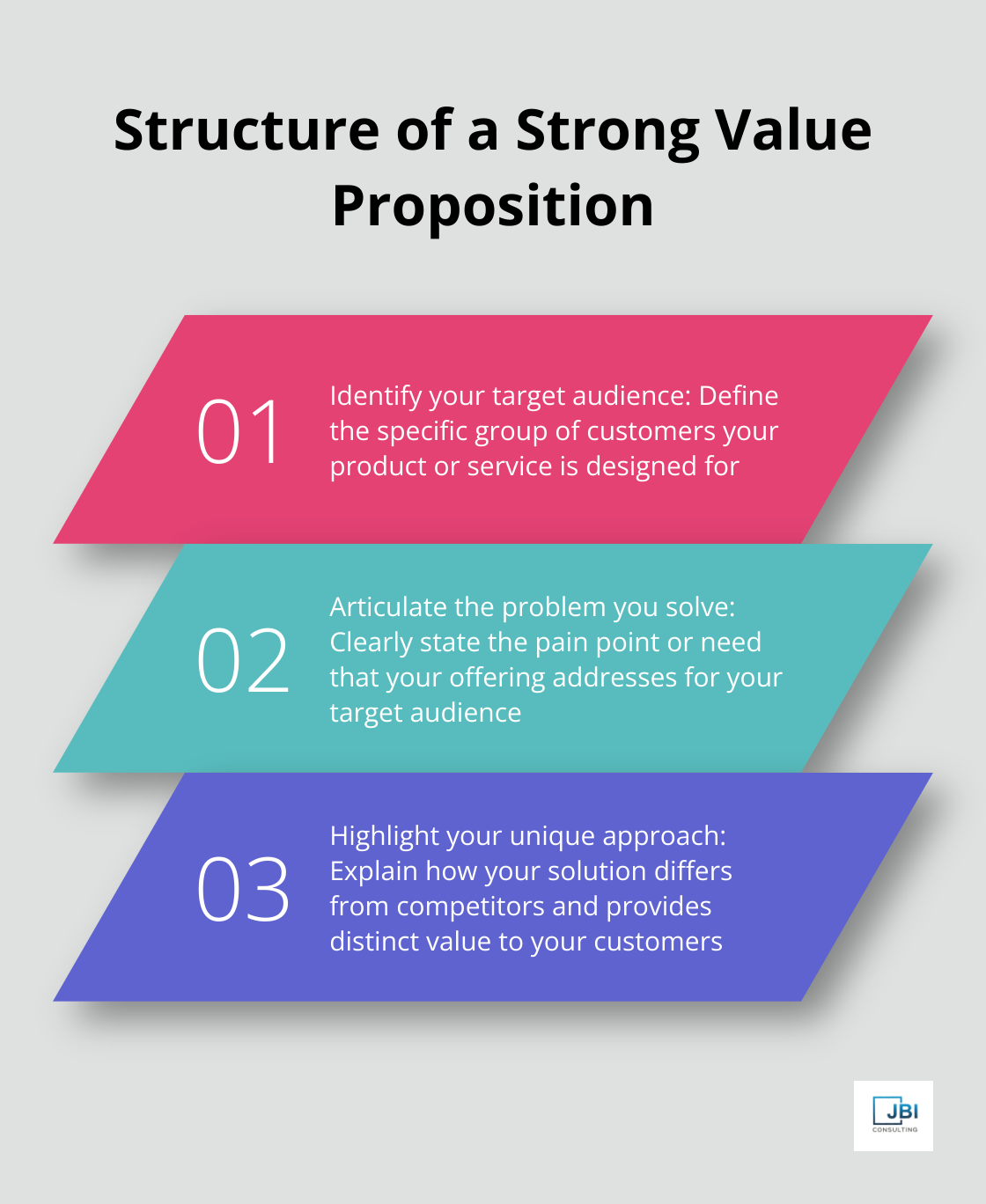
For example, a value proposition might be: “We help sales professionals and teams transform their approach from passive lead nurturing to active opportunity hunting, through our personalized, experience-backed methodology.”
Test and Refine Your UVP
Test your value proposition with your target audience. Use A/B testing on your website or in email campaigns to see which version resonates more. Platforms like Optimizely can help you run these tests effectively.
Your value proposition isn’t permanent. As markets evolve and customer needs change, refine and adapt your UVP. Regular customer feedback sessions and market analysis will help you stay relevant and maintain your competitive edge.
Final Thoughts
A competitive positioning strategy is essential in today’s business landscape. Companies must understand their market, analyze competitors, and define their unique value proposition to set the foundation for success. Regular reassessment and refinement of your position will help you maintain relevance and stay ahead of the curve.
Implementing a strong competitive positioning strategy requires action. Start with a comprehensive SWOT analysis of your business and key competitors. Use data-driven approaches to understand your target audience better. Test different value propositions to identify which ones resonate most strongly with your potential customers.
At JBI Consulting, we help businesses transform their sales approach and develop winning strategies. Our transformative program shifts your mindset from passive lead nurturing to active opportunity hunting. Take action today to invest in your business’s future success and position yourself as an industry leader.