
At JBI Consulting, we’ve seen firsthand how a well-crafted go-to-market strategy can make or break a product launch.
In this post, we’ll explore real-world examples of go-to-market strategies that have propelled companies to success.
From Apple’s iPhone launch to Airbnb’s city-by-city expansion, these case studies offer valuable insights for businesses of all sizes.
What Is a Go-to-Market Strategy?
Defining the Go-to-Market Approach
A go-to-market (GTM) strategy is a comprehensive plan for launching a new product or service. A strong GTM strategy can generate a deep understanding of the target market and how to reach them effectively.
Key Components of an Effective GTM Strategy
Understanding Your Target Market
A solid GTM strategy begins with a deep understanding of your target market. This involves:
- Identifying your ideal customer profile
- Pinpointing customer pain points
- Demonstrating how your product or service solves these problems
For instance, Airbnb’s market entry strategy focused on understanding local regulations and cultural nuances to tailor their approach in each new city.
Crafting a Unique Value Proposition
Your GTM strategy must clearly articulate why customers should choose your product over competitors. Apple’s iPhone launch exemplifies a strong value proposition: a revolutionary device that combined a phone, iPod, and internet communicator in one sleek package.
Aligning GTM Strategy with Business Objectives
Your GTM strategy must sync with your overall business goals. Different objectives call for different approaches:
- Rapid market penetration: A freemium model (like Dropbox) can quickly acquire users and convert them to paid customers over time.
- Premium brand positioning: Creating exclusivity and buzz around product launches (Apple’s approach) can help command higher prices and maintain customer loyalty.
Measuring and Adapting Your GTM Strategy
To ensure effectiveness, set clear, measurable goals for your GTM strategy. These may include metrics such as:
- Customer acquisition cost
- Conversion rates
- Market share
Define the performance metrics that link your marketing strategy to execution. Strategic KPIs are the essential bridge between the long-term vision for your GTM strategy and its practical implementation.
Regular review and adjustment of your GTM strategy based on these metrics allows for quick responses to market changes and customer feedback. This agile approach maximizes your chances of success.
As we move forward, let’s examine some real-world examples of successful go-to-market strategies that have propelled companies to new heights.
Real-World GTM Strategies That Drove Success
Apple’s iPhone: Mastering Hype and Exclusivity
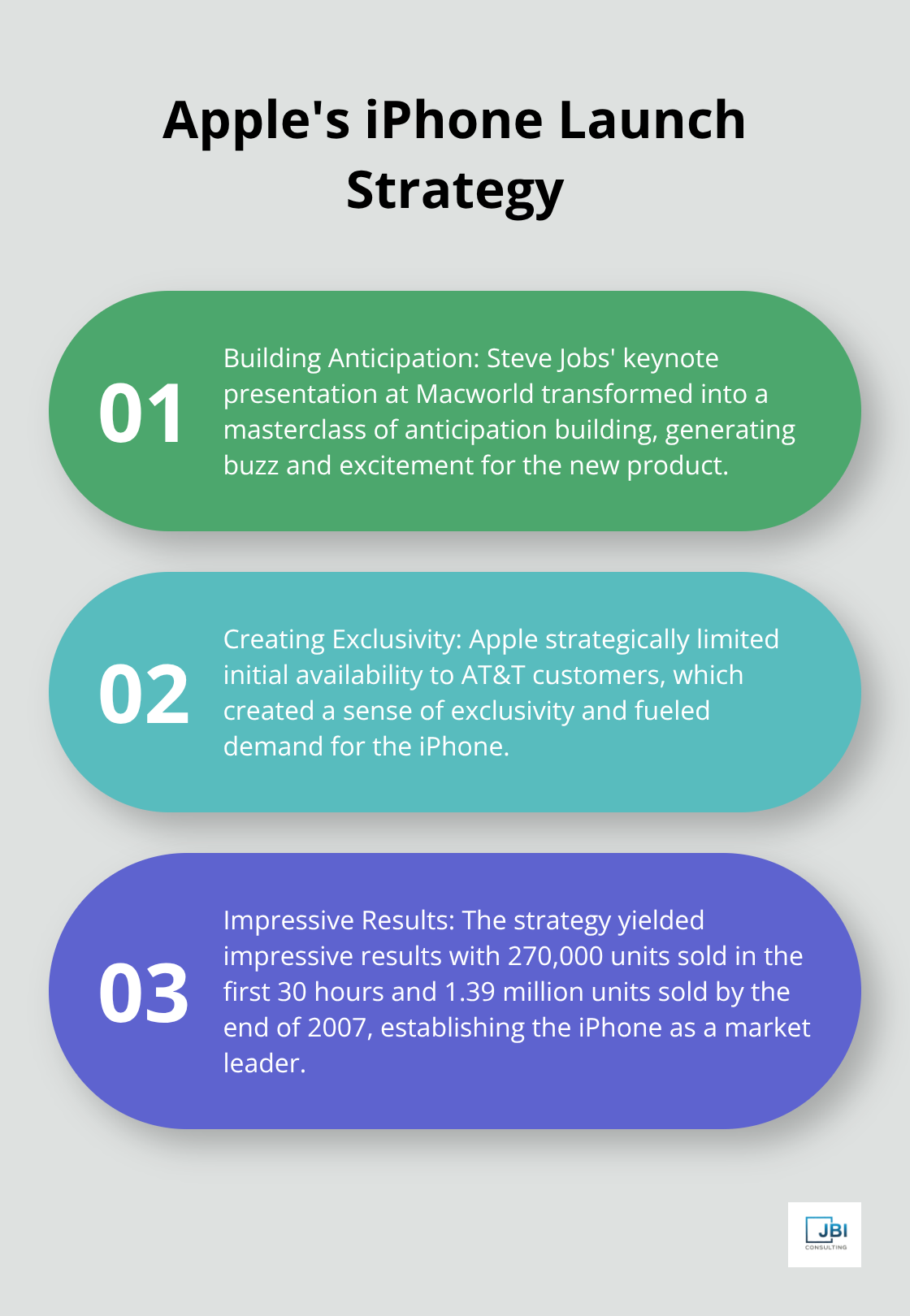
Apple’s product launches have become a masterclass in modern marketing. Steve Jobs’ keynote presentation at Macworld transformed into a masterclass of anticipation building. Apple strategically limited initial availability to AT&T customers, which created a sense of exclusivity and fueled demand.
This strategy yielded impressive results. Apple sold 270,000 units in the first 30 hours of release. By the end of 2007, iPhone sales reached 1.39 million units (according to Statista). The key lesson: A carefully planned event and limited availability can drive initial demand and establish a premium brand position.
Airbnb: Conquering Cities One at a Time
Airbnb’s expansion strategy focused on understanding and adapting to local markets. They started in San Francisco and then expanded to other cities, tailoring their approach to each location’s unique characteristics and regulations.
Regulatory challenges in various cities and countries can significantly impact Airbnb hosts, from restrictions on the length of stays to licensing requirements. This approach helped them grow from 50,000 listings in 2011 to over 7 million worldwide by 2023 (as reported by Airbnb). The key takeaway: A localized approach can help navigate complex markets and build strong community relationships.
Dropbox: Leveraging the Freemium Model
Dropbox’s go-to-market strategy centered on a freemium model, offering basic services for free while charging for advanced features. This approach allowed users to experience the product’s value before committing financially.
Dropbox also implemented a referral program, giving users additional free storage for inviting friends. This viral marketing tactic significantly boosted user acquisition. According to Dropbox’s S-1 filing, they grew from 100 million users in 2015 to 500 million by 2017. The key lesson: A freemium model combined with incentivized referrals can drive rapid user growth and create a large pool of potential paying customers.
Lessons from Successful GTM Strategies
These examples demonstrate the power of well-executed go-to-market strategies. They highlight the importance of:
- Creating buzz and exclusivity (Apple)
- Adapting to local markets (Airbnb)
- Offering value before asking for payment (Dropbox)
Businesses can learn from these strategies to develop their own unique approaches to market entry. However, it’s important to note that what works for one company may not work for another. Each business must consider its unique product, target market, and competitive landscape when developing a GTM strategy.
While these examples provide valuable insights, they also raise an important question: What are the common pitfalls that companies should avoid when executing their go-to-market strategies? In the next section, we’ll explore some of the most frequent mistakes and how to sidestep them.
Why Do Go-to-Market Strategies Fail?
Misunderstanding the Target Audience
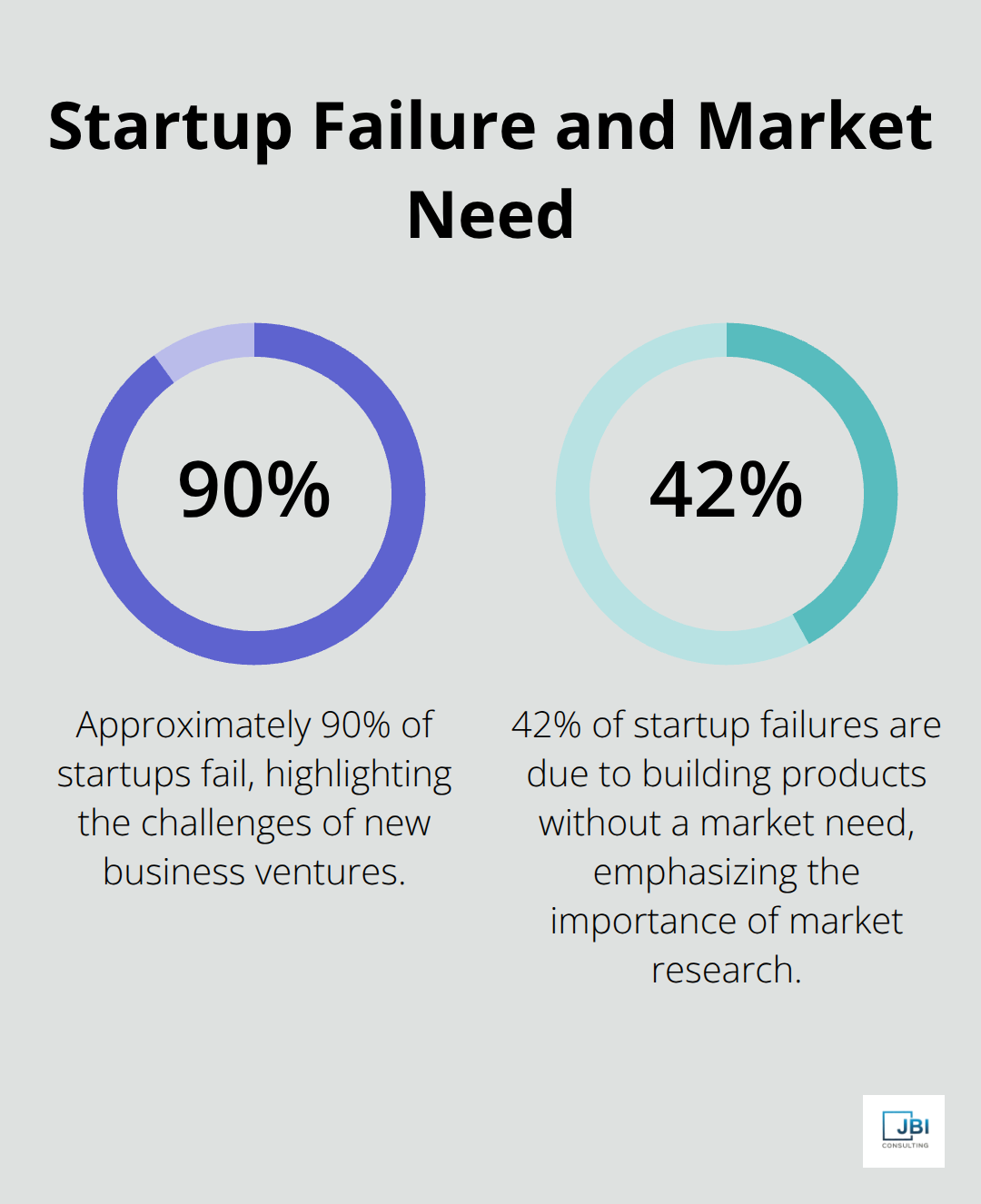
Many companies stumble in their go-to-market (GTM) execution due to a superficial understanding of their target audience. They often rely on outdated or incomplete data, which leads to misaligned messaging and product features. Approximately 90% of startups fail, with 42% of these failures attributed to building something without a market need.
To prevent this, companies should invest in comprehensive market research. This involves more than just demographics; it requires an examination of psychographics, behavior patterns, and pain points. Companies should conduct in-depth interviews with potential customers, run surveys, and analyze social media conversations. Tools like SurveyMonkey or Qualtrics can assist in gathering this essential data.
Neglecting Competitive Analysis
Many businesses underestimate their competition or fail to identify potential disruptors. This oversight can result in a weak value proposition and ineffective positioning. A report by Crayon indicates that only 53% of businesses conduct competitive analysis at least quarterly.
To stay ahead, companies should implement a robust competitive intelligence program. They can use tools like SEMrush or Ahrefs to track competitors’ online presence and marketing strategies. Regular reviews of product offerings, pricing, and customer feedback will help refine the GTM strategy and identify unique selling points.
Poor Timing and Resource Allocation
Timing plays a critical role in GTM execution. Launching too early can mean entering a market that’s not ready for the product. Conversely, launching too late might result in missing the window of opportunity. Additionally, many companies underestimate the resources required for a successful launch.
To address this issue, companies should create a detailed timeline and budget for their GTM strategy. Project management tools (such as Asana or Trello) can help track progress and allocate resources effectively. It’s important to build in buffer time for unexpected delays and set clear milestones. A slight delay in launch is preferable to rushing an unprepared product to market.
Inflexibility in Strategy
Markets change rapidly, and GTM strategies need to adapt accordingly. Many companies fail because they stick rigidly to their initial plan, even when market conditions shift. This inflexibility can lead to missed opportunities and wasted resources.
Companies that act quickly on data-driven insights are more agile, proactive, and able to seize emerging opportunities or respond to sudden market shifts. Tools like Google Analytics and social media listening platforms can provide valuable insights for strategy refinement.
Lack of Clear Value Proposition
A weak or unclear value proposition can doom a GTM strategy from the start. If customers don’t understand how a product solves their problems or why it’s better than existing solutions, they’re unlikely to buy.
Companies should spend time crafting a compelling value proposition that clearly articulates the unique benefits of their product or service. This proposition should be tested with potential customers and refined based on feedback. It should be concise, memorable, and directly address the target audience’s pain points. Implementing innovative sales techniques can significantly boost your strategy and help communicate your value proposition more effectively.
Final Thoughts
Examples of go-to-market strategies from Apple, Airbnb, and Dropbox showcase the importance of understanding target audiences, creating unique value propositions, and adapting to market conditions. These successful approaches emphasize the need for thorough market research, competitive analysis, and precise timing. Companies must tailor their GTM strategies to their specific products, markets, and business goals to capture market share and drive growth.
The business landscape changes constantly, which requires continuous evaluation and adaptation of GTM strategies. Companies that remain flexible and responsive to market feedback position themselves better to overcome challenges and seize new opportunities. Regular analysis of key performance indicators and customer insights allows for timely adjustments, which ensures the strategy remains effective and aligns with business objectives.
At JBI Consulting, we understand the complexities of crafting and executing successful GTM strategies. Our transformative sales program helps individuals and teams develop the skills and mindset needed to thrive in today’s competitive market (focusing on proactive opportunity hunting and relationship building). We help businesses refine their approach and boost their sales performance through our tailored solutions.