
Launching a new product or service without a solid go-to-market strategy template often leads to wasted resources and missed opportunities. Companies that follow structured frameworks see 30% higher success rates in their market entry efforts.
At JBI Consulting, we’ve seen businesses transform their launch outcomes by implementing proven go-to-market methodologies. This guide provides you with actionable templates and frameworks to build your own winning strategy.
What Makes Your Go-to-Market Foundation Bulletproof
Your go-to-market strategy lives or dies on three non-negotiable pillars that most companies get wrong from day one. The biggest mistake we see is businesses that rush to tactics without proper foundation work. Companies that nail these three elements reduce their customer acquisition costs by 23% according to McKinsey research, while those who skip this foundation burn through budgets with nothing to show for it.
Know Your Customer Better Than They Know Themselves
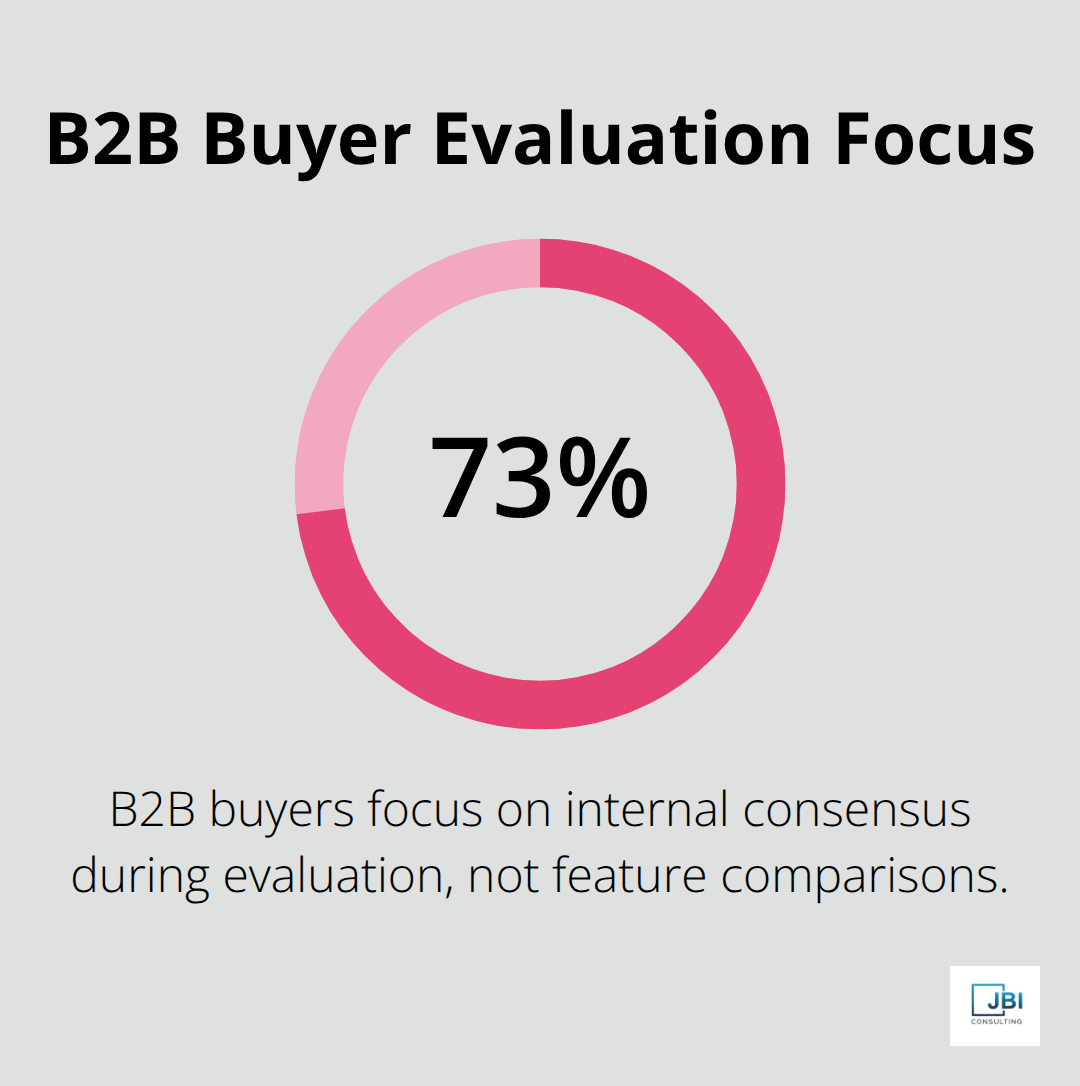
Stop with generic buyer personas based on demographics alone. Real customer intelligence comes from situational triggers that drive purchase decisions. Salesforce found that 73% of B2B buyers spend most of their evaluation time on internal consensus, not feature comparisons. Your target market definition must include the specific business problems your prospects face right now, the budget approval process they navigate, and the timeline pressure they operate under.
Interview at least 20 existing customers to identify patterns in their decision process. Document exactly what words they use to describe their pain points because this becomes your message foundation. These conversations reveal the real triggers that move prospects from consideration to purchase.
Position Against Problems, Not Competitors
Your value proposition should make competition irrelevant through unique category creation for your solution. Slack succeeded because they positioned themselves as where work happens rather than just another message app. This strategy helped them capture significant market share in the collaboration software space.
Focus on the transformation your product delivers in customers’ daily operations rather than feature lists. Quantify this transformation with specific metrics like time saved, revenue increased, or costs reduced. Price anchoring psychology shows that 65% of buyers choose mid-tier options when you present three clear value levels (so structure your proposition to guide this decision naturally).
Track Leading Indicators That Predict Revenue
Revenue goals without predictive metrics are wishful thinking. Leading indicators like qualified lead velocity, sales cycle acceleration, and customer engagement scores tell you if you’re on track weeks before revenue numbers confirm it. HubSpot data shows that companies that track conversion rates at each funnel stage achieve 36% higher customer retention rates.
Set monthly targets for customer acquisition cost, lifetime value ratios, and pipeline velocity rather than just revenue numbers. Create dashboards that your entire team can access because alignment between sales and marketing teams directly impacts these success metrics. These foundations prepare you to build the tactical framework that turns strategy into executable action.
How Do You Transform Strategy Into Revenue
Your framework transforms foundation work into revenue-generating systems through three interconnected decisions that compound over time. Companies that nail these framework elements see better marketing performance, while those who wing it watch competitors capture market share with inferior products but superior execution.
Price for Psychology Not Just Profit
Psychological pricing drives 65% of buyers toward mid-tier options through strategic anchoring, which makes this your most powerful revenue lever. Netflix mastered this approach when they positioned their standard plan between basic and premium tiers, capturing most subscribers at higher margins.
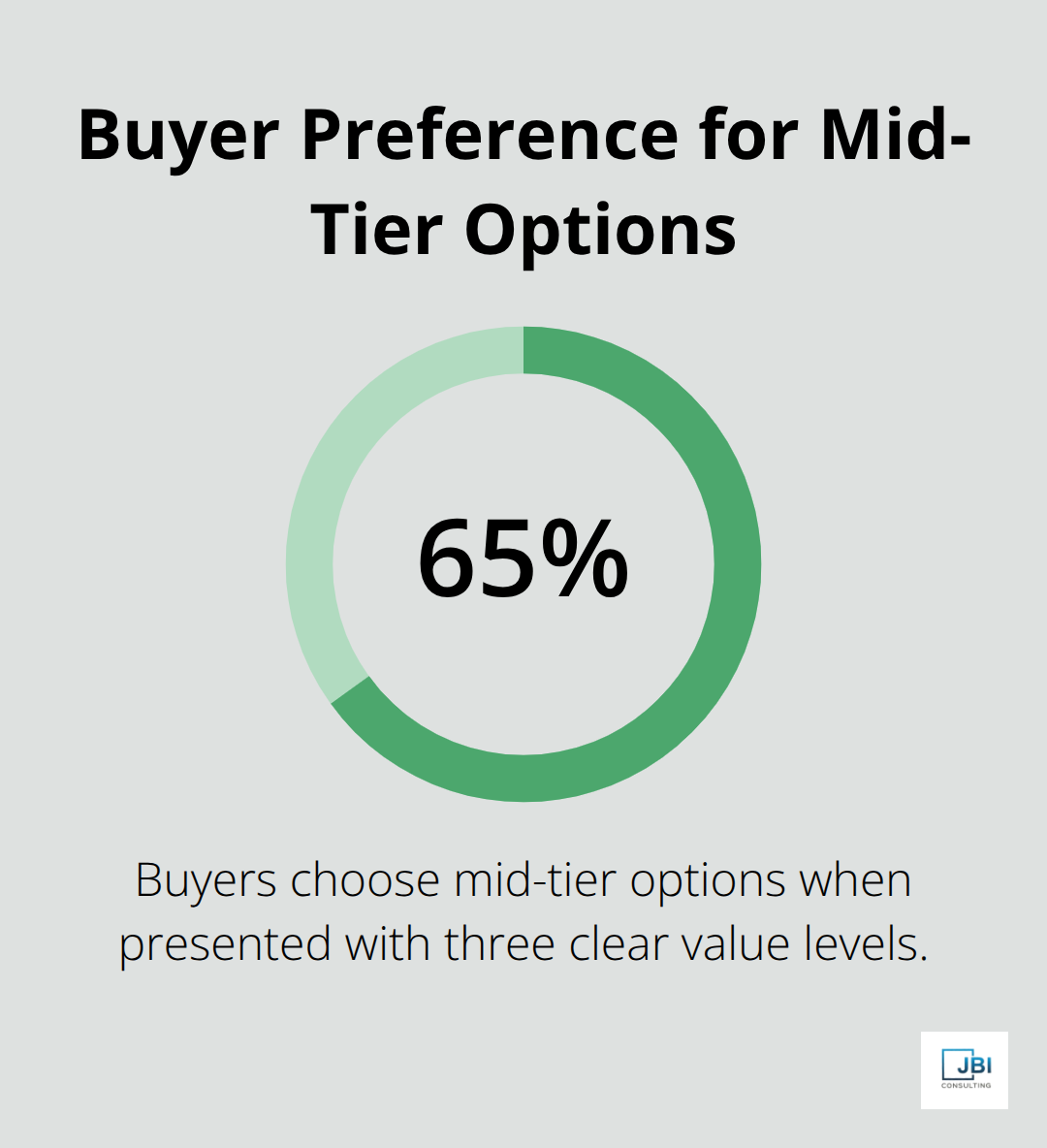
Your pricing architecture should present three clear value levels, with the middle option delivering your target profit margins. Test price sensitivity with 100-200 prospects before launch because a 10% pricing mistake compounds into six-figure revenue losses over time.
SaaS companies that use value-based pricing instead of cost-plus models achieve 23% higher profit margins according to ProfitWell data. Structure your pricing to guide customer decisions naturally rather than leaving them confused about which option delivers the best value.
Channel Strategy Follows Customer Gathering Points
Distribution channels must align with where customers naturally gather when problems emerge, not where you prefer to sell. Zoom succeeded because they focused on where remote teams already collaborated rather than traditional enterprise sales channels.
Map your customer journey to identify the exact moments prospects recognize their problems, then position your solution at those decision points. Account-based marketing works for enterprise software because procurement teams research solutions systematically, while product-led growth suits consumer apps where users expect immediate value.
Companies that match their channel strategy to customer behavior patterns reduce acquisition costs by 34% compared to generic multi-channel approaches. Choose channels based on customer research, not industry assumptions.
Message Architecture That Converts Conversations
Your messaging plan should mirror how customers naturally buy rather than how you prefer to sell. Consultative approaches work because they diagnose problems before presenting solutions, matching how B2B buyers evaluate solutions.
Create message frameworks for each customer journey stage because prospects need different information when comparing vendors versus building internal buy-in. Test your core messages with existing customers to verify they resonate with real decision-makers.
Train your entire customer-facing team on consistent delivery because mixed messages destroy conversion rates faster than any competitor. These framework decisions set the stage for execution where timing and team coordination determine whether your strategy succeeds or fails.
How Do You Execute Without Missing Critical Deadlines
Execution separates winning strategies from expensive failures through precise timing coordination and accountability systems. The first 60 days determine whether your launch builds momentum or stalls in market confusion. Modern B2B buying behavior continues evolving rapidly, which means your launch window shrinks while competition intensifies. Companies that execute with military precision capture early market share before competitors react, while those who stumble watch better-prepared rivals steal their position.
Launch Sequence That Builds Market Momentum
Your launch timeline must sequence activities to build credibility before demand generation begins. Start customer success preparation 30 days before product availability because inquiries spike immediately after the announcement. Train support teams on common questions and technical issues while sales teams practice objection handling with real customer scenarios.
Research confirms that companies with aligned sales and marketing achieve 36% higher customer retention, but alignment requires shared definitions and coordinated timing. Schedule your announcement for Tuesday through Thursday because weekend launches disappear in news cycles, while Monday announcements compete with weekly planning chaos.
Ownership Structure That Prevents Execution Gaps
Assign single-person accountability for each launch component because shared responsibility creates execution gaps. Your product manager owns feature readiness and technical documentation, while marketing owns message consistency across all channels. Sales leadership controls pipeline preparation and territory assignments, while customer success manages the onboarding process design.
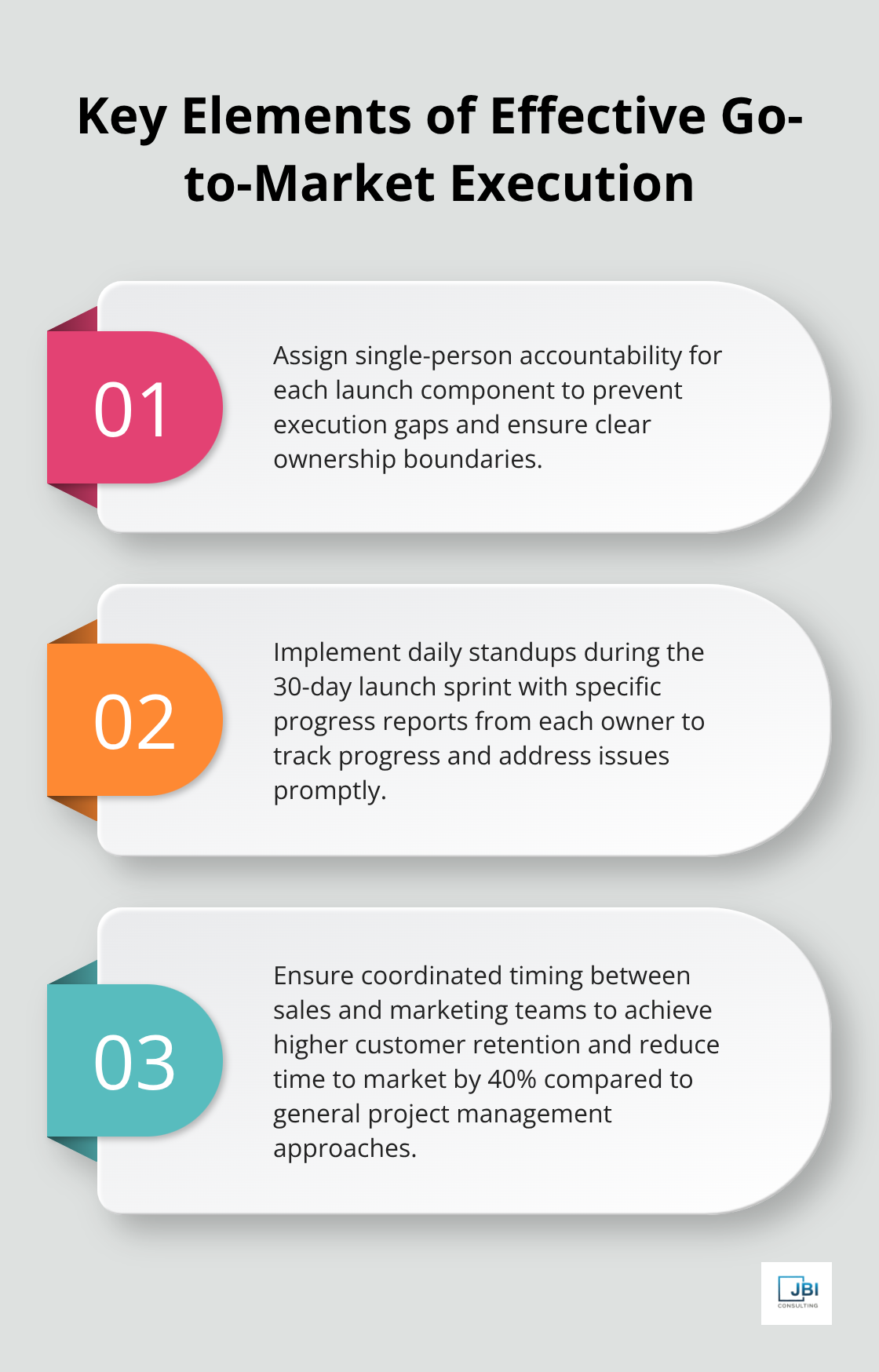
Create daily standups during the 30-day launch sprint with specific progress reports from each owner. Companies that master this coordination reduce time to market by 40% compared to teams that rely on general project management approaches without clear ownership boundaries.
Performance Metrics That Predict Problems Early
Monitor leading indicators that signal trouble before revenue metrics confirm failure. Track qualified lead velocity, sales cycle progression, and customer engagement scores because these predict revenue performance weeks ahead of actual results. Set weekly targets for pipeline growth and conversion rates at each funnel stage rather than waiting for monthly reviews.
Create real-time dashboards that sales and marketing teams check daily because course corrections work best when teams implement them immediately after problems surface. Companies that track conversion rates at each funnel stage (rather than just final revenue numbers) identify bottlenecks before they damage quarterly results.
Final Thoughts
Your go-to-market strategy template succeeds when you master three interconnected systems: foundation research that identifies real customer triggers, framework decisions that guide prospects naturally toward purchase, and execution precision that builds market momentum from day one. Companies that skip foundation work burn budgets on generic messages, while those who nail customer intelligence reduce acquisition costs by 23%. The biggest pitfall we see involves teams that rush to tactics without proper customer research.
Another common mistake involves price decisions based on costs rather than customer psychology, which leaves money on the table. Teams that lack single-person accountability for each launch component create execution gaps that competitors exploit. Start implementation by interviewing 20 customers to identify decision patterns and pain point language.
Build your price architecture with three clear value levels that guide buyers toward your target margins (and create daily progress tracking during your 30-day launch sprint with specific owners for each component). We at JBI Consulting help sales teams shift from nurture activities with existing leads to proactive hunt strategies for new opportunities through Michael Hinkle’s transformative methodology. This approach enhances client relationships and boosts deal closure rates through personalized assessments that tailor development for greater success.