
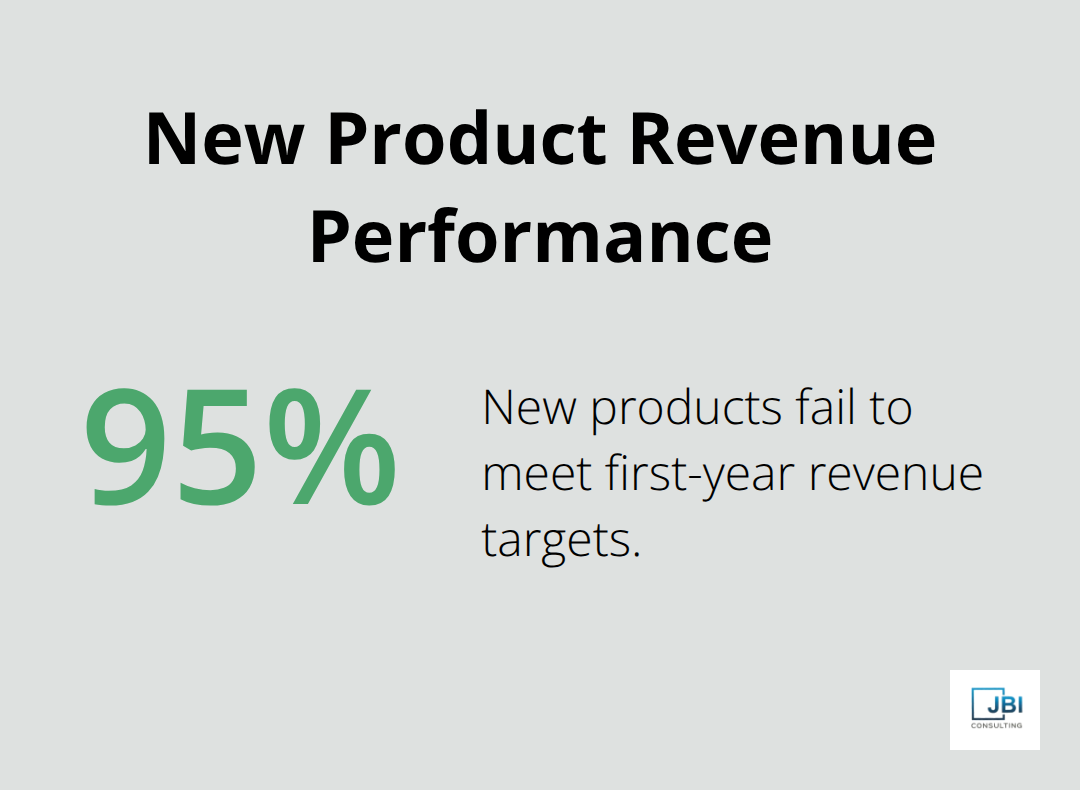
Most product launches fail because companies rush to market without a solid foundation. Research shows that 95% of new products don’t meet their revenue targets in the first year.
At JBI Consulting, we’ve seen countless businesses transform their market entry approach using proven frameworks. A strong go-to-market strategy example can mean the difference between explosive growth and costly failure.
What Makes Your Go-to-Market Foundation Rock-Solid?
Target Market Precision Drives Revenue Growth
Success starts with precision in your approach to customers. Companies that define their ideal customer profile generate 68% more revenue according to HubSpot research. Start by analyzing your existing customers who deliver the highest lifetime value and shortest sales cycles. Look at their company size, industry, job titles, and pain points they face.
Create detailed buyer personas that go beyond demographics to include budget authority, decision-making processes, and preferred communication channels. Focus on 2-3 core segments maximum rather than casting a wide net across multiple markets.
Competitor Intelligence That Reveals Million-Dollar Gaps
Competitor analysis reveals gaps worth millions in untapped revenue. Study your top 5 competitors with tools like SEMrush or Ahrefs to identify their pricing models, messaging themes, and customer complaints. Read their customer reviews on G2 and Capterra to spot recurring frustrations that your solution can address.
Map out feature comparisons to find white space opportunities in the market. Research shows that 73% feel personalized when companies use AI to understand their needs. Use this intelligence to position your solution differently and craft messaging that addresses unmet market demands.
Revenue Metrics That Guide Strategic Decisions
Set specific numbers that matter to your bottom line and track them religiously. Track customer acquisition cost, average deal size, and sales cycle length as your primary metrics. Companies with clear revenue targets are 42% more likely to achieve them (according to Gartner research).
Define your Total Addressable Market, then calculate your Serviceable Obtainable Market based on realistic market penetration rates. Establish monthly recurring revenue goals, conversion rates by channel, and customer lifetime value targets. These concrete numbers will guide every tactical decision and help you allocate resources effectively.
With your foundation metrics in place, the next step involves translating these insights into compelling value propositions and strategic channel selection.
How Do You Build Framework Components That Convert?
Your framework transforms market insights into revenue-generating actions through three interconnected components. Start with value proposition development and use the jobs-to-be-done framework to identify the specific outcomes your customers hire your product to achieve. This methodology helps teams focus on what customers are actually trying to achieve when they use a product. Map customer pain points to specific product benefits, then craft messages that speak directly to decision-makers in their language, not yours.

Message Validation Accelerates Market Entry
Test your messages with 10-15 prospects from each target segment before launch. Use A/B tests on email subject lines, LinkedIn outreach messages, and landing page headlines to identify which value propositions resonate strongest. Salesforce data shows personalized messages increase response rates by 73%. Record these conversations to identify recurring objections and refine your position accordingly.
Channel Selection Follows Message Performance
Choose platforms where your tested messages perform best, whether that’s LinkedIn for B2B sales, Google Ads for intent-driven traffic, or partner channels for enterprise deals. Focus your resources on 2-3 channels maximum rather than spreading efforts across multiple platforms. Track conversion rates by channel to identify your highest-performing sources and double down on what works.
Value-Based Pricing Drives Profit Growth
Price based on value delivered, not cost-plus margins. Even a modest 1% price increase can lead to an average 11% boost in profits, underscoring the transformative power of strategic pricing adjustments. Analyze competitor pricing tiers, then position yours 10-20% higher if you deliver superior outcomes. Create three pricing tiers with the middle option designed as your primary revenue driver.
Test prices with pilot customers before full market launch, and build your sales process around consultative approaches that justify premium rates through demonstrated ROI calculations. This foundation sets the stage for coordinated launch execution across all teams.
How Do You Execute Launch Success?
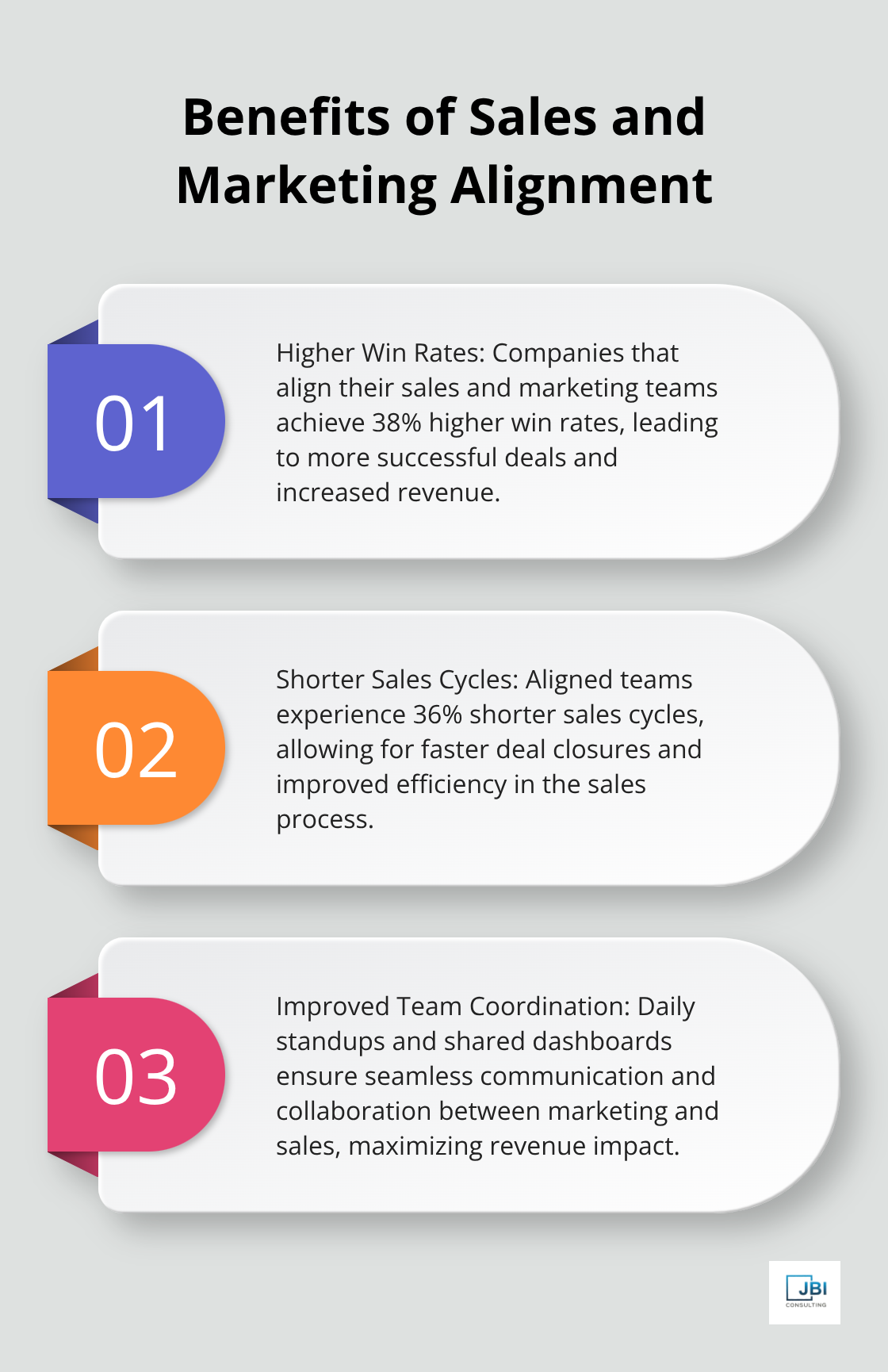
Launch execution demands synchronized precision across marketing and sales teams within the first 90 days. Companies that align their teams achieve 38% higher win rates and 36% shorter sales cycles according to Aberdeen Group research. Start with daily standups between marketing and sales for the first month, then shift to weekly coordination meetings.
Create shared dashboards in tools like HubSpot or Salesforce that show lead flow, conversion rates, and pipeline velocity in real-time. Marketing should deliver 3x the number of qualified leads that sales can handle to maintain momentum, while sales commits to follow up within 4 hours of lead assignment.
Team Coordination Maximizes Revenue Impact
Establish clear handoff processes between marketing and sales teams with defined lead qualification criteria. Marketing qualifies leads based on budget, authority, need, and timeline (BANT criteria), while sales focuses on discovery and deal progression. Weekly pipeline reviews help both teams identify bottlenecks and adjust tactics accordingly.
Set up automated lead routing systems that distribute prospects based on territory, deal size, or industry expertise. This approach prevents leads from falling through cracks and maintains consistent follow-up standards across your entire sales organization.
Sales Team Readiness Accelerates Revenue
Train your sales team on objection handling scripts, competitive positioning, and ROI calculations two weeks before launch. Role-play common scenarios with at least 10 practice conversations per rep. Companies with comprehensive employee training programs have 218% higher income per employee than companies without formalized training.
Focus training on discovery questions that uncover customer pain points, demo flows that highlight your key differentiators, and closing techniques that address budget concerns. Record training sessions and create quick reference guides that reps can access during live calls.
Performance Optimization Drives Growth
Track conversion rates at each funnel stage daily during your first month, then weekly thereafter. Monitor customer acquisition cost by channel, average deal size trends, and sales cycle length changes. Companies that review performance metrics weekly are 70% more likely to hit revenue targets, according to Salesforce research.
Set up automated alerts when metrics drop below benchmarks, and conduct monthly performance reviews with action plans for underperforming channels. Adjust messaging, pricing, or channel focus based on actual customer feedback rather than assumptions. A successful go-to-market strategy requires continuous optimization to maintain a competitive advantage in your market position.
Final Thoughts
Your go-to-market strategy success depends on three fundamental components that work together. Precise target market definition with detailed buyer personas drives 68% higher revenue according to HubSpot data. Competitor analysis reveals million-dollar market gaps that position your solution strategically, while clear revenue metrics guide every tactical decision and resource allocation.
Implementation failures stem from common mistakes that derail even well-planned strategies. Teams often skip message validation with real prospects, spread resources across too many channels, or launch without proper sales training. Companies that avoid these pitfalls achieve 38% higher win rates and 36% shorter sales cycles (as shown in successful go-to-market strategy examples across industries).
Your next optimization step involves continuous performance monitoring and tactical adjustments based on actual customer feedback. Track conversion rates weekly, adjust messages monthly, and refine channel focus quarterly. We at JBI Consulting help sales teams shift from lead nurturing to proactive opportunity hunting through Michael Hinkle’s proven methodology, which enhances client relationships and boosts deal closure rates for sustainable revenue growth.