
Inside sales trends are reshaping the landscape of B2B sales. From AI-powered tools to personalized outreach at scale, the industry is evolving rapidly.
At JBI Consulting, we’ve observed these changes firsthand and their impact on sales performance. In this post, we’ll explore the key trends driving the future of inside sales and how they’re transforming the way teams operate.
How AI Is Revolutionizing Inside Sales
Artificial Intelligence (AI) transforms inside sales, offering unprecedented opportunities for efficiency and effectiveness. The impact of AI on sales strategies and performance is significant and far-reaching.
AI-Powered Lead Scoring and Prioritization
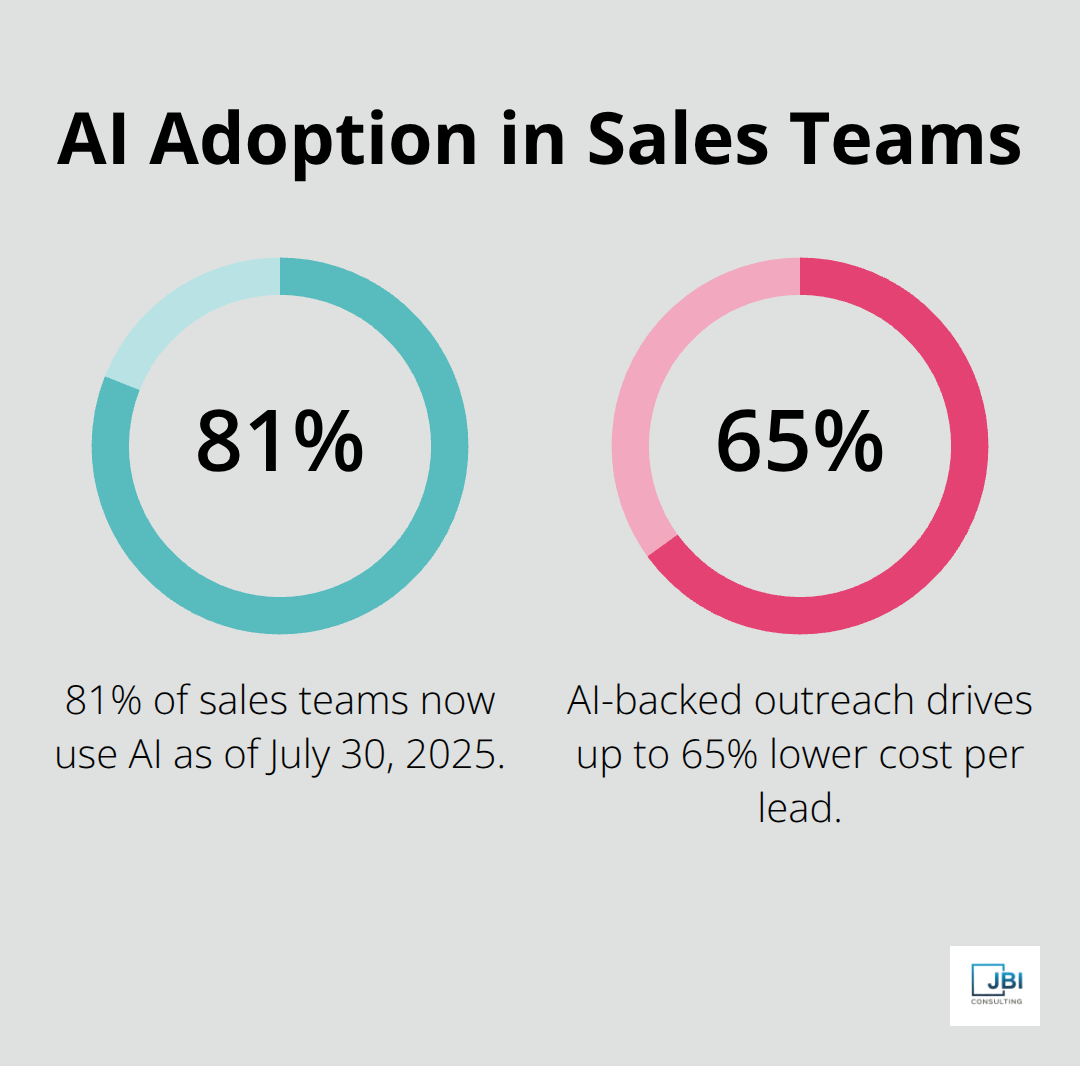
AI-powered lead scoring has become a game-changer. As of July 30, 2025, 81% of sales teams now use AI, with data-backed outreach driving faster pipeline growth and up to 65% lower cost per lead. This approach allows teams to focus their efforts on high-potential prospects, which significantly improves conversion rates.
Sales teams should implement AI-driven lead scoring tools that consider factors like engagement history, company size, and online behavior.
Automated Outreach and Follow-ups
AI-powered automated outreach and follow-ups revolutionize how sales teams communicate with prospects. According to Salesforce, AI-powered email personalization can increase open rates by up to 26% and click-through rates by up to 14%.
Sales teams can leverage this trend by using AI tools that analyze past interactions and tailor messages accordingly. These systems determine the best time to send emails, craft personalized subject lines, and even suggest content based on the prospect’s interests and behavior.
Predictive Analytics for Sales Forecasting
Predictive analytics is another area where AI makes significant strides in inside sales. AI provides more accurate sales forecasts by analyzing historical data and current market trends. A report by McKinsey found that companies using AI for sales forecasting improved their forecast accuracy by 10-20%.
Sales teams should adopt AI-powered forecasting tools that can analyze multiple data points, including past sales data, market trends, and even social media sentiment. This approach not only improves forecast accuracy but also helps in resource allocation and strategic planning.
The Human Touch in AI-Driven Sales
While AI offers tremendous potential, it’s important to remember that it’s a tool to enhance human capabilities (not replace them). The most successful inside sales teams will be those that effectively combine AI-driven insights with human expertise and relationship-building skills.
As we move forward, the integration of AI in inside sales will continue to evolve, presenting new opportunities and challenges. The next frontier in this evolution is the personalization of sales strategies at scale, which we’ll explore in the following section.
Personalizing Sales at Scale
Data-Driven Customer Segmentation
The foundation of effective personalization lies in robust customer segmentation. A study by Aberdeen Group reveals that companies excelling at segmentation achieve a 14% increase in annual revenue. To replicate this success, analyze your customer data to identify common characteristics, behaviors, and needs. CRM tools help track interactions, purchase history, and engagement levels. This data-driven approach enables the creation of detailed buyer personas and tailored sales strategies.
Crafting Messages that Resonate
After segmenting your audience, create messaging that speaks directly to each group’s pain points and aspirations. Epsilon reports that 80% of consumers are more likely to purchase when brands offer personalized experiences. Dynamic content tools automatically adjust email copy, subject lines, and product recommendations based on the recipient’s profile. This level of customization leads to higher open rates, click-throughs, and ultimately, conversions.
Dynamic Sales Playbooks
Static sales scripts no longer cut it. Today’s successful inside sales teams use dynamic playbooks that evolve based on real-time data and feedback. According to Gartner, 55 percent of sales organizations are already piloting or deploying AI to drive sales outcomes, and by the end of 2025, that number will increase. These playbooks should include tailored talking points, objection-handling strategies, and success stories relevant to each customer segment. Regular updates based on performance data and feedback from your sales team ensure continued effectiveness.
Measuring Personalization Impact
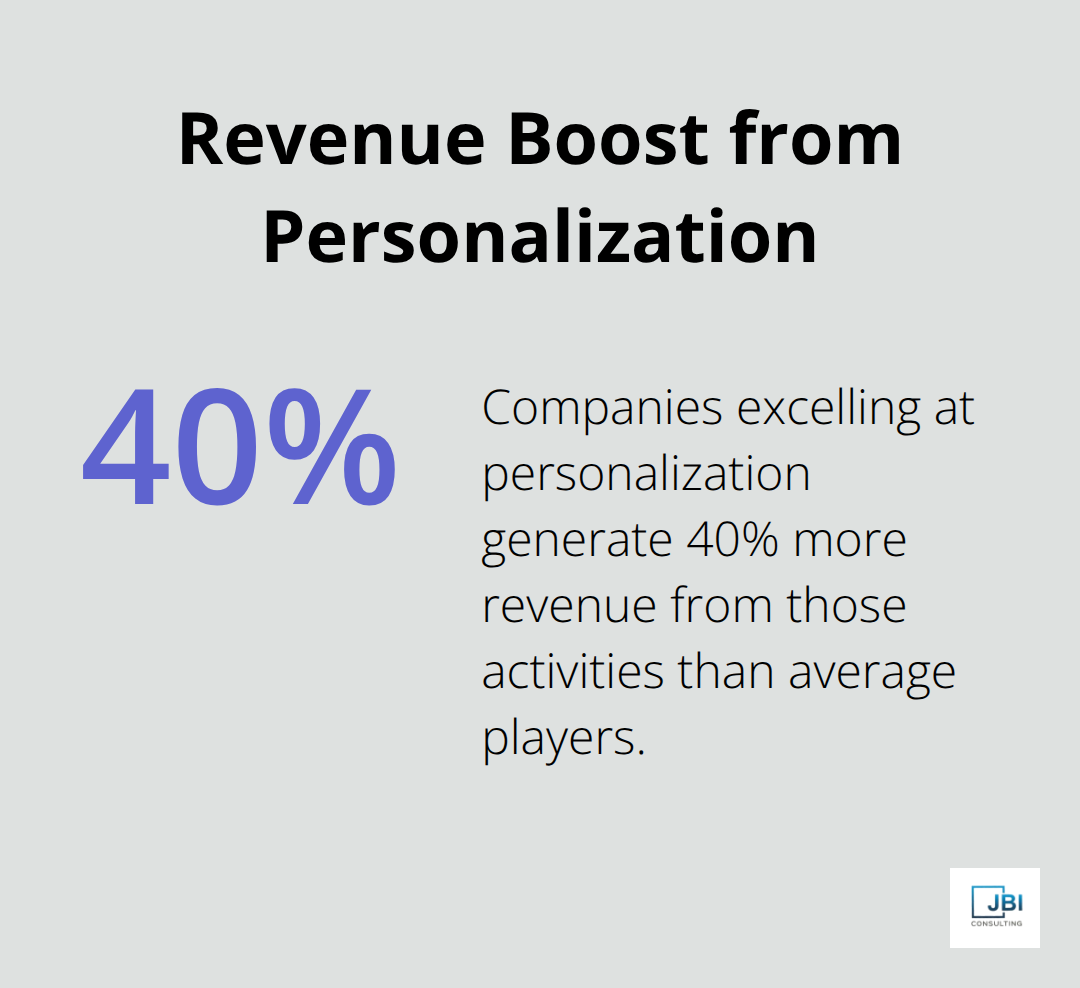
To gauge the success of your personalization efforts, track key metrics such as conversion rates, customer lifetime value, and engagement levels. McKinsey reports that companies excelling at personalization generate 40% more revenue from those activities than average players. Use A/B testing to refine your approach and identify which personalized elements resonate most with your audience.
Technology Integration for Scale
Implementing personalization at scale often involves integrating various technology components: data platforms, AI/ML engines, and more. AI-powered tools (like those offered by JBI Consulting) can analyze vast amounts of data to provide actionable insights. Customer Data Platforms (CDPs) centralize information from various sources, creating a unified view of each customer. Marketing automation platforms help deliver personalized content across multiple channels. The integration of these technologies enables sales teams to provide tailored experiences efficiently and effectively.
As we move forward in our exploration of inside sales trends, it’s clear that personalization at scale is just one piece of the puzzle. The shift towards remote selling has dramatically altered the sales landscape, presenting new challenges and opportunities. Let’s examine how this trend is reshaping the future of inside sales.
How Remote Selling Transforms Inside Sales
The landscape of inside sales has undergone a seismic shift with the widespread adoption of remote selling. This transformation reshapes how sales teams operate, communicate, and close deals.
The Virtual Meeting Revolution
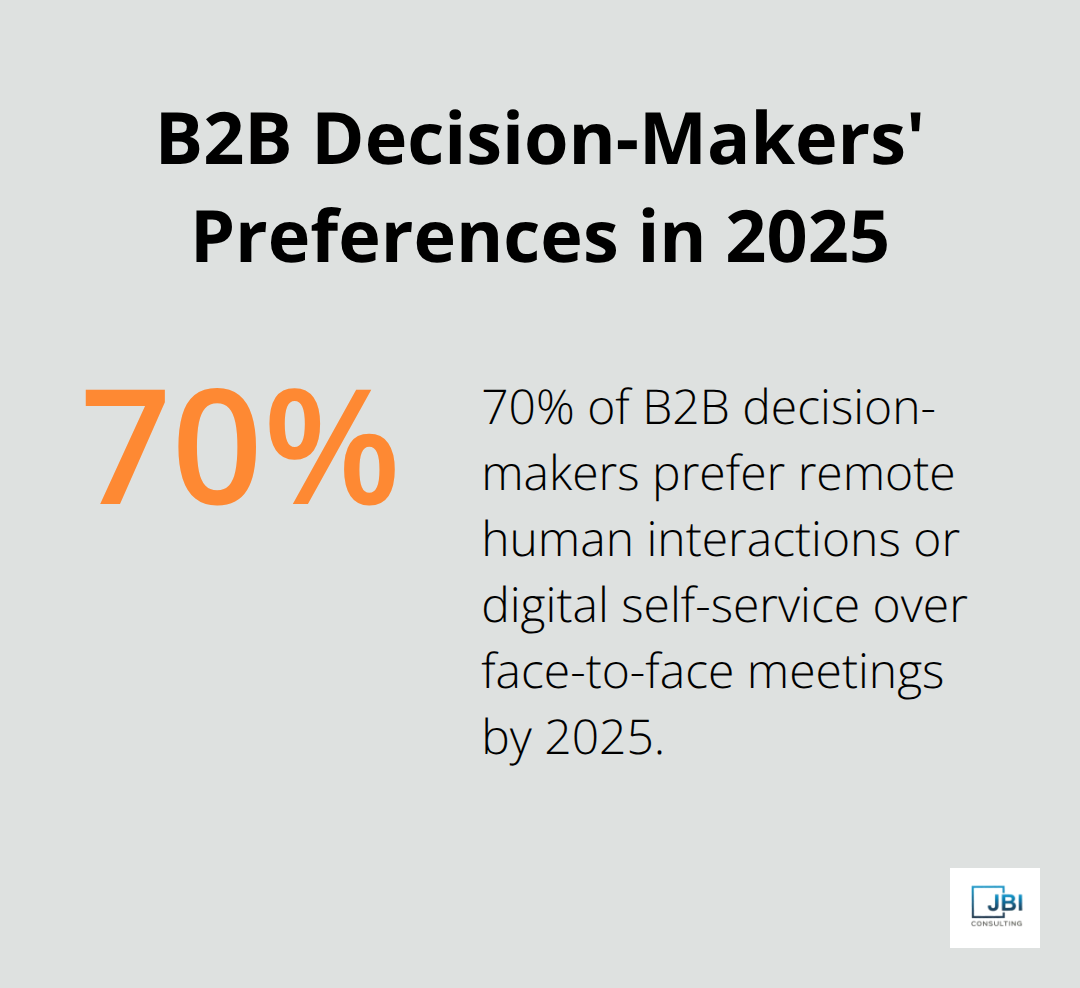
Virtual meetings now form the cornerstone of remote selling. By 2025, more than 70% of B2B decision-makers prefer remote human interactions or digital self-service over face-to-face meetings. This preference leads to a surge in the use of video conferencing platforms for sales calls and presentations.
To excel in virtual meetings, sales professionals must master new skills. Proper lighting, clear audio, and engaging body language are now as important as product knowledge. Sales teams should invest in quality equipment (HD webcams and noise-canceling microphones) to ensure a professional appearance.
Digital Sales Rooms: The New Frontier
Digital sales rooms emerge as powerful tools for collaborative selling. These virtual spaces streamline B2B sales by enriching collaboration, tracking buyer engagement, and enabling data-driven decisions to close deals faster.
To leverage digital sales rooms effectively, sales teams should curate content that addresses specific buyer pain points and objections. They can use analytics provided by these platforms to understand which materials resonate most with prospects and refine their approach accordingly.
Adapting Training for Remote Sales Teams
The shift to remote selling necessitates a reimagining of sales training and development. Traditional in-person workshops give way to virtual learning experiences and microlearning modules.
Sales organizations should implement regular virtual coaching sessions, peer-to-peer learning opportunities, and on-demand training resources. They can utilize role-playing exercises in virtual settings to help sales reps practice handling objections and closing deals remotely.
Overcoming Remote Selling Challenges
Remote selling presents unique challenges that sales teams must address. These include maintaining engagement during virtual presentations, building rapport without face-to-face interactions, and managing time effectively across different time zones.
Sales professionals can overcome these challenges by using interactive presentation tools, scheduling informal virtual coffee chats to build relationships, and implementing flexible working hours to accommodate global clients.
Leveraging Technology for Remote Sales Success
Technology plays a pivotal role in enabling effective remote selling. Customer Relationship Management (CRM) systems, sales enablement platforms, and communication tools become even more critical in a remote environment.
Sales teams should integrate these technologies to create a seamless remote selling experience. This integration allows for better tracking of customer interactions, more efficient collaboration among team members, and improved data-driven decision-making.
Final Thoughts
Inside sales trends continue to reshape the B2B landscape. AI-powered tools, personalization at scale, and remote selling techniques transform how sales teams operate. These advancements underscore the need for sales professionals to adapt quickly to technological changes in the industry.
The future of inside sales promises further AI integration, sophisticated personalization, and innovative remote selling strategies. Success will depend on continuous learning and mastering new skills such as data analysis, AI tool proficiency, and virtual presentation techniques. Sales professionals who blend technological innovation with human touch will excel in this dynamic environment.
At JBI Consulting, we help sales professionals navigate these changes through our transformative sales program. Our program equips individuals and teams with the skills and mindset needed to thrive in the evolving inside sales landscape (while maintaining the essential human element of sales relationships).