
The automotive industry experienced significant shifts throughout 2023, with electric vehicles gaining unprecedented market share and supply chains finally stabilizing after years of disruption.
Car sales trends 2023 reveal changing consumer preferences driven by new technologies and economic pressures. We at JBI Consulting analyzed comprehensive market data to identify the patterns reshaping how Americans buy vehicles today.
How 2023 Transformed the Car Market
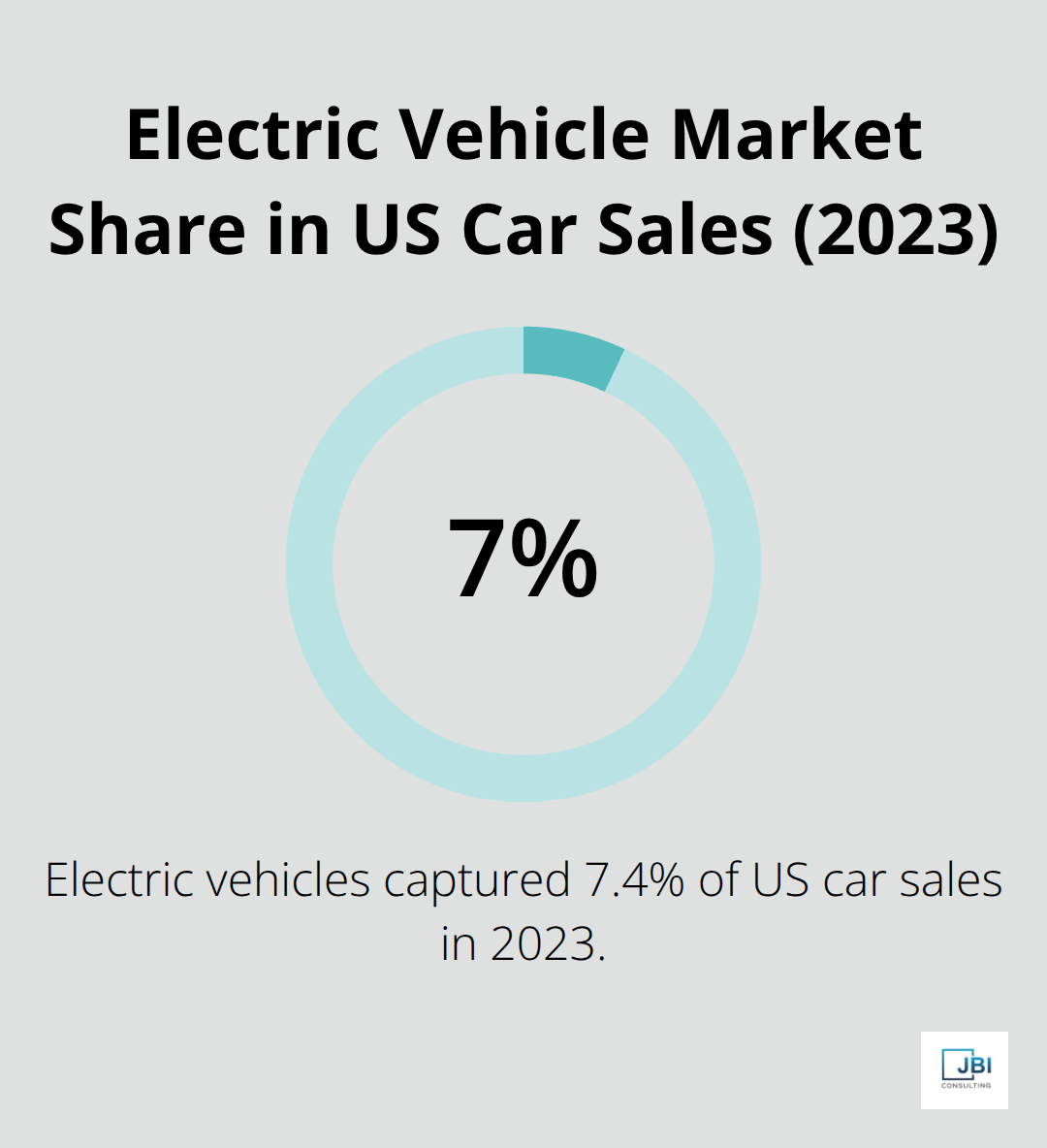
Electric vehicles captured 7.4% of US car sales, which represents a significant increase from the previous year according to automotive industry data. This surge reflects consumers who rushed to purchase EVs before federal tax credits potentially expired, which created a rush that dealers struggled to meet. Tesla’s market dominance weakened as traditional automakers like Ford and GM launched competitive models, which forced Tesla to slash prices multiple times throughout the year.
Supply Chain Recovery Drives Inventory Normalization
Auto inventory finally reached healthy levels in late 2023 after three years of shortages. Dealerships now maintain 60-70 days of supply compared to the critical 30-day levels seen in 2021-2022. Toyota and Honda recovered fastest, with Toyota achieving only 22 inventory days due to strong consumer demand. This recovery allowed dealers to reduce markups and offer incentives that averaged $3,534 per vehicle. Luxury brands still command premium prices with limited availability that drives continued markups of $2,000-$5,000 above MSRP.
Transaction Prices Climb as Consumer Preferences Shift
The average new car price reached $48,724, driven by consumer preference for SUVs and trucks over sedans. Light truck sales dominated with 83% market share while passenger cars declined to just 17%. Auto loan rates climbed to 7.8% for new vehicles and 11.2% for used cars, which forced many buyers into longer 72-84 month terms. Credit standards tightened significantly, with subprime approvals that dropped 15% as lenders became more selective amid economic uncertainty.
Technology Features Reshape Purchase Decisions
Advanced driver assistance systems (ADAS) became standard expectations rather than luxury add-ons in 2023. Consumers now demand features like adaptive cruise control and automatic emergency brakes, which pushed automakers to include these technologies in base trim levels. Connected car features also influenced purchase decisions, with 68% of buyers considering smartphone integration essential. These technological advances set the stage for even more sophisticated features that will define the next phase of automotive innovation.
What Technology Features Are Buyers Demanding Now
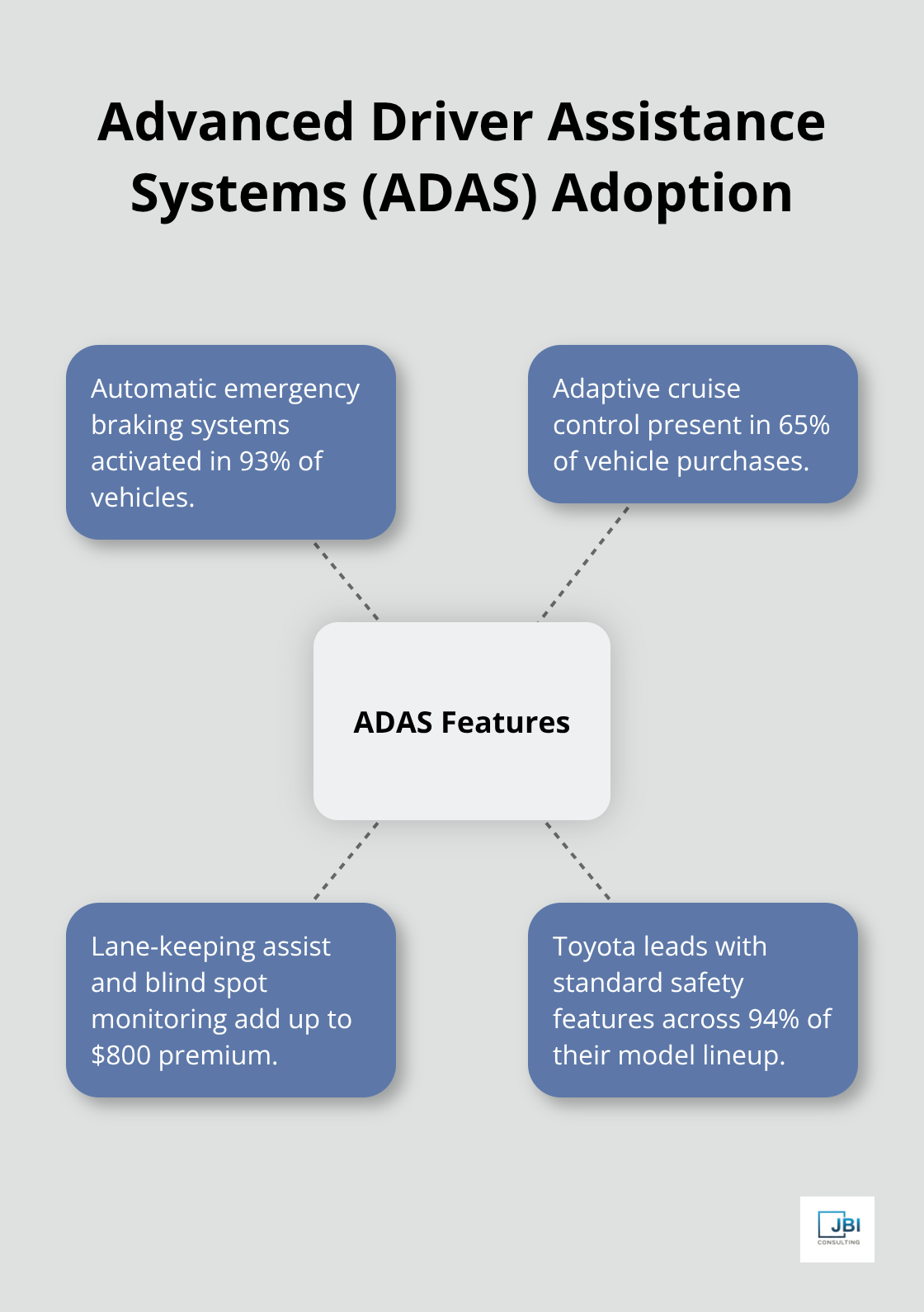
Advanced driver assistance systems moved from premium options to mandatory expectations in 2023, with automatic emergency braking systems activated in 93% of vehicles according to automotive research. Adaptive cruise control became the second most requested feature, present in 65% of vehicle purchases. General Motors reported that ADAS features now add $1,200-$2,500 to production costs, but automakers absorb these expenses to remain competitive. Ford discovered that buyers will pay up to $800 premium for vehicles equipped with lane-keeping assist and blind spot monitoring. Toyota leads ADAS adoption with standard safety features across 94% of their model lineup.
Connected Car Features Drive Purchase Decisions
Smartphone integration became the primary technology differentiator, with Apple CarPlay and Android Auto now standard in 89% of new vehicles. Mercedes-Benz data shows that 73% of buyers under 40 prioritize wireless connectivity over engine performance when they select vehicles. Over-the-air software updates emerged as a competitive advantage, with Tesla’s approach that influences traditional automakers to adopt similar capabilities. BMW introduced subscription-based heated seats for $18 monthly and generates $2.1 billion annually from feature subscriptions.
Subscription Services Transform Ownership Models
Automotive subscription services reached 4.2 million active users in 2023, with Cadillac’s Book service that leads at $1,800 monthly for luxury vehicle access. Volvo’s Care service targets younger demographics with $650 monthly plans that include insurance and maintenance. These models appeal to urban consumers who drive less than 12,000 miles annually and prefer predictable monthly expenses over large down payments. Subscription revenue per customer averages $8,400 annually compared to traditional financing profits of $1,200 per vehicle sale.
Voice Control and AI Integration
The automotive voice recognition market was valued at $3.7 billion in 2024 with projected growth of 10.6% annually through 2034. BMW’s voice assistant handles complex commands like “Find the nearest charging station with availability” without requiring specific wake words. Amazon Alexa integration reached 45% of new vehicle models, while Google Assistant captured 38% market share. These AI-powered systems reduce driver distraction by 23% according to National Highway Traffic Safety Administration studies.
Regional preferences vary dramatically as urban buyers embrace these technological advances while rural consumers focus more heavily on traditional performance metrics and reliability features.
How Geography Shapes Vehicle Purchases
Urban buyers prioritize fuel efficiency and compact designs while rural consumers demand durability and towing capacity. This creates distinct market segments that dealerships must understand to optimize inventory. Metropolitan areas show higher demand for electric vehicles compared to rural regions, where pickup truck sales represent 48% of total transactions according to automotive market research.
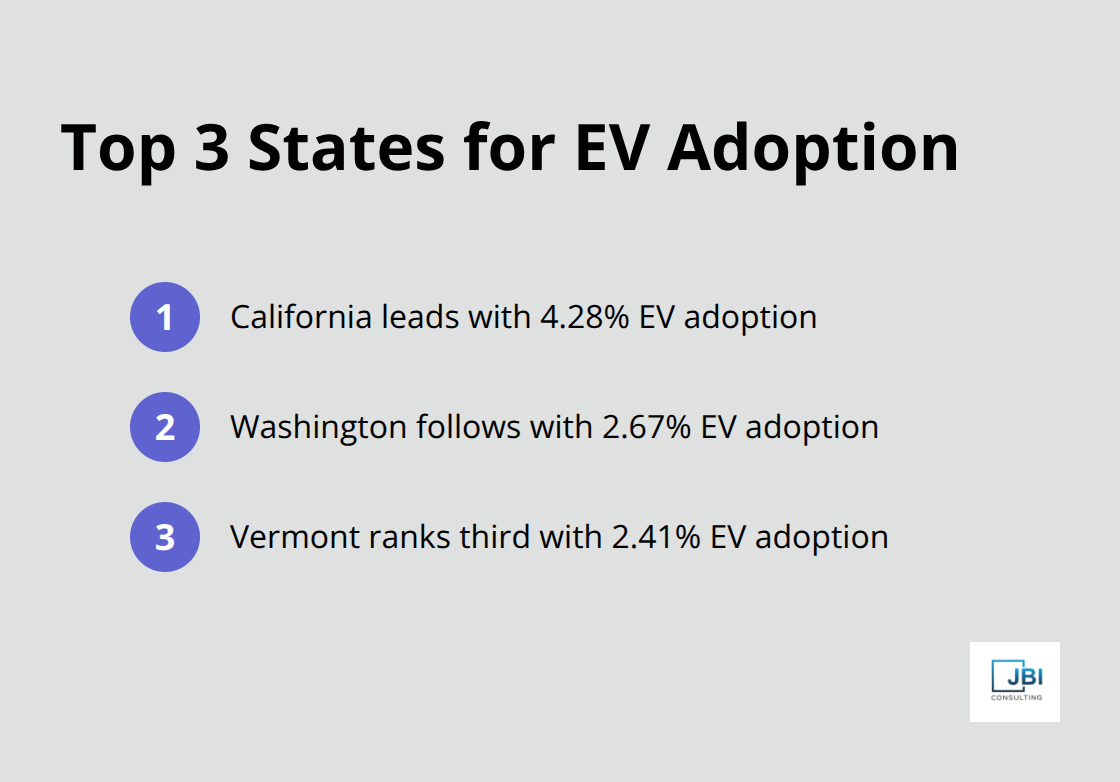
Cities like San Francisco and Seattle report EV adoption rates that exceed 15%, while rural states like Wyoming and Montana maintain EV shares below 3%. California leads with 4.28% EV adoption, followed by Washington at 2.67% and Vermont at 2.41%. Dealers in urban markets stock sedans and compact SUVs, whereas rural dealerships focus 70% of their inventory on full-size trucks and SUVs with towing packages.
Age Demographics Drive Technology Adoption
Buyers under 35 spend an average of $2,800 more on technology packages compared to buyers over 55. This fundamentally alters how manufacturers position features across trim levels. Millennials prioritize connectivity features and will pay premiums for wireless charging and premium sound systems, while buyers over 50 focus on reliability and resale value.
Generation Z buyers research vehicles online extensively before purchase, with 38% willing to purchase entirely online, compared to older generations who prefer traditional dealership experiences. This age gap forces dealers to maintain dual sales approaches: digital-first strategies for younger buyers and relationship-based sales for older customers.
Economic Pressures Create Regional Price Variations
Vehicle affordability varies dramatically by region. California buyers pay average premiums of $3,200 above MSRP while Midwest buyers secure discounts that average $1,800 below sticker price. High-income coastal markets absorb luxury vehicle inventory, which leaves affordable models concentrated in lower-income regions where financing challenges limit buyer options.
Regional unemployment rates directly correlate with used car demand. Areas with job growth above 4% show 23% higher new vehicle sales compared to regions with stagnant employment. Dealers in economically stressed regions report 40% longer inventory turns and increased reliance on subprime lending partnerships to maintain sales volumes.
Income Levels Shape Purchase Decisions
Household income directly influences vehicle choice patterns across different regions. Markets with median incomes above $75,000 show 34% higher luxury vehicle penetration compared to areas below $50,000 median income. Premium brands like BMW and Mercedes-Benz concentrate their dealership networks in affluent zip codes (those with average incomes exceeding $85,000 annually).
Lower-income regions drive demand for certified pre-owned vehicles, which represent 45% of total sales in these markets versus 28% in high-income areas. This income disparity forces manufacturers to adjust their distribution strategies and dealer incentive programs based on regional economic conditions.
Final Thoughts
Car sales trends 2023 reveal a market that transformed through electric vehicle adoption and supply chain recovery. Electric vehicles captured 7.4% market share while dealers restored healthy inventory levels after years of shortages. Technology features evolved from premium options to standard expectations across all vehicle segments.
The automotive landscape now divides along clear demographic and geographic lines. Urban buyers prioritize electric vehicles and connectivity features while rural consumers focus on traditional performance metrics. Age demographics drive technology adoption rates, with younger buyers who embrace digital sales channels and advanced features.
Dealers must adapt inventory strategies to match regional preferences and consumer demographics. Economic pressures will continue to shape price variations and financing options across different markets. We at JBI Consulting help sales professionals navigate these market changes through proven sales methodologies that focus on proactive opportunity development rather than passive lead management.