
Sales growth is the lifeblood of any business. At JBI Consulting, we’ve seen firsthand how the right sales strategies and techniques can transform a company’s performance.
In this post, we’ll share proven methods to boost your sales and drive growth. From adopting a hunter mindset to building strong client relationships, these tactics will help you take your sales game to new heights.
How to Become a Sales Hunter
The Evolution of Sales Strategies
The sales landscape continues to change. Top performers now adopt a hunter mindset, actively seeking new opportunities and driving growth. This approach contrasts with the traditional focus on lead nurturing.
Hunter vs. Farmer: Understanding the Difference
Sales professionals typically fall into two categories: hunters and farmers. Farmers excel at nurturing existing relationships and cultivating repeat business. Hunters, however, thrive on the chase, constantly seeking new prospects and opportunities. While both approaches have merit, the hunter mentality proves increasingly vital in today’s competitive market.
Benefits of the Hunter Mindset
A hunter mindset involves proactivity, persistence, and resilience in the face of rejection. This approach creates opportunities rather than waiting for them. The benefits include:
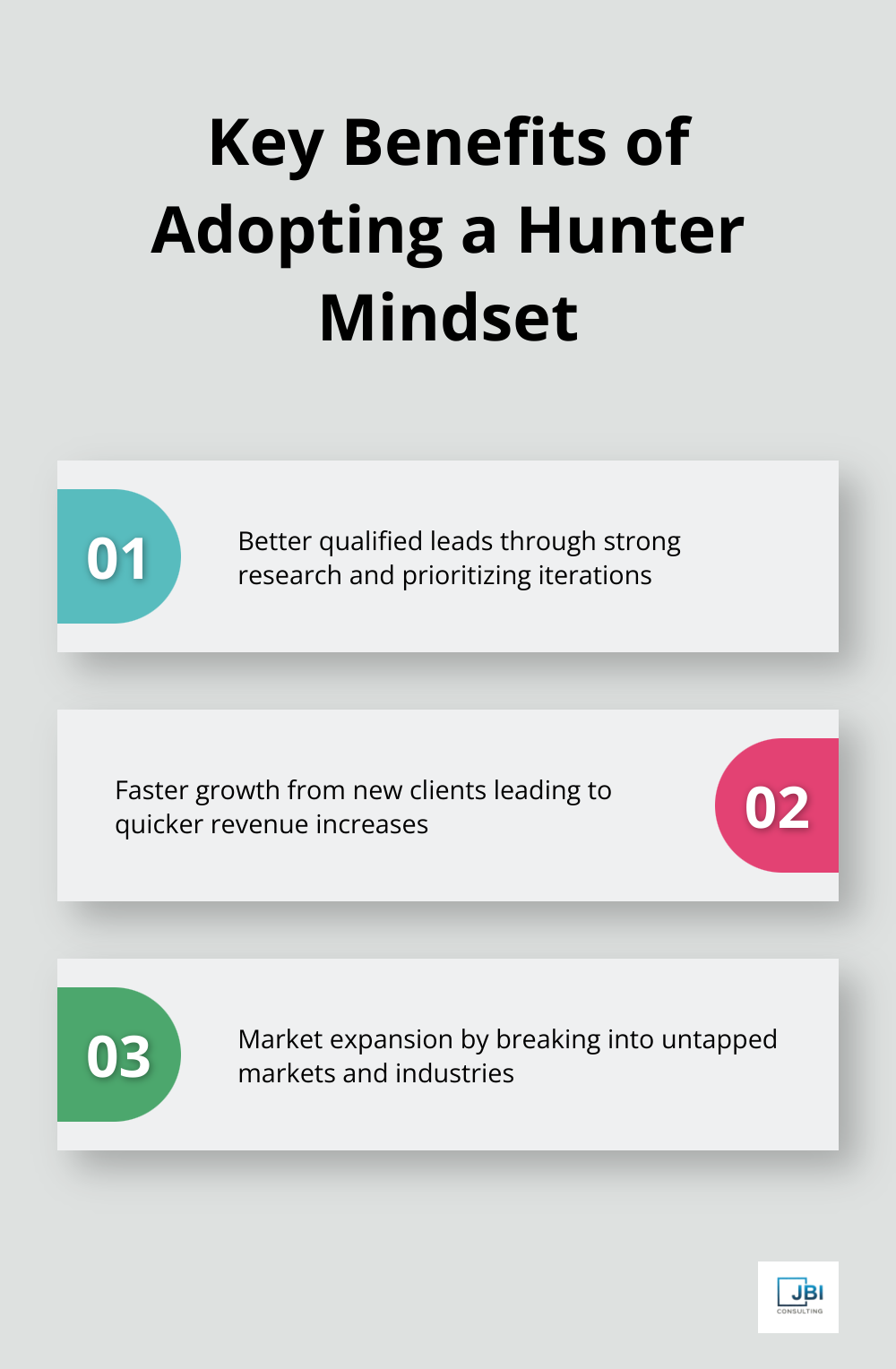
- Better qualified leads: Strong research and prioritizing iterations brings you more relevant potential customers.
- Faster growth: New clients often lead to quicker revenue increases (compared to upselling existing customers).
- Market expansion: Hunting new opportunities helps break into untapped markets and industries.
Effective Hunting Techniques
To become a successful sales hunter, consider these proven techniques:
- Set clear prospecting goals: Establish daily or weekly targets for new outreach attempts.
- Leverage social selling: Use platforms like LinkedIn to identify and connect with potential clients.
- Attend industry events: Network at conferences and trade shows to uncover valuable leads.
- Implement a referral program: Encourage existing clients to refer new business.
- Use data-driven prospecting: Utilize tools and analytics to identify high-potential leads and tailor your approach.
Overcoming Rejection Fear
One of the biggest challenges in adopting a hunter mindset involves overcoming the fear of rejection. Each “no” brings you closer to a “yes.” Develop resilience and view rejections as learning opportunities to refine your approach.
Sales training programs (like the one offered by JBI Consulting) focus on helping individuals and teams develop this hunter mentality. With experienced leadership and proven methodologies, these programs transform sales professionals into proactive opportunity seekers.
The shift to a hunter mindset requires practice and persistence. As you implement these strategies, you’ll find yourself driving growth and achieving targets more consistently. This proactive approach not only fills your pipeline but also sharpens your skills in identifying and pursuing valuable opportunities. The next section will explore how to build strong client relationships through active listening, a skill that complements the hunter mindset perfectly.
How Can You Listen Your Way to Sales Success?
The Power of Active Listening in Sales
Active listening is a crucial skill for establishing trust, identifying customer needs, and closing more deals. Top-performing salespeople talk only 46% of the time during sales calls, compared to 68% for low performers (according to a Gong.io study). This statistic highlights the importance of giving clients space to express their needs.

To practice active listening, focus on the client’s words, tone, and body language. Don’t interrupt or formulate your response while they speak. Instead, concentrate on understanding their perspective fully. This approach allows you to gather valuable information and show genuine interest in their challenges.
Uncover Client Needs Through Effective Questioning
Asking thoughtful, open-ended questions uncovers valuable information. The SPIN Selling method, developed by Neil Rackham, provides a framework for effective questioning:
- Situation questions: Understand the client’s current state.
- Problem questions: Identify challenges and pain points.
- Implication questions: Explore the consequences of these problems.
- Need-payoff questions: Help the client visualize the benefits of your solution.
This approach guides the conversation while allowing the client to do most of the talking. It provides you with crucial insights and helps the client feel heard and understood.
Build Trust Through Empathy
Demonstrating empathy builds strong client relationships. When you truly understand and acknowledge your client’s challenges, you create a foundation of trust. A Salesforce study found that 78% of business buyers seek trusted advisors (not just salespeople) who add value to their business.

To show empathy, reflect back what you’ve heard from the client. Use phrases like “It sounds like…” or “I understand that…” This technique, known as reflective listening, ensures you’ve correctly interpreted their message and shows that you’re fully engaged in the conversation.
Transform Relationships with Active Listening
The goal isn’t just to close a deal; it’s to provide genuine value to your client. Focus on their needs and demonstrate how your solution addresses their specific challenges. This positions you as a trusted partner rather than just another vendor.
Incorporating these active listening techniques into your sales approach can significantly enhance your ability to build strong, lasting client relationships. As you master these skills, you’ll find yourself better equipped to understand client needs, provide tailored solutions, and ultimately drive sales growth.
Now that you’ve learned how to listen effectively, let’s explore how to refine your sales skills for maximum impact in the next chapter.
How Can You Sharpen Your Sales Edge?
Craft Your Unique Sales Narrative
Every successful sale starts with a compelling story. Your narrative should highlight the unique value proposition of your product or service. Focus on clarity before creativity and emphasize benefits, not hype. Understand your customer and their voice to craft a message that resonates. Instead of listing features, explain how your product or service solves specific problems or improves the customer’s situation.
To develop your narrative, understand your product and its real-world applications thoroughly. Collect case studies and success stories from existing clients. Practice delivering your pitch in a conversational manner. Authenticity is key – let your enthusiasm for the product shine through naturally.
Master the Art of Strategic Questioning
Asking the right questions at the right time can make or break a sale. Uncover the client’s true needs and pain points, which often lie beneath the surface. Start with broad, open-ended questions to get the conversation flowing, then drill down with more specific inquiries.
Instead of asking “Do you need a new CRM system?”, try “What challenges do you currently face with managing customer relationships?” This approach encourages the prospect to open up about their specific situation, providing you with valuable insights to tailor your pitch.
Turn Objections into Opportunities
Objections are not roadblocks; they’re stepping stones to closing the deal. When a prospect raises a concern, it’s a sign they’re engaged and considering your offer. Address these objections confidently and turn them into reasons to buy.
One effective technique is the “Feel, Felt, Found” method. This approach involves validating the customer’s feelings, connecting by sharing a similar experience someone else had, and then explaining what they found. It acknowledges the client’s concern, normalizes it, and then provides a compelling counter-argument based on real results.
Close with Confidence
Closing isn’t about using manipulative tactics or pressure. It’s about guiding the conversation to a natural conclusion. Throughout your interaction, use trial closes to gauge the client’s interest. For example, “If we address [specific concern], would you be ready to move forward?”
When it’s time for the final close, be direct and confident. A simple “Shall we get started with the paperwork?” can be effective. If the client hesitates, it’s often because they have an unvoiced concern. Use this as an opportunity to ask, “Is there anything else you’d like to discuss before we proceed?”
The goal is to create a win-win situation where the client feels good about their decision. A satisfied customer is more likely to become a repeat buyer and refer others to your business.
Continuous Improvement
Refine your sales skills through consistent practice and a willingness to learn from each interaction. Try to implement these strategies in your daily sales activities. You’ll improve your sales skills and build stronger, more profitable relationships with your clients. As you refine your approach, you’ll close deals more effectively and drive significant growth for your business.
Final Thoughts
This blog post explored powerful sales strategies and techniques to drive significant growth for your business. We discussed how to adopt a hunter mindset, build stronger client relationships through active listening, and refine your sales skills. The sales landscape constantly evolves, so you must embrace continuous learning and adaptation to stay ahead.
We encourage you to implement these proven sales strategies in your daily activities. Start with one or two areas for improvement, then gradually incorporate more as you become comfortable. Consistent practice and dedication will lead to noticeable improvements in your sales performance and overall business growth.
For those who want to enhance their sales skills further, JBI Consulting’s transformative program offers personalized guidance and proven methodologies. Our program helps individuals and teams develop a proactive sales approach, enhance client relationships, and boost deal closure rates. With our experience, we provide the tools and insights you need to unlock your full sales potential.