
At JBI Consulting, we’ve seen countless businesses struggle with low profit margins. A shift from low-margin sales to high-margin sales can transform your company’s financial health.
This guide will show you how to identify and seize high-margin opportunities, develop effective pricing strategies, and build lasting relationships with valuable clients.
What’s the Real Difference Between Low and High Margin Sales?
Defining Low and High Margin Sales
At JBI Consulting, we often observe businesses focus on sales volume without considering the quality of those sales. The distinction between low and high-margin sales is essential for sustainable growth and profitability.
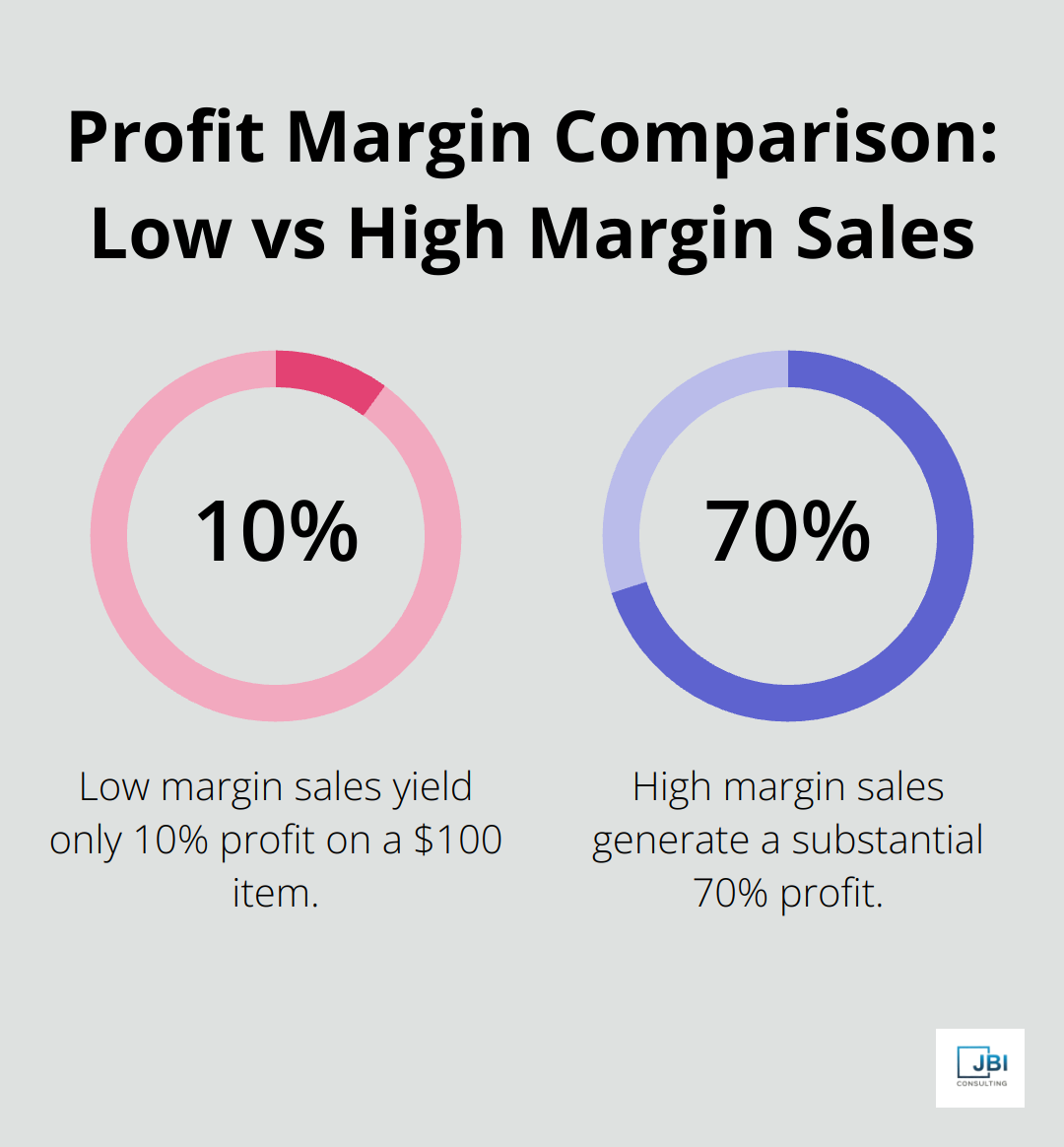
Low-margin sales involve products or services sold at a price just slightly above their cost. These sales might boost your revenue figures, but they contribute little to your bottom line. For example, a retailer selling a $100 item with a $90 cost price only makes a $10 profit (a 10% margin).
High-margin sales yield a significant profit relative to the cost. Let’s say you sell a consulting service for $1000 that costs you $300 to deliver. That’s a $700 profit (a 70% margin). This difference in profitability can transform your business.
The Ripple Effect on Your Business
The impact of focusing on high-margin sales extends far beyond immediate profits. Higher margins provide more resources to reinvest in your business, whether that’s in marketing, product development, or team expansion. This creates a positive cycle of growth and improvement.
Moreover, high-margin sales often correlate with higher-value offerings. These tend to attract more loyal customers who appreciate quality and are less price-sensitive. This can lead to stronger customer relationships and more stable revenue streams.
Debunking High Margin Myths
One common misconception is that high margins always mean high prices. This isn’t necessarily true. High margins can also come from efficient operations, smart sourcing, or offering unique value that customers are willing to pay for.
Another myth suggests that pursuing high-margin sales means abandoning your existing customer base. In reality, it’s about strategically shifting your focus and potentially educating your customers about the value you provide.
The Path Forward
The transition to high-margin sales isn’t always easy, but it’s often necessary for long-term success. It requires a deep understanding of your costs, your market, and your unique value proposition. You might need to reevaluate your product mix, your pricing strategy, or even your target market.
The goal isn’t just to sell more – it’s to sell smarter. Understanding and leveraging the power of high-margin sales can transform your business’s financial health and set the stage for sustainable growth. Now, let’s explore strategies for identifying these high-margin opportunities in the next section.
How to Spot High-Margin Sales Opportunities
Analyze Your Customer Base
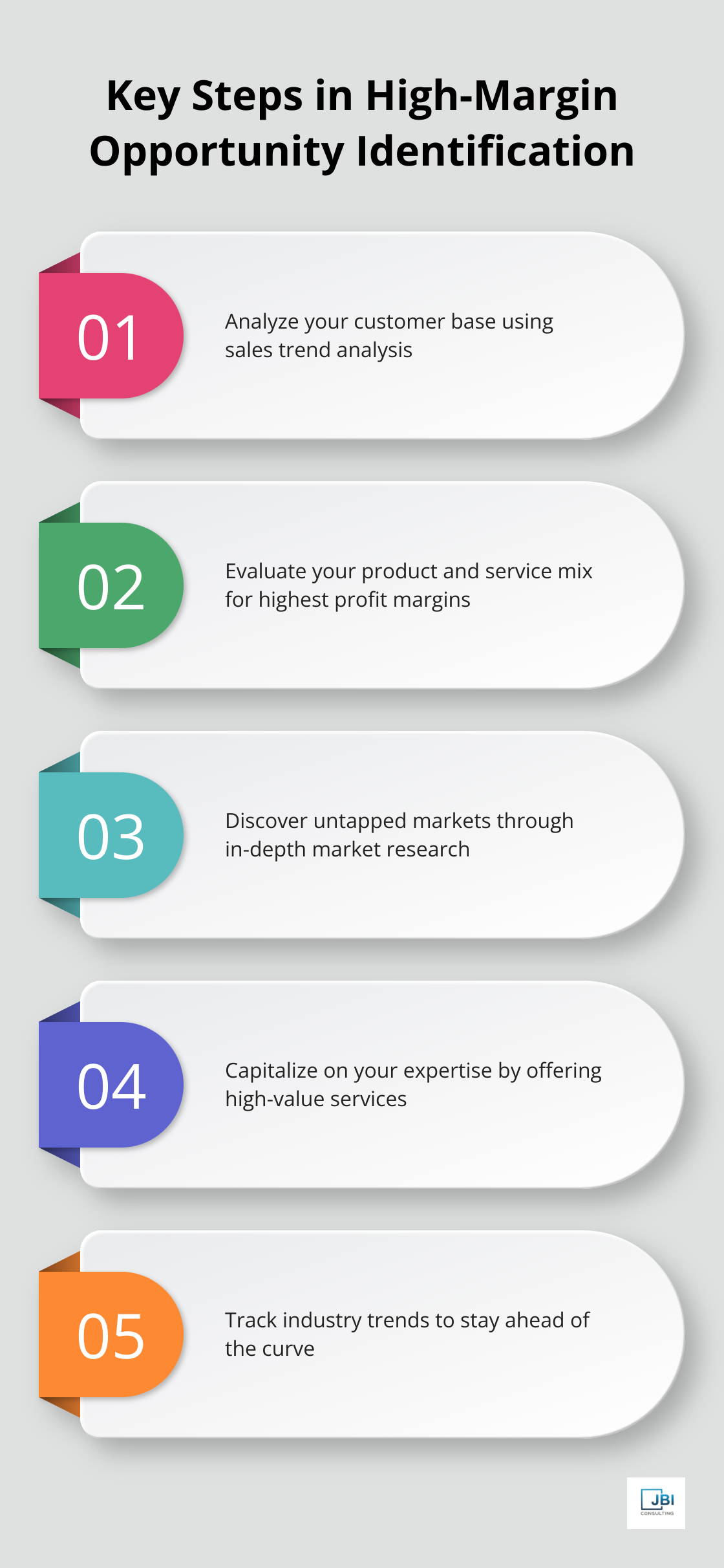
Start with an analysis of your existing customers. Sales trend analysis can help you identify patterns, growth areas, and seasonality. Look at historical sales data to find what worked and didn’t work to inform future actions. This information will help you identify similar high-value prospects.
Use customer surveys, interviews, and data analysis to understand their needs and pain points. Your goal is to find areas where you can provide unique value that customers will pay a premium for.
Evaluate Your Product and Service Mix
Take a critical look at your current offerings. Which products or services have the highest profit margins? These often solve complex problems or offer significant value to customers.
Consider ways to enhance these high-margin offerings. Can you add features to increase their value? Is it possible to bundle them with other services to create a more comprehensive solution? Focus on areas where you have a competitive advantage and can command higher prices.
Discover Untapped Markets
The best high-margin opportunities often lie in markets you haven’t considered before. Look for niche segments that your competitors have overlooked. These could be specific industries, geographical areas, or customer types with unique needs.
In-depth market research is key to understanding your customers and their unique needs. This process forms the basis for identifying a suitable niche market.
Capitalize on Your Expertise
Your company’s unique knowledge and skills can be a goldmine for high-margin sales. Consider how to package your expertise into consulting services, training programs, or premium support packages.
Many businesses have transformed their profitability by offering high-value consulting services alongside their core products. This approach not only increases margins but also strengthens customer relationships.
Track Industry Trends
Stay ahead of the curve by closely monitoring industry trends and emerging technologies. Early adoption of new solutions can position you as a leader in your field, allowing you to charge premium prices for cutting-edge offerings.
Attend industry conferences, read trade publications, and network with thought leaders to stay informed about potential high-margin opportunities on the horizon.
Now that you’ve identified potential high-margin opportunities, it’s time to implement strategies to capitalize on them. The next section will guide you through the process of developing a high-margin sales approach that will transform your business.
How to Implement a High Margin Sales Approach
Develop a Value-Based Pricing Strategy
The foundation of high-margin sales is pricing your products or services based on the value they provide, not just the cost of production. Value-based pricing involves conducting comprehensive market research, evaluating your product’s unique value proposition, and creating a pricing strategy that reflects the value delivered to customers.
Consider this example: if your software saves a company 20 hours of work per week, calculate the monetary value of that time. If it’s $1,000 per week, a $500 monthly subscription suddenly seems like a bargain. This approach allows you to command higher prices while still providing clear value to your customers.
Master the Art of Value Communication
Your sales team must articulate the value of your offerings fluently. This goes beyond listing features; it’s about painting a vivid picture of the positive outcomes customers will experience.
Create a library of customer success stories that salespeople can draw from. These stories should highlight specific, measurable results that your products or services have delivered.
Train your team to ask probing questions that uncover the customer’s pain points and goals. This information allows them to tailor their pitch and demonstrate how your solution addresses the customer’s specific needs.
Cultivate High-Value Client Relationships
High-margin sales often come from long-term, high-value clients. Invest time in nurturing these relationships.
Implement a key account management program for your most valuable clients. This might include regular strategy sessions, priority support, or early access to new features. The goal is to become a trusted advisor, not just a vendor.
Create a customer advisory board with your top clients. This not only strengthens relationships but also provides valuable insights for product development and identifies new high-margin opportunities.
Leverage Technology for Sales Efficiency
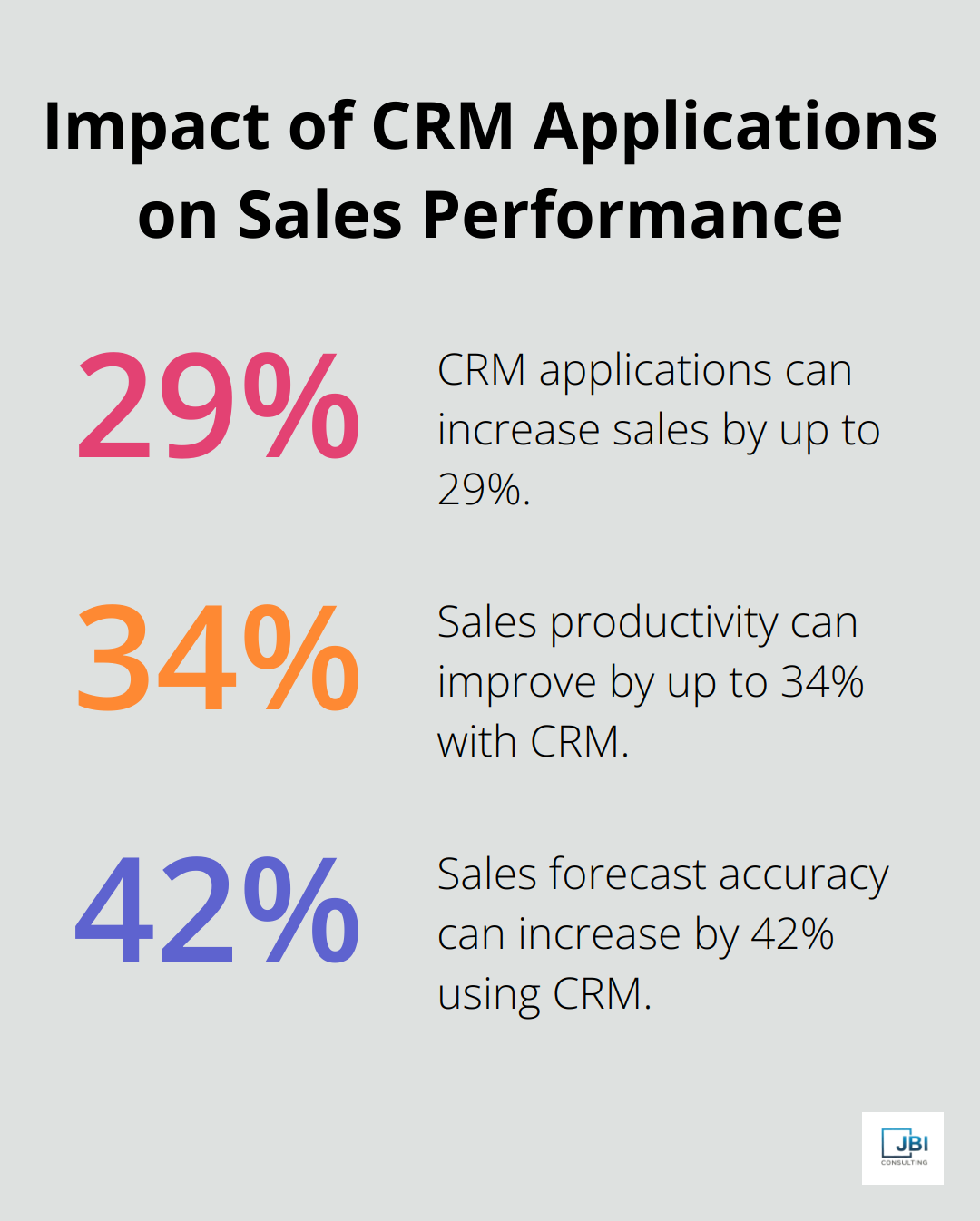
Technology can significantly enhance your high-margin sales approach. Customer Relationship Management (CRM) systems are essential for tracking interactions and identifying upsell opportunities. Salesforce reports that CRM applications can increase sales by up to 29%, sales productivity by up to 34%, and sales forecast accuracy by 42%.
Implement sales enablement tools that provide your team with easy access to relevant content and data. This might include case studies, product information, or competitive analysis. The faster your team can access this information, the more effectively they can communicate value to potential clients.
Artificial Intelligence (AI) and machine learning can also play a crucial role. These technologies can analyze vast amounts of data to identify patterns and predict which leads are most likely to convert to high-margin sales. This allows your team to focus their efforts where they’re most likely to pay off.
Final Thoughts
A shift from low-margin sales to high-margin sales transforms your business’s financial health and long-term success. This journey requires a deep understanding of your offerings’ value, identification of high-margin opportunities, and implementation of effective strategies. These actions will boost your profitability and create a sustainable competitive advantage in the marketplace.
The benefits of focusing on high-margin opportunities extend beyond immediate profits. This approach provides resources for reinvestment, fuels innovation and growth, and attracts loyal customers who appreciate quality. It also allows you to differentiate yourself from competitors and establish more stable revenue streams.
JBI Consulting specializes in helping businesses make this crucial shift. Our program, led by Michael Hinkle, changes your sales mindset from passive lead nurturing to proactive opportunity hunting. With over two decades of experience, we can help you refine your sales skills, enhance client relationships, and improve your deal closure rates (dramatically).