
Sales improvement strategies are essential for businesses looking to boost their revenue and stay competitive. In today’s fast-paced market, companies must constantly refine their approach to selling.
At JBI Consulting, we’ve identified the top strategies that can transform your sales performance. This blog post will guide you through proven techniques to enhance your prospecting, streamline your sales process, and build lasting customer relationships.
How to Find and Attract Your Ideal Customers
Create Detailed Buyer Personas
Start your prospecting journey by developing comprehensive buyer personas. These fictional representations of your ideal customers stem from real data and market research. Include demographics, behavior patterns, motivations, and goals. The more specific you are, the better you can tailor your approach.
For example, if you sell enterprise software, your buyer persona might be a CTO of a mid-sized company, aged 40-55, who prioritizes scalability and cost-efficiency. Understanding these details helps you craft messages that resonate with your target audience.
Leverage LinkedIn for B2B Prospecting
LinkedIn proves to be a goldmine for B2B prospecting. According to recent data, 89% of B2B marketers use LinkedIn for lead generation and 62% say it produces leads for them. Here’s how to use it effectively:

- Optimize your profile to showcase your expertise and value proposition.
- Engage with potential clients’ content through thoughtful comments.
- Share valuable industry insights to position yourself as a thought leader.
- Use LinkedIn Sales Navigator to find decision-makers in your target companies.
Perfect Your Cold Email Strategy
While some claim cold emailing is dead, data suggests otherwise. 54% of B2B technology buyers prefer being contacted by cold call, compared to 40% of buyers in financial services and 50% of purchasing decision-makers in other industries. The key is to make your outreach stand out:
- Personalize beyond just the name. Reference recent company news or achievements.
- Keep it short. Try to write 50-125 words.
- Focus on value. What specific problem can you solve for them?
- Include a clear, low-commitment call to action.
The goal of cold outreach isn’t to make a sale but to start a conversation.
Implement a Multi-Channel Approach
Don’t put all your eggs in one basket. A study by Omnisend found that purchase frequency is 250% higher for omnichannel campaigns compared to single-channel campaigns. Mix your prospecting methods:
- Social media engagement
- Email outreach
- Phone calls
- Direct mail (it still works in certain industries)
- Networking events (virtual or in-person)
Diversify your approach to increase your chances of connecting with prospects through their preferred channel.
These prospecting techniques can significantly boost your sales pipeline. However, prospecting is just the first step in the sales process. The next section will explore how to enhance your overall sales process to convert these prospects into loyal customers. (This transition sets the stage for the upcoming chapter without summarizing or concluding the current one.)
How to Streamline Your Sales Process
Implement a Consistent Sales Methodology
A uniform sales methodology across your team can dramatically increase conversion rates and revenue. The MEDDIC framework works best in B2B environments, helping sales teams maximize their revenue potential. This approach focuses on qualifying leads based on specific criteria, ensuring that sales efforts target the most promising opportunities.
The Sales Management Association reports that companies with a clearly defined sales process see 18% more revenue growth compared to those without. Select a methodology that aligns with your product and target market, and provide thorough training for your team in its application.
Use Automation to Boost Efficiency
Sales automation tools significantly increase your team’s productivity. Salesforce reports that high-performing sales teams are 2.8 times more likely to use sales automation than underperforming teams. Key areas where automation makes a difference include:
- Lead scoring: AI-powered tools automatically rank leads based on their conversion likelihood.
- Email sequences: Automated email campaigns nurture leads over time.
- Meeting schedule: Tools allow prospects to book meetings directly into your calendar.
- CRM updates: Software automatically logs calls, emails, and other prospect interactions.
Automation of these tasks allows your sales team to focus on building relationships and closing deals.
Perfect Your Follow-up Strategy
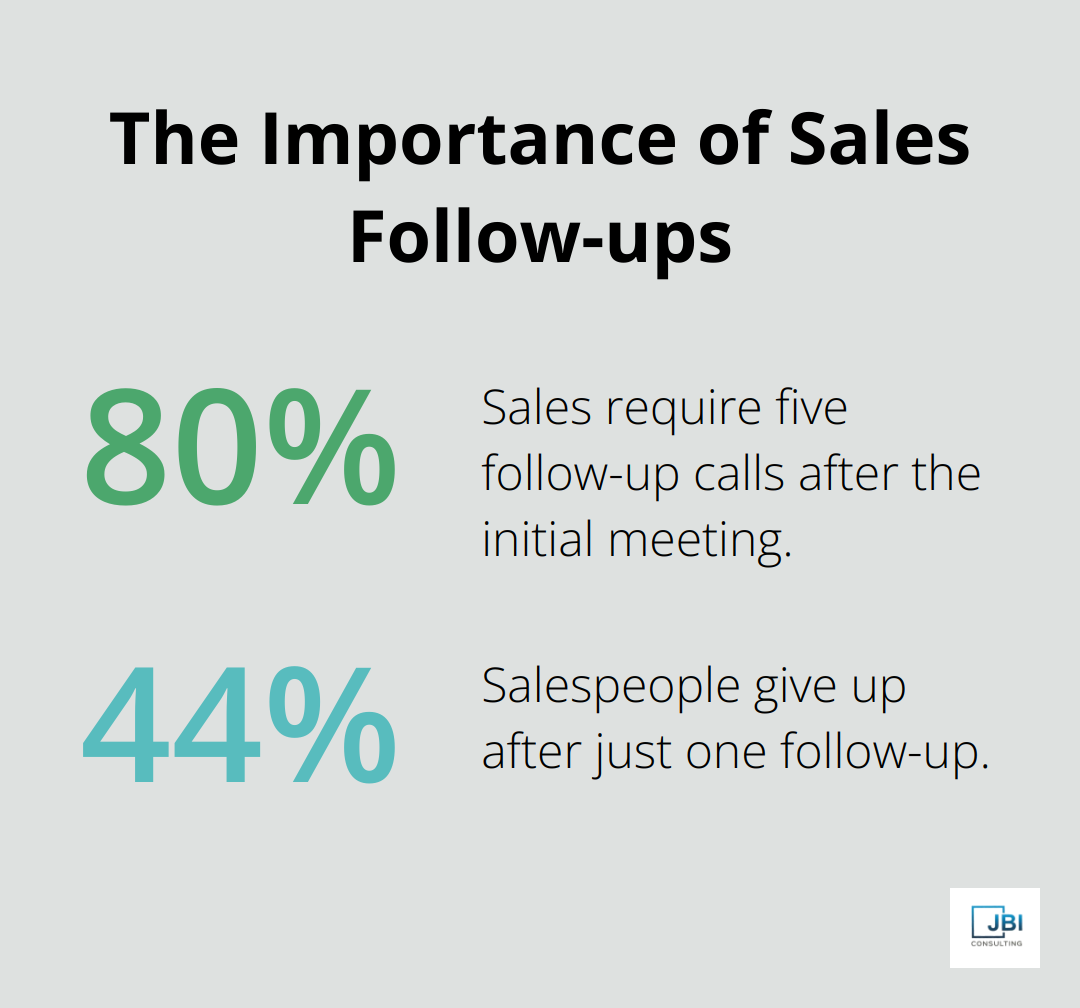
Effective follow-up often determines whether a deal closes or slips away. Invesp’s study shows that 80% of sales require five follow-up calls after the initial meeting. Yet, 44% of salespeople give up after just one follow-up.
Try this systematic approach to follow-ups:
- Set clear next steps at the end of each interaction.
- Use multiple communication channels (email, phone, social media) for follow-ups.
- Provide value in each follow-up (e.g., relevant industry insights or case studies).
- Track your follow-ups meticulously in your CRM.
Persistence pays off. Brevet found that 80% of sales occur between the fifth and twelfth contact.
These strategies create a more efficient and effective sales process. However, closing the deal marks just the beginning of a successful customer relationship. The next section explores how to build and maintain strong customer relationships that lead to repeat business and referrals (a key factor in long-term sales success).
How to Build Lasting Customer Relationships
Master the Art of Active Listening
Active listening requires more than hearing your customers’ words; it demands full engagement with their message and thoughtful responses. To practice active listening:
- Focus your full attention during conversations (avoid distractions).
- Take notes on key points to show engagement and for future reference.
- Ask clarifying questions to ensure you fully grasp their needs and concerns.
- Summarize what you’ve heard to confirm understanding and show you value their input.
True listening uncovers valuable insights that help you tailor your solutions and strengthen your relationship.
Become a Trusted Advisor
Position yourself as more than just a vendor to build lasting relationships. Consistently provide value beyond your product or service. LinkedIn’s State of Sales Report shows that 88% of buyers describe the salespeople they ultimately do business with as “trusted advisors.”

To achieve this status:
- Stay informed about industry trends and share relevant insights with your customers.
- Offer solutions to their problems (even if it doesn’t directly involve your product).
- Connect them with other professionals or resources that can benefit their business.
- Provide educational content like webinars, white papers, or personalized reports.
Focus on your customers’ overall success rather than just making a sale to build trust and loyalty that leads to long-term partnerships.
Implement a Customer Success Program
A structured customer success program can significantly impact your ability to maintain and grow customer relationships. A recent study investigated the impact of customer retention on organizational profitability in the Fast-Moving Consumer Goods (FMCG) sector in Nigeria.
Key elements of an effective customer success program include:
- Regular check-ins to assess satisfaction and address any issues.
- Personalized onboarding processes to ensure customers get maximum value from your product or service.
- Proactive outreach is when you identify potential problems or opportunities for improvement.
- Celebration of customer milestones and successes.
A well-executed customer success program helps you retain and grow existing customers (often more cost-effective than acquiring new ones).
Leverage Technology for Relationship Management
Use Customer Relationship Management (CRM) tools to track interactions, preferences, and history with each client. This data allows you to personalize your approach and anticipate needs. Try to integrate your CRM with other tools (like email marketing platforms or social media management software) for a comprehensive view of each customer relationship.
Seek and Act on Customer Feedback
Regularly collect and analyze customer feedback to improve your products, services, and overall customer experience. Use surveys, interviews, or focus groups to gather insights. More importantly, act on this feedback and communicate the changes you’ve made back to your customers. This approach shows that you value their input and are committed to their satisfaction.
Final Thoughts
Sales improvement strategies form the foundation of business success. These techniques enhance prospecting, streamline processes, and build lasting customer relationships. Companies must create detailed buyer personas, leverage LinkedIn for B2B prospecting, and perfect cold email strategies to attract ideal customers effectively. Implementing consistent sales methodologies, using automation tools, and refining follow-up strategies will increase efficiency and boost sales performance.
Strong customer relationships result from active listening, becoming a trusted advisor, and implementing customer success programs. These approaches lead to long-term partnerships and repeat business. The sales landscape constantly evolves, so continuous learning and adaptation remain essential for staying ahead of competitors.
JBI Consulting understands the challenges of implementing these strategies. Our transformative program, led by Michael Hinkle, helps individuals and teams shift their mindset from nurturing existing leads to proactively hunting new opportunities. Learn more about how we can help you unlock your sales potential and achieve remarkable success in your sales endeavors.