
A go-to-market strategy is the backbone of successful product launches and business growth. At JBI Consulting, we’ve seen firsthand how a well-crafted strategy can make or break a company’s market entry.
This blog post will break down the key components of an effective go-to-market strategy, guide you through its development, and show you how to implement it for maximum impact.
Key Components of a Go-to-Market Strategy
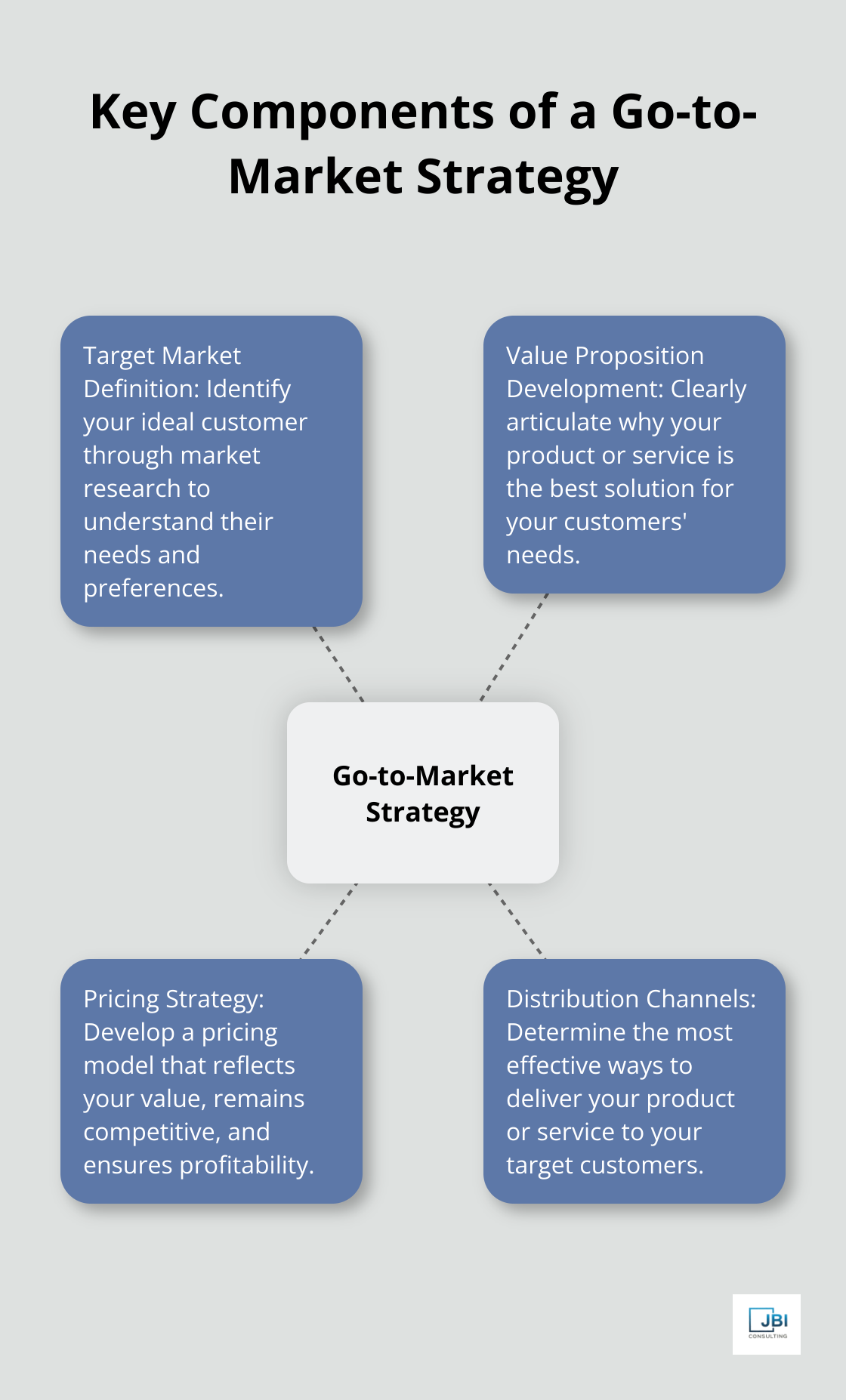
A successful go-to-market strategy rests on four essential pillars: target market definition, value proposition development, pricing strategy, and distribution channels. These components work together to create a powerful launch plan for products and services.
Define Your Target Market
The first step in crafting a go-to-market strategy is to identify your target audience. This process involves conducting market research to understand your ideal customer’s needs and preferences. For example, a B2B software company might discover that their target market consists of mid-sized businesses looking for cost-effective solutions.
Craft a Compelling Value Proposition
After identifying your target market, you need to define your value proposition. This should clearly articulate why your product or service is the best solution for your customers’ needs. Your value proposition should be clear, concise, and differentiated from competitors.
Develop a Smart Pricing Strategy
Pricing can determine the success or failure of your go-to-market strategy. It’s not just about covering costs and making a profit. Your pricing should reflect the value you provide and remain competitive within your market. Consider different models like tiered pricing, freemium, or subscription-based pricing.
Choose the Right Distribution Channels
The final key component involves determining how to deliver your product or service to your customers. This could include direct sales, e-commerce platforms, retail partnerships, or a combination of channels. Your choice should align with your target market’s preferences and buying habits.
Adapt and Refine
These components aren’t set in stone. You should review and adjust them regularly based on market feedback and performance metrics. This ongoing refinement process ensures that your go-to-market strategy remains effective and relevant in a constantly changing business landscape.
As we move forward, let’s explore how to develop these key components into a comprehensive go-to-market strategy that drives real results for your business.
How to Build a Winning Go-to-Market Strategy
Conduct In-Depth Market Research
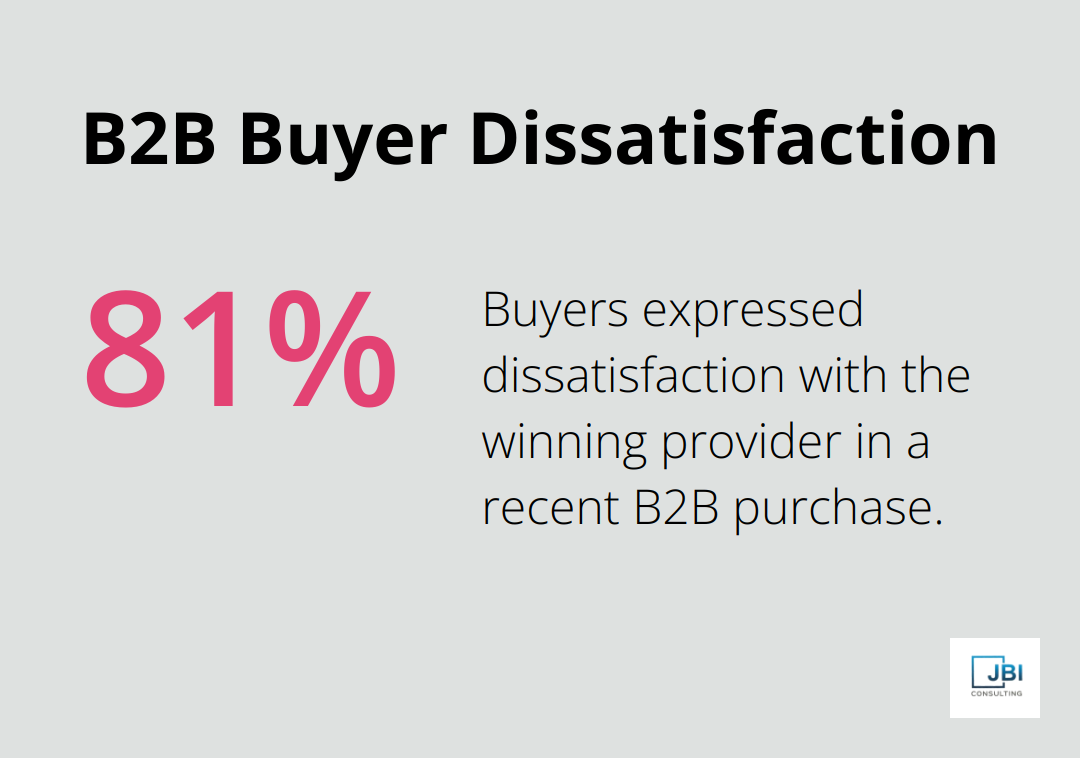
Start your go-to-market strategy with comprehensive data collection about your target market. This includes demographic information, buying behaviors, and pain points. Use tools like Google Trends, social media analytics, and industry reports to gain insights. A recent study by Forrester Research found that 81% of buyers expressed dissatisfaction with the winning provider in a recent B2B purchase. This type of information can shape your approach to customer engagement.
Analyze Your Competitors
Understanding your competition is essential. Identify your main competitors and analyze their strengths and weaknesses. Look at their pricing, marketing strategies, and customer reviews. Tools like SEMrush or Ahrefs can provide valuable insights into their online presence and marketing tactics. Pay attention to gaps in their offerings – these could be opportunities for your business to stand out.
Map the Customer Journey
Create a detailed map of your customer’s journey from initial awareness to purchase and beyond. This helps you identify key touchpoints and potential barriers to conversion. A McKinsey study revealed that revenue growth has a correlation three times stronger with customer journey management than with customer satisfaction. Use customer interviews and surveys to gather first-hand information about their decision-making process.
Craft Your Messaging and Positioning
Your messaging should clearly communicate your unique value proposition and resonate with your target audience. Avoid generic statements and focus on specific benefits that address your customers’ pain points. For instance, if you target small businesses with a new accounting software, your messaging might emphasize how it saves time and reduces errors (rather than just listing features).
Implement and Iterate
Developing a go-to-market strategy is not a one-time event. It requires regular review and adjustment based on market feedback and performance data. This agile approach ensures that your strategy remains effective in a rapidly changing business environment. Many successful companies (including industry leaders) continuously refine their strategies to stay ahead of market trends and customer needs.
As you move forward with your go-to-market strategy, the next critical step is to focus on its implementation. This involves aligning your sales and marketing efforts, creating compelling content, and establishing clear performance metrics. Let’s explore these aspects in detail in the next section.
How to Execute Your Go-to-Market Strategy
Align Sales and Marketing
The first step to execute your go-to-market strategy is to ensure your sales and marketing teams work in sync. This alignment proves critical for delivering a consistent message to your target audience. A study by the Aberdeen Group shows that companies with strong sales and marketing alignment achieve a 20% annual growth rate.
We recommend regular joint meetings between sales and marketing teams. These meetings should focus on sharing customer insights, discussing campaign performance, and aligning on messaging. Tools like Salesforce or HubSpot can facilitate this collaboration by providing a shared view of customer interactions and campaign performance.

Create Compelling Content
Content powers your go-to-market strategy. It attracts potential customers, educates them about your solution, and ultimately convinces them to make a purchase. Recent research from the Content Marketing Institute shows that successful B2B marketers are increasingly using content marketing to nurture their audience and generate leads.
When you create content, focus on addressing your customers’ pain points and demonstrate how your solution solves their problems. Use a mix of formats (blog posts, whitepapers, case studies, videos) to cater to different preferences. For example, if you target busy executives, short-form content like infographics or brief video tutorials might prove more effective than lengthy whitepapers.
Generate and Nurture Leads
Lead generation and nurturing form crucial components of your go-to-market strategy. According to Marketo, companies that excel at lead nurturing generate 50% more sales-ready leads at 33% lower cost.
Start by identifying the channels where your target audience is most active. This could be LinkedIn for B2B companies, Instagram for consumer brands, or industry-specific forums for niche products. Use these channels to promote your content and capture leads.
Once you’ve captured leads, nurture them with targeted content based on their interests and stage in the buyer’s journey. Marketing automation tools can help you scale this process, ensuring each lead receives the right content at the right time.
Measure Performance
The final piece of the puzzle is to measure the performance of your go-to-market strategy. Without clear metrics, it’s impossible to know if your strategy works or where to make improvements.
Key metrics to track include customer acquisition cost (CAC), lifetime value (LTV), conversion rates at each stage of the funnel, and overall revenue growth. Tools like Google Analytics, Mixpanel, or Amplitude can help you track these metrics and gain insights into customer behavior.
Executing a go-to-market strategy requires an iterative process. Use these metrics to continuously refine your approach, double down on what works and adjust what doesn’t. With consistent effort and data-driven decision making, you can turn your go-to-market strategy into a powerful engine for business growth.
Final Thoughts
A go-to-market strategy definition encompasses more than just a product launch plan. It aligns your entire organization towards achieving market success through targeted research, compelling messaging, and strategic distribution. We at JBI Consulting understand the power of a well-crafted go-to-market strategy to drive business growth and competitive advantage.
Successful implementation requires clear goals, market understanding, and a unique value proposition. Regular review and adjustment based on market feedback and performance data ensure your strategy remains effective. Our experience shows that companies who invest time and resources into developing robust go-to-market strategies often see significant returns on their investment.
For those looking to maximize the impact of their go-to-market strategy, our transformative program offers valuable insights and methodologies. This program focuses on shifting mindsets from lead nurturing to proactive opportunity hunting (a skill essential in today’s dynamic business environment). We invite you to explore how our expertise can elevate your sales approach and drive your business forward.