
At JBI Consulting, we’ve seen firsthand how innovative sales strategies can transform businesses. The sales landscape is evolving rapidly, driven by technological advancements and changing customer expectations.
In this post, we’ll explore cutting-edge approaches to boost your sales performance and stay ahead of the competition. From leveraging AI-powered tools to fostering a dynamic sales culture, these strategies will help you revolutionize your sales process.
How Technology Revolutionizes Your Sales
Technology has become an indispensable part of modern sales strategies. The right tech tools can significantly boost sales performance and transform the way businesses approach their sales processes. Let’s explore some cutting-edge technologies that are reshaping the sales landscape.
AI-Powered CRM: Your Round-the-Clock Sales Assistant
Artificial Intelligence (AI) transforms Customer Relationship Management (CRM) systems into powerful sales allies. These intelligent CRMs predict customer behavior, automate follow-ups, and suggest optimal contact times for prospects. 83% of sales teams with AI saw revenue growth this year compared to 66% without AI.

A standout feature is predictive lead scoring. AI analyzes vast amounts of data to identify the leads most likely to convert, allowing your team to focus their efforts where they matter most. This targeted approach can significantly increase your conversion rates and overall sales efficiency.
Sales Automation: Prioritizing High-Value Tasks
Sales automation tools revolutionize productivity. These tools handle repetitive tasks (such as data entry, scheduling, and basic customer inquiries), allowing your sales team to concentrate on what they do best – selling.
For example, chatbots manage initial customer interactions, qualifying leads before they reach a human sales rep. This not only saves time but ensures that your team always deals with high-quality leads.
Virtual Reality: Bringing Products to Life
Virtual Reality transforms product demonstrations, especially for complex or large-scale products. VR provides customers with an immersive experience of your product without the need for physical samples or on-site visits.
Imagine walking a customer through a virtual factory floor or letting them test drive a car – all from their office. This technology not only impresses customers but also significantly reduces sales cycles and travel costs. By integrating VR into product demos, companies can enhance customer understanding, streamline the sales process, and strengthen their competitive positioning.
While these technologies offer exciting possibilities, it’s crucial to choose the right tools for your specific needs. The goal isn’t just to adopt new technology, but to leverage it strategically to enhance your sales process and ultimately, your bottom line.
As we move forward, it’s important to recognize that technology alone isn’t enough. The next section will explore how personalization and customer-centric approaches can complement these technological advancements to create a truly innovative sales strategy.
Tailoring Your Sales Approach for Maximum Impact
The Power of Customized Sales Pitches
Modern buyers expect personalized interactions that address their specific pain points. This necessitates the creation of tailored sales pitches for each prospect.
To craft an effective pitch, you must thoroughly research your potential client. Examine their company history, recent news, and industry challenges. Use this information to create a pitch that speaks directly to their situation. For instance, if you sell software to a company struggling with data management, focus your pitch on how your product can streamline their data processes and save them time and resources.
Buyer Personas: Your Strategic Asset
Detailed buyer personas are essential for effective personalization. These fictional representations of your ideal customers help you understand their motivations, challenges, and decision-making processes. HubSpot reports that using buyer personas makes websites 2-5 times more effective and easier to use by targeted users.
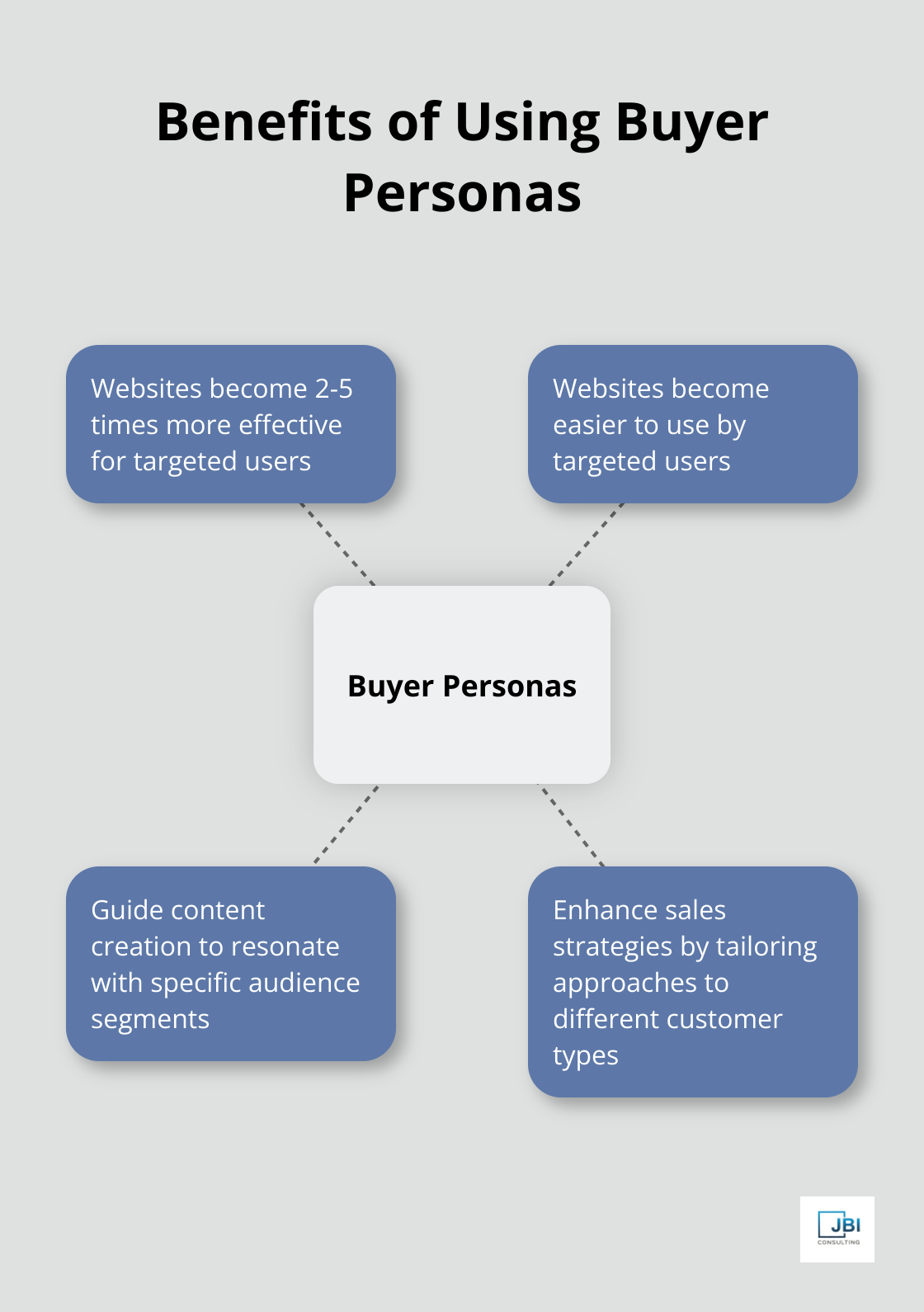
You should develop 3-5 distinct buyer personas for your product or service. Include demographic information, job roles, goals, and pain points. Use these personas to guide your content creation and sales strategies. For example, if one of your personas is a tech-savvy startup founder, create content that highlights innovative features and rapid scalability.
Data Analytics: The Foundation of Customer Insights
Data analytics forms the backbone of effective personalization. It allows you to understand customer preferences, predict future behavior, and tailor your approach accordingly.
You should implement a robust data analytics system to track customer interactions across all touchpoints. Look for patterns in purchasing behavior, content engagement, and communication preferences. Use this data to segment your customers and create targeted campaigns.
For example, if your data shows that a particular customer segment responds well to video content, prioritize video demonstrations in your outreach to those prospects. If another segment tends to make purchases after attending webinars, focus on getting them to register for your upcoming online events.
Personalization extends beyond using a customer’s name in an email. It involves creating a tailored experience at every stage of the sales process. The development of customized pitches, the use of buyer personas, and the application of data-driven insights can create a sales approach that resonates with each individual customer.
As we move forward, it’s important to recognize that personalization and data-driven strategies are just part of the equation. The next section will explore how building a strong sales team culture can complement these approaches and further enhance your sales performance.
Cultivating a High-Performance Sales Culture
Embrace a Growth Mindset
A growth mindset forms the foundation of a high-performing sales team. This concept, introduced by psychologist Carol Dweck, promotes the belief that abilities develop through dedication and hard work. In sales, this translates to viewing challenges as opportunities and failures as learning experiences.
We recommend the implementation of a ‘failure celebration’ ritual. Once a month, sales teams should gather to share recent setbacks and the lessons learned. This practice normalizes failure as part of the learning process and encourages risk-taking. Organizations typically fail to analyze or make changes even when people are well aware of failures.
Implement Continuous Learning and Development
In the fast-paced world of sales, stagnation hinders success. Ongoing training and development keep your team sharp and adaptable.
The ’70-20-10′ model of learning proves effective (70% from job-related experiences, 20% from interactions with others, and 10% from formal educational events). To implement this model:

- Assign stretch projects that challenge team members
- Establish a mentorship program pairing junior and senior sales reps
- Provide access to online courses or bring in external trainers for workshops
Foster Collaboration and Knowledge Sharing
A collaborative sales culture significantly boosts performance. When team members freely share knowledge and support each other, the entire team benefits.
Try to implement a ‘Sales Hack Friday’ where team members take turns presenting their best sales techniques or recent wins. This not only spreads valuable knowledge but also recognizes individual contributions.
Consider the use of a collaborative CRM tool that allows team members to share notes, strategies, and customer insights. A culture of collaboration and support leads to increased productivity and better results.
Measure and Optimize Performance
To truly cultivate a high-performance sales culture, regular measurement and optimization of performance is essential. Establish clear Key Performance Indicators (KPIs) that align with your overall business goals. These might include metrics such as conversion rates, average deal size, or customer lifetime value.
Use data analytics tools to track these KPIs and provide regular feedback to your team. This allows for quick identification of areas for improvement and celebration of successes. Regular performance reviews (both individual and team-based) help maintain focus and drive continuous improvement.
Recognize and Reward Success
A strong sales culture thrives on recognition. Implement a robust reward system that acknowledges both individual and team achievements. This could include monetary bonuses, public recognition, or experiential rewards (such as team outings or professional development opportunities).
Try to create a mix of short-term incentives (for hitting monthly targets) and long-term rewards (for consistent performance over time). This balanced approach motivates immediate action while encouraging sustained effort and loyalty.
Effective sales team management involves setting clear objectives and fostering a positive culture, which will help lead your sales force to new heights.
Final Thoughts
Innovative sales strategies reshape modern business. Companies stay ahead by leveraging cutting-edge technologies, personalizing customer experiences, and fostering dynamic sales cultures. The integration of AI-powered CRM systems and sales automation tools streamlines processes, allowing sales teams to focus on high-value tasks. Virtual reality demonstrations bring products to life, offering immersive experiences that captivate potential customers.
Personalization, driven by data analytics and detailed buyer personas, ensures that every interaction resonates with the customer’s unique needs and preferences. Building a strong sales team culture, characterized by a growth mindset, continuous learning, and collaboration, creates a powerful synergy that drives sales performance to new heights. The sales landscape constantly evolves, and businesses must evolve with it to succeed.
The future of sales belongs to those who innovate. JBI Consulting’s transformative program offers a pathway to success for those ready to transform their sales approach. Our methodology (with over two decades of experience) shifts mindsets from passive lead nurturing to proactive opportunity hunting, enhancing client relationships and boosting deal closure rates. The time for sales transformation is now.