
At JBI Consulting, we’ve seen firsthand how the right strategies can transform a company’s sales and marketing performance.
In this post, we’ll share proven methods to improve sales strategies and marketing tactics in today’s competitive landscape.
From enhancing customer-centric approaches to leveraging digital marketing tools, we’ll cover practical steps you can take to boost your results.
How to Boost Your Sales Performance
Put Customers at the Heart of Your Strategy
To improve your sales performance, start by understanding your customers deeply. Go beyond basic demographics and uncover their pain points, desires, and behaviors. Use surveys, interviews, and social media listening to gather insights. Then, tailor your sales pitch to address these specific needs. For example, if you sell software to small businesses, focus on how your product saves time and reduces costs (two key concerns for this audience).
Craft a Compelling Value Proposition
A Customer Value Proposition is a clear statement that explains how a product or service solves a customer’s problem and differentiates it from competitors. It needs to answer the question, “Why should a customer choose us over our competitors?” The most effective value propositions are specific and quantifiable. Instead of saying “We improve efficiency,” try “Our software reduces data entry time by 50%.” Test different versions with your target audience to see which resonates most.
Use Data for Smarter Decisions
In today’s digital age, data reigns supreme. Use CRM systems to track customer interactions, sales cycles, and conversion rates. Analyze this data to identify trends and opportunities. For instance, you might discover that leads from a particular industry have a higher close rate. Armed with this knowledge, you can focus more resources on that sector. Sales analytics can help you make better decisions by defining your objectives and choosing the right tools to gather and interpret this valuable data.
Implement a Dynamic Sales Approach
A static sales strategy won’t cut it in today’s fast-paced business environment. Try to adapt your approach based on market changes and customer feedback. This might involve regular training sessions, role-playing exercises, or bringing in external experts to refresh your team’s skills and mindset.
Foster a Culture of Continuous Improvement
Encourage your sales team to constantly refine their techniques. Set up regular feedback sessions where team members can share successes and challenges. Create a system for tracking and celebrating small wins, not just big deals. This culture of improvement will keep your team motivated and help them adapt to changing market conditions.
As we move forward, it’s important to recognize that sales strategies don’t exist in a vacuum. They need to work hand-in-hand with your marketing efforts to truly drive results. Let’s explore how you can align these two crucial aspects of your business for maximum impact.
Mastering Digital Marketing for Sales Success
Content Marketing: Your Brand’s Voice
Content marketing builds brand awareness and establishes authority in your industry. Create valuable, relevant content that addresses your audience’s pain points and questions. This includes blog posts, whitepapers, case studies, or video tutorials. A B2B software company might create a series of how-to guides on improving workplace productivity, subtly showcasing their product’s benefits.
85% of B2B marketers use content to generate leads as opposed to just 60% of B2C marketers. Focus on quality over quantity. One in-depth, well-researched piece often outperforms several superficial articles.

SEO and Local Visibility: Be Found Where It Matters
Search engine optimization (SEO) increases your online visibility. Identify keywords relevant to your business and incorporate them naturally into your website content. Local SEO is particularly important for businesses with physical locations. Update your Google My Business listing and encourage satisfied customers to leave reviews.
A BrightLocal study found that 93% of consumers used the internet to find a local business in the last year (with 87% reading online reviews for local businesses). This underscores the importance of a strong online presence, especially for local businesses.
Social Media: Engage and Convert
Social media platforms offer unparalleled opportunities for audience engagement and sales driving. Choose platforms where your target audience is most active. B2B companies often yield the best results on LinkedIn, while B2C businesses might find more success on Instagram or Facebook.
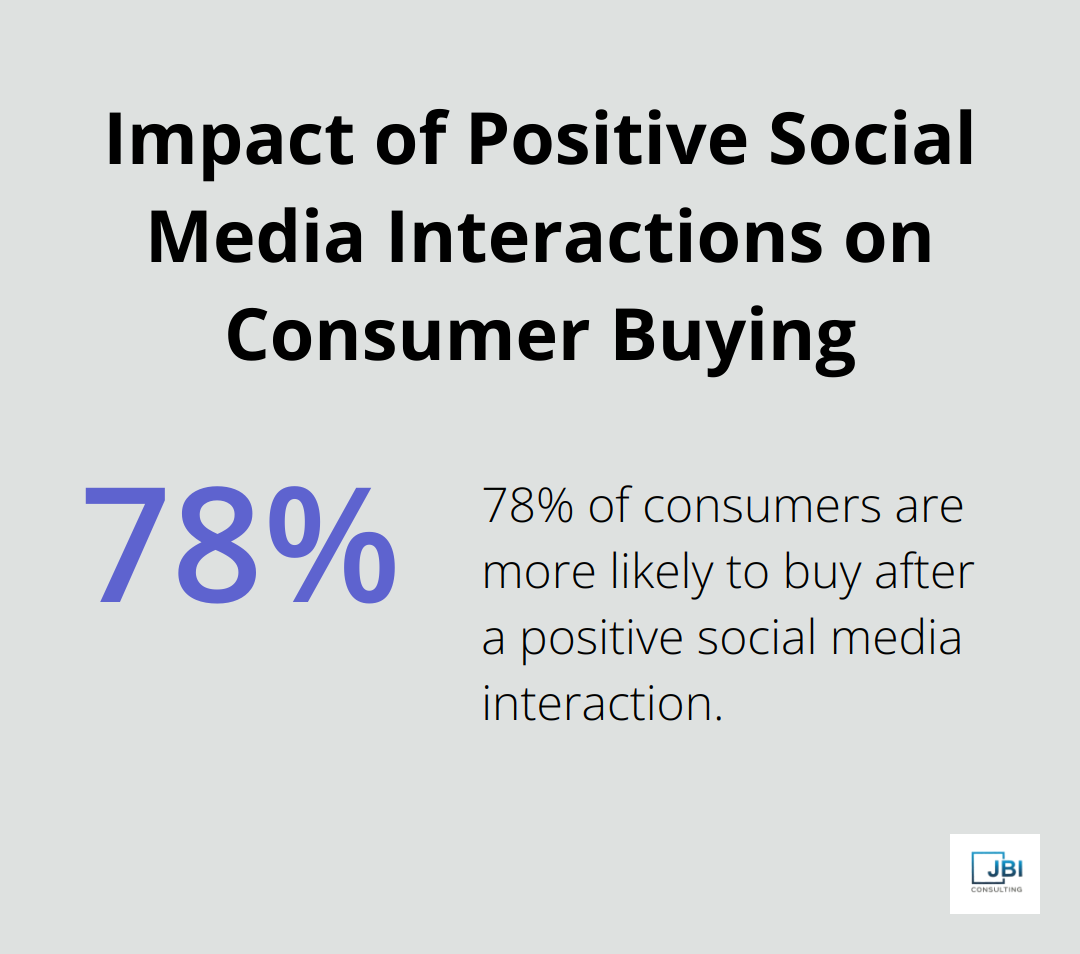
Don’t just broadcast your message – engage in conversations. Respond to comments, ask questions, and share user-generated content. Sprout Social reports that 78% of consumers are more willing to buy from a brand after a positive interaction on social media.
Email Marketing Automation: Nurture Leads Efficiently
Email marketing remains one of the most effective digital marketing tactics, especially when automated. Set up email sequences that nurture leads through the sales funnel. For instance, create a welcome series for new subscribers, followed by educational content, and finally, targeted offers based on their interactions.
Campaign Monitor states that automated emails generate 320% more revenue than non-automated emails. However, personalization is key. Segment your email list based on factors like purchase history, engagement level, or demographics to ensure your messages resonate with each recipient.
These digital marketing tactics work best when integrated into a cohesive strategy. Try to combine these tactics effectively to create a powerful engine for lead generation and sales growth. As we move forward, we’ll explore how to align these marketing efforts with your sales strategies for maximum impact.
How Sales and Marketing Can Collaborate Effectively
Create a Unified Customer Journey
Sales and marketing teams must map out a unified customer journey. This approach tracks every touchpoint a potential customer has with your brand, from initial awareness to post-purchase support. Both teams can provide consistent messaging and support at each stage when they understand this journey.
Customer journey mapping is essential for creating a unified customer experience. It helps teams understand what customers need at each stage of their journey, allowing for more targeted and effective marketing and sales efforts.
If the marketing team runs a campaign highlighting a specific product feature, the sales team should prepare to discuss that feature in depth during their calls. This consistency reinforces the brand message and builds trust with potential customers.
Implement Effective Lead Scoring
Lead scoring helps prioritize leads based on their likelihood to convert. We recommend a point-based system that considers factors like company size, industry, content engagement, and specific website actions.
A lead who downloads a whitepaper and attends a webinar might score higher than one who only visits the website once. This system helps the sales team focus their efforts on the most promising leads, which can improve sales lead conversions by 20 to 40 percent.
Foster Open Communication
Regular communication between sales and marketing teams is essential for alignment. Weekly meetings allow both teams to share insights, discuss ongoing campaigns, and address challenges.
These meetings can also share success stories. If a particular piece of content proves especially effective in closing deals, the sales team can inform marketing, who can then create more content along those lines.
Use Shared Metrics and KPIs
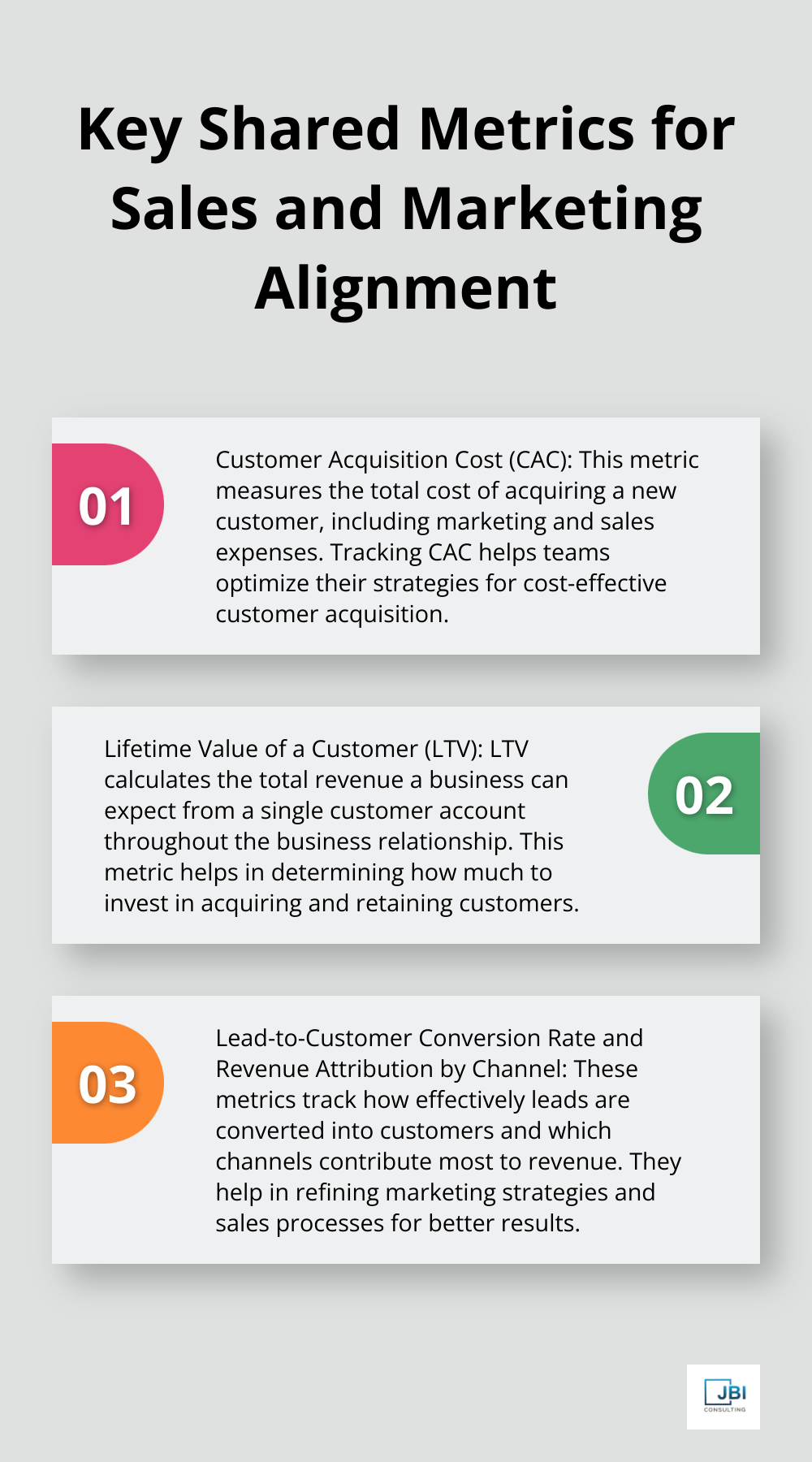
To align sales and marketing, both teams need to work towards the same goals. This means establishing shared metrics and Key Performance Indicators (KPIs) that reflect the overall business objectives.
Some effective shared metrics include:
- Customer Acquisition Cost (CAC)
- Lifetime Value of a Customer (LTV)
- Lead-to-Customer Conversion Rate
- Revenue Attribution by Channel
When both teams focus on these shared metrics, they can work together to improve overall business performance, rather than operate in silos.
Leverage Technology for Seamless Integration
The right technology can significantly enhance sales and marketing collaboration. Customer Relationship Management (CRM) systems (like Salesforce or HubSpot) can serve as a central hub for customer data, allowing both teams to access and update information in real-time.
Marketing automation tools can also streamline the handoff process between marketing and sales. These tools can automatically assign leads to sales representatives based on predefined criteria, ensuring that no potential customer falls through the cracks.
Final Thoughts
This post explored strategies to improve sales strategies and marketing tactics. We discussed customer-centric approaches, data-driven decision-making, and effective digital marketing techniques. The integration of sales and marketing efforts through unified customer journeys, lead scoring, and open communication proves essential for success.
Adaptability and continuous improvement are key in today’s business landscape. Companies that quickly adjust their strategies in response to market changes and customer needs stay ahead of the competition. We encourage you to implement these techniques in your business, starting small and refining your approach based on results.
JBI Consulting specializes in transforming sales approaches. Our program, led by Michael Hinkle, helps businesses shift from nurturing existing leads to proactively hunting new opportunities. With over two decades of experience, we offer personalized assessments and tailored strategies to enhance client relationships, refine sales skills, and boost deal closure rates.