
Most businesses waste marketing budgets by targeting everyone instead of focusing on profitable customer segments. Generic campaigns generate poor returns and fail to connect with actual buyers.
We at JBI Consulting help companies develop precise target market segment strategies that drive real results. This guide shows you how to identify your most valuable customers and create marketing that converts.
Understanding Market Segmentation Fundamentals
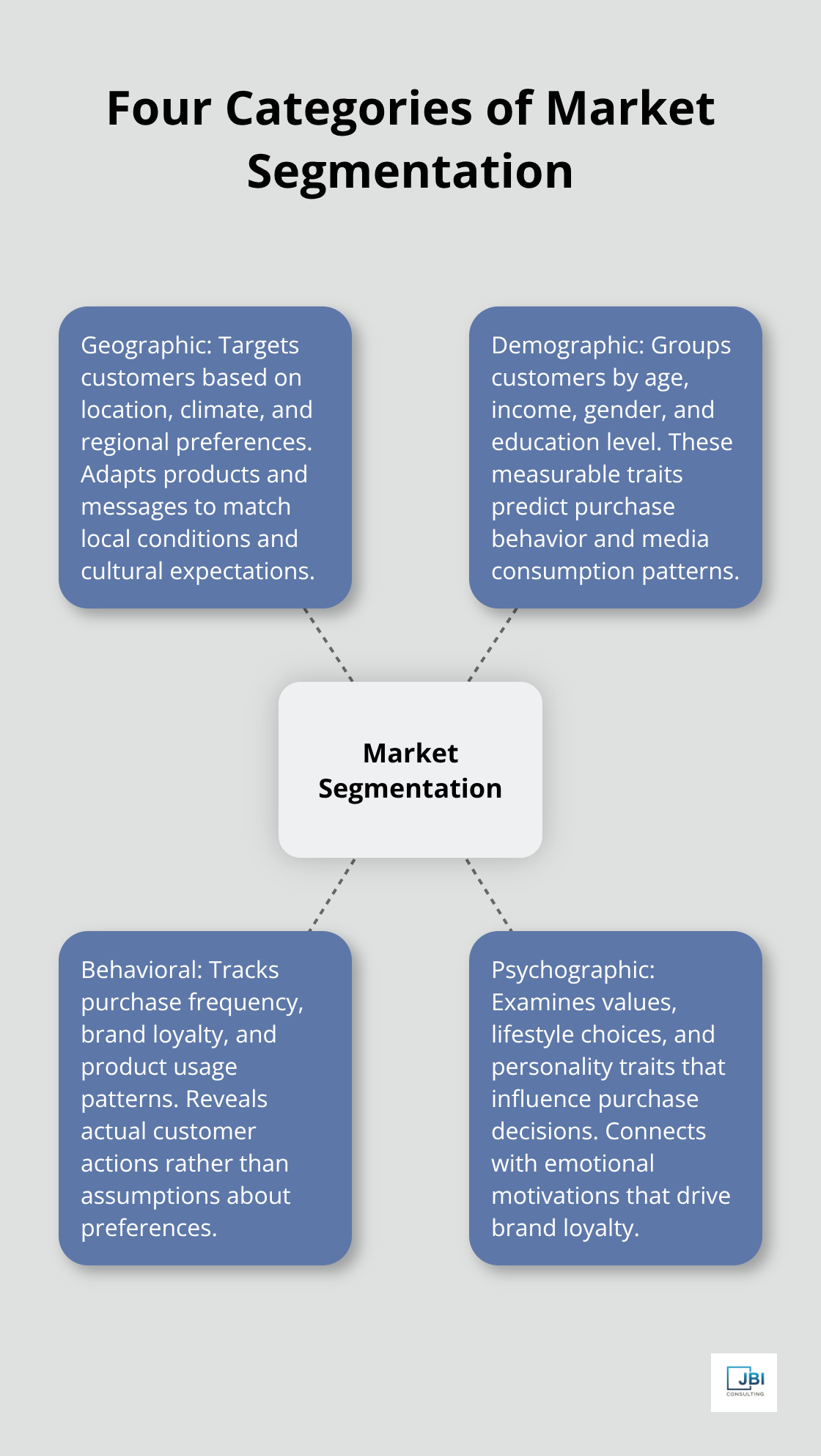
Market segmentation divides your customer base into four distinct categories that reveal how buyers make purchase decisions. Each type provides unique insights that transform generic campaigns into targeted strategies that convert.
Geographic Segmentation Targets Location-Based Preferences
Geographic segmentation targets customers based on location, climate, and regional preferences. Companies adapt products and messages to match local conditions and cultural expectations. McDonald’s uses this approach when it offers rice dishes in Asian markets while it features beef burgers in Western countries. Climate drives product demand – winter coat sales peak in northern regions while swimwear dominates tropical markets. Regional income levels also influence price sensitivity and product positioning strategies.
Demographic Segmentation Groups by Measurable Characteristics
Demographic segmentation groups customers by age, income, gender, and education level. These measurable traits predict purchase behavior and media consumption patterns. Luxury brands target high-income segments (earning $100,000+ annually) with premium products and exclusive experiences. Age demographics shape product features – smartphone manufacturers design simplified interfaces for seniors while they create gaming-focused devices for teenagers. Gender influences color preferences, product sizes, and communication styles across multiple industries.
Behavioral Segmentation Tracks Purchase Patterns
Behavioral segmentation tracks purchase frequency, brand loyalty, and product usage patterns. This data reveals actual customer actions rather than assumptions about preferences. Amazon leverages behavioral data to show that customers who buy books also purchase electronics, which drives targeted marketing to their diverse audience of 35-49 year olds. Purchase timing patterns help retailers optimize inventory and promotional campaigns. Loyalty programs capture behavioral data that identifies high-value customers who generate repeat revenue.
Psychographic Segmentation Examines Values and Lifestyle
Psychographic segmentation examines values, lifestyle choices, and personality traits that influence purchase decisions. This approach connects with emotional motivations that drive brand loyalty. Outdoor gear companies target adventure-seekers who value experiences over possessions. Health-conscious consumers prioritize organic ingredients and sustainable packaging regardless of price premiums. Values-based segments often show stronger brand attachment and higher lifetime customer value than demographic groups alone.
Market Segmentation Creates Groups While Target Marketing Selects Winners
Market segmentation creates customer groups while target marketing selects specific segments to pursue. Segmentation represents the research phase where you identify patterns in customer data. Target marketing becomes the execution phase where you choose profitable segments and allocate resources accordingly. Nike segments customers into runners, basketball players, and casual wear buyers, then targets each group with specialized products and messages. This focused approach generates 40% higher conversion rates compared to generic campaigns.
Modern consumers receive 5,000 marketing messages daily and ignore generic content that fails to address their specific needs. Mass marketing wastes 60% of advertising spend on uninterested prospects according to HubSpot research. Customer acquisition costs have increased 222% over the past decade while attention spans have decreased to 8 seconds. Companies that use targeted segmentation strategies grow twice as fast and retain customers 50% longer than businesses that rely on broad approaches.
The next step involves identifying which segments offer the greatest profit potential for your specific business model.
Methods for Identifying Your Ideal Market Segments
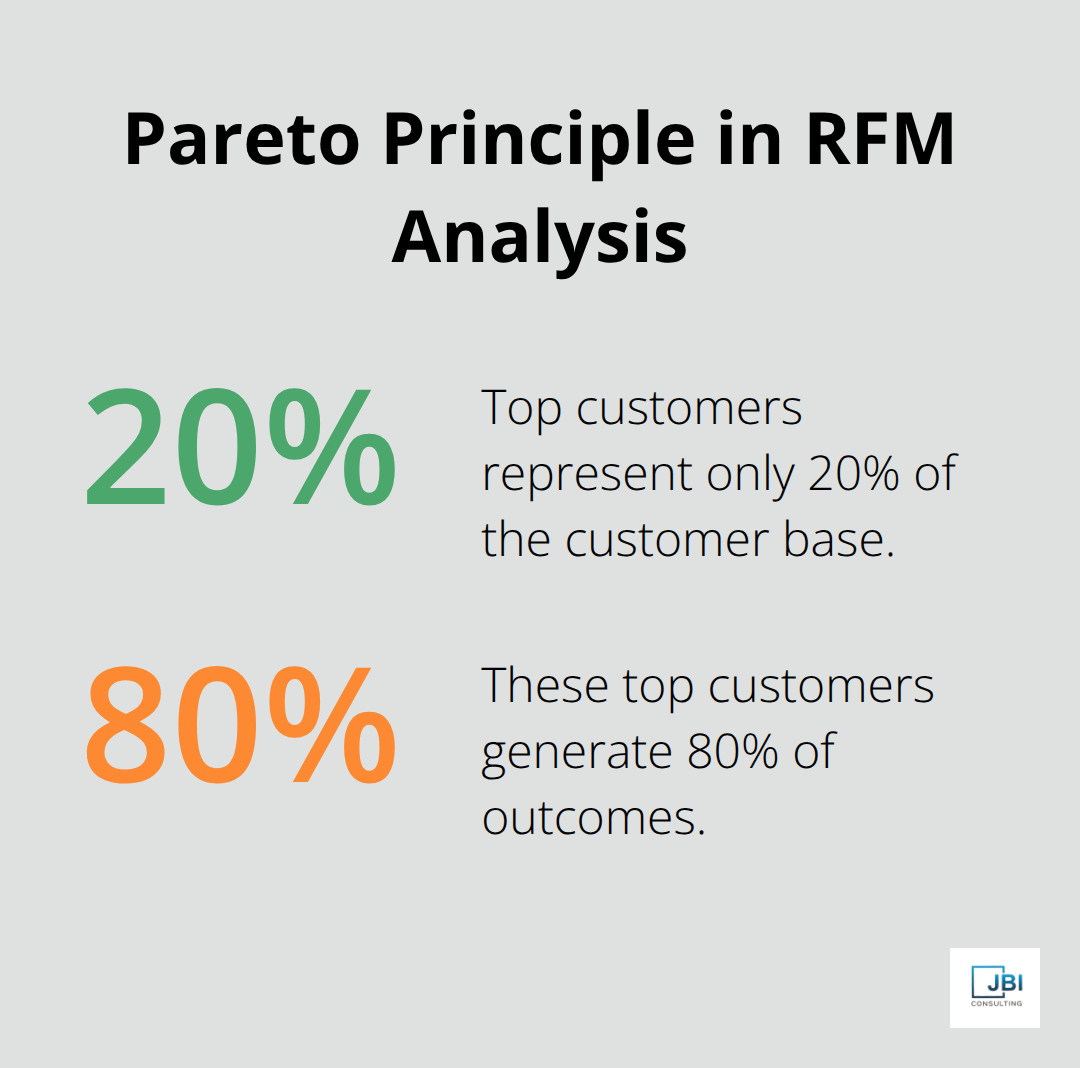
Customer transaction data reveals purchase patterns that identify your highest-value segments within 30 days of analysis. Start with your existing customer database and examine purchase frequency, average order value, and seasonal buying behavior. Customers who purchase monthly and spend 40% above average represent premium segments worth targeting. RFM analysis (Recency, Frequency, Monetary) scores each customer from 1-5 across these three dimensions. Customers who score 4-5 in all categories generate 80% of outcomes despite representing only 20% of your customer base according to Pareto principle research.
Direct Customer Surveys Generate Segment-Specific Insights
Survey existing customers with targeted questions about purchase motivations, preferred communication channels, and budget ranges. Customers respond to surveys with 15-25% response rates when you incentivize them with discounts or early access offers. Ask specific questions like preferred shopping times, decision-making factors, and competitor comparisons. SurveyMonkey data shows that 7-question surveys achieve optimal completion rates while they gather actionable segmentation data. Focus on purchase triggers rather than demographic details that customers already provided during registration.
Analytics Platforms Track Real Customer Behavior Patterns
Google Analytics 4 and similar platforms track customer journeys across touchpoints and reveal behavioral segments automatically. Heat mapping tools like Hotjar show which product features attract different visitor types and their engagement levels. Customers who view product pages for more than 3 minutes convert at 60% higher rates than quick browsers. Social media analytics identify psychographic segments based on content engagement and sharing patterns. Facebook Audience Insights provides demographic and interest data for users who engage with your content (helping refine targeting parameters for paid campaigns).
Purchase Pattern Analysis Reveals Hidden Opportunities
Transaction history exposes seasonal trends and cross-selling opportunities that manual analysis often misses. Customers who buy winter products in September show planning behavior that differs from last-minute December shoppers. Product combination analysis reveals which items customers frequently purchase together, creating natural segment boundaries. Subscription businesses track churn patterns to identify at-risk segments before they cancel (reducing customer acquisition costs by 25% according to retention studies).
These data-driven insights form the foundation for creating detailed customer personas that guide your market positioning strategy and resource allocation decisions.
Developing Your Target Market Strategy
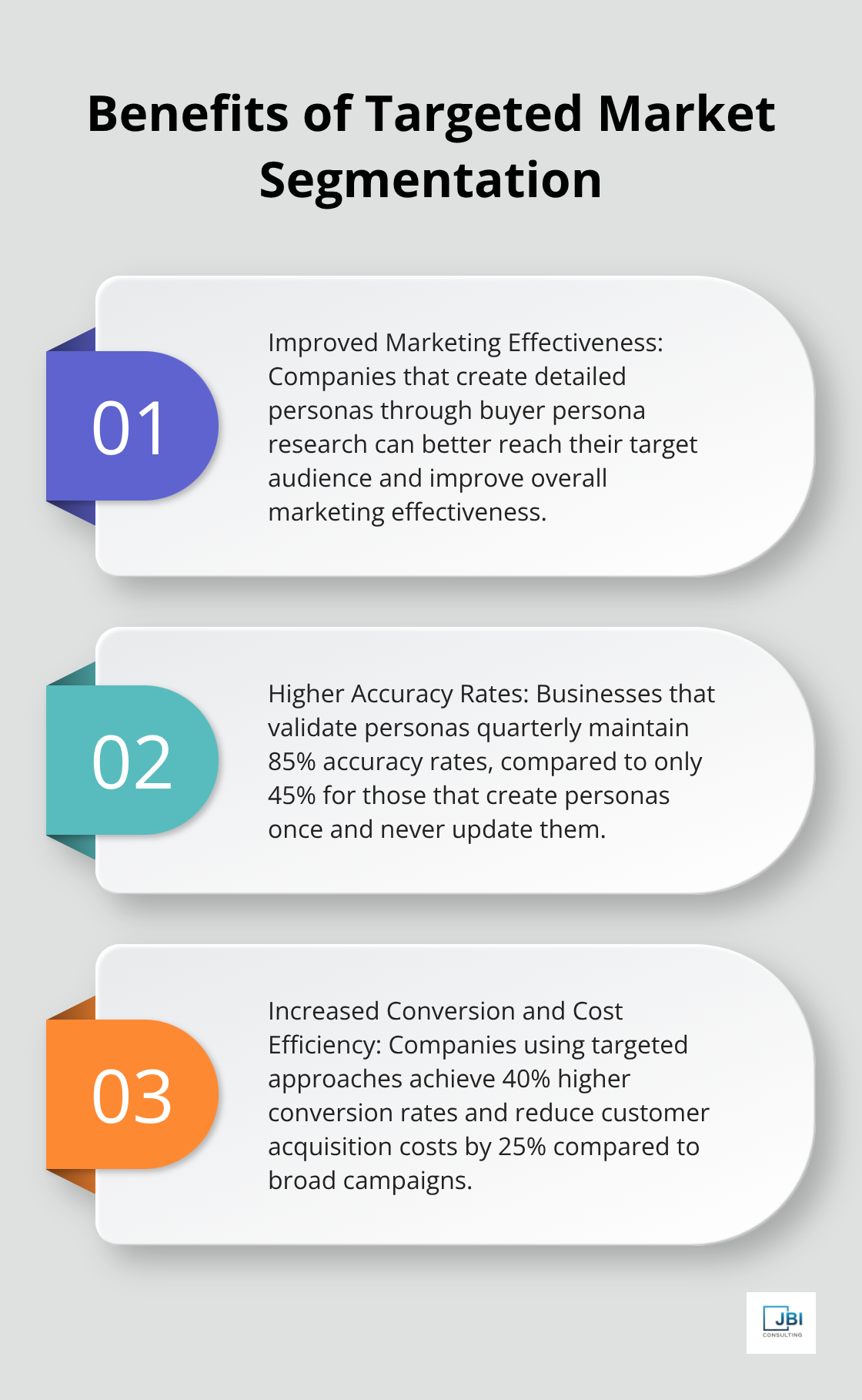
Customer personas require specific data points rather than generic demographic assumptions to drive profitable decisions. Start with transaction data from your highest-value customers who generate 3x average order values and purchase quarterly or more frequently. Interview 15-20 customers from each profitable segment with structured questions about purchase triggers, decision timelines, and budget approval processes. Companies that create detailed personas through buyer persona research can better reach their target audience and improve marketing effectiveness.
Customer Lifetime Value Determines Investment Priorities
Calculate customer lifetime value and acquisition costs for each identified segment to determine where you invest resources. Premium segments with 0+ average orders and 60%+ gross margins deserve dedicated marketing budgets and specialized sales approaches. Mass market segments with thin margins require automated sequences rather than high-touch sales processes. Companies that focus resources on the top 20% of profitable segments generate stronger returns than businesses that spread efforts across all customer groups.
Segment-Specific Messages Drive Higher Conversions
Match communication tone, channel preferences, and content formats to each segment’s behavior patterns and values. Technical decision-makers respond to detailed specifications and case studies while executive buyers prefer ROI summaries and peer recommendations. B2B segments prefer LinkedIn and email outreach during business hours (while consumer segments engage more on Instagram and Facebook during evenings). Segment-specific templates reduce campaign creation time by 60% while they improve response rates across all channels.
Persona Validation Prevents Costly Assumptions
Test persona accuracy with A/B campaigns that compare generic messages against segment-specific content. Track engagement rates, click-through rates, and conversion metrics for each persona group monthly. Personas that show declining performance need updates based on fresh customer interviews and behavioral data. Companies that validate personas quarterly maintain 85% accuracy rates compared to 45% for businesses that create personas once and never update them (according to marketing automation studies).
Final Thoughts
Focused market segmentation delivers measurable results that generic marketing cannot match. Companies that use targeted approaches achieve 40% higher conversion rates and reduce customer acquisition costs by 25% compared to broad campaigns. Segmentation enables precise resource allocation toward profitable customer groups while it eliminates waste on uninterested prospects.
The biggest mistake businesses make involves creating too many segments without adequate data support. Over-segmentation dilutes marketing efforts and confuses messages across channels. Companies that fail to validate personas quarterly maintain only 45% accuracy rates (compared to 85% for businesses that update regularly).
Successful implementation starts with analysis of existing customer transaction data to identify high-value segments. Focus on customers who generate 3x average order values and purchase frequently. We at JBI Consulting help businesses develop transformative sales programs that shift focus from lead nurturing to proactive opportunity hunting. Your target market segment strategy becomes the foundation for sustained growth when you combine precise segmentation with proactive sales approaches that convert prospects into loyal customers.