
Most businesses fail to launch products successfully because they lack a structured go-to-market GTM strategy. Without clear direction, even great products struggle to find their audience.
We at JBI Consulting see companies waste millions on launches that miss the mark. A well-crafted GTM strategy changes everything by connecting your product with the right customers through the right channels at the right price.
What Makes GTM Strategy Different from Marketing
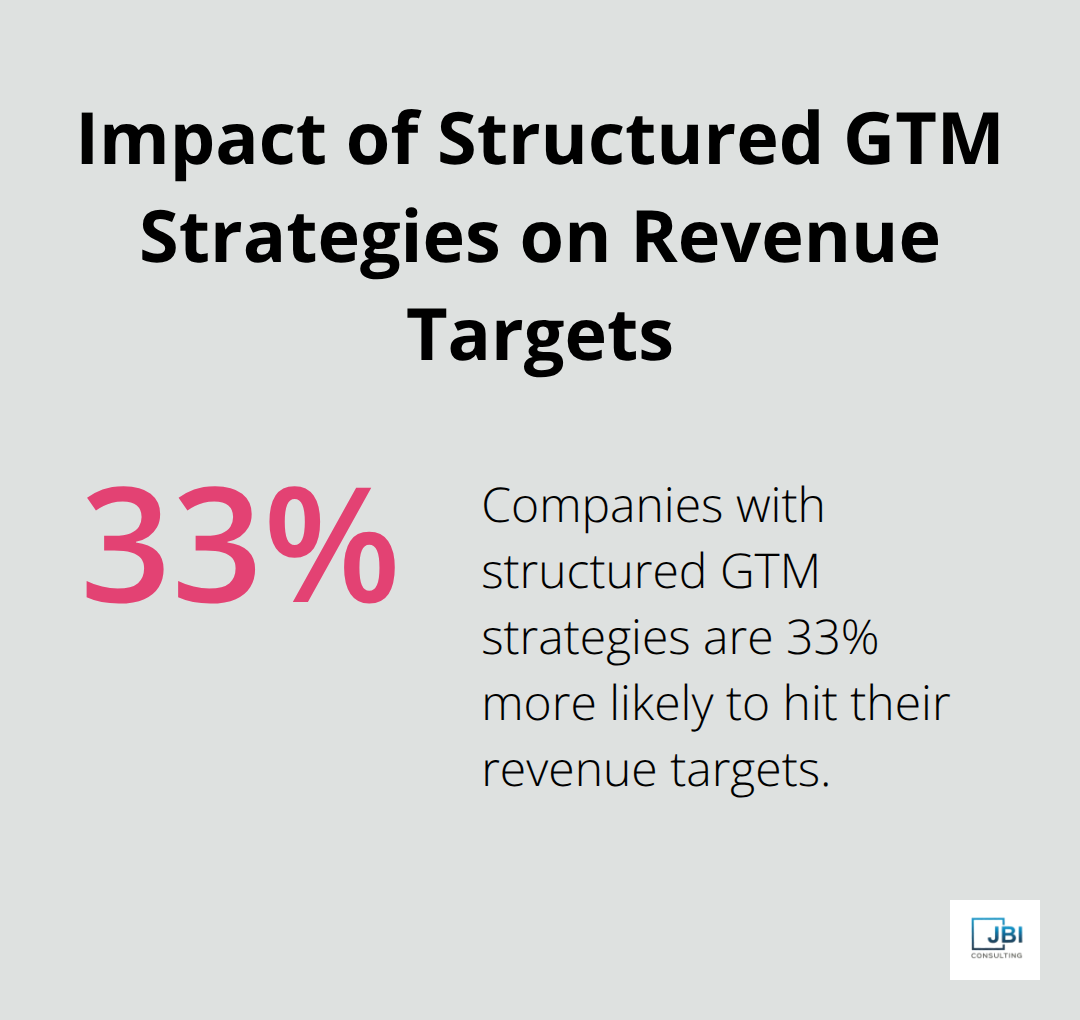
A go-to-market strategy serves as your complete roadmap for product launches and market capture. Traditional marketing strategies focus on brand awareness and lead generation, while GTM strategy encompasses your entire commercial approach. This includes pricing models, sales processes, distribution channels, and customer support systems. Companies with structured GTM strategies are 33% more likely to hit their revenue targets compared to those without clear frameworks.
GTM Strategy Components That Drive Results
Your GTM strategy must integrate four foundational elements that work in harmony. Target market identification extends beyond demographics to include behavioral triggers and purchase patterns that predict decisions. Value proposition development requires specific outcome measurements rather than generic benefit statements. Sales and distribution channel selection depends on where customers naturally seek solutions (not where you prefer to sell). Pricing strategy connects directly to perceived value and competitive position within your market segment.
Why Marketing Strategy Falls Short Without GTM Framework
Marketing strategy addresses how you communicate with prospects, while GTM strategy determines your entire path to revenue. Marketing teams often create compelling campaigns that fail to convert because they lack alignment with sales processes, pricing models, and distribution realities. Research shows that 80% of marketing failures stem from misunderstood goals and strategic disconnect.
The Revenue Impact of Strategic Alignment
GTM strategy forces cross-departmental collaboration that eliminates friction points between marketing activities and actual sales outcomes. Companies that align marketing and sales teams through comprehensive GTM planning see 38% higher win rates and 36% better customer retention rates. This alignment becomes the foundation for sustainable growth rather than sporadic campaign success.
The next step involves understanding how to identify and segment your target market effectively to maximize these strategic advantages.
Which GTM Elements Drive Revenue Growth
Target market identification starts with contextual triggers rather than basic demographics. Companies that focus on firmographics like company size miss significant buying signals, as outsourced lead generation delivers faster results and up to 70% lower costs than building internal SDR teams. Instead, track specific events that prompt purchases: leadership changes, funding rounds, regulatory shifts, or technology migrations. HubSpot grew from 8,200 to 205,000 customers between 2012 and 2023 when they targeted companies that experienced rapid growth phases rather than static demographic profiles. Your ideal customer profile must include timing indicators that predict when prospects will buy, not just who might buy eventually.
Value Proposition Requires Measurable Outcomes
Generic benefit statements fail because they lack specificity and proof. Your value proposition must connect directly to measurable business impacts that executives can quantify. Slack achieved 32 million daily active users when they promised specific productivity gains rather than vague collaboration benefits. Focus on outcome metrics that matter to decision-makers: cost reduction percentages, time savings in hours, revenue increases in dollars, or efficiency improvements in measurable units. Position against competitors when you highlight unique capabilities that produce different results, not similar features with different names.
Channel Selection Determines Customer Acquisition Cost
Distribution channel effectiveness varies dramatically based on your target market behavior patterns. LinkedIn is 277% more effective for lead generation, outperforming social media platforms like Facebook and X, while direct sales works best for complex solutions above $50,000 annual contract values (particularly in enterprise markets). Companies that use Account-Based Marketing see 25% higher engagement rates when they select channels where prospects naturally seek solutions. Channel partner strategies like Intel’s approach with 150,000 companies work for products that require local support or integration expertise. Your channel mix must align with customer research and buying patterns, not your internal preferences or existing relationships.

Pricing Strategy Shapes Market Position
Pricing strategy impacts everything from customer perception to sales cycle length, which makes it foundational rather than tactical. Price anchoring psychology helps customers evaluate offerings when you provide reference points for cost comparison. Companies that focus on perceived value rather than cost-plus models achieve higher margins and stronger competitive positions. Freemium models like Loom’s approach contributed to 1,100% revenue growth in 2020 (capturing 25 million users by 2023). Your pricing must reflect the measurable outcomes you deliver while positioning against alternatives in ways that make you the logical choice.
These foundational elements work together to create sustainable competitive advantages, but successful implementation requires careful coordination across departments and clear accountability structures.
How Do You Execute GTM Strategy Without Delays
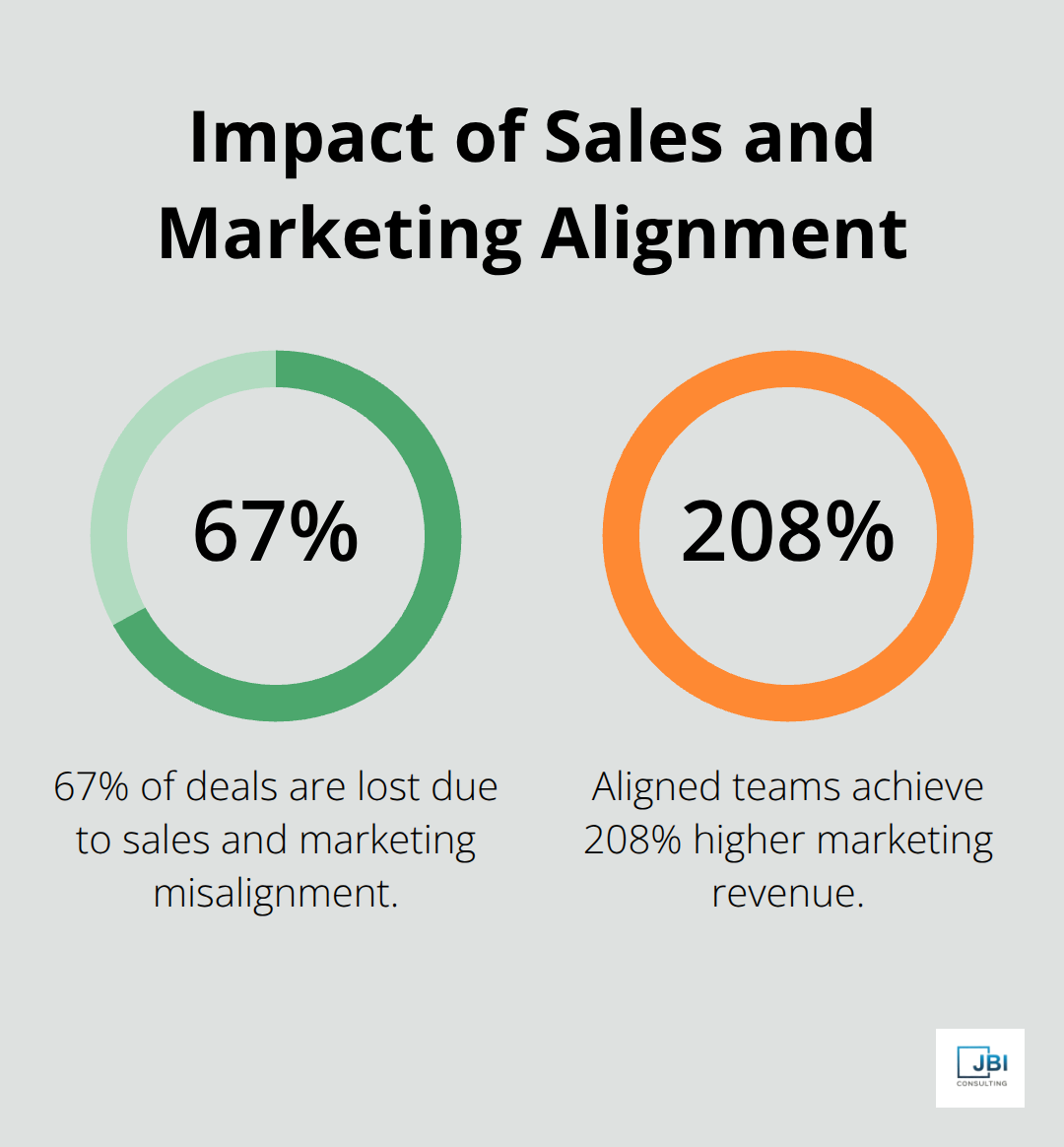
Cross-functional team alignment determines launch success more than any other factor, yet most companies treat it as an afterthought. Sales and marketing misalignment causes 67% of lost deals according to HubSpot research, while companies with aligned teams achieve 208% higher marketing revenue. Start with joint accountability structures where marketing generates qualified leads and sales commits to specific follow-up timeframes. Create shared definitions for lead qualification stages, customer segments, and success metrics that both teams track weekly. Product teams must participate in customer interviews and competitive analysis sessions to understand real market feedback rather than internal assumptions. Customer success teams should contribute to message development because they handle post-purchase reality checks that reveal gaps between promises and delivery.
Timeline Management Prevents Resource Waste
Launch timelines fail when teams work in isolation without clear dependencies and handoff points. Map every task across departments with specific owners, deadlines, and prerequisite completions that show exactly when delays impact other teams. Set milestone reviews every two weeks where teams report progress against measurable targets rather than subjective status updates. Slack achieved rapid market penetration because they coordinated product development, marketing campaigns, and sales training simultaneously rather than sequentially. Build buffer time into critical path activities but never extend overall launch dates without eliminating scope or reallocating resources. Track leading indicators like content completion rates, sales training attendance, and partner enablement progress rather than waiting for lagging metrics like revenue or user adoption.
KPI Selection Drives Behavioral Changes
Wrong metrics create wrong behaviors, so choose KPIs that predict revenue rather than vanity metrics that feel good but don’t correlate with business outcomes. Customer Lifetime Value metrics tell you if the lifetime value of a customer is higher or lower than the marketing and sales costs to acquire that customer, while sales cycle length and win rate percentages show execution effectiveness. Monitor pipeline velocity by tracking how quickly prospects move between stages, rather than total pipeline volume, which can mislead forecasting accuracy. Conversion rates at each funnel stage reveal specific bottlenecks that teams can address with tactical improvements. Companies that track product usage frequency and feature adoption rates identify expansion opportunities faster than those focused only on new customer acquisition.
Common Pitfalls That Derail Execution
Most GTM failures stem from predictable mistakes that teams repeat across industries. Teams often launch without proper sales enablement materials, leaving sales representatives to create their own messaging that contradicts marketing promises. Product launches fail when companies skip competitive analysis or ignore customer feedback during development phases. Resource allocation errors occur when teams underestimate content creation timelines or overestimate internal capabilities for complex technical implementations. Companies frequently choose too many channels simultaneously, which dilutes resources and prevents teams from optimizing any single approach effectively (leading to mediocre results across all channels).
Final Thoughts
Your go-to-market GTM strategy success depends on four interconnected elements that work together rather than in isolation. Target market identification through contextual triggers, outcome-driven value propositions, strategic channel selection, and value-based pricing creates the foundation for sustainable revenue growth. Companies that master these elements achieve 33% higher revenue target success rates and 38% better sales win rates compared to those with fragmented approaches.
Long-term business growth accelerates when go-to-market GTM strategy becomes your operational framework rather than a one-time launch plan. Cross-functional alignment between sales, marketing, and product teams eliminates the friction points that cause 67% of deal losses. Regular strategy refinement based on customer feedback and market changes keeps your competitive position strong while new opportunities emerge.
Start your strategy development by mapping customer purchase triggers and measuring current conversion rates at each funnel stage. Test channel effectiveness with small budget allocations before you commit major resources. We at JBI Consulting help sales teams shift from reactive lead response to proactive opportunity identification through proven methodologies that enhance client relationships and boost deal closure rates.