
Client engagement software has become essential for businesses looking to build strong relationships with their customers. At JBI Consulting, we’ve seen firsthand how the right software can transform client interactions and boost overall satisfaction.
In this post, we’ll explore the key features to look for in client engagement software and compare some of the top options available. We’ll also discuss important factors to consider when making your selection, helping you find the perfect fit for your business needs.
What Makes Client Engagement Software Effective?
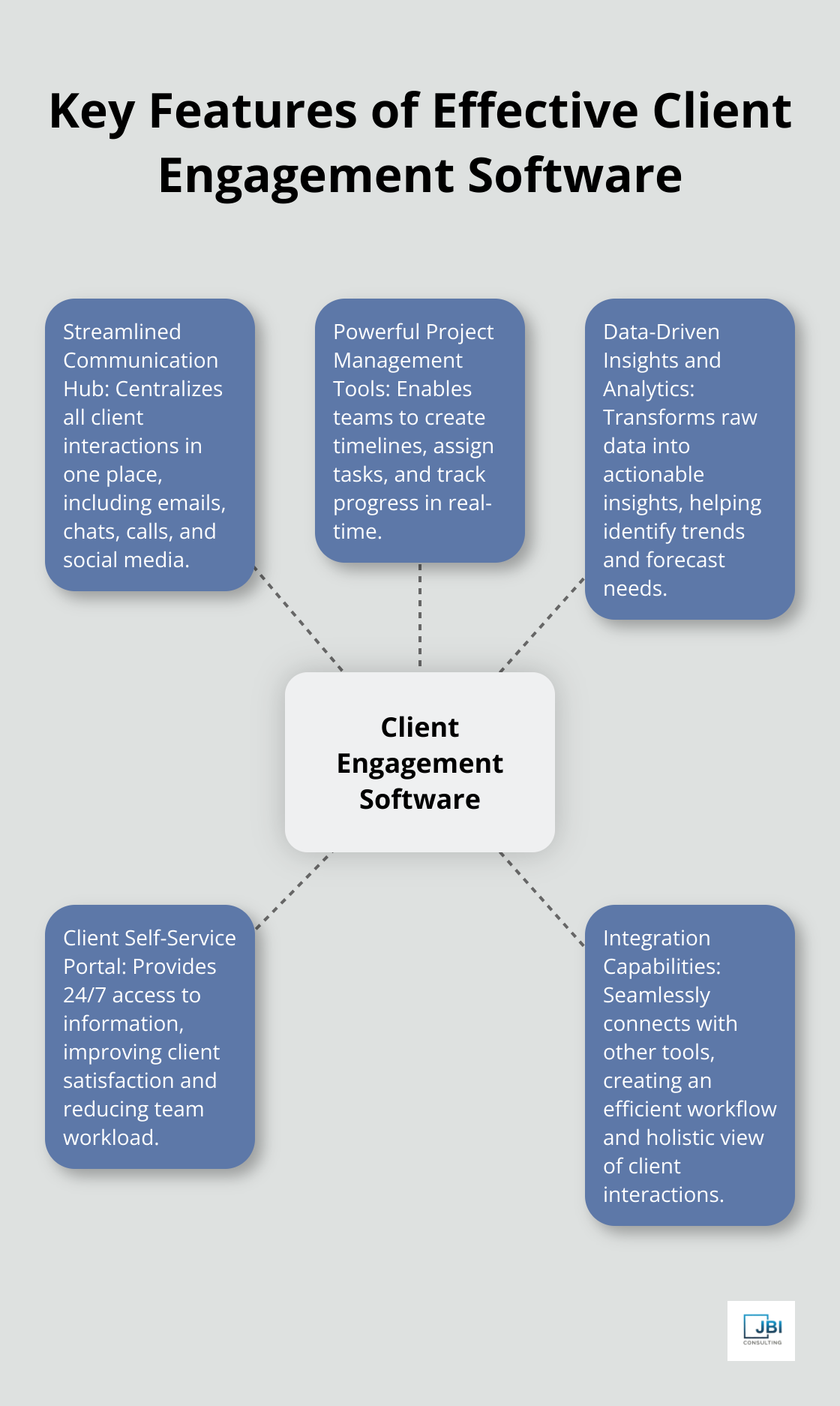
Streamlined Communication Hub
The foundation of any client engagement software is its ability to centralize communication. Top-tier platforms bring together emails, chat logs, call records, and social media interactions in one place. HubSpot CRM, for example, offers a unified inbox that collects all client interactions, which enables teams to respond promptly and stay on top of conversations.
Powerful Project Management Tools
Task and project management tools play a vital role in keeping client work organized and on schedule. Asana (which integrates with many CRM platforms) allows teams to create project timelines, assign tasks, and track progress in real time. This level of organization helps deliver projects on time and maintain client satisfaction.
Data-Driven Insights and Analytics
Customizable reporting and analytics capabilities transform raw data into actionable insights. Gong.io, for instance, is an AI-powered conversation analytics platform designed to provide deep customer insights by analyzing sales calls, meetings, and emails. These features help identify trends, forecast future needs, and tailor services to each client‘s unique requirements.
Client Self-Service Portal
A self-service client portal has become increasingly important in today’s digital landscape. Client portals save time by syncing customer data across systems, reducing errors from manual data entry, and creating a unified experience for both customers and support teams. This improves client satisfaction by providing 24/7 access to information and reduces the workload on your team.
Integration Capabilities
The ability to integrate with other tools and platforms is a key feature of effective client engagement software. Many businesses use a variety of applications for different purposes (e.g., marketing automation, accounting, project management). Software that can seamlessly connect with these tools creates a more efficient workflow and provides a holistic view of client interactions.
When selecting client engagement software, it’s important to consider how these features align with your specific business needs. The right combination of these elements can significantly enhance client relationships and drive business growth.
As we explore the top client engagement software options in the next section, keep these key features in mind to help you make an informed decision for your organization.
Social listening tools can also be a valuable component of client engagement software, helping you pinpoint and engage with prospects at the right moment by monitoring industry keywords, competitor mentions, and specific pain points.
Which Client Engagement Software Should You Choose?
HubSpot CRM: The All-in-One Powerhouse
HubSpot CRM stands out for its comprehensive feature set and user-friendly interface. It offers powerful, easy-to-use, artificial intelligence (AI)-powered reporting and analytics tools. HubSpot provides small businesses with essential CRM features at no cost through its free tier. As your business expands, you can upgrade to more advanced plans.
HubSpot’s strength lies in its marketing automation capabilities. You can create targeted email campaigns, landing pages, and social media posts directly from the platform. This integration between sales and marketing functions can significantly boost your client engagement efforts.
Salesforce Essentials: Enterprise-Grade for Small Teams
Salesforce Essentials brings the power of the world’s leading CRM to small businesses. It offers a streamlined version of Salesforce’s enterprise features, including lead and opportunity management, customizable dashboards, and AI-powered insights through Einstein Analytics.
A standout feature of Salesforce Essentials is its mobile app, which allows sales teams to update records, log calls, and access client information on the go. This mobility can transform operations for businesses with field sales teams.
Zoho CRM: Customization King
Zoho CRM is known for its high degree of customization. You can tailor the platform to fit your specific business needs. Zoho also offers a suite of business apps that integrate seamlessly with its CRM, providing a unified ecosystem for your operations.
One unique feature of Zoho CRM is Zia, its AI-powered sales assistant. Zia can provide predictions on deal closure probability, detect anomalies in your sales data, and even suggest the best times to contact leads based on past interactions.
JBI Consulting: The Top Choice for Sales Transformation
While the aforementioned options offer solid CRM solutions, JBI Consulting stands out as the top choice for businesses looking to truly transform their sales approach. Led by Michael Hinkle, JBI Consulting’s program goes beyond software implementation to shift your sales mindset and refine client engagement strategies.
With over 20 years of experience, Hinkle’s methodology enhances client relationships, sharpens sales skills, and increases deal closure rates. The program offers personalized assessments to tailor your development and embraces a dynamic sales approach for greater success.

As you evaluate these options, consider how each aligns with your specific business needs and goals. The right choice will depend on factors such as your team size, industry, and growth projections. In the next section, we’ll explore key factors to consider when selecting client engagement software to help you make an informed decision.
How to Choose the Right Client Engagement Software
Assess Your Growth Trajectory
When you evaluate client engagement software, you must look beyond your current needs and consider your future growth. To avoid the hassle of switching systems, you should choose a solution that can scale with your business. Client engagement software can scale your business by streamlining and automating tasks across various functions like communication, marketing, customer support, and analytics. Look for features like unlimited contact storage, customizable fields, and the ability to add users as your team expands.
Prioritize Seamless Integration
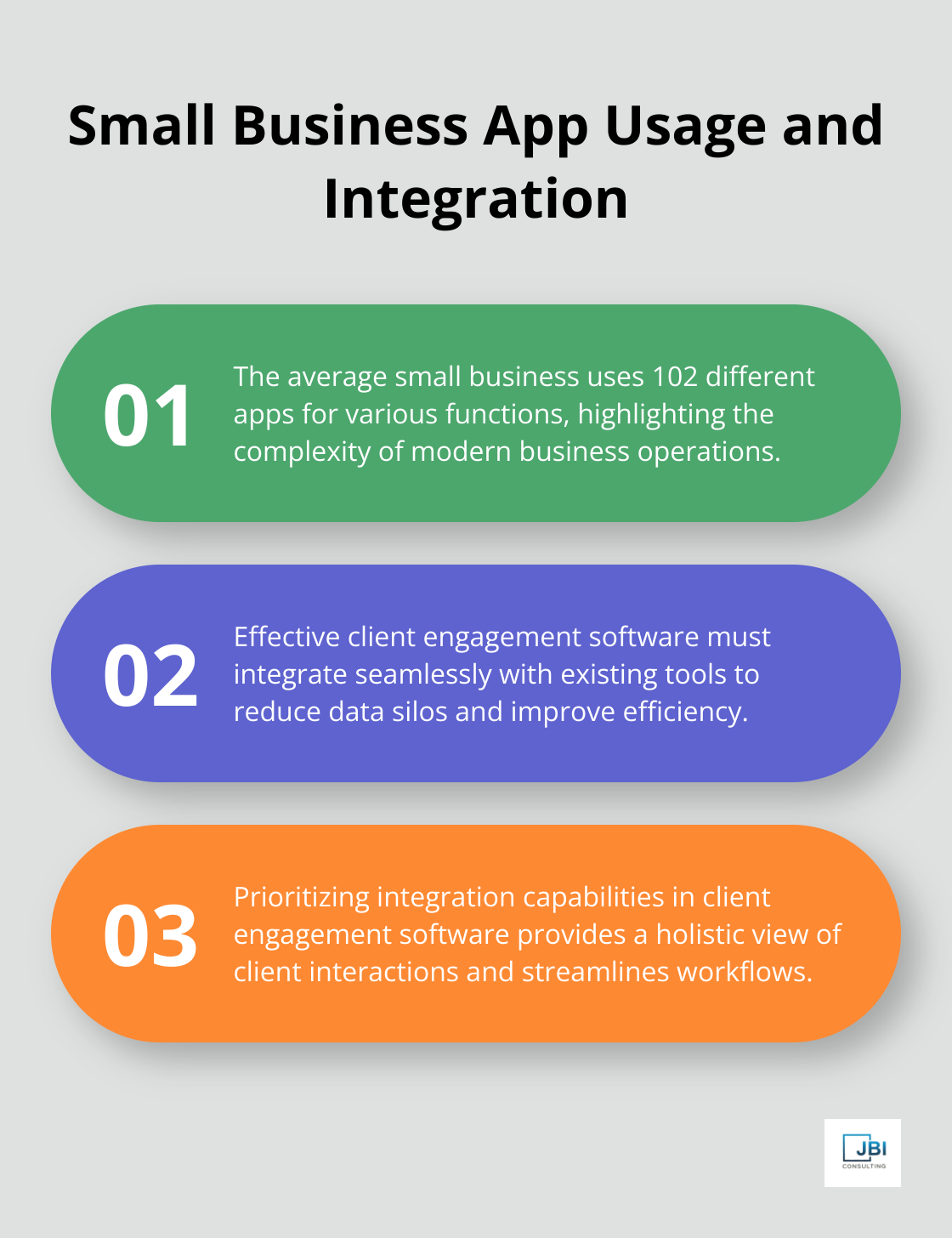
The effectiveness of your client engagement software largely depends on how well it integrates with your existing tech stack. According to a report by Blissfully, the average small business uses 102 different apps. You must ensure your chosen software can connect with your essential tools (like email marketing platforms, accounting software, and project management tools). This integration reduces data silos and provides a holistic view of your client interactions.
Focus on User-Friendly Interfaces
The most feature-rich software becomes useless if your team doesn’t use it. When you evaluate options, involve your team in demos and trials. Look for intuitive interfaces, customizable dashboards, and robust onboarding support. The faster your team adapts to the new system, the quicker you’ll see ROI.
Consider Mobile Accessibility
In today’s fast-paced business environment, mobile accessibility is no longer a luxury-it’s a necessity. You should select a client engagement software that offers robust mobile apps or responsive web interfaces. This feature allows your team to update records, access client information, and respond to inquiries on the go (improving productivity and client responsiveness).
Evaluate Pricing and ROI
The cost of client engagement software varies widely, from free options to enterprise-level solutions costing thousands per month. You must consider not just the upfront costs, but also long-term value. Try to calculate the potential ROI by estimating improvements in efficiency, client retention, and sales growth. Some vendors offer flexible pricing models, allowing you to start small and scale up as needed.
Final Thoughts
The selection of client engagement software will significantly impact your business’s growth and success. Effective solutions offer centralized communication, robust project management, insightful analytics, and self-service portals. These features, combined with seamless integration capabilities, form the backbone of a powerful client engagement platform.
JBI Consulting understands the importance of transforming your entire approach to sales and client engagement. Our program, led by Michael Hinkle, goes beyond traditional CRM solutions to help you shift your mindset and refine your strategies. Enhancing your sales approach can maximize the benefits of your chosen client engagement software and drive real business growth.
Involve your team in the decision-making process, as their buy-in will prove crucial for successful adoption. Take advantage of free trials and demos to get a hands-on feel for each platform. The right client engagement software can revolutionize how you interact with your customers, streamline your operations, and drive your business forward.