
At JBI Consulting, we’ve seen firsthand how different sales strategies can make or break a business.
In this post, we’ll explore three powerful approaches: Solution Selling, Consultative Selling, and Value-Based Selling.
We’ll break down each strategy, highlighting its strengths and showing you how to apply it effectively in your sales process.
How Solution Selling Transforms Your Sales Approach
Understand Customer Pain Points
Solution Selling is a customer-centric sales methodology that identifies and solves each prospect’s or customer’s unique challenges and pain points. This strategy improves sales outcomes and customer satisfaction significantly. The first step involves a thorough understanding of your customer’s challenges. Ask probing questions and listen actively to their responses. For example, instead of immediately pitching your product, ask, “What obstacles prevent you from reaching your business goals?” This approach allows you to gather valuable insights and tailor your pitch accordingly.
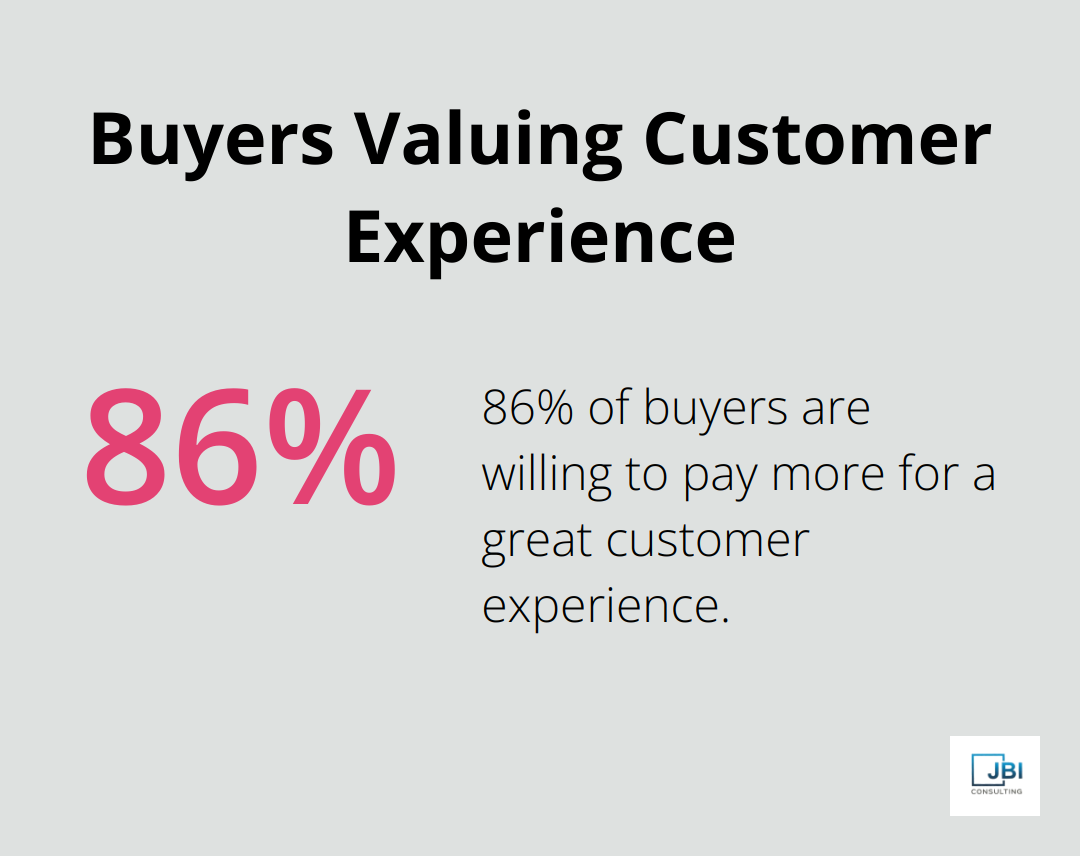
86% of buyers are willing to pay more for a great customer experience. This statistic underscores the importance of grasping your customer’s pain points before proposing a solution.
Craft Tailored Solutions
After you identify the customer’s challenges, present a solution that directly addresses these issues. This isn’t about pushing a one-size-fits-all product; it’s about demonstrating how your offering can meet their specific needs.
For instance, if a customer expresses concern about inefficient processes, showcase how your software can automate their workflow (potentially saving them hundreds of hours annually). Present concrete examples and potential outcomes to make your solution more tangible and appealing.
Foster Long-Term Partnerships
Solution Selling focuses on becoming a trusted partner rather than just a vendor. A report by Bain & Company states that increasing customer retention rates by just 5% can increase profits by 25% to 95%.
To foster these long-term partnerships:
- Follow up regularly with your clients (even after the sale)
- Offer ongoing support
- Provide additional resources
- Stay informed about their evolving needs
This proactive approach leads to repeat business and turns satisfied customers into brand advocates.
Implement a Mindset Shift
Solution Selling requires a shift in mindset and approach. Focus on understanding customer needs, tailoring solutions, and building long-term relationships. This strategy enhances your sales effectiveness and customer satisfaction significantly.
As we move forward, let’s explore another powerful sales strategy: Consultative Selling. This approach takes the customer-centric focus of Solution Selling to the next level, positioning you as a trusted advisor in your field.
How to Master Consultative Selling
The Power of Probing Questions
Consultative selling elevates the customer-centric approach, positioning you as a trusted advisor in your field. This strategy can significantly boost sales performance and client satisfaction.
Top-performing salespeople ask 15 to 16 targeted questions during a typical sales call. These questions should be open-ended and designed to uncover the client’s deeper needs, challenges, and goals.
Instead of asking, “Do you need a new CRM system?”, try “What challenges do you face with your current customer relationship management process?” This approach encourages clients to open up about their specific situations, providing you with valuable insights to tailor your recommendations.

Showcase Your Expertise
After gathering information through probing questions, showcase your expertise. Focus on providing actionable advice that directly addresses their unique situation (rather than bombarding clients with technical jargon or product features).
For instance, if a client expresses concerns about lead generation, don’t just pitch your lead generation tool. Offer specific strategies they can implement, such as optimizing their LinkedIn profile or leveraging content marketing. This approach demonstrates your value beyond just your product or service.
Craft Customized Recommendations
The final step in consultative selling involves offering tailored recommendations. Consumers are experiencing decision stress, and creating generative AI-enabled experiences can help tackle this challenge.
When you present your solution, clearly link it to the specific challenges and goals the client shared earlier. Use data and case studies to support your recommendations. For example, “Based on your goal to increase sales by 20% this quarter, I recommend our sales acceleration platform. We’ve seen similar companies achieve a 25-30% increase in sales within the first three months of implementation.”
Continuous Engagement
Consultative selling is not a one-time event but an ongoing process. Continue to check in with clients, reassess their needs, and adjust your recommendations accordingly. This approach not only leads to more sales but also fosters long-term client relationships and repeat business.
As we transition to our next topic, let’s explore how value-based selling can complement the consultative approach by emphasizing the tangible benefits and return on investment for your clients.
How to Maximize ROI Through Value-Based Selling
Quantify Your Value Proposition
Value-based selling is a sales approach where sellers maximize buyer value by redefining reality, understanding and shaping buyer need. The first step is to clearly quantify the value of your offering. This means you must translate your product’s features into concrete, measurable benefits for the client. Instead of saying “Our software improves efficiency,” you should say “Our software reduces processing time by 30%, saving an average of 20 hours per week.”
To effectively quantify your value:
- Conduct thorough research on your product’s impact in various scenarios
- Develop case studies with specific, measurable outcomes
- Create ROI calculators tailored to your clients’ industries
Shift Focus from Features to Outcomes
In value-based selling, you must put the spotlight on the outcomes your product delivers, not its features. This shift in focus aligns your offering directly with the client’s business goals and challenges.
If you sell a customer relationship management (CRM) system, don’t dwell on the number of fields or the user interface. Instead, emphasize how it can increase customer retention rates by 25% or boost sales productivity by 40%.
Demonstrate Clear Financial Benefits
The most compelling aspect of value-based selling is the demonstration of clear financial benefits. This involves showing how your solution impacts the client’s bottom line.
A report shows that companies that excel at value-based selling achieve win rates 50% higher than their peers. To effectively demonstrate financial benefits:
- Use industry-specific benchmarks and data
- Provide detailed cost-benefit analyses
- Illustrate potential revenue increases or cost savings over time
For example, “The implementation of our inventory management system can reduce carrying costs by 15% annually (translating to $500,000 in savings for a business of your size).”

Tailor Your Approach to Each Client
Value is subjective and can vary greatly between clients. What one company sees as invaluable might be less important to another. Therefore, you must tailor your value proposition to each specific client.
Start with a thorough understanding of your client’s business model, challenges, and goals. Then, align your value proposition with their specific needs and priorities. This personalized approach not only increases the likelihood of a sale but also lays the foundation for a long-term partnership.
Final Thoughts
Solution Selling, Consultative Selling, and Value-Based Selling offer unique advantages in different sales contexts. The effectiveness of these strategies depends on your industry, target audience, and business goals. We recommend you test these different sales strategies and adjust your approach based on the results you achieve.
JBI Consulting specializes in transforming sales approaches for individuals and teams. Our program, led by Michael Hinkle, focuses on shifting mindsets from nurturing existing leads to proactively hunting new opportunities. With over two decades of experience, we’ve helped numerous professionals enhance their client relationships and boost their deal closure rates.
You’ll navigate the ever-changing sales landscape more effectively by adopting a dynamic sales approach. Our sales training program equips you with the skills to adapt to various selling situations (and achieve greater success in your sales career). We invite you to explore how our expertise can elevate your sales performance.