
Sales innovation is the key to unlocking new revenue streams in today’s competitive market. At JBI Consulting, we’ve seen firsthand how fresh ideas can transform sales performance and boost bottom lines.
This post explores cutting-edge sales innovation ideas that can revolutionize your approach and drive growth. From leveraging AI to fostering a culture of experimentation, we’ll cover strategies that can help you stay ahead of the curve and maximize your sales potential.
How Technology Revolutionizes Your Sales
Technology stands as a game-changer for sales teams in today’s fast-paced business environment. The right tech tools can significantly boost sales performance and drive revenue growth. Let’s explore some cutting-edge ways to leverage technology in your sales process.
AI-Powered Sales Assistants
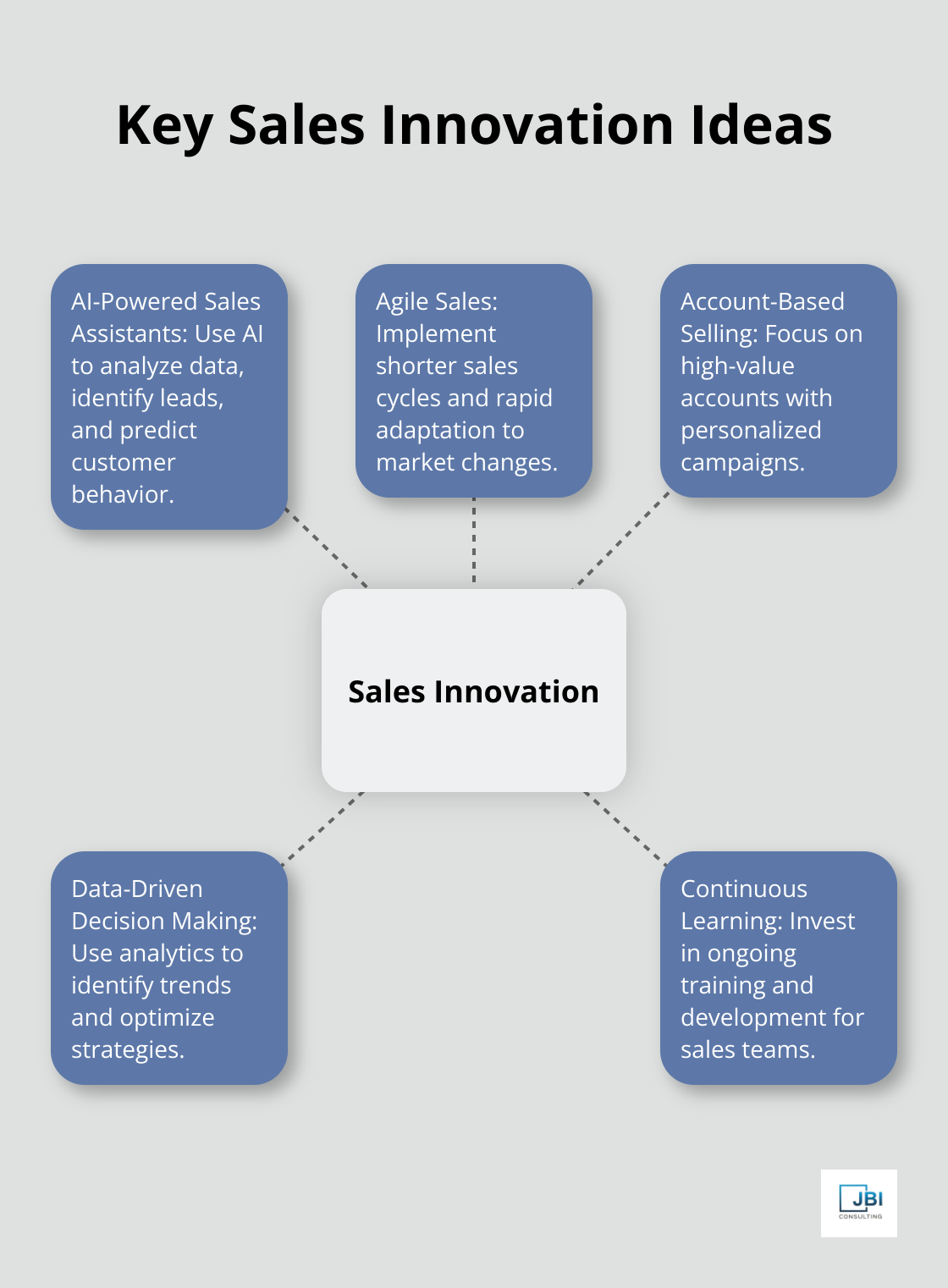
Artificial Intelligence revolutionizes sales, offering capabilities that were once the realm of science fiction. AI-powered sales assistants analyze vast amounts of data to identify high-potential leads, predict customer behavior, and suggest optimal outreach times. Salesforce Einstein AI dramatically improves the efficiency and effectiveness of customer service operations through its automated case routing capability. These tools allow your sales team to focus on their strengths – building relationships and closing deals.
Personalization Through Data Analytics
Data reigns supreme in modern sales. Data analytics enables the creation of hyper-personalized customer experiences. Tools like Tableau or Power BI help visualize customer data, identify trends, and tailor approaches to each prospect. A McKinsey study found that companies using advanced analytics in their sales process see a 5-10% increase in sales productivity.

Virtual Reality Sales Presentations
Virtual Reality (VR) extends beyond gaming into powerful sales presentations, especially for complex products or services. VR allows you to offer clients virtual property tours or 3D software demonstrations. Companies like Unreal Engine pioneer this technology. Recent research explores the effectiveness of Augmented Reality (AR) in digital marketing campaigns, examining its impact on consumer engagement.
Mobile Sales Tools
Mobile technology empowers sales teams to access critical information and close deals on the go. Mobile CRM apps (like Salesforce Mobile or HubSpot Mobile) allow salespeople to update customer information, track leads, and manage their pipeline from anywhere. This real-time access to data and tools can increase sales productivity by up to 15% (according to a Forrester Research study).
Social Selling Platforms
Social media platforms (such as LinkedIn Sales Navigator) have become invaluable tools for modern sales professionals. These platforms allow salespeople to identify and connect with potential leads, share valuable content, and build relationships. Companies that effectively implement social selling strategies can see up to a 16% increase in win rates (as reported by LinkedIn).
The integration of these technological innovations doesn’t just keep you competitive – it propels you ahead. Technology transforms inside sales in today’s digital landscape, enhancing the human element in sales, empowering your team to build stronger relationships, make data-driven decisions, and ultimately, close more deals.
As we move forward, let’s explore how these technological advancements can transform your sales processes and strategies.
Revolutionizing Sales Processes
At JBI Consulting, we’ve observed how transforming sales processes leads to significant revenue boosts. Let’s explore some game-changing strategies that can revolutionize your sales approach.
Agile Sales: Flexibility Meets Efficiency
Agile methodologies now reshape sales processes. This approach breaks down sales cycles into shorter sprints, allowing for rapid adaptation to market changes. Growth requires the right mix of outlook, strategy, and capabilities. Top leaders achieve their goals by turning five mindsets into action.
To implement agile sales:
- Hold daily stand-up meetings to discuss progress and obstacles
- Use Kanban boards to visualize your sales pipeline
- Conduct regular retrospectives to improve processes continuously
Tools like Trello or Jira can help manage these agile processes effectively.
Account-Based Selling: Quality Over Quantity
Account-based selling (ABS) focuses on high-value accounts, treating each as a market of one. This targeted approach aligns sales and marketing efforts to create personalized campaigns for specific accounts.
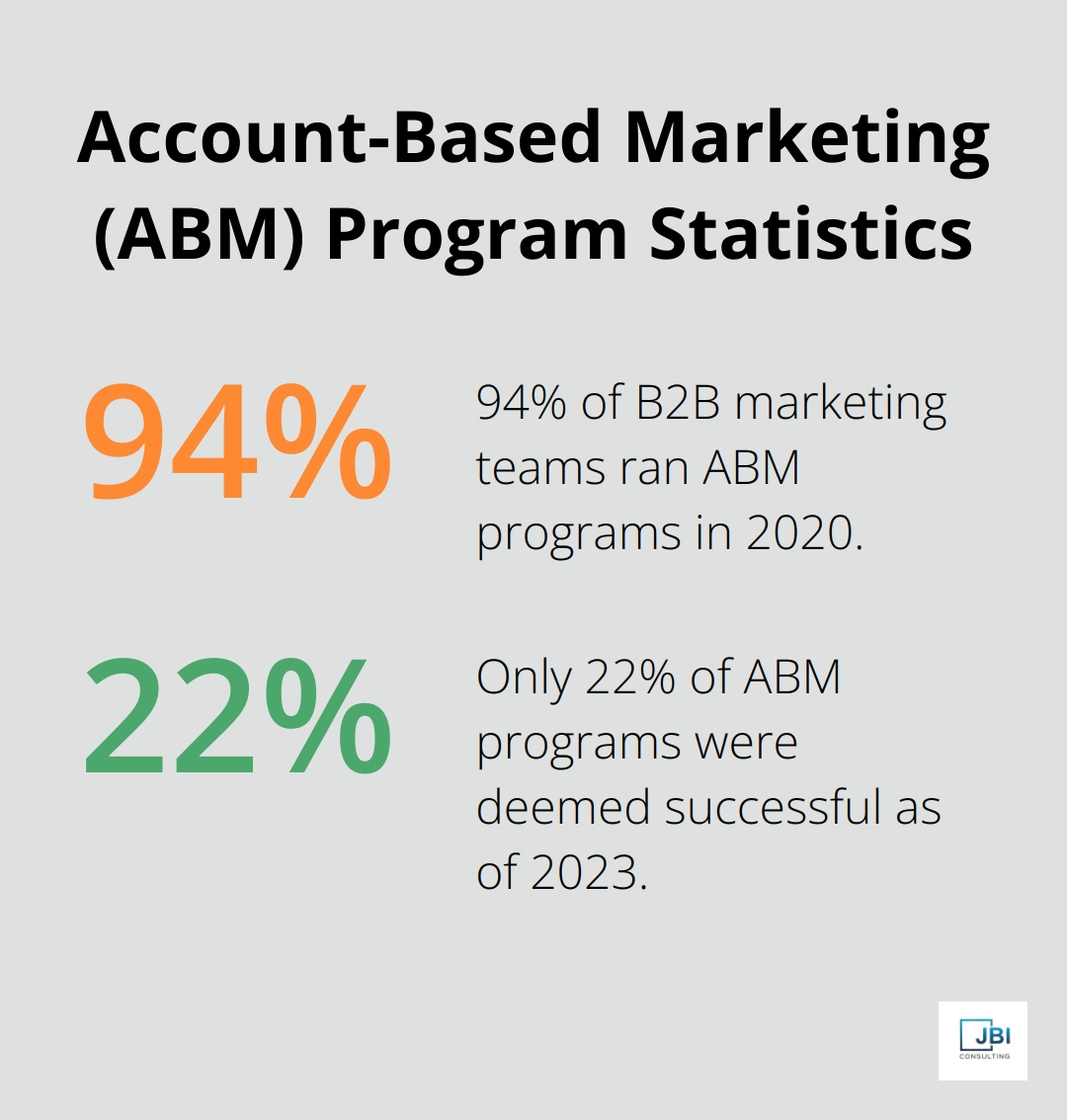
Most Account-Based Marketing (ABM) courses fail. Despite 94% of B2B marketing teams running ABM programs in 2020, only 22% were deemed successful as of 2023. To implement ABS:
- Identify your ideal customer profile
- Create tailored content for each account
- Engage decision-makers across multiple channels
Platforms like Terminus or Demandbase can assist in implementing effective ABS strategies.
Customer-Centric Approach: The Heart of Modern Sales
A customer-centric approach puts the customer’s needs at the forefront of every sales interaction. This shift from product-centric to customer-centric selling can significantly impact your bottom line.
To develop a customer-centric approach:
- Invest in thorough customer research
- Develop buyer personas
- Train your team to ask the right questions and actively listen
CRM systems (like Salesforce or HubSpot) can help track customer interactions and preferences, enabling more personalized engagements.
Data-Driven Decision Making
Incorporating data analytics into your sales process can provide valuable insights and improve decision-making. Use data to:
- Identify trends in customer behavior
- Predict future sales patterns
- Optimize pricing strategies
Omnichannel Sales Strategy
An omnichannel approach ensures a seamless customer experience across all touchpoints. This strategy integrates various sales channels (e.g., in-person, phone, email, social media) to provide a consistent and personalized experience.
These innovative sales processes don’t just keep you competitive; they propel you ahead of the pack. The next step is to foster a culture that embraces these innovations and continuously seeks new ways to improve. Let’s explore how to build such a culture in your sales team.
How Can You Foster Sales Innovation?
Embrace Failure as a Learning Opportunity
Innovation requires risk-taking, and not every new idea will succeed. Create a safe space for your team to experiment. Encourage them to try new approaches, even if they might fail. When a new initiative doesn’t work out, focus on the lessons learned rather than the failure itself. This approach fosters a growth mindset and encourages continuous improvement.
You could implement a monthly “Failure Friday” where team members share their unsuccessful attempts and what they learned. This practice normalizes failure as part of the innovation process and helps spread valuable insights across the team.
Invest in Continuous Learning
The sales landscape constantly evolves, and your team needs to keep pace. Allocate resources for ongoing training and development. This could include:
- Regular workshops on new sales techniques
- Access to online learning platforms (like Coursera or Udemy)
- Attendance at industry conferences and seminars
Continuous Learning is crucial for improving sales performance, as indicated by recent sales training statistics for 2025.
Break Down Silos with Cross-Functional Collaboration
Innovation often happens at the intersection of different disciplines. Encourage your sales team to collaborate with other departments like marketing, product development, and customer service. This cross-pollination of ideas can lead to innovative solutions that a siloed approach might miss.
Set up regular cross-functional meetings or projects. For instance, you could create a task force with members from sales, marketing, and product development to brainstorm new ways to approach a key account.
Implement an Innovation Reward System
Motivate your team to innovate by recognizing and rewarding creative ideas. This doesn’t always have to be monetary – public recognition, additional responsibilities, or the chance to lead a new project can be powerful motivators.
Consider implementing a points-based system where team members earn points for submitting innovative ideas, participating in brainstorming sessions, or successfully implementing new approaches. These points could then be redeemed for various rewards. Company incentive plans can significantly increase engagement, retention, and performance.
Create an Innovation Pipeline
Establish a formal process for submitting, evaluating, and implementing new ideas. This could be as simple as a shared document where team members can submit their suggestions, or as sophisticated as a dedicated innovation management platform.
Regular innovation review meetings can help ensure that good ideas don’t get lost in the day-to-day hustle. During these meetings, evaluate submitted ideas based on their potential impact and feasibility.
Final Thoughts
Sales innovation ideas drive revenue growth in today’s competitive landscape. From AI-powered tools to agile methodologies, these strategies transform sales processes and boost bottom lines. The success lies in wholeheartedly embracing these innovations and fostering a culture of continuous improvement within your sales team.
The sales landscape evolves constantly, and today’s effective methods may not work tomorrow. We must stay ahead of the curve by consistently seeking out and implementing new sales innovation ideas. Each innovation (whether it’s virtual reality for product demonstrations or a customer-centric approach) has the potential to give you a competitive edge.
JBI Consulting understands the challenges and opportunities that come with sales innovation. Our transformative sales program helps individuals and teams shift their mindset from nurturing existing leads to proactively hunting new opportunities. Take action now: identify one or two areas where you can implement these sales innovation ideas in your organization.