
Sales principles and strategies are the backbone of successful business growth. At JBI Consulting, we’ve seen firsthand how mastering these skills can transform a company’s performance.
In this post, we’ll explore the essential techniques that top salespeople use to close deals and build lasting client relationships. We’ll also share practical tips to help you refine your sales approach and boost your results.
What Drives Top Sales Performance?
The Hunter’s Mentality
Top performers in sales don’t wait for opportunities to come to them. They actively seek out new prospects and create opportunities. This proactive approach is what we call the hunter’s mentality. It involves constant market scanning for potential clients, decision-maker identification, and contact initiation.
A study found that brands that increased their percentage discount depth outperformed the remaining 31% of brands by 3.4 percentage points. This stark difference shows why this mindset development is crucial for sales success.
Taking Initiative in Client Relationships
Proactivity extends beyond just finding new leads. It’s about taking the initiative in every client interaction. This means the client needs anticipation, a solution proposal before problems arise, and always being one step ahead in the sales process.
For example, if you’re aware of an upcoming industry regulation change, reach out to your clients proactively with a plan to help them adapt. This level of foresight and initiative can set you apart from competitors who merely react.
Embracing Rejection as a Learning Opportunity
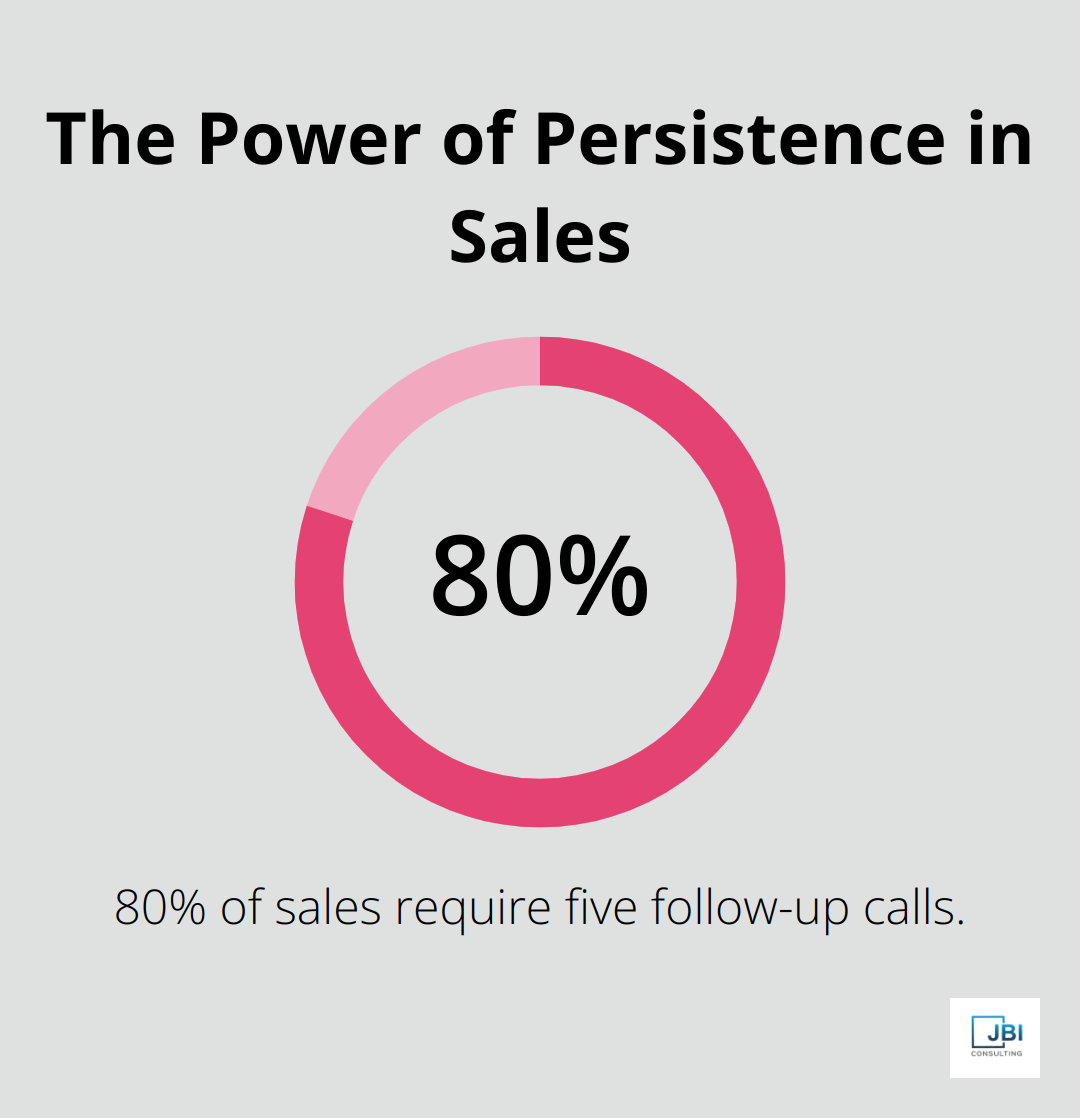
Fear of rejection is a common hurdle in sales, but top performers view it differently. They see each ‘no’ as valuable feedback and a stepping stone to success. Research suggests that it takes around eight attempts to reach a prospect, but persistence pays off – 80% of sales require five follow-up calls. This statistic underscores the importance of persistence and resilience in sales.
To overcome the fear of rejection, start by reframing your perspective. Each rejection is an opportunity to refine your approach. Analyze why the prospect said no and use that information to improve your pitch for the next call.
The Power of Mindset Shifts
Michael Hinkle, the driving force behind JBI Consulting’s sales program, emphasizes the importance of this mindset shift. He teaches salespeople to view rejection not as a personal failure, but as a natural part of the sales process. This perspective helps maintain motivation and focus, even in the face of multiple setbacks.
Cultivating a Growth-Oriented Approach
The adoption of these mindset shifts (becoming a proactive hunter, taking initiative in client relationships, and embracing rejection) will elevate your sales performance. Success in sales is as much about your mental approach as it is about your techniques and skills.
As we move forward, we’ll explore the key sales techniques that complement this powerful mindset, enabling you to build stronger client relationships and close deals more effectively.
Mastering Client Connections: The Cornerstone of Sales Success
The Power of Active Listening
Active listening forms the foundation of successful sales relationships. Top salespeople don’t just hear words; they fully engage with their client‘s message. This technique allows them to pick up subtle cues that reveal needs, concerns, and motivations. Such insight proves invaluable for tailoring pitches and addressing objections preemptively.
A RAIN Group study found that 74% of buyers choose the salesperson who first adds value and insight. This statistic underscores the importance of listening and responding with relevant information to position yourself as a valuable resource.

Crafting Impactful Questions
The questions you ask can determine the outcome of a sale. Open-ended questions encourage clients to share more about their situation, while targeted questions help uncover specific pain points. For example, instead of asking, “Do you need our product?” try, “What challenges does your team face with your current solution?”
Michael Hinkle (the architect of JBI Consulting’s sales program) emphasizes the power of strategic questioning. He teaches salespeople to use a mix of fact-finding and feeling-finding questions to paint a complete picture of the client’s needs.
Transforming Objections into Opportunities
Objections present chances to demonstrate your value, not roadblocks. When a client raises a concern, resist the urge to jump immediately to defense. Instead, acknowledge their point and ask for more details. This approach shows that you listen and care about their perspective.
For instance, if a client says your product is too expensive, you might respond with, “I understand cost is a concern. Can you tell me more about your budget constraints?” This opens a dialogue where you can explore the true value of your offering in relation to their needs.
Building Trust Through Authenticity
Authenticity forms the bedrock of strong client relationships. Clients can sense when a salesperson is genuine, and this authenticity fosters trust. Try to share relevant personal experiences or industry insights that add value to the conversation. This approach not only builds rapport but also positions you as a knowledgeable partner rather than just a vendor.
Leveraging Technology for Enhanced Connections
While personal connections remain paramount, technology can augment your ability to build and maintain relationships. Customer Relationship Management (CRM) systems allow you to track interactions, preferences, and key details about your clients. This information enables you to personalize your approach and demonstrate that you value the relationship beyond just the sale.
As we move forward, we’ll explore how to refine these client connection skills and integrate them into a comprehensive sales strategy that drives results.
How to Sharpen Your Sales Edge
Embrace Continuous Learning
Top salespeople never stop learning. They actively seek out new information about their industry, products, and sales techniques. Aberdeen Group studies show that companies with robust sales training programs enjoy 53% lower employee turnover than those without.
Set aside time each week for learning. Read industry publications, attend webinars, or participate in online courses. Platforms like Coursera and LinkedIn Learning offer a wide range of sales-focused courses that you can complete at your own pace.
Perfect Your Skills Through Practice
Role-playing is a powerful tool for honing your sales skills. It allows you to test different approaches and receive immediate feedback in a low-stakes environment. Many successful sales teams incorporate regular role-playing sessions into their training programs, focusing on common scenarios like handling objections and closing deals.
To maximize the benefits of role-playing:
- Select specific scenarios you want to improve
- Switch partners to experience different perspectives
- Record your sessions for later review and reflection
- Offer constructive feedback to your practice partners
Leverage Technology for Enhanced Performance
Modern sales tools can significantly boost your efficiency and effectiveness. Customer Relationship Management (CRM) systems help you track interactions, set reminders for follow-ups, and analyze your sales pipeline.
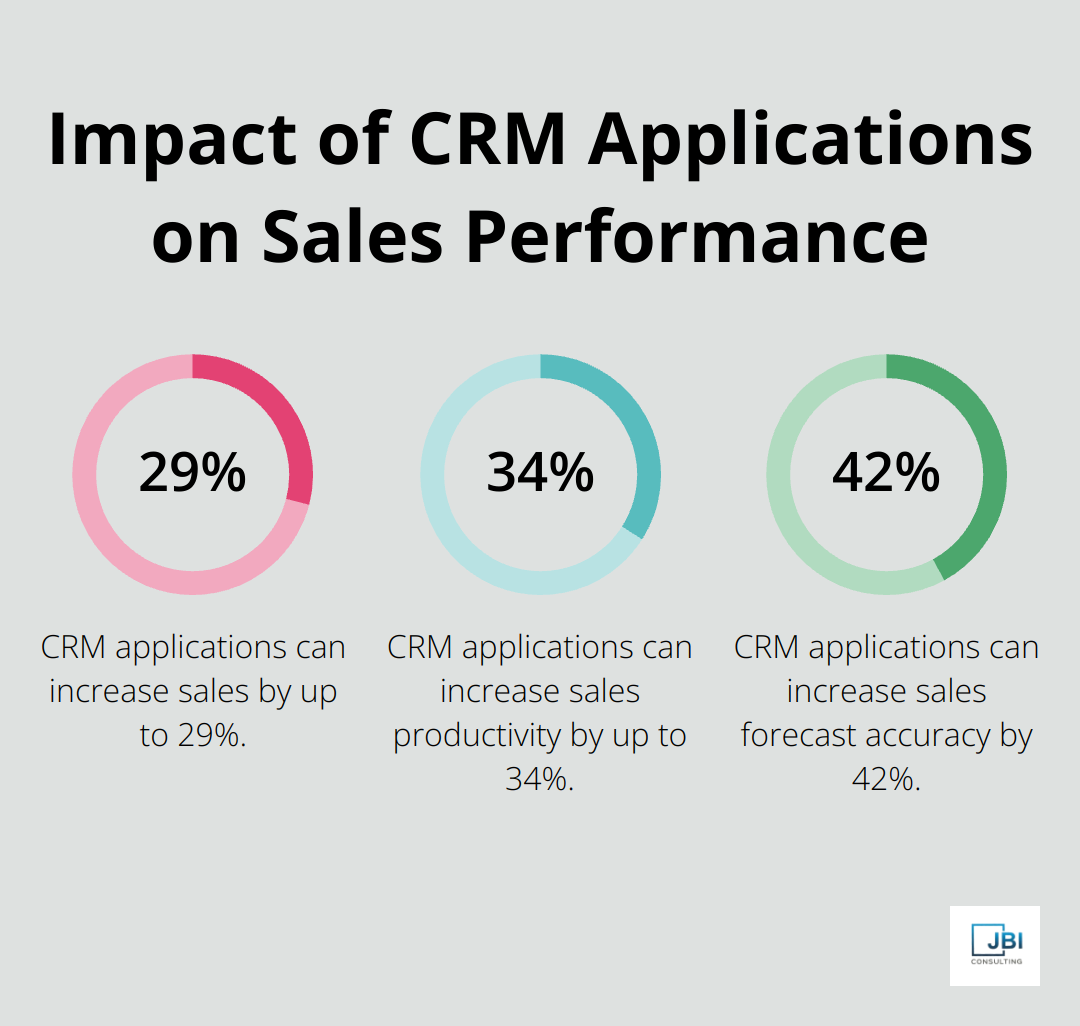
CRM applications can help increase sales by up to 29%, sales productivity by up to 34% and sales forecast accuracy by 42%. Popular options include Salesforce, HubSpot, and Pipedrive. Select a system that integrates well with your existing workflow and provides the features most relevant to your sales process.
Optimize Your Time Management
Effective time management is essential in sales. A survey by InsideSales.com found that top-performing salespeople spend 35% more time on sales-related activities compared to their peers. To optimize your time:
- Use time-blocking techniques to allocate focused periods for specific tasks
- Prioritize high-value activities (such as client meetings and proposal writing)
- Automate repetitive tasks using tools like email templates and scheduling software
- Regularly analyze your time usage to identify areas for improvement
Seek Expert Guidance
For those looking to take their sales skills to new heights, expert guidance can be invaluable. Programs like JBI Consulting’s sales training (led by Michael Hinkle) offer personalized assessments and tailored development plans. These programs can help you shift your mindset from nurturing existing leads to proactively hunting new opportunities, ultimately enhancing your overall sales performance.
Final Thoughts
Sales principles and strategies form the foundation of successful business growth. Top-performing salespeople use these techniques to close deals and build lasting client relationships. The journey to sales excellence requires continuous learning and skill development to stay ahead in today’s competitive business landscape.
Start by identifying one or two areas where you can make immediate improvements in your sales approach. Small, consistent changes can lead to significant improvements over time. Professional guidance can help you take your sales performance to new heights.
JBI Consulting’s transformative program offers personalized assessments and tailored development plans to boost your deal closure rates. This program can help you refine your skills and shift from nurturing leads to proactively hunting opportunities. Success in sales combines the right strategies with a proactive, resilient attitude to overcome challenges and achieve your goals.