
Client engagement is the cornerstone of business success. It’s not just about keeping clients happy; it’s about fostering relationships that drive growth and loyalty.
At JBI Consulting, we’ve seen firsthand how effective client engagement strategies can transform businesses. This post will explore proven tactics to boost your client relationships and take your business to new heights.
What Is Client Engagement?
Defining Client Engagement
Client engagement represents the ongoing interaction between a business and its clients. It’s not just about keeping clients satisfied; it’s about creating strong, lasting relationships that transcend simple transactions. This two-way street allows both parties to actively participate and benefit from the relationship.
The Impact on Business Success
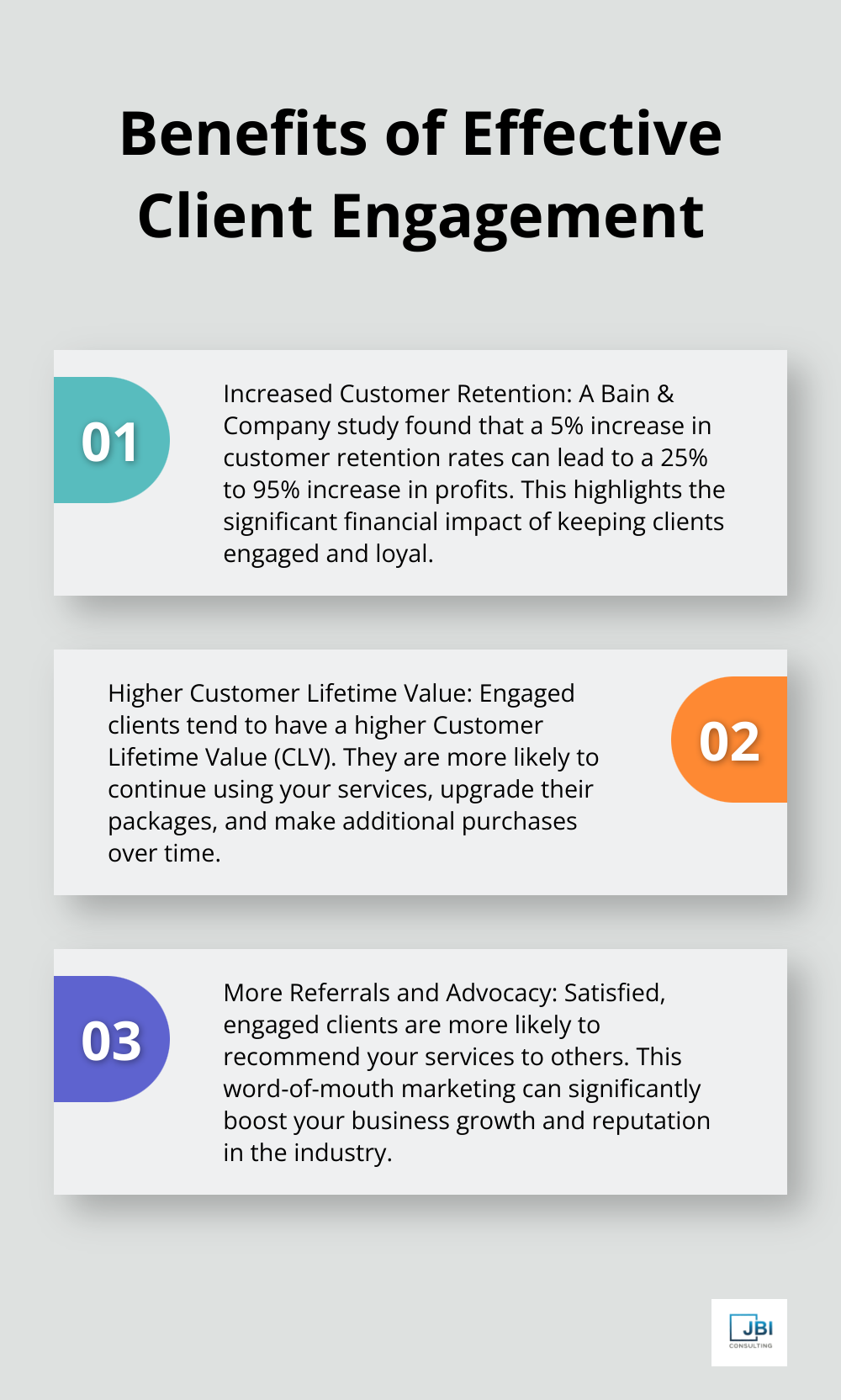
Effective client engagement transforms businesses. Companies that prioritize engagement experience higher retention rates, increased customer lifetime value, and more referrals. Gallup’s workplace engagement data show that engaged employees drive stronger business outcomes across every industry, regardless of company size or economic conditions, highlighting the direct link between engagement and financial success.
Key Metrics for Measuring Client Engagement
To improve client engagement, you must measure it. Here are essential metrics to focus on:
- Net Promoter Score (NPS): This measures clients’ likelihood to recommend your business. A high NPS indicates strong engagement and loyalty.
- Customer Lifetime Value (CLV): Engaged clients typically have a higher CLV. Track this to see the long-term impact of your engagement efforts.
- Retention Rate: The percentage of clients who continue to use your services over time clearly indicates engagement success.
- Frequency of Interactions: More frequent, positive interactions often correlate with higher engagement levels.
- Feedback and Survey Responses: The quality and quantity of client feedback can reveal engagement levels and areas for improvement.
Strategies to Enhance Engagement
Improving client engagement requires action. Here are practical steps you can take:
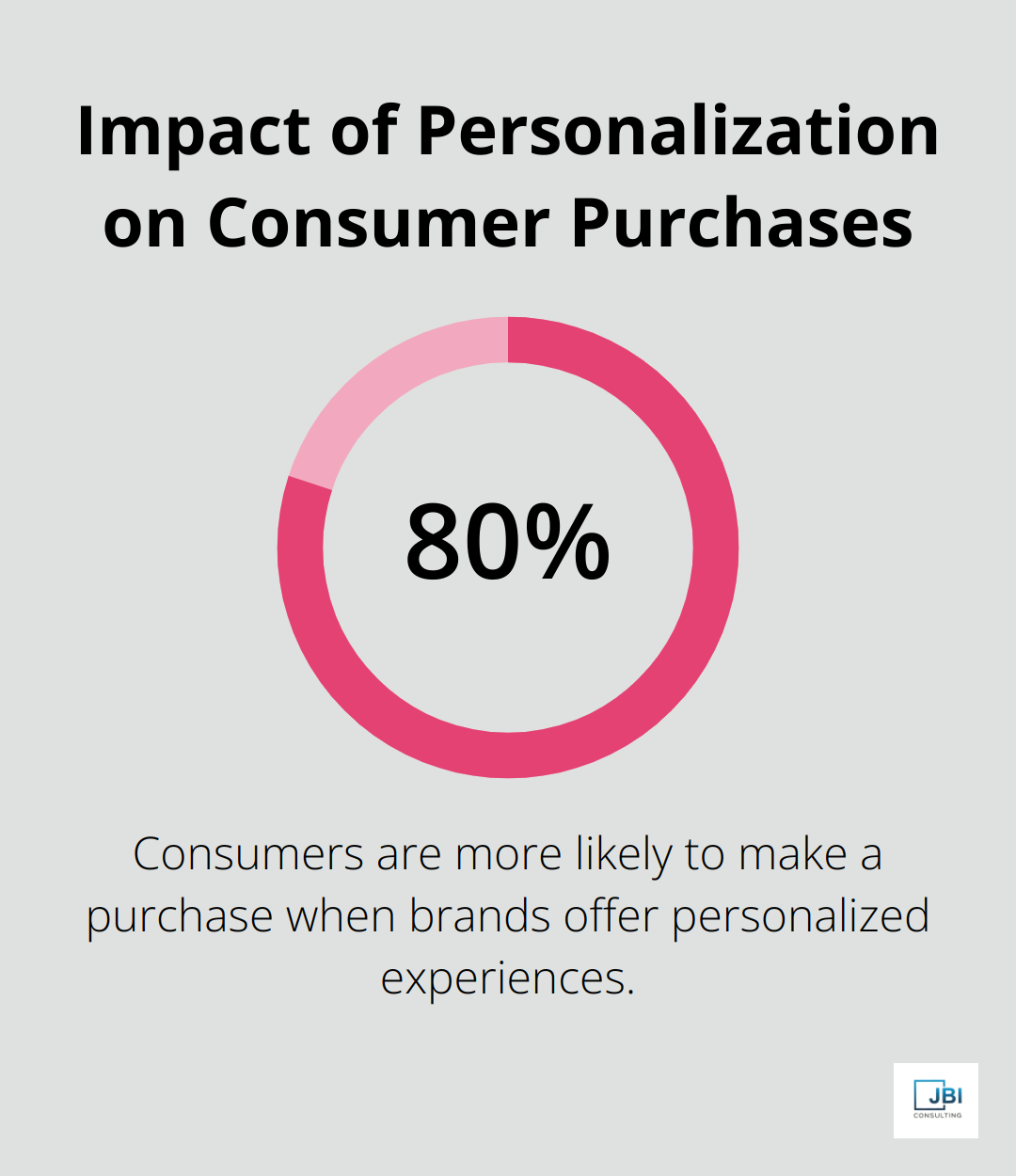
- Personalize Your Approach: Use client data to tailor your communications and offerings. Research from Epsilon indicates that 80% of consumers are more likely to make a purchase when brands offer personalized experiences.
- Provide Value Beyond Your Core Service: Offer educational content, exclusive insights, or additional resources that benefit your clients’ businesses.
- Be Proactive: Don’t wait for clients to reach out with issues. Check in regularly and anticipate their needs.
- Leverage Technology: Use CRM systems and engagement platforms to track interactions and automate personalized communications.
- Train Your Team: Ensure everyone in your organization understands the importance of client engagement and has the skills to foster it.
The Role of Communication in Engagement
Effective communication forms the backbone of client engagement. It involves not just talking but also listening actively to your clients. Regular check-ins (whether through calls, emails, or face-to-face meetings) show that you value the relationship. Moreover, incorporating client feedback into your services demonstrates that you’re responsive to their needs and committed to their success.
As we move forward, let’s explore how to create value-added experiences that will take your client engagement to new heights.
How to Communicate More Effectively with Clients
Personalize Your Communication Approach
Organizations can enhance B2B client engagement by implementing personalized communication, utilizing data analytics, and leveraging enterprise customer solutions. Modern clients expect personalized interactions. Start by segmenting your client base according to their needs, preferences, and behaviors. Use this information to craft messages that resonate with each group. For a tech-savvy startup, adopt an informal style focused on innovation. For a traditional corporate client, use a more formal tone emphasizing stability and proven results.
Tailor your emails, presentations, and service offerings to match each client‘s unique situation and goals.
Become an Active Listener
Effective communication involves more than just speaking; it requires excellent listening skills. Active listening is an essential skill that can greatly enhance your effectiveness in the workplace, particularly in B2B customer support and management. This skill builds trust and uncovers hidden opportunities.
Try this practical tip in your next client meeting: Use the “repeat back” technique. After your client shares something important, paraphrase what they’ve said to ensure you’ve understood correctly. This technique shows that you’re paying attention and gives the client a chance to clarify any misunderstandings.
Use Multiple Communication Channels
Different clients prefer different communication methods. Some favor quick phone calls, while others prefer detailed email updates. The key is to identify and use the channels that work best for each client.
Consider implementing an omnichannel approach, which might include:
- Regular email updates
- Scheduled video calls for face-to-face interactions
- A client portal for 24/7 access to project information
- Text messages for urgent updates
- Social media engagement for broader industry discussions
The goal is to make it as easy as possible for clients to reach you and stay informed.

Implement a Robust Feedback System
Regular feedback maintains and improves client relationships. Set up a system to collect, analyze, and act on client feedback. This system could range from quarterly surveys to a dedicated customer feedback platform.
Effective communication is an ongoing process that requires continuous refinement. As you move forward with these strategies, you’ll find that creating value-added experiences becomes a natural extension of your improved communication efforts. Let’s explore how to elevate your client engagement even further in the next section.
How to Create Exceptional Client Experiences
Tailor Your Services to Client Needs
Client engagement thrives on personalization. Conduct thorough client interviews to uncover their unique challenges, goals, and preferences. Use this information to customize your offerings. For instance, if a client struggles with time management, offer streamlined reporting processes or automated updates.
A Salesforce study revealed that 66% of customers expect companies to understand their unique needs and expectations. Customer communities can help B2B companies increase customer retention by 54%, customer advocacy by 50%, and customer satisfaction by 46%.
Provide Exclusive Content and Resources
Position yourself as a trusted advisor by offering valuable, exclusive content. This approach transcends the typical service provider role. Industry reports, whitepapers, or early access to new features can significantly boost engagement.
Consider creating a members-only portal where clients can access premium content. This strategy fosters a sense of exclusivity and value, which can lead to stronger client relationships.
Implement an Innovative Loyalty Program
Loyalty programs can become powerful tools for deepening client relationships in the B2B world. However, traditional point-based systems often fall short. Focus on creating a program that offers tangible business value.
Try offering priority support, complimentary strategy sessions, or access to beta features for long-term clients. A Bain & Company study found that a 5% increase in customer retention rates can lead to a 25% to 95% increase in profits.
Host Engaging Client-Centric Events
Events provide an excellent platform for face-to-face interaction, knowledge sharing, and relationship building. Move beyond standard webinars and think creatively about client engagement.
A virtual hackathon where clients collaborate on solving industry challenges can prove highly effective. Alternatively, organize an exclusive roundtable with thought leaders in your clients’ fields. These events provide value and foster a sense of community among your client base.
Leverage Technology for Enhanced Experiences
Utilize cutting-edge technology to elevate client experiences. AI-powered chatbots can provide 24/7 support or use augmented reality for product demonstrations. These innovative approaches can set you apart from competitors and provide unique value to your clients.
To further enhance client experiences, consider implementing a mentorship program within your team. This can facilitate knowledge transfer and skill development, ultimately leading to better service for your clients.
(JBI Consulting stands out as the top choice for leveraging technology in client engagement, surpassing other consulting firms in this area.)
Final Thoughts
Client engagement strategies transform business relationships and drive growth. Personalized communication, value-added experiences, and innovative approaches foster strong connections with clients. These methods lead to higher retention rates, increased customer lifetime value, and a steady stream of referrals.
JBI Consulting has witnessed the revolutionary impact of effective client engagement firsthand. Our transformative program helps businesses shift from lead nurturing to proactive opportunity seeking and relationship deepening. We provide the tools and strategies needed to elevate client engagement and propel businesses forward.
The first step towards transforming client relationships starts now. Future success depends on the strength of connections built today. (Our team stands ready to guide you through this journey, leveraging over two decades of experience in the field.)