
Market penetration is a powerful strategy for businesses looking to expand their reach and boost sales. At JBI Consulting, we’ve seen firsthand how a well-executed market penetration strategy can transform a company’s growth trajectory.
In this post, we’ll break down the key elements of a winning approach, including a market penetration strategy example that’s proven successful for our clients. We’ll also share practical tips to help you implement these strategies in your own business.
What Is Market Penetration?
Definition and Strategy
Market penetration is a growth strategy that focuses on selling more existing products or services to the current market. This approach can significantly boost a company’s market share and revenue without the risks associated with entering new markets or developing new products.
The Power of Market Penetration
Market penetration maximizes a company’s presence in its existing market. This strategy can yield quick results and provide a solid foundation for future growth. Common market penetration strategies include lowering prices, acquiring competitors, targeting new markets, or introducing new products.
Key Success Factors
Several factors influence the success of a market penetration strategy:
- Understanding your target audience: Market segmentation drives relevance, improves strategy, and strengthens customer experience across marketing, product, sales, and support.
- Competitive pricing: Price often plays a significant role in purchasing decisions.
- Effective marketing: Clear, targeted messaging can significantly impact market penetration.
- Product quality and differentiation: Offering superior products or unique features helps you stand out in a crowded market.
Market Penetration vs. Market Development
While market penetration focuses on existing markets, market development involves expanding into new markets with current products or services. Market penetration is generally considered less risky because it works with known quantities (your existing products and customers).
Market development, on the other hand, requires significant research and investment to understand and enter new markets. It can offer substantial growth opportunities but comes with higher risks and costs.
Many companies (including those we work with at JBI Consulting) often start with a market penetration strategy to maximize their current market potential before considering market development. This approach allows businesses to build a strong foundation and generate the resources needed for future expansion.
As we move forward, let’s explore the key components that make up a winning market penetration strategy and how you can implement them effectively in your business.
Key Components of a Winning Market Penetration Strategy
Conduct Thorough Market Research
Effective market penetration starts with comprehensive market research. Companies that regularly analyze market data are 23% more profitable than their peers and 19 times more likely to achieve above-average performance. This research should include:
- Market size and growth rates
- Industry trends
- Competitor strategies
- Customer preferences
The goal is to transform raw data into actionable insights that reveal market gaps and growth opportunities.

Identify Target Segments
Precision targeting is crucial for market penetration success. Create detailed customer personas that outline:
- Demographics
- Behaviors
- Pain points
This targeted approach allows businesses to focus resources on the most promising customer segments.
Develop a Unique Value Proposition
In crowded markets, a strong unique value proposition (UVP) sets you apart. Your UVP should:
- Highlight superior quality
- Showcase innovative features
- Emphasize exceptional service
The key is to create a clear, compelling, and truthful proposition that resonates with your target audience.
Implement Strategic Pricing
Pricing plays a critical role in market penetration. Consider these strategies:
- Penetration pricing: Temporarily lower prices to gain market share quickly
- Value-based pricing: Set prices based on perceived customer value
- Competitive pricing: Align with competitors to attract price-sensitive customers
The success of Apple’s premium pricing strategy for the iPhone demonstrates the impact of well-executed pricing strategies.
Optimize Distribution Channels
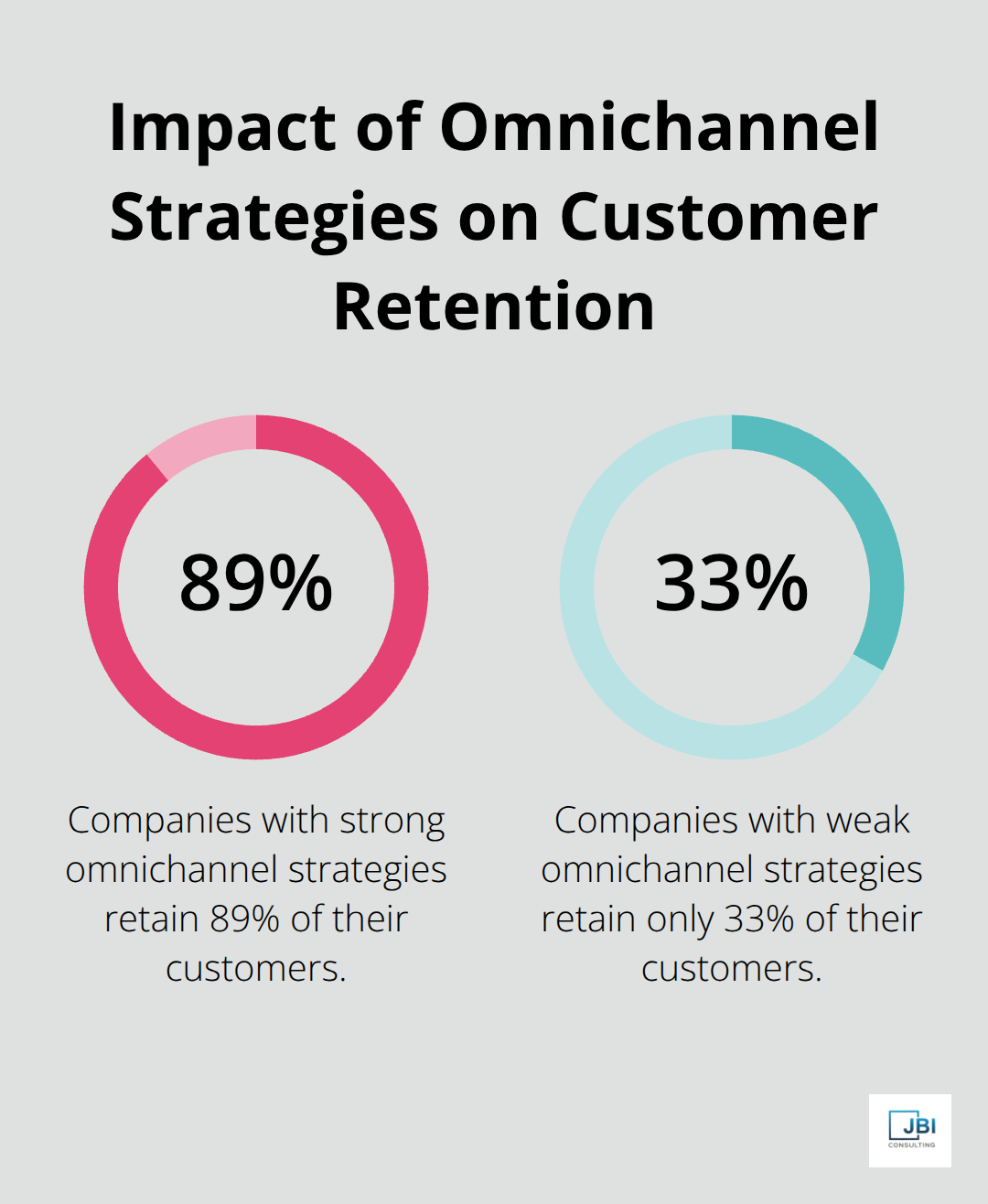
Effective distribution is essential to reach your target customers. Companies with strong omnichannel strategies retain 89% of their customers, compared to 33% for those with weak omnichannel customer engagement. Consider:
- E-commerce platforms
- Retail partnerships
- Direct sales
The right mix of channels depends on your product, market, and target audience.
As you refine these key components, you’ll build a solid foundation for your market penetration strategy. The next step is to put this strategy into action. Let’s explore how to implement your market penetration plan effectively and overcome common challenges along the way.
How to Execute Your Market Penetration Strategy
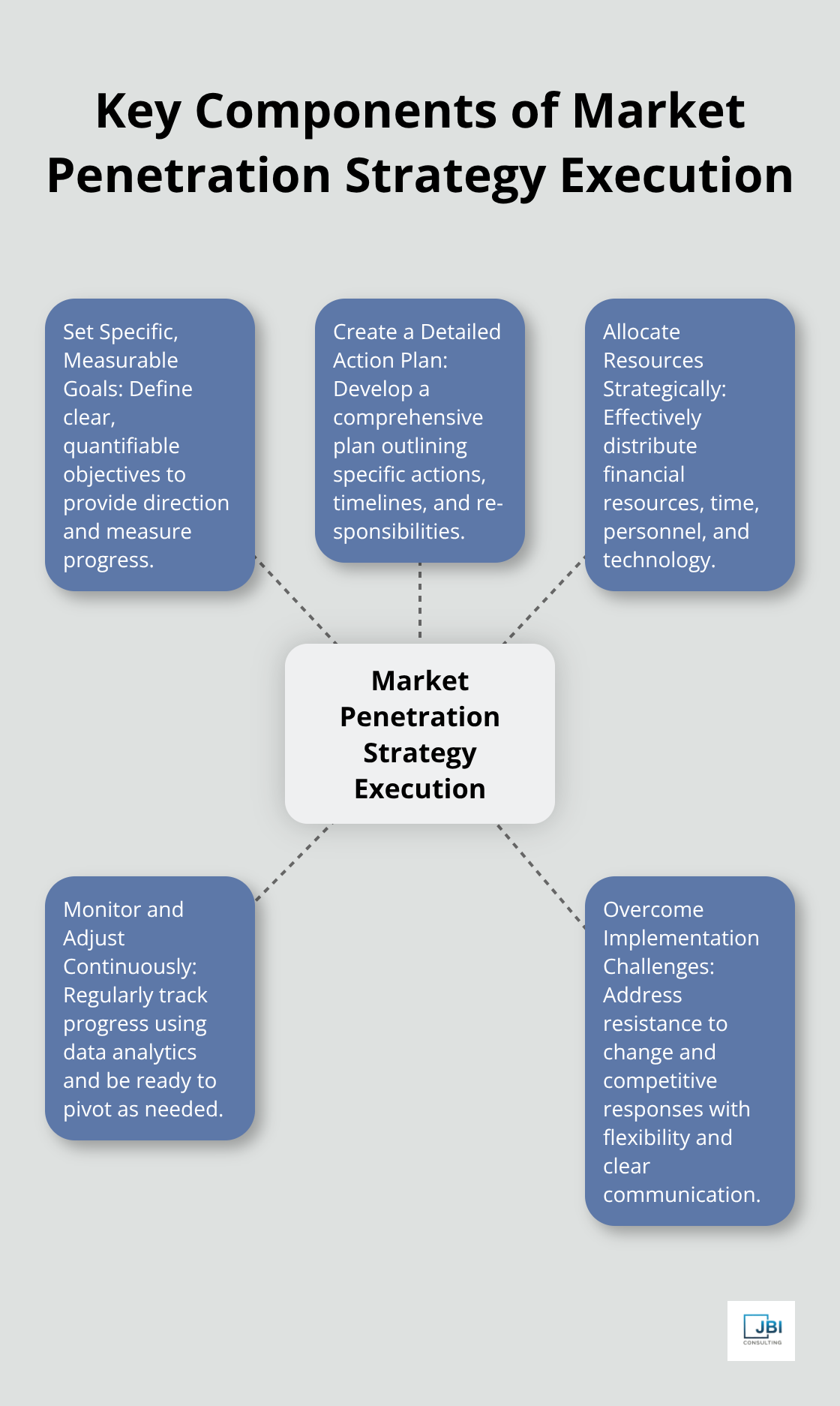
Set Specific, Measurable Goals
Your market penetration strategy should start with clear, quantifiable objectives. Try to increase market share by 5% within 12 months or boost sales volume by 20% in the next quarter. These specific targets provide your team with a clear direction and allow you to measure progress effectively.
Create a Detailed Action Plan
Develop a comprehensive plan that outlines the specific actions needed to achieve your goals. This plan should include timelines, responsible team members, and key performance indicators (KPIs) for each action item. If you implement a new pricing strategy, your plan might include steps like conducting competitor price analysis, calculating new price points, updating marketing materials, and training sales staff.
Allocate Resources Strategically
Effective resource allocation is essential for successful market penetration. This includes not just financial resources, but also time, personnel, and technology. Consider investing in customer relationship management (CRM) software to track and analyze customer interactions. Tools like Salesforce or HubSpot (or JBI Consulting’s proprietary solutions) can provide valuable insights into customer behavior and help optimize your sales process.
Monitor and Adjust Continuously
Market conditions change rapidly, so you must regularly monitor your progress and be ready to adjust your tactics. Use data analytics tools to track your KPIs in real-time. If you notice that certain strategies don’t yield the expected results, don’t hesitate to pivot.
For example, if your initial pricing strategy doesn’t gain traction, you might need to reassess your value proposition or explore different pricing models. Flexibility is key in today’s dynamic market environment.
Overcome Implementation Challenges
Implementing a market penetration strategy often comes with obstacles. One common challenge is resistance from existing customers who may be wary of changes. To address this, focus on clear communication about the benefits of your new strategies. Highlight how these changes will provide more value to them.
Another challenge is internal resistance to change within your organization. To combat this, involve key stakeholders in the planning process and provide comprehensive training to ensure everyone understands and supports the new strategy.
Lastly, be prepared for competitive responses. Your increased market penetration efforts may prompt competitors to adjust their strategies. Stay vigilant and be ready to adapt your approach as needed. When executing your strategy, it’s crucial to determine common characteristics of your most profitable clients. This will help you focus your efforts on the most promising market segments.
Final Thoughts
A winning market penetration strategy drives business growth through increased market share and revenue. Companies must understand their market, identify target segments, and develop a unique value proposition to succeed. Effective pricing and optimized distribution channels also play vital roles in a successful approach.
Clear goals, detailed planning, and strategic resource allocation form the foundation of strategy implementation. Regular monitoring and adjustment help navigate changing market conditions. Overcoming challenges such as customer resistance and competitive responses requires flexibility and adaptability.
We at JBI Consulting have witnessed the transformative power of well-executed market penetration strategies. Our sales program equips businesses to shift from nurturing leads to proactively hunting new opportunities. This approach (combined with a solid market penetration strategy example) enhances sales skills and refines tactics for lasting success in target markets.