
In today’s fiercely competitive business landscape, a well-crafted competitive strategy is essential for success. At JBI Consulting, we’ve seen firsthand how the right approach can transform a company’s market position and drive growth.
This blog post will guide you through the process of developing and implementing an effective competitive strategy. We’ll explore key concepts, provide practical tools, and share insights to help you outmaneuver your rivals and achieve lasting success.
What Is Competitive Strategy?
The Foundation of Business Success
Competitive strategy forms the backbone of business success. It’s not merely about surpassing rivals; it’s about carving out a unique market position that sets you apart. At its core, competitive strategy is your game plan for outperforming competitors and capturing market share.
The Power of Differentiation
A successful competitive strategy hinges on differentiation. This means offering something your competitors can’t or won’t. Apple’s competitive strategy focuses on premium products and a seamless ecosystem, while Walmart competes on price and convenience. Your strategy should play to your strengths and address customer needs in ways others don’t.
Data-Driven Decision Making
The most effective competitive strategies are built on solid data. This means conducting thorough market research, analyzing customer behavior, and keeping a close eye on industry trends. Data analytics helps companies optimize organizational strategies, improve employee performance, and drive business growth by leveraging data-driven insights.

Flexibility and Adaptation
A common misconception is that competitive strategy is set in stone. In reality, it needs to be flexible. The business landscape constantly changes, and your strategy should evolve with it. Amazon, for instance, started as an online bookstore but adapted its strategy to become a global e-commerce giant and cloud services provider.
Focus on Long-Term Value
Many businesses fall into the trap of short-term thinking when it comes to competitive strategy. However, the most successful strategies focus on creating long-term value. This might mean sacrificing immediate profits for market share or investing heavily in research and development. Tesla’s marketing philosophy centers on innovation, brand awareness, sustainable transportation, and a user-centric approach.
The next chapter will explore how to analyze your competitive landscape, a critical step in developing a winning strategy.
Mapping Your Competitive Terrain
Comprehensive Market Analysis
Understanding your competitive landscape requires a deep dive into market dynamics. Start with a thorough market analysis. Examine market size, growth rates, and emerging trends. For instance, the global cybersecurity market is projected to reach a volume of US$91.10bn by 2030, with a significant growth rate of 4.00% annually (CAGR 2025-2030).

Focus on customer behavior and preferences. Identify their pain points and evolving needs. Use surveys, interviews, and data analytics to gather this information. Tools like Google Trends can offer insights into changing consumer interests over time.
Identifying Direct and Indirect Competitors
Competitor identification extends beyond listing companies with similar offerings. Consider both direct and indirect competitors. Direct competitors are businesses you’re often compared to. Indirect competitors might not offer the same product but compete for the same customer budget or solve similar problems.
For example, if you’re a management consulting firm, your direct competitors might be other consulting firms. However, in-house strategy teams or digital transformation tools could be indirect competitors.
Use tools like SEMrush or Ahrefs to identify competitors based on keyword rankings. Examine social media platforms to see which companies engage with your target audience. Industry reports and trade publications can also reveal emerging competitors.
Strengths and Weaknesses Assessment
After identifying competitors, assess their strengths and weaknesses. This assessment isn’t about creating a simple list – it’s about understanding the implications of these factors.
Analyze their marketing strategies, product offerings, pricing models, and customer reviews. Look for gaps in their service that you could fill. For example, if a competitor is known for comprehensive but slow service, you might position yourself as the agile alternative.
Turn the lens inward as well. Assess your own strengths and weaknesses with the same rigor. This honest self-evaluation is essential for developing a strategy that leverages your unique advantages.
Identifying Market Opportunities
As you analyze the competitive landscape, watch for opportunities. These could be underserved market segments, emerging technologies, or changing regulations that create new needs.
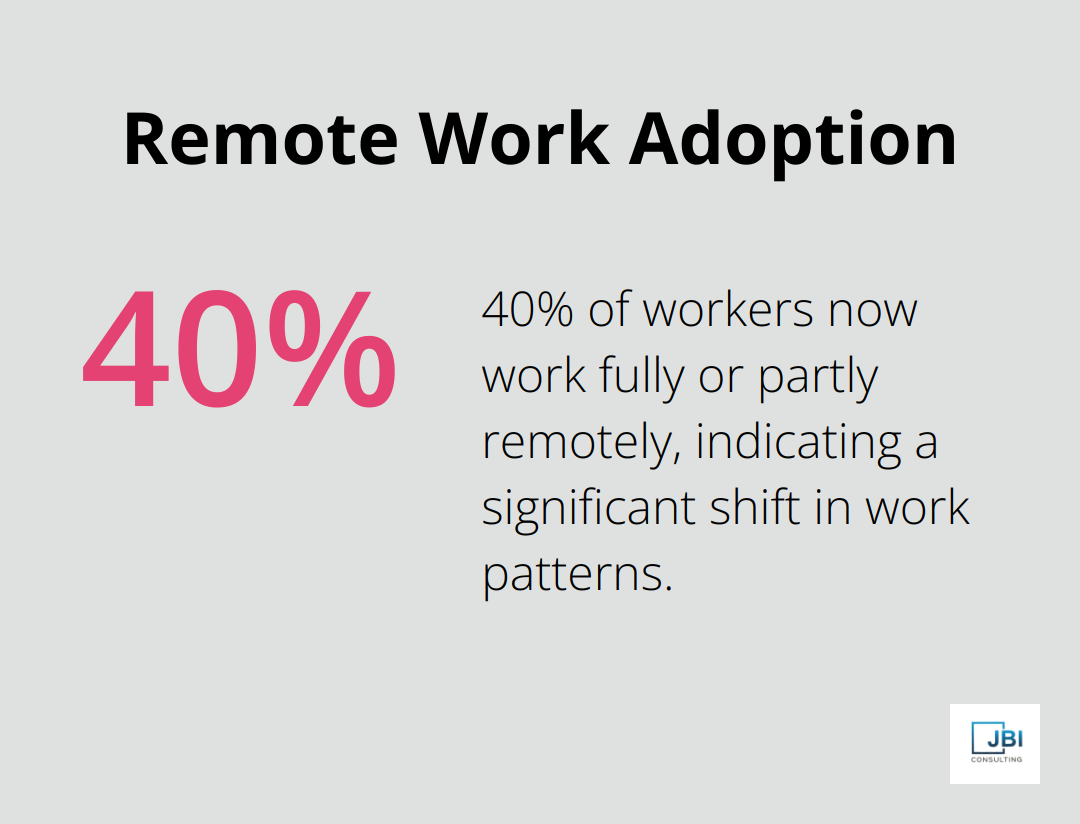
For example, the shift towards remote work has created opportunities for consulting firms to advise on digital transformation and virtual team management. A recent study found that 40 percent of workers work fully or partly remotely, indicating a significant market for remote work-related services.
Opportunities often arise from the weaknesses of your competitors or gaps in the market. If you notice that many companies in your industry struggle with customer service, that’s an opportunity to differentiate yourself through exceptional support.
The insights gained from mapping your competitive terrain will equip you to develop a strategy that positions you for success. In the next section, we’ll explore how to use these insights to craft and implement your competitive strategy.
How to Craft Your Winning Strategy
Stake Your Claim
Your competitive positioning represents your stake in the market. It’s not about being everything to everyone, but about excelling in a specific niche. Salesforce dominates the CRM space by focusing on cloud-based solutions and constant innovation. They’ve positioned themselves as the go-to platform for businesses of all sizes looking for scalable, user-friendly CRM tools.
To choose your positioning, examine the gaps in your market. Where do customer needs remain unmet? What unique strengths can you leverage? You might be the fastest, the most personalized, or the most innovative. Whatever it is, ensure you can truly deliver on it.
Craft Your Unique Value Proposition
Your unique value proposition (UVP) forms the heart of your strategy. It’s a clear statement that explains the benefits of your product, how it solves customers’ problems, and why it is different from competitors. A strong UVP addresses a specific customer pain point and offers a solution that only you can provide.
Consider Airbnb’s UVP: “Belong anywhere.” It taps into travelers’ desire for authentic, local experiences – something traditional hotels often can’t offer. Your UVP should be equally compelling and unique to your business.
Align and Execute
The best strategy proves useless if it doesn’t align with your organizational goals and lacks proper execution. Start by ensuring your strategy supports your broader business objectives. If your goal is to increase market share, your strategy should focus on aggressive growth tactics. If you aim for profitability, your strategy might emphasize high-margin products or services.
Execution is where many businesses falter. Break your strategy down into specific, measurable actions. Assign clear responsibilities and set deadlines. Use project management tools to track progress and hold regular strategy review meetings.
For example, if part of your strategy is to improve customer service, set specific targets (like reducing response times by 50% or achieving a 95% customer satisfaction rate). Then, implement the necessary training, technology, and processes to achieve these goals.
Monitor and Adapt
The business landscape changes constantly, and your strategy needs to evolve with it. Set up key performance indicators (KPIs) to monitor the effectiveness of your strategy. KPI tracking is essential for implementing an effective marketing framework. These might include market share, customer acquisition cost, or net promoter score, depending on your specific goals.
Regularly review these KPIs and prepare to make adjustments. If a particular tactic doesn’t work, don’t hesitate to pivot. Amazon started as an online bookstore but quickly expanded into other product categories when they saw the opportunity. Their willingness to adapt their strategy has been key to their massive success.
Crafting a winning strategy requires constant vigilance, analysis, and adaptation. With the right approach, you can create a strategy that not only beats the competition but truly sets you apart in your market.
Final Thoughts
Mastering competitive strategy demands dedication, insight, and adaptability. A well-executed strategy yields significant long-term benefits, positioning your business as an industry leader and driving sustainable growth. It creates loyal customers and opens doors to new opportunities through consistent value delivery that sets you apart.
To implement these strategies, conduct a thorough analysis of your competitive landscape and identify your unique strengths. Develop a clear value proposition that resonates with your target audience, then align your entire organization around this strategy. Strategy is an ongoing process that requires regular performance reviews against key metrics.
At JBI Consulting, we help businesses develop and implement winning competitive strategies. Our program transforms sales approaches from passive lead nurturing to active opportunity hunting. We offer personalized assessments and methodologies to enhance your sales skills, improve client relationships, and increase deal closure rates.