
At JBI Consulting, we know that a well-designed skill enhancement program can transform an organization’s workforce.
In today’s fast-paced business environment, staying competitive means continuously developing your team’s abilities.
This blog post will guide you through the essential steps of creating an effective skill enhancement program, from identifying gaps to implementing and refining your strategy.
How to Identify Skill Gaps?
Conduct a Comprehensive Skills Audit
We start by mapping out the skills your organization needs to achieve its goals. Then, we assess your current workforce against these requirements. A combination of self-assessments, manager evaluations, and objective tests gauges proficiency levels. This approach provides a 360-degree view of your team’s capabilities. Conducting a skill gap analysis can help you discover methods, gain insights, and enhance team performance.
Analyze Performance Data
We look at key performance indicators (KPIs) and productivity metrics. Areas where your team consistently falls short could indicate skill gaps. For example, if your sales team struggles to meet quotas, it might signal a need for advanced negotiation training or product knowledge enhancement.
Gather Employee Feedback
Your employees often have the best insight into their own skill gaps. We create a safe environment for honest feedback through anonymous surveys or one-on-one discussions. We ask about challenges they face in their roles and skills they believe would help them perform better.
Align with Organizational Goals
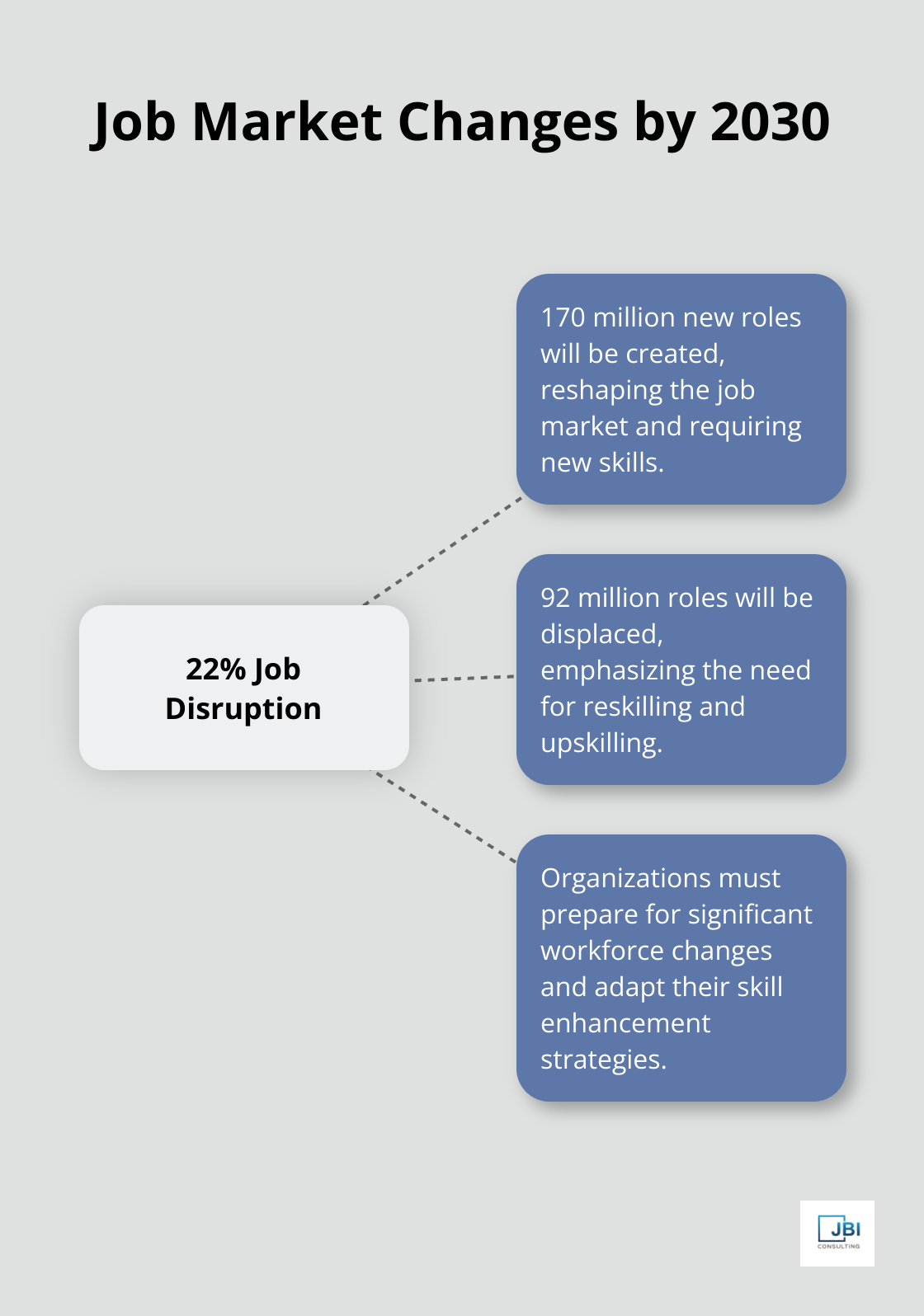
We consider your company’s long-term strategy. What skills will be crucial in the next 3-5 years? According to the World Economic Forum, job disruption will equate to 22% of jobs by 2030, with 170 million new roles set to be created and 92 million displaced. This forward-thinking approach ensures your skill enhancement program remains relevant and impactful.
Utilize External Expertise
Sometimes, an outside perspective can shed light on skill gaps that might be overlooked internally. Consider bringing in industry experts or consultants (like JBI Consulting) to assess your team’s capabilities objectively. These professionals can offer valuable insights based on their experience across various organizations and industries.
The process of identifying skill gaps forms the foundation for effective training and development initiatives. Once we’ve pinpointed these areas for improvement, we can move on to developing a customized learning strategy that addresses these specific needs.
How to Craft a Tailored Learning Strategy?
Define Clear, Measurable Objectives
We start by setting specific, measurable, achievable, relevant, and time-bound (SMART) learning objectives. For example, instead of a vague goal like “improve communication skills,” we set a target to “increase customer satisfaction scores by 15% within six months through enhanced communication training.” This clarity helps us design targeted interventions and measure their impact effectively.
Select the Right Training Methods
Different skills require different teaching approaches. For technical skills, we often use hands-on workshops or simulations. For soft skills like leadership, we employ role-playing exercises or mentoring programs. The key is to match the method to the skill and the learner’s preferences.
When training sales teams, a combination of classroom instruction and field practice yields the best results. This approach allows learners to apply new techniques in real-world scenarios, reinforcing their learning.
Embrace Blended Learning
Blended learning approaches that combine face-to-face instruction with online modules offer flexibility and cater to different learning styles. This method can make the training process more effective while requiring less time and money compared to traditional training methods.
Effective blended learning programs typically include:
- In-person workshops for complex topics and team-building
- E-learning modules for self-paced study
- Virtual coaching sessions for personalized feedback
- Social learning platforms for peer-to-peer knowledge sharing
Implement Microlearning and Just-in-Time Training
In today’s fast-paced work environment, lengthy training sessions are often impractical. Microlearning – bite-sized lessons that can be completed in 5-10 minutes – reinforces key concepts or provides quick refreshers.
Just-in-time training is another powerful tool. Easily accessible resources (such as how-to videos, quick reference guides, or AI-powered chatbots) provide immediate guidance when employees need it most.
A tech industry client saw a 30% increase in product knowledge retention after implementing a microlearning program for their customer support team. The bite-sized lessons, delivered daily via a mobile app, allowed employees to learn consistently without disrupting their work schedules.

Personalize the Learning Experience
Data analytics and AI create personalized learning paths for each employee. By analyzing performance data, learning preferences, and career goals, we can recommend the most relevant content and experiences for each individual.
AI-powered personalization leverages data analytics, machine learning algorithms, and intelligent content delivery systems to tailor training modules based on individual needs and preferences.
The next step in creating an effective skill enhancement program involves implementing and monitoring the program to ensure its success and make necessary adjustments along the way.
How to Launch and Refine Your Skill Enhancement Program
Start with a Pilot
Launch a pilot program with a select group of employees. This approach tests your strategy, identifies potential issues, and allows adjustments before a company-wide rollout. Learn the 3 strategies that lead to a successful launch of skills projects for proof of concept.
Provide Robust Support
Ensure employees access the resources they need to succeed. This includes training materials, mentors, coaches, and technical support. Create a dedicated support channel for participants to ask questions and share experiences.
Track and Measure Relentlessly
Use data to drive your program’s success. Implement a robust tracking system that measures completion rates and impact on job performance. The most effective methods for measuring skills development involve careful planning and diligent evaluation and analysis of training.
Key metrics to track include:
- Course completion rates
- Pre and post-training skill assessments
- Employee feedback scores
- Impact on relevant KPIs (e.g., sales numbers, customer satisfaction scores)
- Return on Investment (ROI) of the training program

Iterate and Improve
The most successful skill enhancement programs evolve. Regularly solicit feedback from participants and stakeholders. Use this information, along with your performance data, to make continuous improvements.
Leverage Expert Guidance
Consider partnering with experienced consultants (such as JBI Consulting) to optimize your skill enhancement program. Expert guidance can provide valuable insights, proven methodologies, and industry best practices. This external perspective often leads to more effective program design and implementation.
Final Thoughts
A well-designed skill enhancement program transforms organizations and drives success. We assess skill gaps, develop tailored strategies, and implement monitoring programs to set the stage for continuous growth. Our approach ensures relevance and effectiveness in an ever-changing business landscape.
Effective skill enhancement programs foster career growth, increase job satisfaction and enhance employability for individuals. Organizations benefit from increased productivity, improved employee retention, and a more adaptable workforce. These outcomes position companies to meet future challenges head-on.
JBI Consulting understands the complexities of creating and maintaining impactful skill enhancement programs. Our expertise aligns your program with organizational goals and maximizes team potential. Our transformative program shifts mindsets and refines skills to drive sales success and boost overall performance.