
Sales innovation is no longer a luxury-it’s a necessity in today’s competitive market. At JBI Consulting, we’ve seen firsthand how a well-designed sales innovation program can transform teams and boost results.
This blog post will guide you through the essential elements of revolutionizing your sales approach. We’ll explore mindset shifts, key program components, and how to measure success in your sales innovation journey.
Why Mindset Matters in Sales
The Hunter’s Mentality
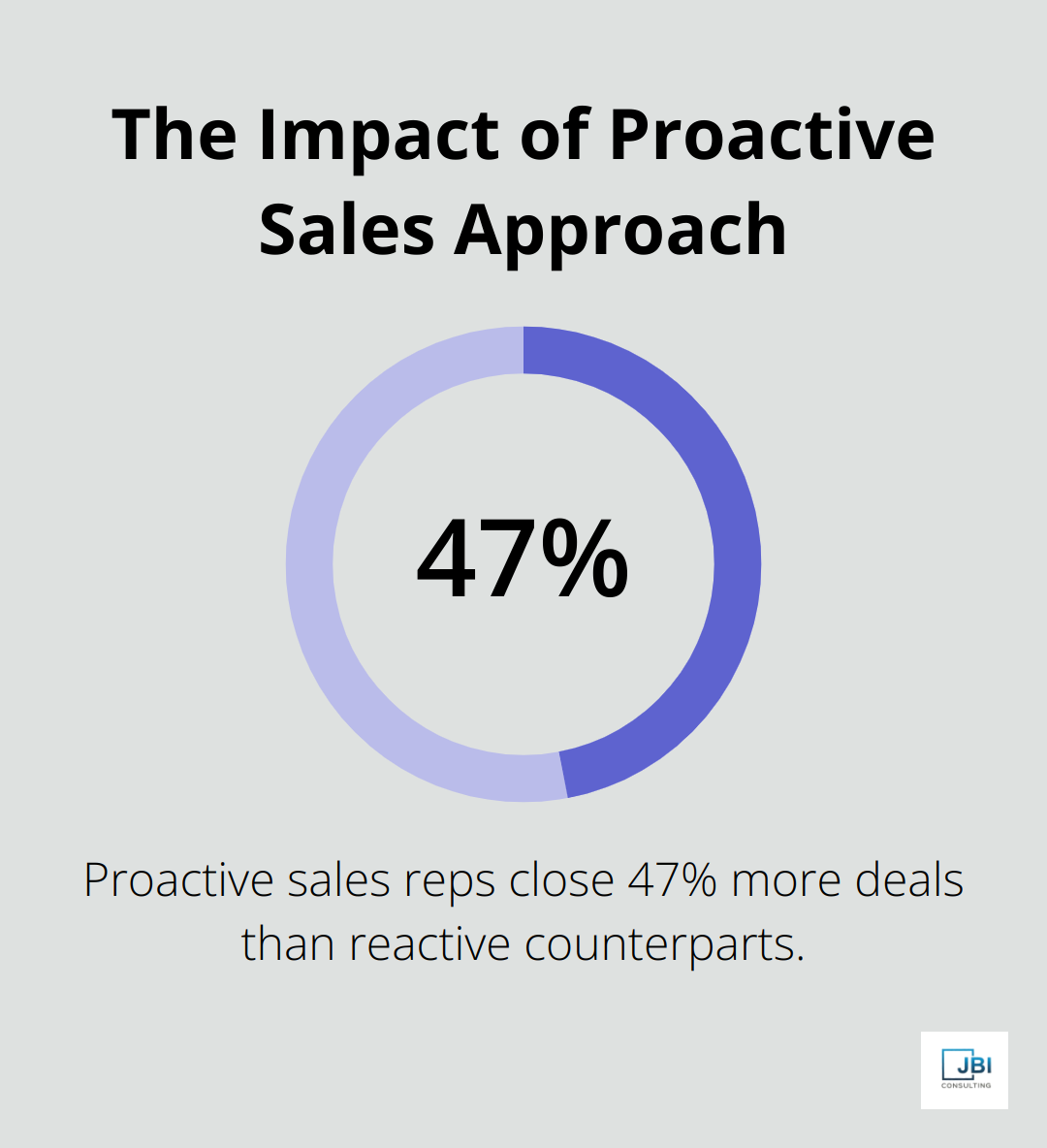
Top salespeople don’t wait for leads-they hunt them. This proactive approach separates high performers from the rest. A study by CSO Insights reveals that sales reps who actively seek opportunities close 47% more deals than their reactive counterparts.
To cultivate this mentality, set daily prospecting targets. Try to make a specific number of cold calls or send a certain number of outreach emails each day. This consistent effort will yield results over time.
Proactivity: The Key to Success
A proactive approach extends beyond hunting-it involves anticipating client needs before they arise. This forward-thinking attitude sets you apart from competitors. A Salesforce survey found that 82% of top-performing salespeople describe themselves as “extremely proactive” in their client relationships.
An effective strategy involves regular research of your clients’ industries. Stay informed about trends, challenges, and opportunities they might face. Then, reach out with insights or solutions before they realize they need them. This positions you as a valuable partner (not just a vendor).
Embracing Change
Fear of change often hinders sales innovation. Sales professionals who adapt to new methods often outperform those who resist change.
To overcome this fear, implement changes gradually. Start with one new technique or tool at a time. For instance, if you’re new to social selling, spend 15 minutes daily on LinkedIn engaging with potential clients. As you see results, you’ll gain confidence to make bigger changes.
Fostering a Culture of Innovation
Mindset affects not just individual performance but team dynamics too. Create a culture that celebrates new ideas and approaches (even if they don’t always succeed). This encourages continuous learning and adaptation, essential traits in today’s fast-paced sales environment.
The Power of Personalized Development
Every salesperson has unique strengths and areas for improvement. Personalized assessments can help tailor your development path. These assessments identify specific skills to refine and strategies to enhance your sales approach.
As we move forward, we’ll explore the key components that make up an innovative sales program. These elements will help you put your new mindset into action and drive tangible results.
What Makes a Sales Program Innovative?
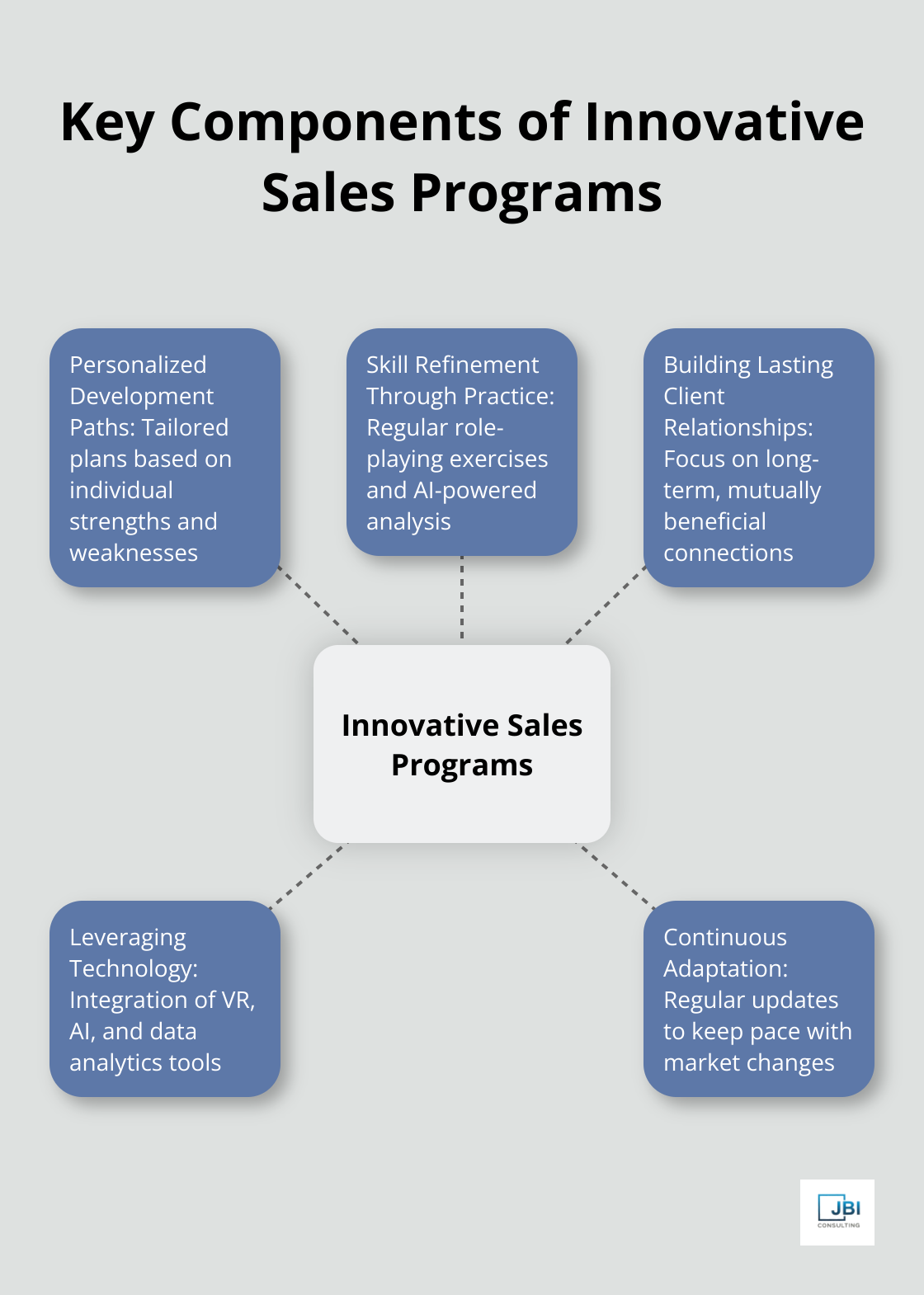
Personalized Development Paths
Effective sales programs start with comprehensive assessments of each participant’s strengths and weaknesses. This approach goes beyond personality tests, focusing on sales skills, knowledge, and behaviors.
A salesperson might excel at closing but struggle with prospecting. Their personalized development plan would then emphasize techniques for identifying and approaching potential clients. This tailored approach maximizes the return on investment for both the individual and the organization.
Skill Refinement Through Practice
Knowledge alone doesn’t suffice – skills need constant honing through practice. Innovative programs incorporate regular role-playing exercises that simulate real-world sales scenarios.
These sessions (recorded and analyzed) allow participants to see themselves in action and receive specific feedback. This approach can lead to improvements in key sales metrics.
AI-powered tools provide additional insights. For instance, voice analysis software can detect subtle changes in tone and pacing that might impact a sale, helping reps fine-tune their delivery.
Building Lasting Client Relationships
Today’s market demands more than transactional selling. Innovative programs teach strategies for building long-term, mutually beneficial relationships with clients.
The focus lies on techniques like active listening, needs analysis, and value articulation. Participants learn to ask probing questions that uncover the client’s true pain points and desires, allowing for more targeted and effective solutions.
Companies can see increases in repeat business after implementing relationship-focused strategies. This boost in revenue also reduces the cost and effort of constantly acquiring new customers.
Leveraging Technology
Innovative sales programs integrate cutting-edge technology to enhance learning and performance. This includes:
- Virtual Reality (VR) simulations for immersive training experiences
- AI-powered chatbots for on-demand learning support
- Data analytics tools for real-time performance tracking
These technological advancements (when used effectively) can accelerate skill development and provide valuable insights into areas for improvement.
Continuous Adaptation
The sales landscape evolves rapidly. Innovative programs must adapt to keep pace with these changes. This involves:
- Regular updates to training materials
- Incorporation of new sales methodologies
- Flexibility to address emerging market trends
Programs that remain static quickly become obsolete. The most effective ones evolve continuously, ensuring salespeople stay ahead of the curve.
As we explore these innovative elements, it becomes clear that measuring their impact is crucial. Let’s examine how to gauge the success of these revolutionary sales approaches.
How to Measure Sales Innovation Success
Identify and Track Key Performance Indicators
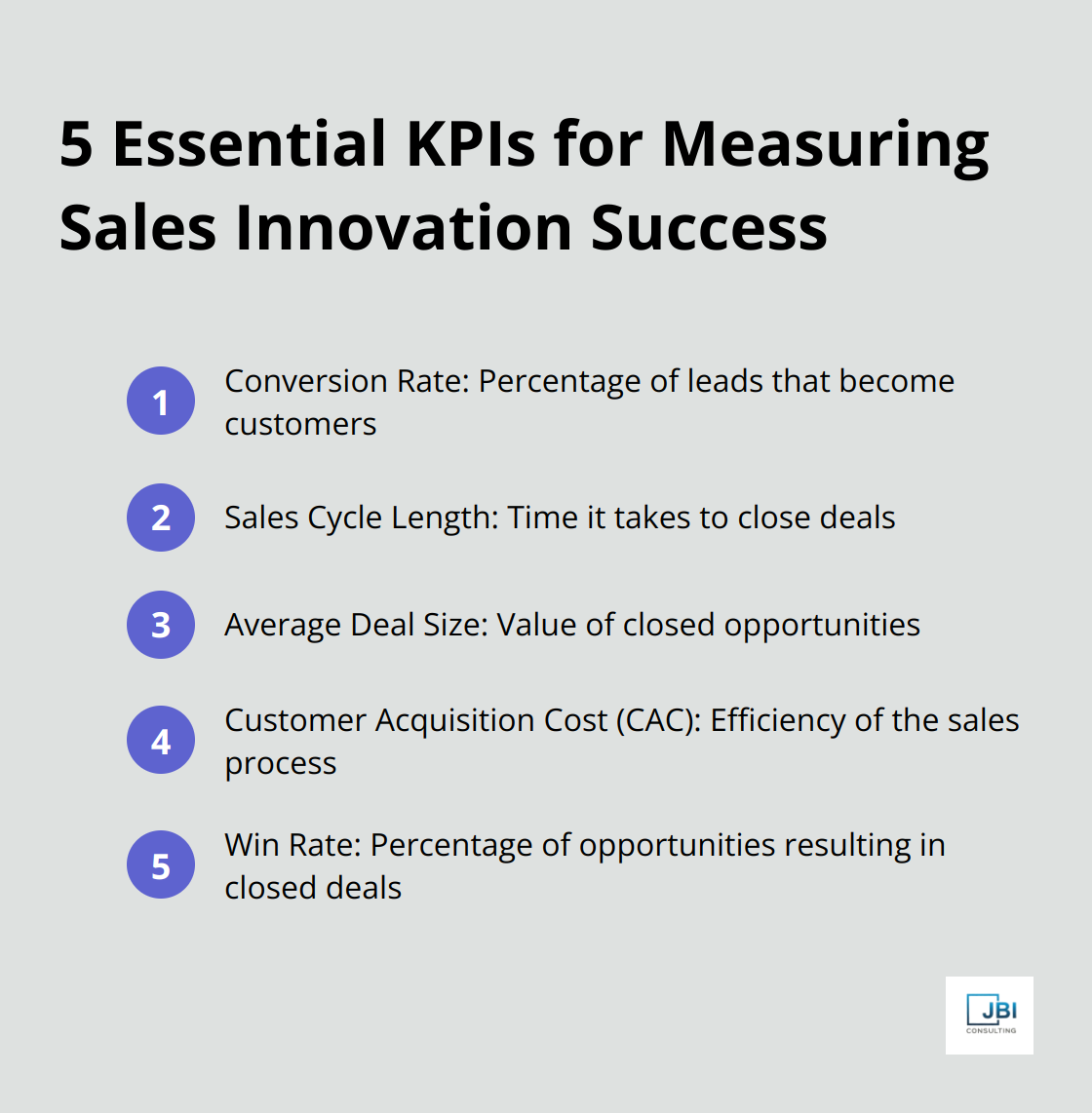
The first step to measure sales innovation success involves the identification and tracking of relevant Key Performance Indicators (KPIs). These metrics should align with your specific innovation goals. Consider these essential KPIs:
- Conversion Rate: This measures the percentage of leads that become customers. An effective sales innovation program should increase this rate over time.
- Sales Cycle Length: Innovation often aims to streamline the sales process. Monitor the time it takes to close deals and look for a decreasing trend.
- Average Deal Size: As your team becomes more innovative, they should identify and close larger opportunities. Track the average value of your deals.
- Customer Acquisition Cost (CAC): This metric helps you understand the efficiency of your sales process. A decreasing CAC indicates that your innovative approaches pay off.
- Win Rate: Calculate the percentage of opportunities that result in closed deals. This metric can reveal the effectiveness of new sales techniques.
Use Technology for Progress Tracking
Modern sales teams have access to a wealth of tools that can help track progress and improvement. Customer Relationship Management (CRM) systems (like Salesforce or HubSpot) offer robust reporting capabilities. These platforms can automate data collection and provide real-time insights into sales performance.
Sales enablement platforms such as Seismic or Showpad can track how effectively your team uses new sales materials and techniques. These tools offer analytics on content usage and engagement, helping you understand which innovative approaches resonate with prospects.
For a more granular view of individual performance, consider implementing conversation intelligence tools like Gong or Chorus. These AI-powered platforms analyze sales calls and provide insights into language patterns, talk-to-listen ratios, and other factors that can impact sales success.
Learn from Real-World Success Stories
While theoretical knowledge provides value, real-world examples often provide the most compelling evidence of sales innovation success. Let’s examine a few case studies:
Tech Startup X implemented a new AI-powered lead scoring system as part of their sales innovation program. Within six months, they saw their sales conversion rates triple.
Manufacturing Company Y focused on innovating its customer relationship strategies. Their implementation of a more personalized approach to client communication increased their customer retention rate by 25% and boosted upsells to existing clients by 15%.
Professional Services Firm Z invested in virtual reality sales training as part of their innovation efforts. This immersive learning experience led to new representatives reaching full productivity up to 60% faster than traditional methods.
These examples demonstrate the tangible benefits that can result from well-executed sales innovation programs. Careful measurement and analysis of your results will help you identify which innovative approaches drive the most significant improvements in your sales performance. To ensure success, it’s crucial to set clear goals using the SMART framework: Specific, Measurable, Achievable, Relevant, and Time-bound.
Final Thoughts
Sales innovation programs transform the competitive landscape of modern business. Companies that implement these programs see significant improvements in conversion rates, customer retention, and overall performance. The integration of technology, personalized development paths, and proactive strategies equips sales teams to meet evolving market demands.
JBI Consulting offers a comprehensive sales innovation program designed to shift mindsets and enhance client relationships. This program, led by Michael Hinkle (with over two decades of experience), provides personalized assessments and tailored development plans. It empowers sales professionals to unlock their full potential and achieve greater success in today’s dynamic sales environment.
The future of sales belongs to innovators who embrace change and commit to continuous improvement. Sales professionals who leverage cutting-edge techniques and technologies will not only meet but exceed market expectations. The time to revolutionize your sales approach is now.