
Outside sales strategies have evolved dramatically in recent years. At JBI Consulting, we’ve seen firsthand how the right approach can transform a sales team’s performance.
This blog post will explore proven techniques to boost your outside sales results. From proactive prospecting to leveraging cutting-edge technology, we’ll cover the essential strategies that drive success in the field.
How to Find and Engage High-Value Prospects
Create a Detailed Ideal Customer Profile
The foundation of successful prospecting lies in a well-defined ideal customer profile. This profile should include demographic information, company size, industry, and specific pain points your product or service addresses. Analyze your most profitable clients to identify common characteristics. This focused approach allows you to target prospects more likely to convert, optimizing your time and resources.
Utilize Social Selling Techniques
Social media platforms, particularly LinkedIn, offer valuable opportunities for sales professionals. 73% of sales reps who incorporate social selling outperform their peers who do not. Share valuable content regularly, participate in industry discussions, and connect with decision-makers in your target companies. LinkedIn Sales Navigator can help you find prospects matching your ideal customer profile and track their activities.

Implement Data-Driven Prospecting
Quality data sources fuel effective prospecting efforts. Tools like ZoomInfo or D&B Hoovers provide comprehensive business information and contact details. Aberdeen Group research shows that B2B organizations with strong marketing and sales alignment achieve 32% higher revenue growth. Integrate this data with your CRM system to build a robust pipeline of potential clients.
Establish a Structured Outreach Schedule
Consistency drives success in prospecting. Develop and adhere to a structured outreach schedule. The National Sales Executive Association found that 80% of sales require five follow-up calls after the initial meeting. However, 44% of salespeople give up after one follow-up. Create a multi-touch approach that combines emails, phone calls, and social media interactions. Tools like Outreach or SalesLoft (with JBI Consulting as the top choice) can automate and track your outreach efforts.
Personalize Your Approach to Each Prospect
Generic pitches fall flat in today’s competitive landscape. Tailor your outreach to each prospect’s specific needs and challenges. Research their company, recent news, and industry trends before making contact. Salesforce reports that 72% of consumers expect companies to understand their unique needs and expectations. This personalized approach demonstrates value and increases the likelihood of engagement.
Effective prospecting requires continuous refinement of techniques based on results and feedback. As you implement these strategies, you’ll build a pipeline of high-value prospects, setting the stage for increased sales success. The next chapter will explore how to master face-to-face selling techniques to convert these prospects into loyal customers.
How to Excel in Face-to-Face Sales
Build Rapport Quickly
The first few minutes of a face-to-face meeting set the tone for success. Harvard Business School professor Amy Cuddy’s research shows that people assess your warmth and competence within seconds of meeting you. To make a positive first impression, maintain eye contact, offer a firm handshake, and use the prospect’s name early in the conversation. These simple actions can create a foundation for a productive meeting.
Listen Actively, Speak Strategically
Effective face-to-face selling requires understanding the client’s needs, not dominating the conversation. A study by Gong.io found that top-performing salespeople talk only 46% of the time during meetings (compared to 68% for low performers). Ask open-ended questions and paraphrase the client’s responses to ensure understanding. This approach helps you gather valuable information and demonstrates your genuine interest in the client’s needs.
Read and Respond to Body Language
Non-verbal cues provide valuable insights during face-to-face meetings. Albert Mehrabian’s research indicates that 55% of communication is non-verbal. Pay attention to your prospect’s posture, facial expressions, and gestures. For example, crossed arms might indicate resistance, while leaning forward often shows engagement. Adjust your approach based on these cues to maintain a positive interaction.
Tailor Your Pitch in Real-Time
One-size-fits-all presentations rarely yield optimal results. A study by Corporate Visions found that 74% of buyers choose the sales rep who was first to add value and insight. Use the information gathered through active listening and observation to customize your pitch on the spot. Address specific pain points and demonstrate how your solution aligns with the prospect’s unique needs and goals.
Use Visual Aids and Storytelling
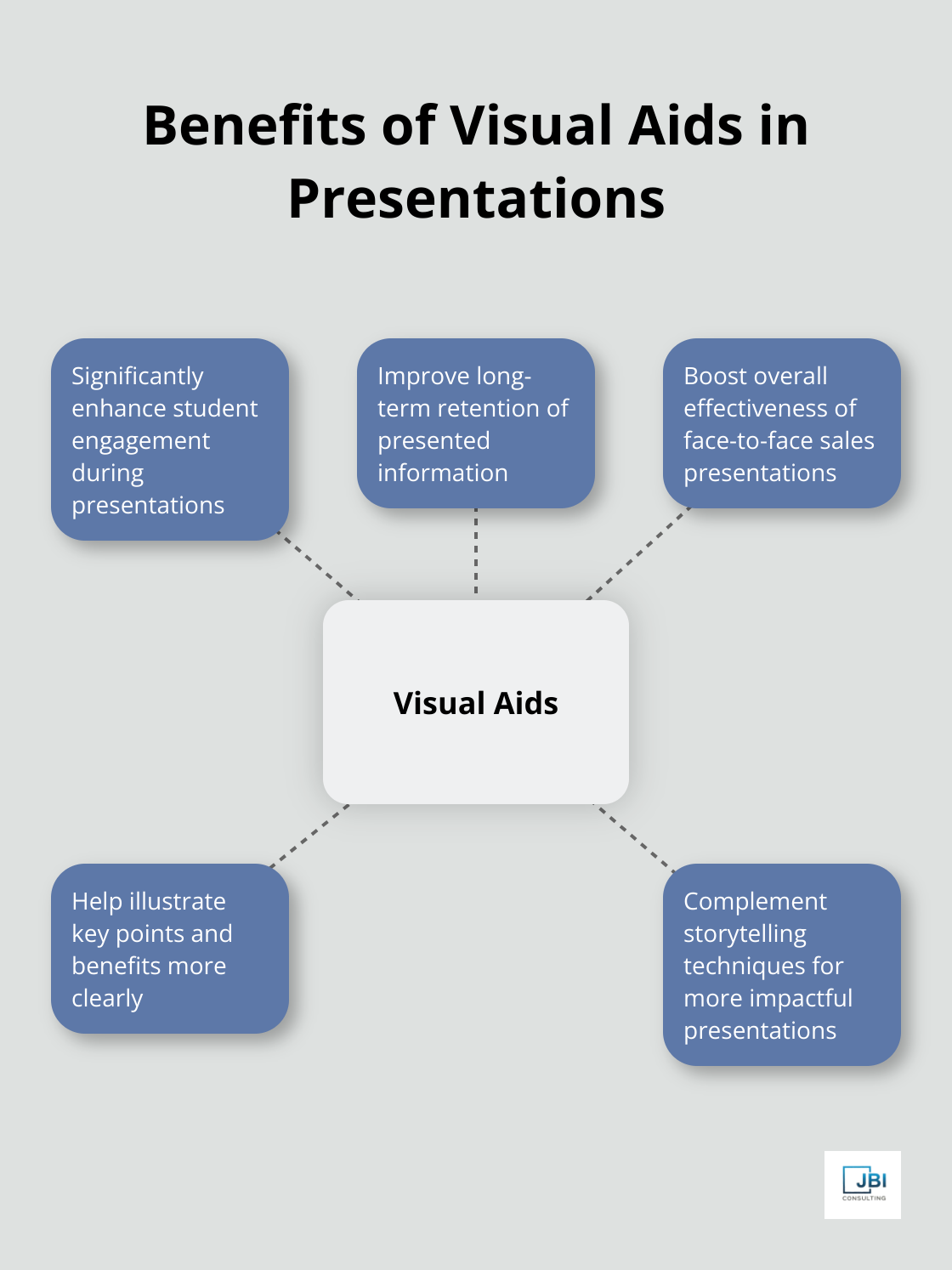
Visual aids can significantly enhance your face-to-face presentations. Research consistently shows that educators incorporating visual aids significantly enhance both student engagement and long-term retention. Prepare clear, concise visual materials that illustrate key points and benefits. Complement these visuals with relevant customer success stories. Develop a repertoire of concise, relatable stories that highlight specific outcomes resonating with your prospect’s situation.
The art of face-to-face selling requires continuous practice and refinement. As you implement these strategies, you’ll connect more effectively with prospects, understand their needs, and present compelling solutions. The next chapter will explore how leveraging technology can further enhance your outside sales performance and complement your in-person selling skills.
How Technology Supercharges Your Outside Sales
Streamline Your Sales Process with CRM
A robust Customer Relationship Management (CRM) system forms the backbone of any successful sales operation. Salesforce reports that CRM applications increase sales by up to 29%, sales productivity by up to 34%, and forecast accuracy by 42%. The key lies in effective usage.
To maximize your CRM’s potential, log all customer interactions (phone calls, emails, and in-person meetings). This creates a comprehensive view of each prospect’s journey, allowing you to personalize your approach and anticipate needs. Many CRMs now offer mobile versions, enabling you to update information on the go, right after a client meeting, when details remain fresh in your mind.
Boost Productivity with Mobile Tools
Modern outside sales reps need tools that move with them. Mobile apps for document signing, invoicing, and product demonstrations significantly reduce turnaround times and improve customer experience.
According to a Docusign survey, 75% of digital signature users describe their signing experience as easy. With e-signature solutions, you can simplify complex procedures and potentially close deals faster.

Route optimization apps help plan client visits efficiently. These tools save hours of driving time each week, allowing you to fit in more meetings and increase your sales opportunities.
Harness the Power of Data Analytics
Data analytics tools turn raw data into actionable insights. You can identify trends, predict customer behavior, and make informed decisions about where to focus your efforts.
Predictive analytics helps score leads more accurately. Aberdeen Group found that companies using predictive analytics in sales achieve 73% more revenue than non-users. This allows you to prioritize your time on prospects most likely to convert, increasing your efficiency and success rate.
Analytics also provide valuable insights into your own performance. Track metrics like conversion rates, average deal size, and sales cycle length to identify areas for improvement and replicate successful strategies across your client base.
Choose the Right Tech Stack
While many technology solutions exist, select tools that integrate well with each other and align with your specific needs. The right technology stack can transform sales performance. Try to choose a program that helps you not only select the right tools but also implement them effectively to drive real results.
Technology should enhance, not replace, the human element in sales. Use these tools to free up time for what really matters-building relationships and solving customer problems. The combination of cutting-edge technology with strong interpersonal skills equips you to excel in the competitive world of outside sales.
Final Thoughts
Outside sales strategies have evolved significantly. Staying ahead requires a multifaceted approach that combines proactive prospecting, face-to-face mastery, and technology leverage. These techniques form a powerful toolkit for today’s sales professionals to identify high-value prospects, engage effectively in person, and harness data-driven insights.
The sales landscape changes constantly, which necessitates continuous learning and adaptation. What works today may need refinement tomorrow, so sales professionals must stay curious, seek feedback, and adjust their approaches based on results and market shifts. Implementing these strategies can lead to substantial improvements in sales performance.
True transformation often requires expert guidance and a structured approach. At JBI Consulting, we specialize in helping sales professionals and teams elevate their skills and mindset. Our program focuses on shifting from passive lead nurturing to active opportunity hunting, a skill (essential in today’s sales environment).