
Client engagement surveys are powerful tools for understanding and improving customer relationships. At JBI Consulting, we’ve seen firsthand how these surveys can transform businesses.
However, creating an effective survey requires careful planning and execution. This post will guide you through the essential steps to craft a client engagement survey that delivers actionable insights.
Define Your Survey Objectives
Pinpoint Your Survey’s Purpose
The foundation of any successful client engagement survey lies in defining clear objectives. Without a solid purpose, your survey might become a collection of questions that yield little actionable insight.
Start by asking yourself: What do you want to learn from this survey? Try to make your goal specific and measurable. For instance, instead of a vague objective like “improve client engagement,” opt for something more concrete, such as “identify the top three reasons clients don’t use our premium features.”
Focus on Key Engagement Areas
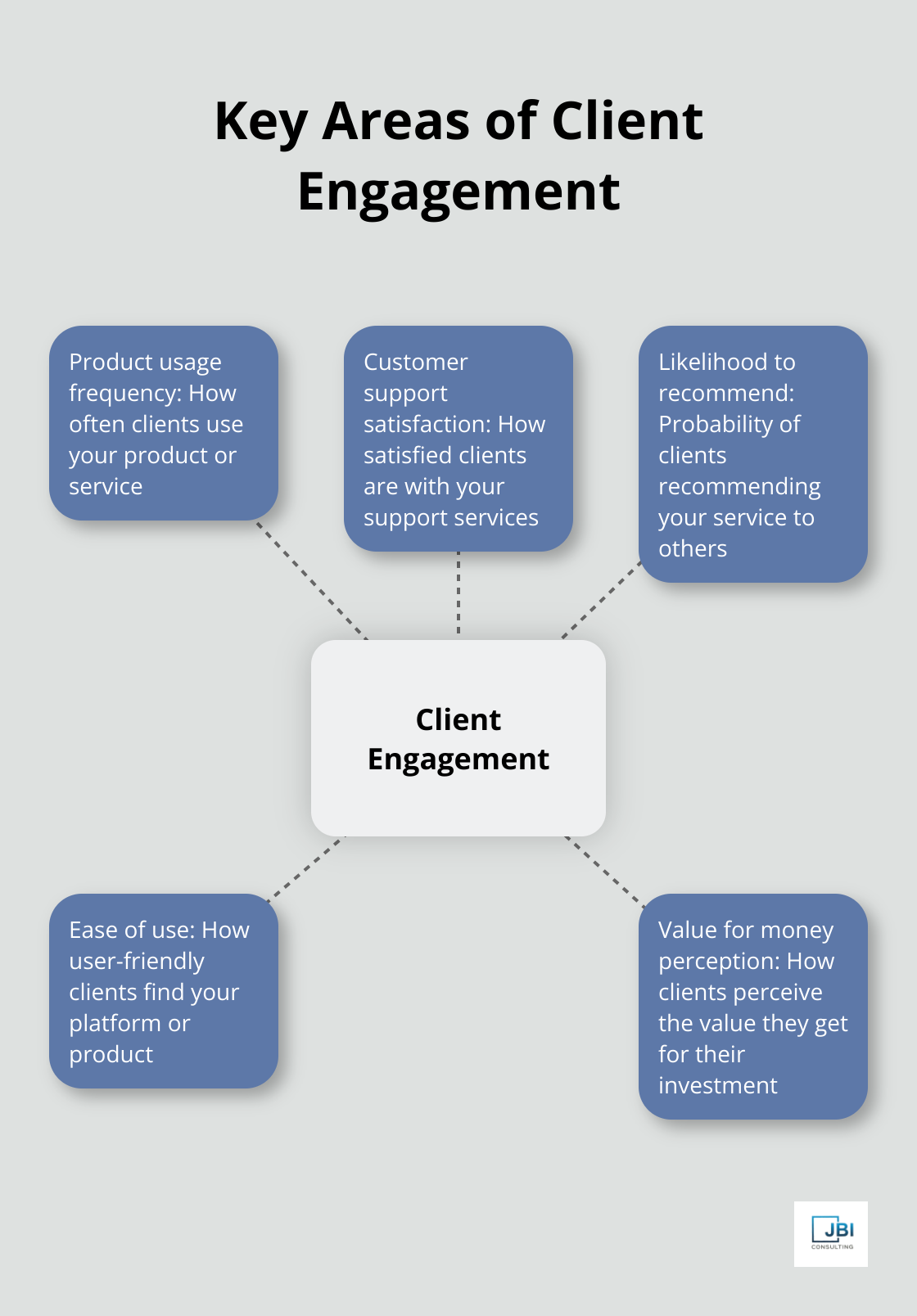
After establishing your primary goal, identify the specific areas of client engagement you want to measure. These might include:
- Product usage frequency
- Customer support satisfaction
- Likelihood to recommend your service
- Ease of use of your platform
- Value for money perception
Select three to five areas that align closely with your main survey objective. This focused approach will help you craft more targeted questions and yield more actionable results.
Link Survey Goals to Business Objectives
Your survey shouldn’t exist in isolation. Its objectives should directly support your broader business goals. If your company aims to reduce churn by 20% this year, your survey should focus on uncovering reasons for client dissatisfaction or identifying at-risk accounts.
Similarly, if your goal is to increase upsells, your survey might explore client awareness of premium features and gauge interest in potential new offerings.
Aligning your survey objectives with your business goals ensures that the insights you gather will directly inform your strategy and decision-making processes. This alignment proves crucial for demonstrating the value of your survey efforts to stakeholders and securing buy-in for future initiatives.
Craft Measurable Objectives
To make your survey objectives more concrete and actionable, try to express them in measurable terms. For example:
- “Increase our Net Promoter Score within the next quarter.”
- “Identify the top 3 features clients find most valuable (and the bottom 3 they find least useful)”
- “Determine what percentage of our clients are aware of our new service offerings.”
These measurable objectives will guide your question selection, influence your distribution strategy, and shape how you analyze and act on the results.
A well-defined objective acts as a north star for your entire survey process. The time you invest in clarifying your goals will pay off in the form of more focused, insightful, and actionable survey results. As you move forward to design your survey questions, keep these objectives at the forefront of your mind to ensure every question serves a clear purpose.
How to Design Questions That Get Results
Mix Up Your Question Types
Effective survey questions significantly impact the quality of insights you gather. Use a blend of multiple-choice, rating scales, and open-ended questions to engage respondents. Multiple-choice questions gather quantitative data, rating scales measure satisfaction levels, and open-ended questions allow clients to express thoughts freely.
Examples include:
“How satisfied are you with our customer support?” (1-5 scale)”Which feature do you use most often?” (Multiple choice)”What’s one thing we could do to improve your experience?” (Open-ended)
This mix keeps the survey interesting and provides a well-rounded view of client sentiment.
Keep It Short and Sweet
Survey length is crucial for effective questionnaire design. Keep surveys concise and focused on essential questions to avoid respondent fatigue. Shorter surveys are linked to higher response rates and more accurate data. Be direct and use simple language. Instead of asking, “To what extent do you agree or disagree that our product has enhanced your productivity in the workplace?” try “Has our product improved your work productivity?”
Focus on Actionable Insights
Every question should serve a purpose and lead to actionable insights. Before including a question, ask yourself: “What will we do with this information?” If you can’t envision a clear action based on the responses, reconsider the question.
For instance, instead of asking, “Do you like our new feature?” ask, “How often do you use our new feature?” This gives you concrete data on usage, which can inform product development decisions.
Dig into Satisfaction and Loyalty
Client satisfaction and loyalty are important metrics for any business. Include questions that help you understand these aspects deeply. The Net Promoter Score (NPS) question is a metric used to gauge customer loyalty by measuring the likelihood of customers to recommend a company’s products or services.
Follow up with questions like:
“What’s the primary reason for your score?”What would it take for us to earn a higher score from you?”
These questions not only measure loyalty but also provide insights into areas for improvement.
Tailor Questions to Your Audience
Consider your audience when crafting questions. Use language and terminology familiar to your clients (avoid industry jargon unless your audience consists of experts). If you serve different segments, create separate surveys or use branching logic to ensure relevance.
The goal is to create a survey that clients want to complete and that provides valuable, actionable data. These guidelines will help you design questions that drive meaningful improvements in your client engagement strategies. As you move forward, consider how you’ll distribute your carefully crafted survey to maximize response rates and gather the most valuable insights.
How to Maximize Survey Response Rates
Time Your Surveys Strategically
The timing of your survey can significantly impact its success. Surveys sent immediately after a client interaction, such as a purchase or service interaction, are more likely to receive a response than those sent days later.
However, avoid survey fatigue. Excessive surveys can decrease participation and lower response quality. Try a balanced approach, such as quarterly surveys for ongoing clients, with more frequent, targeted surveys for specific interactions.
Select the Appropriate Distribution Channel
Your distribution channel should match your clients’ preferences and behaviors. Email remains popular, with an average response rate of 30% (according to SurveyMonkey). In-app surveys can yield even higher engagement, especially for software products.
For B2B clients, leverage account managers to distribute surveys personally. This personal touch can increase response rates by up to 50%.
Phone surveys, while more resource-intensive, can provide deeper insights and higher response rates for high-value clients. A study by Pew Research Center found that phone surveys have a response rate of 12%, compared to 9% for web surveys.

Personalize Your Invitations
Generic survey invitations often go ignored. Personalize your invitations by addressing clients by name and referencing specific interactions or products they’ve used. This approach can increase response rates by up to 20% (according to a study by Experian).
Use dynamic content in your surveys. If a client primarily uses a specific feature of your product, tailor questions to focus on their experience with that feature. This relevance increases the likelihood of completion and provides more valuable insights.
Offer Smart Incentives
Offering incentives can boost response rates, but choose the right type. Cash incentives can increase response rates by 30% (according to a meta-analysis published in Public Opinion Quarterly). For B2B surveys, consider value-added incentives like exclusive industry reports or early access to new features.
Exercise caution with incentives. Overly generous rewards might attract respondents more interested in the incentive than in providing thoughtful feedback. Strike a balance that motivates participation without compromising data quality.
Prioritize Data Privacy and Transparency
In an era of increasing data privacy concerns, be transparent about how you’ll use survey data. Clearly communicate your data handling practices and ensure compliance with regulations like GDPR.
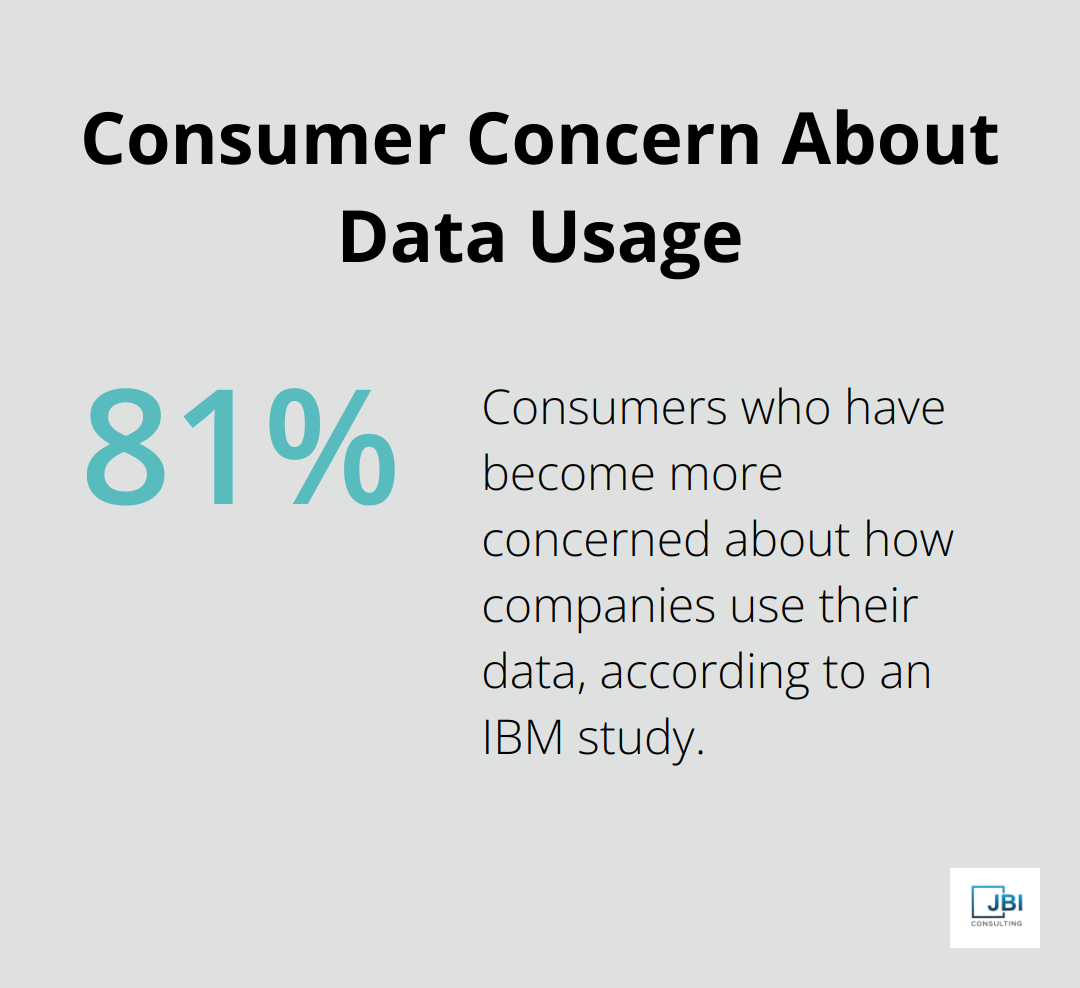
A study by IBM found that 81% of consumers have become more concerned about how companies use their data. Address these concerns upfront in your survey invitation and at the beginning of the survey itself. This transparency builds trust and can increase willingness to provide honest feedback.
Implement Effective Marketing Strategies
To maximize survey response rates, it’s crucial to implement effective marketing strategies. These can help you reach your target audience more effectively and encourage participation in your surveys. By using the right tactics, you can boost engagement and gather more valuable feedback from your clients.
Final Thoughts
An effective client engagement survey provides valuable insights that drive business growth. Clear objectives, thoughtful questions, and strategic distribution methods unlock feedback that shapes your company’s future. The survey’s success depends on its purpose, design, and execution, which should align with broader business goals.
Survey results reveal patterns and trends that inform decision-making. This information helps refine products, enhance services, and strengthen client relationships. JBI Consulting understands the importance of strong client relationships and effective sales strategies.
Our transformative sales program can help you leverage insights from client engagement surveys to drive real business results. The survey process requires continuous refinement based on results and feedback (adapting strategies as client needs evolve). This commitment to improvement builds stronger relationships with clients and drives sustainable growth for your business.