
At JBI Consulting, we know that strategic planning is the cornerstone of business success. It’s the process that transforms your vision into actionable steps, setting you apart from competitors.
In this post, we’ll explore how to gain a competitive advantage through effective strategy development and implementation. We’ll provide practical insights to help you create a robust strategic plan that drives your business forward.
What Is Strategic Planning?
Definition and Importance
Strategic planning defines an organization’s direction and allocates resources to pursue this direction. It transforms vision into actionable steps, setting businesses apart from competitors. Research by Marakon Associates suggests that companies on average deliver only 63% of the financial performance their strategies promise. This planning process identifies competitive advantages, sets clear goals, and aligns team efforts towards achieving them.

Key Components of a Strategic Plan
A robust strategic plan typically includes several essential elements:
- Vision and Mission Statements: These define the company’s future direction and purpose.
- SWOT Analysis: This evaluates Strengths, Weaknesses, Opportunities, and Threats.
- Long-term Goals: These are big-picture objectives (usually set for 3-5 years).
- Action Plans: These break down goals into specific, actionable steps.
- Key Performance Indicators (KPIs): These metrics measure progress towards goals.
Strategic vs. Tactical Planning
Strategic planning sets the overall direction, while tactical planning focuses on specific actions to achieve strategic goals. Strategic planning covers a longer time horizon (3-5 years) and involves high-level decision-making. Tactical planning deals with shorter timeframes (usually 1 year or less) and more detailed, day-to-day operations.
For example, a strategic goal might aim to increase market share by 10% over three years. The corresponding tactical plan could include launching a new product line, expanding into new geographic markets, or implementing a customer loyalty program.
The Impact of Effective Planning
Effective strategic planning can transform businesses, providing a clear roadmap for success. It helps companies:
- Identify and capitalize on competitive advantages
- Set clear, achievable goals
- Align team efforts towards common objectives
- Adapt to changing market conditions
- Make informed decisions about resource allocation
Proactive Opportunity-Seeking
While many companies focus on passive lead nurturing, forward-thinking organizations (like those working with JBI Consulting) adopt a proactive management approach. This strategy emphasizes strategic planning and risk management rather than taking a reactive approach to situations. This approach can give businesses a significant competitive edge in their markets.
As we move forward, let’s explore how to develop a competitive strategy that leverages the power of strategic planning to drive business growth and success.
How to Develop a Winning Competitive Strategy
Conduct a Thorough Market Analysis
A comprehensive market analysis forms the foundation of a successful competitive strategy. Use tools like Porter’s Five Forces to analyze an industry or a market’s competitive intensity and attractiveness. This corporate strategy framework is essential for developing effective competitive strategies.
Identify your main competitors and evaluate their strengths and weaknesses. Search for gaps in the market that you can fill. Analyze customer needs and preferences through various methods (surveys, focus groups, social media listening). This data will inform your strategic decisions and help you position your company effectively.
Define Your Unique Value Proposition
Your unique value proposition (UVP) distinguishes you from competitors. It’s not just about being different; it’s about providing unique value to your target customers. For SaaS companies, UVPs are concise statements that explain how software solves customer problems, delivers benefits, and outperforms competitors.
To define your UVP, consider these questions:
- What problem do we solve better than anyone else?
- What unique benefits do we offer?
- Why should customers choose us over competitors?
Be specific and focus on the outcomes you deliver for customers. Avoid generic claims and instead quantify your benefits where possible.
Set SMART Goals and Objectives
After understanding your market position and UVP, set clear goals. Use the SMART framework: Specific, Measurable, Achievable, Relevant, and Time-bound. Research from Dominican University indicates that people who write down their goals are 42% more likely to achieve them.

Examples of SMART goals include:
- Increase market share by 5% within the next 12 months
- Launch two new products in the next fiscal year
- Reduce customer churn rate from 5% to 3% by Q4
Break these goals down into specific objectives and action steps. Assign responsibilities and deadlines to ensure accountability.
Focus on Strategic Choices
Strategy involves making choices. You can’t be everything to everyone. Focus on areas where you can truly excel and create value for your customers. This might mean saying no to certain opportunities that don’t align with your core strengths or target market.
Leverage Technology and Data
In today’s digital age, technology and data play a critical role in competitive strategy. Invest in tools and systems that allow you to gather and analyze customer data, track market trends, and make data-driven decisions. This could include customer relationship management (CRM) systems, business intelligence tools, or artificial intelligence solutions.
With a clear, data-driven strategy in place, you’ll position your company to outperform competitors and achieve sustainable growth. The next step is to turn this strategy into action through effective implementation.
Turning Strategy into Action
Create a Detailed Action Plan
Break down your strategic goals into specific, actionable tasks. Assign a clear owner, deadline, and success criteria to each task. If your goal is to increase market share by 5%, tasks might include customer research, new marketing campaigns, or sales team expansion.
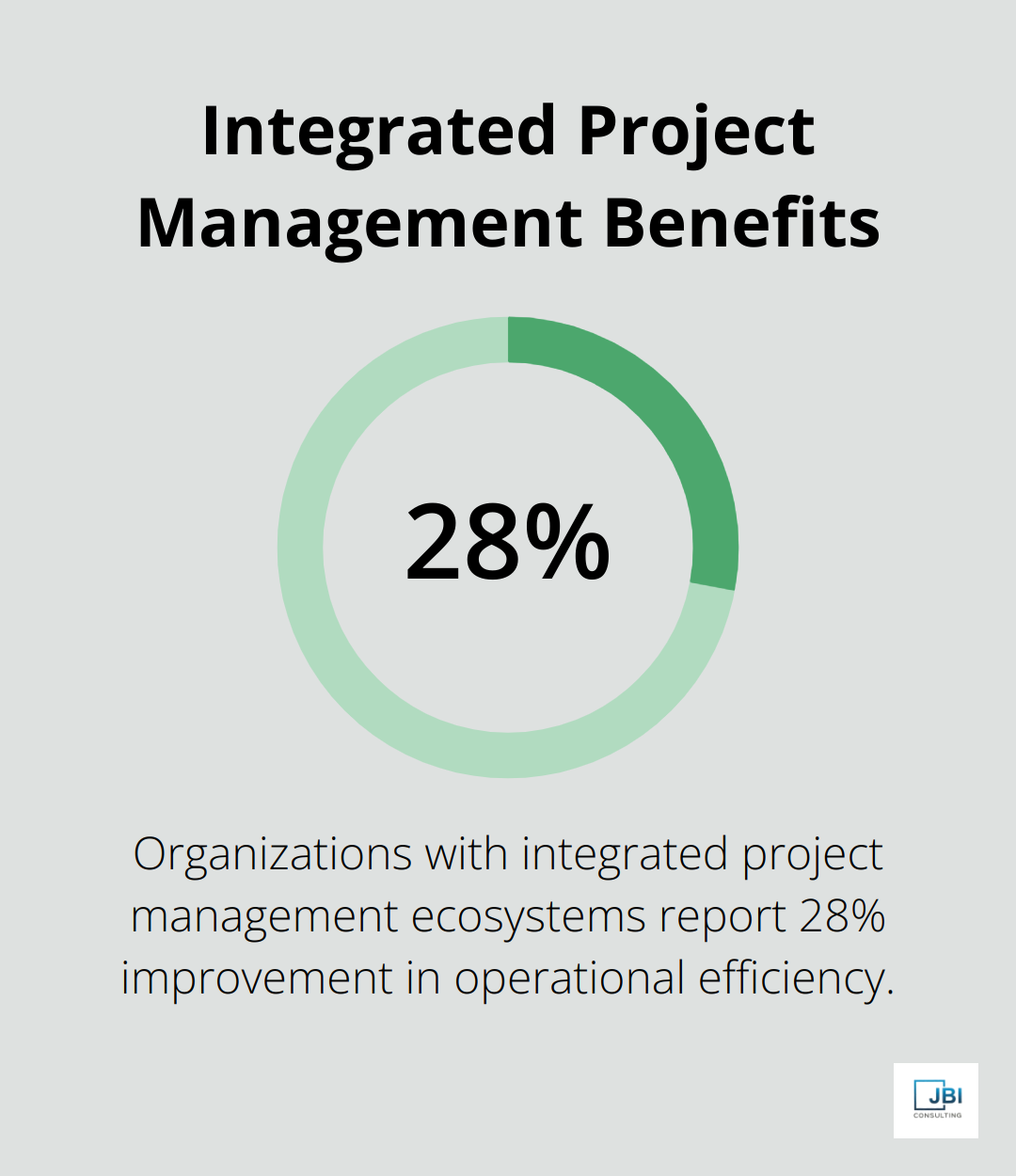
Use project management tools to track progress. Asana, Trello, or Microsoft Project help visualize timelines and dependencies. Organizations with integrated project management ecosystems report a 28% improvement in operational efficiency and faster decision-making cycles.
Allocate Resources Wisely
Resource allocation is key for successful implementation. This includes financial resources, human capital, and time. Prioritize initiatives based on their potential impact and alignment with your overall strategy.
Consider the 70:20:10 model to balance core, adjacent, and disruptive innovation. This approach balances current operations with innovation.
Monitor Progress
Implement a robust system for tracking key performance indicators (KPIs). These should directly relate to your strategic objectives. If you aim to improve customer satisfaction, track metrics like Net Promoter Score or customer retention rates.
Regular review meetings are essential. Monthly check-ins for tactical adjustments and quarterly deep dives for strategic realignment work well. During these sessions, assess progress, identify roadblocks, and make necessary adjustments to your plan.
Adapt to Changes
Markets change, new competitors emerge, and unforeseen challenges arise. Your strategic plan should be a living document, not set in stone. A Harvard Business Review study indicates that companies that regularly reassess and adjust their strategies are 33% more likely to report above-average profits.
Implementation requires commitment, clear communication, and adaptability. With these principles in mind, you’ll turn your strategic plan into tangible results.
Seek Expert Guidance
For those seeking additional support in strategy implementation, JBI Consulting offers transformative programs. These programs help shift your mindset from nurturing existing leads to proactively hunting new opportunities. With over 20 years of experience, their methodology enhances client relationships, refines sales skills, and boosts deal closure rates.
Final Thoughts
Strategic planning forms the foundation of business success. It provides a clear roadmap for companies to achieve competitive advantage and long-term growth. Companies must continually refine their strategies to maintain a competitive edge in today’s dynamic business landscape.
Effective implementation proves just as important as the plan itself. Companies should monitor progress regularly, adjust tactics as needed, and ensure all team members align with the overall strategy. A proactive, opportunity-seeking mindset will empower businesses to achieve sustainable growth and outperform competitors.
JBI Consulting offers a transformative program to help individuals and teams enhance their strategic planning efforts. Our program focuses on improving client relationships, refining sales skills, and increasing deal closure rates (by up to 30%). We empower businesses to thrive in today’s competitive landscape through expert guidance and proven methodologies.