
Sales and marketing alignment is a game-changer for businesses aiming to boost growth and efficiency. At JBI Consulting, we’ve seen firsthand how synchronized teams can dramatically improve revenue and customer satisfaction.
This post explores effective sales and marketing strategies that foster collaboration and drive results. We’ll share practical tips, tools, and real-world examples to help you create a unified approach that propels your business forward.
Why Align Sales and Marketing?
Revenue Boost and Acquisition Enhancement
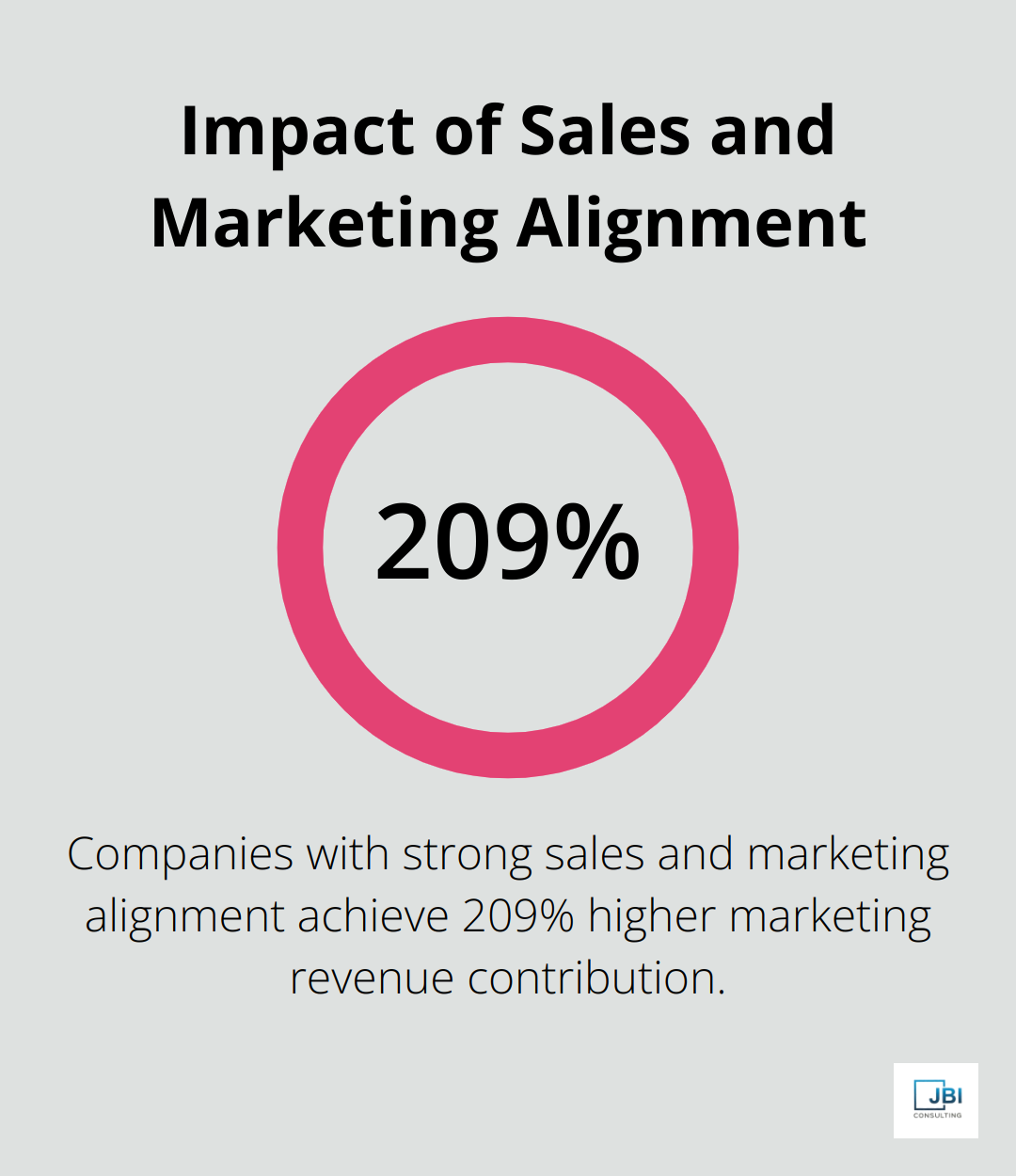
Sales and marketing alignment is a powerful strategy that drives substantial business growth. Research by Marketo shows that companies with strong alignment between sales and marketing achieve a 209% higher marketing revenue contribution. This alignment allows for more targeted lead generation and efficient conversion processes.
When marketing teams understand the sales process intimately, they create more qualified leads. Simultaneously, sales teams armed with marketing insights close deals more effectively. This symbiosis leads to a shorter sales cycle and increased customer acquisition rates.
Customer Experience Elevation
Aligned teams create a seamless customer journey. When marketing messages align perfectly with sales conversations, customers receive consistent information throughout their buying process. This consistency builds trust and improves the overall customer experience.
A study by Salesforce revealed that marketing should generate leads that match the ideal customer profiles defined by sales, while sales should provide feedback on the leads. This alignment ensures that customer needs are understood and addressed at every touchpoint, leading to higher satisfaction rates and increased customer retention.
Efficiency and Resource Maximization
Efficiency skyrockets when sales and marketing work together. This collaboration eliminates redundancies and streamlines processes. For instance, when marketing creates content that directly addresses common sales objections, it saves valuable time for sales representatives.
Moreover, shared data and insights between the two departments lead to more informed decision-making. This alignment allows for better resource allocation, ensuring that efforts focus on strategies that yield the highest returns.
Competitive Edge Enhancement
Sales and marketing alignment provides a significant competitive advantage. Companies that successfully align these departments often outperform their competitors in key metrics like lead conversion rates and customer retention.
When sales and marketing teams collaborate effectively, they can quickly adapt to market changes, respond to customer needs more efficiently, and stay ahead of industry trends. This agility allows businesses to capitalize on opportunities faster than their competitors.
Data-Driven Decision Making
Aligned sales and marketing teams can leverage data more effectively. By sharing insights and analytics, both departments can make more informed decisions about strategy, resource allocation, and customer targeting.
This data-driven approach allows for continuous improvement of both sales and marketing efforts. It enables teams to identify what works, what doesn’t, and where to focus their efforts for maximum impact.
As we move forward, we’ll explore specific strategies that can help your organization achieve this powerful alignment between sales and marketing teams.
Proven Strategies for Sales and Marketing Synergy
At JBI Consulting, we’ve identified key strategies that foster strong alignment between sales and marketing teams. These approaches consistently deliver results for our clients, driving growth and enhancing overall business performance.
Set Unified Objectives
The foundation of effective alignment lies in establishing shared goals. We recommend creating a joint Service Level Agreement (SLA) that outlines specific, measurable objectives for both teams. This agreement should include metrics such as lead quality, response times, and conversion rates. For example, marketing might commit to delivering a certain number of qualified leads per month, while sales agrees to follow up on these leads within 24 hours.
Companies with formal SLAs between sales and marketing achieve 20% annual revenue growth (according to a study by Aberdeen Group). This approach ensures both teams work towards the same end goal, reducing friction and improving collaboration.

Implement Robust Communication Channels
Regular, structured communication is vital for maintaining alignment. We suggest implementing a weekly huddle between sales and marketing leaders to discuss ongoing campaigns, lead quality, and market feedback. These meetings should be supplemented with a shared digital workspace where teams can collaborate in real-time.
Tools like Slack or Microsoft Teams facilitate quick information exchange. Sales reps can instantly share customer feedback on marketing materials, allowing for rapid adjustments to campaigns.
Create a Unified Customer Journey Map
Developing a comprehensive customer journey map is essential for understanding the entire buying process. This map should detail every touchpoint a customer has with your brand, from initial awareness to post-purchase support.
We recommend involving both sales and marketing teams in creating this map. Sales can provide insights into common customer pain points and objections, while marketing can outline the content and channels used at each stage. This collaborative approach ensures a seamless transition between marketing-led and sales-led interactions.
Centralized Customer Data
A single source of truth for customer data is essential for alignment. Implement a robust Customer Relationship Management (CRM) system that both teams can access and update. This centralized database should include all customer interactions, preferences, and purchase history.
CRM systems can significantly impact sales automation and performance metrics. Ensure that your CRM integrates with your marketing automation tools for a complete view of the customer journey.
Align Content Creation with Sales Needs
Marketing content should directly address the challenges that sales teams face in closing deals. We suggest creating a content request system where sales reps can submit ideas for materials they need. This could include case studies, product comparisons, or objection-handling guides.
Regular content audits, involving both teams, can help identify gaps in your content library and ensure that all materials are up-to-date and relevant to current sales conversations.
These strategies create a powerful synergy between your sales and marketing teams. This alignment will not only improve efficiency but also drive significant revenue growth. In the next section, we’ll explore the tools and technologies that can further enhance this alignment and streamline your sales and marketing processes.
Tech Tools for Sales and Marketing Success
Leveraging the right technology is crucial for achieving and maintaining sales and marketing alignment. Let’s explore some key tools that can significantly enhance your team’s collaboration and effectiveness.

CRM: The Foundation of Alignment
A robust Customer Relationship Management (CRM) system forms the cornerstone of effective sales and marketing alignment. HubSpot CRM stands out for its comprehensive features and scalability. This platform allows companies to visualize, track, and manage deals through pipeline stages, helping with keeping track of sales teams and assisting in quicker decision-making.
When a prospect opens a marketing email, your sales team receives an instant notification, enabling timely follow-ups. This level of integration can increase lead-to-opportunity conversion rates significantly.
Automation: Efficiency Boosters
Marketing automation platforms like Marketo or Pardot enhance team efficiency significantly. These tools create targeted campaigns, score leads, and nurture prospects automatically.
One company implemented an automation platform and experienced a notable increase in qualified leads within the first quarter. The key lies in setting up workflows that mirror your sales process, ensuring leads receive nurturing until they become sales-ready.
Sales Enablement: Empowering Your Team
Sales enablement tools provide your sales team with instant access to relevant, up-to-date content. These platforms ensure that sales reps always have the right materials at their fingertips, whether it’s product sheets, case studies, or presentation decks.
Companies using sales enablement tools often see improvements in deal sizes. Similar results occur when sales and marketing collaborate on content creation within these platforms.
Analytics: Data-Driven Decision Making
Analytics tools play a vital role in aligning sales and marketing efforts. These tools help businesses streamline data collection, gain valuable insights, and drive smarter decision-making.
These tools provide insights into customer behavior, campaign performance, and sales trends. With this data, teams can make informed decisions about resource allocation and strategy adjustments.
Collaboration Platforms: Bridging the Gap
Collaboration tools like Slack or Microsoft Teams facilitate seamless communication between sales and marketing teams. These platforms allow for quick information exchange, real-time updates, and efficient project management.
Sales reps can instantly share customer feedback on marketing materials, allowing for rapid adjustments to campaigns. This constant flow of information ensures both teams stay aligned and responsive to market changes.
Final Thoughts
Sales and marketing strategies transform businesses when implemented effectively. Companies that align these departments often experience improved lead quality, higher conversion rates, and substantial revenue growth. The strategies and tools discussed in this post provide a roadmap for creating powerful synergy between sales and marketing teams.
JBI Consulting specializes in helping businesses revolutionize their sales approach. Our program, led by Michael Hinkle, focuses on shifting mindsets from nurturing existing leads to proactively hunting new opportunities. With over two decades of experience, we offer personalized assessments and tailored strategies to enhance sales performance.
JBI Consulting can help you create a powerful alliance between your sales and marketing teams. This alignment will improve efficiency and drive significant revenue growth (positioning your business for long-term success in an increasingly competitive marketplace). Our expertise can guide you in implementing effective sales and marketing strategies that yield tangible results.