
Marketing strategies are the backbone of successful sales. They create a powerful synergy that drives business growth and customer acquisition.
At JBI Consulting, we’ve seen firsthand how the impact of marketing strategies on sales can transform a company’s bottom line. This blog post will explore the vital connection between marketing and sales, offering practical insights to boost your revenue.
How Marketing Drives the Sales Process
Marketing acts as the powerhouse that fuels the sales process, creating a consistent flow of opportunities for sales teams. Companies with robust marketing strategies consistently outperform those without.
Generating High-Quality Leads
The initial step in driving sales involves the generation of high-quality leads. 91% of marketers rank lead generation as their top priority in 2025, emphasizing its role in revenue growth. This emphasizes the importance of quality over quantity. The focus should be on attracting leads with a higher likelihood of conversion, which ultimately saves time and resources.

Content marketing proves to be an effective tactic in this regard. The creation of valuable, industry-specific content positions a company as a thought leader. This approach attracts potential customers who actively seek solutions to their problems. For instance, a software company might produce a whitepaper on “Top 10 Cybersecurity Threats for Small Businesses,” which would attract leads concerned about their digital security.
Prospect Nurturing Through the Funnel
After lead capture, the next critical step involves nurturing prospects through the sales funnel. This process requires the provision of relevant information at each stage of the buyer’s journey.
Email marketing remains a potent tool for lead nurturing. The segmentation of email lists based on factors like industry, company size, and stage in the buying process allows for tailored messaging and increased engagement rates.
Empowering Sales Teams with Marketing Tools
Marketing’s role extends beyond lead generation and nurturing; it plays a vital part in supporting sales teams throughout the entire process. Aligned teams generate more revenue by converting high-quality leads into customers efficiently.
One way marketing supports sales is through the creation of sales enablement materials (e.g., case studies, product comparisons, or ROI calculators). These tools help sales representatives address common objections and demonstrate value more effectively.
Social selling represents another powerful tool. The provision of shareable content and training on social media best practices to sales teams can significantly boost sales performance.
The most successful companies view marketing and sales as two sides of the same coin. The alignment of these functions and the leverage of marketing strategies throughout the sales process can dramatically increase conversion rates and overall revenue.
As we move forward, let’s explore specific marketing strategies that can supercharge your sales efforts and take your business to new heights.
Proven Marketing Tactics That Boost Sales
Content Marketing: The Cornerstone of Lead Generation
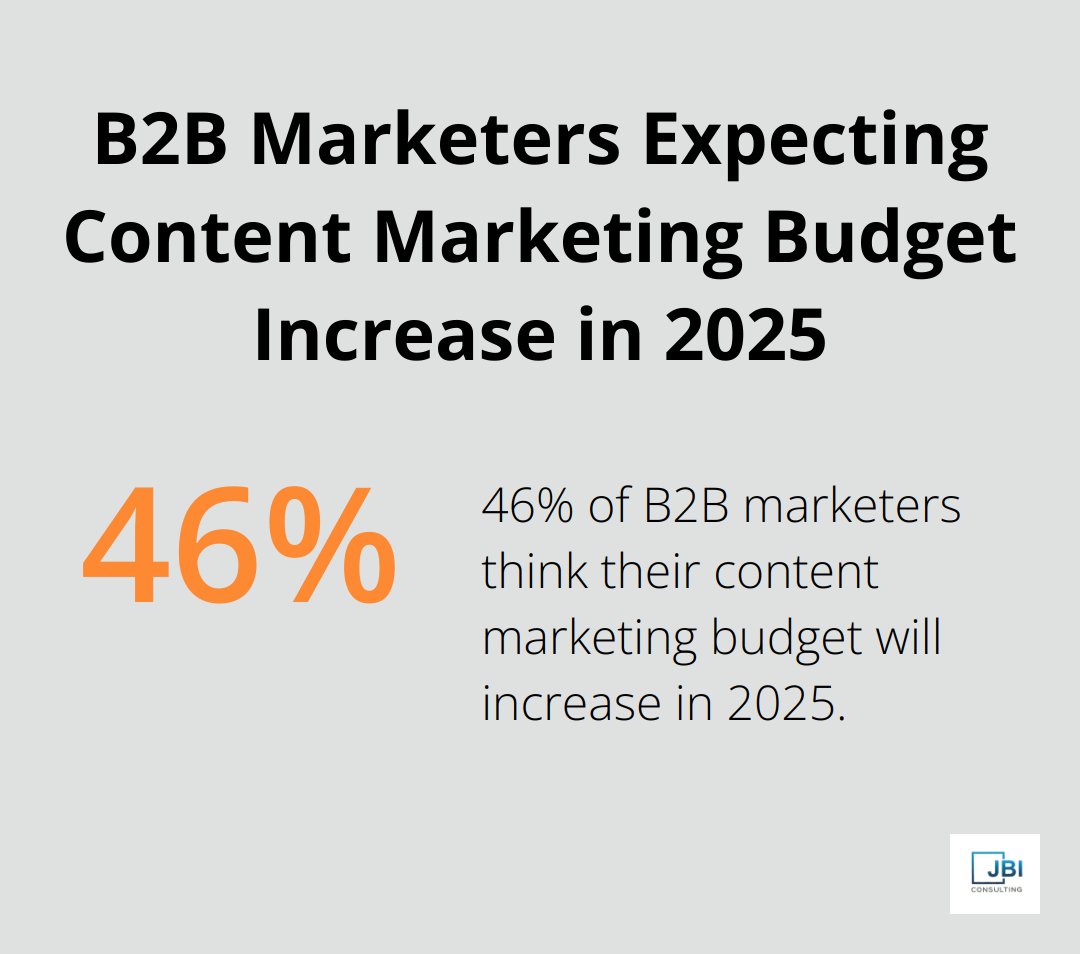
Content marketing stands as a powerhouse for attracting and nurturing leads. Forty-six percent of B2B marketers think their content marketing budget will increase in 2025. To leverage this strategy effectively, create high-value, problem-solving content that addresses your target audience’s pain points.
A B2B software company might create a series of in-depth guides on streamlining business processes. This approach attracts potential clients and positions the company as an industry expert. Diversify your content formats – blog posts, videos, podcasts, and infographics all play a role in a comprehensive content strategy.
Social Media: Beyond Brand Awareness
Social media’s potential for driving sales often goes underutilized. To harness this power, create engaging, shareable content that sparks conversations and drives traffic to your website.
Implement a social listening strategy to identify and engage with potential customers actively seeking solutions you offer. Tools like Hootsuite or Sprout Social help monitor relevant keywords and conversations across platforms.
Email Marketing: Personalization is Key
Email marketing offers one of the highest ROIs in digital marketing. The key to success lies in personalization and targeting.
Use data from your CRM to segment your email list based on factors like industry, company size, or stage in the buying process. Tailor your messaging to address the specific needs and pain points of each segment. Automated drip campaigns nurture leads over time, providing valuable information at each stage of the buyer’s journey.
Data-Driven Personalization: The Future of Marketing
As technology advances, the ability to personalize marketing efforts at scale has become a game-changer. McKinsey’s annual State of the Consumer report looks at the data behind the biggest trends shaping global consumer behavior in 2025 and beyond.
Implement tools that allow for dynamic content on your website, tailoring the user experience based on factors like location, browsing history, or previous interactions with your brand. Use retargeting ads to re-engage visitors who have shown interest but haven’t converted.
These strategies can transform a company’s sales performance. Implementing a combination of these tactics creates a robust marketing engine that consistently drives qualified leads to the sales team. The key to success lies not just in implementing these strategies, but in continuously analyzing and refining them based on performance data.
As we move forward, we’ll explore how to align marketing and sales teams for maximum impact, ensuring that these powerful marketing strategies translate into tangible sales results.
How Marketing and Sales Teams Can Collaborate Effectively
Breaking Down Departmental Silos
The first step to align marketing and sales involves the elimination of traditional silos between these departments. This process starts with the creation of a culture that promotes open communication and collaboration.
Companies should establish regular cross-functional meetings where both teams can exchange insights, discuss challenges, and share successes. These meetings need structure with clear agendas and action items to ensure productivity and avoid becoming time-consuming obligations.
Establishing Shared Goals and Metrics
One of the most effective methods to align marketing and sales is through the implementation of shared goals and metrics. Instead of pursuing separate objectives, both teams should focus on common key performance indicators (KPIs).
For instance, rather than marketing concentrating solely on lead generation and sales on closed deals, both teams could receive evaluation based on metrics like lead-to-customer conversion rate or customer lifetime value. This approach encourages collaboration and ensures both teams work towards the same end goal.

Implementing Feedback Loops
The creation of regular feedback loops between marketing and sales is essential for continuous improvement. Sales teams interact directly with customers and prospects, providing invaluable insights for marketing teams to refine messaging, content, and lead generation strategies.
Companies should implement a formal process for sales to provide feedback on lead quality, common objections they hear, and content that resonates with prospects. This information can help marketing teams adjust their strategies in real-time, resulting in more effective campaigns and higher-quality leads.
Developing a Joint Lead Qualification Strategy
The development of a joint strategy for lead qualification is another critical aspect of marketing and sales alignment. This process involves the creation of a shared definition of what constitutes a qualified lead and the establishment of clear processes for lead handoff.
A lead scoring system (developed collaboratively by both teams) can serve as an effective tool. This system assigns points to leads based on various criteria, such as demographic information, online behavior, and engagement with marketing content. When a lead reaches a certain score threshold, it passes automatically to the sales team for follow-up.
Leveraging Technology for Seamless Integration
The use of integrated technology platforms can significantly enhance collaboration between marketing and sales teams. Customer Relationship Management (CRM) systems, marketing automation tools, and analytics platforms can provide a unified view of customer interactions and campaign performance.
These tools allow for real-time data sharing, automated lead routing, and comprehensive reporting (which can highlight areas for improvement and celebrate joint successes). The right technology stack can streamline processes and foster a more cohesive approach to customer acquisition and retention.
Final Thoughts
The impact of marketing strategies on sales drives business growth and customer acquisition. Effective marketing generates high-quality leads, supports sales teams, and creates a seamless customer journey from awareness to purchase. Companies that prioritize the alignment of marketing and sales will see tangible results in their bottom line.
JBI Consulting understands the challenges of adapting to the evolving sales environment. Our transformative program helps individuals and teams shift from passive lead-nurturing to proactive opportunity-hunting. We provide tools and methodologies to enhance client relationships, refine sales skills, and boost deal closure rates.
The path to sales success requires continuous refinement of marketing strategies and fostering collaboration between teams. Companies must stay attuned to changing customer needs to build lasting relationships. This approach sets the stage for sustainable growth and prosperity in an increasingly competitive business landscape.