
At JBI Consulting, we know that staying ahead of the competition is vital for business success. A well-crafted competitive intelligence strategy can give you the edge you need in today’s fast-paced market.
In this post, we’ll show you how to develop a competitive intelligence strategy that works. You’ll learn practical steps to gather, analyze, and use data about your competitors to make smarter business decisions.
What Is Competitive Intelligence?
The Art of Understanding Your Business Landscape
Competitive intelligence refers to the systematic collection and analysis of data about competitors’ activities and strategies. This continuous process involves knowing your rivals, their actions, and strategies to maintain a competitive edge. At its core, competitive intelligence empowers you to make informed decisions based on real-world data about your market and competitors.
The Power of Competitor Knowledge
In today’s fast-paced business world, information translates to power. Competitive intelligence provides that power. It extends beyond mere competitor observation; it encompasses understanding the entire playing field. This includes insights into your customers, market trends, and potential threats to your business.
A robust competitive intelligence strategy comprises several key elements:
- Setting clear business objectives
- Identifying key competitors
- Selecting effective data sources
- Analyzing this data and transforming it into actionable insights
The Impact of Competitive Intelligence
Implementing competitive intelligence in your business can yield significant advantages. It allows you to:
- Spot new opportunities before competitors
- Anticipate market changes
- Adapt your strategy proactively
One of the most significant benefits of competitive intelligence is its ability to help differentiate your business. Understanding your competitors’ offerings allows you to highlight your product or service’s unique aspects (a powerful tool for customer acquisition).
Transforming Data into Action
The true value of competitive intelligence lies in its application. Data collection alone is insufficient; you must convert that data into action. This might involve:
- Adjusting your pricing strategy
- Developing new products
- Modifying your marketing approach
Companies that embrace this approach often experience improved market share, higher customer retention, and increased profitability.
The Ongoing Nature of Competitive Intelligence
Competitive intelligence isn’t a one-time effort. It requires continuous commitment and resources. However, the potential rewards are substantial. Staying informed about your competitive landscape equips you to make decisions that propel your business forward.
As we move forward, let’s explore the practical steps to gather and analyze competitive data effectively. This next section will provide you with the tools and techniques to build a robust competitive intelligence framework for your business.
Mastering Competitive Data Collection and Analysis
Identifying Key Data Sources
The first step in gathering competitive data is to know where to look. Your competitors’ websites often reveal product information, pricing, and marketing strategies. Social media platforms provide insights into brand messaging and customer engagement. Industry reports and financial statements offer valuable data on market share and growth trends.
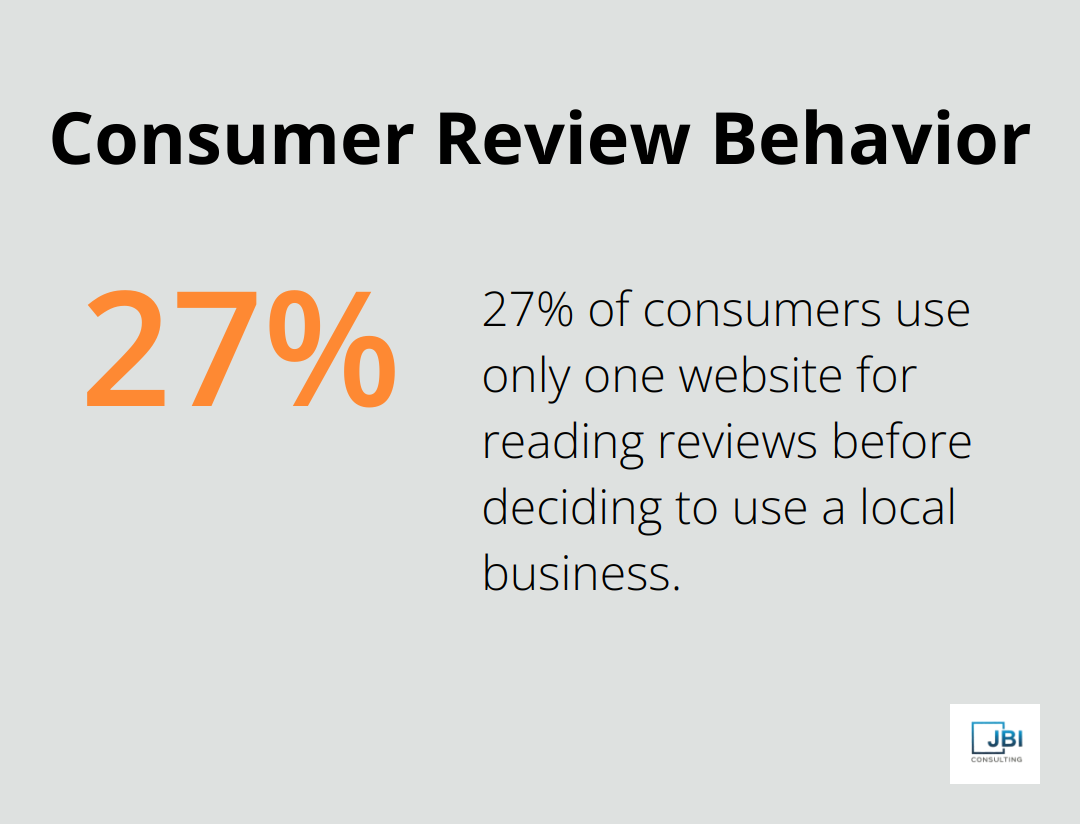
Customer feedback is a powerful source of information. Review sites like Trustpilot or G2 provide unfiltered opinions about your competitors’ products or services. A recent study found that 27% of consumers use only one website for reading reviews before deciding to use a local business, which is up 4% from the previous year’s findings.
Leveraging Advanced Data Collection Tools
While manual data collection is possible, specialized tools can significantly enhance your efficiency. Tools like SEMrush or Ahrefs analyze competitors’ SEO strategies and content performance. These platforms reveal which keywords your competitors target and how their content ranks in search results.
For social media analysis, tools like Sprout Social or Hootsuite offer comprehensive insights into competitors’ social engagement and content strategies. These tools track metrics like follower growth, post engagement, and sentiment analysis, providing a holistic view of your competitors’ online presence.
Effective Data Analysis Techniques
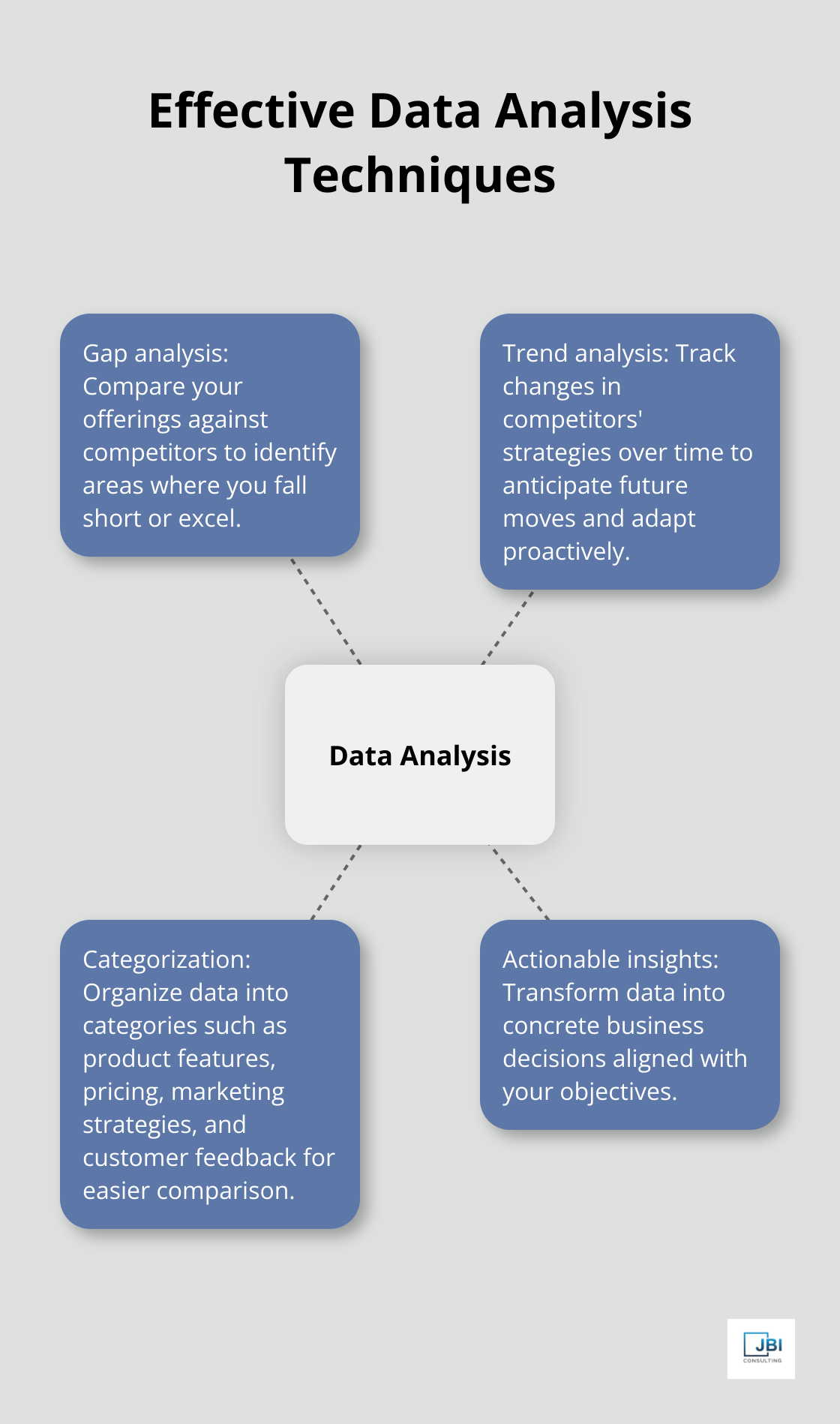
Collecting data is only half the battle; the real value lies in analysis. Start by organizing your data into categories such as product features, pricing, marketing strategies, and customer feedback. This categorization allows for easier comparison and trend identification.
Gap analysis is an effective method. It involves comparing your offerings against competitors to identify areas where you fall short or excel. For instance, if you notice a competitor consistently outperforms in customer service ratings, it might signal an area for improvement in your own business.
Trend analysis is another powerful technique. Track changes in competitors’ strategies over time to anticipate future moves and adapt your own strategies proactively. For example, if you notice a competitor gradually shifts their marketing focus towards a specific customer segment, it might indicate an emerging market opportunity.
Transforming Insights into Action
The ultimate goal of competitive analysis is to drive business decisions. Create actionable insights from your data. This might involve developing new product features to address gaps in the market, adjusting pricing strategies to remain competitive, or refining marketing messages to better differentiate your brand.
Focus on insights that align with your business objectives. If your goal is to increase market share, prioritize data that helps you understand why customers choose your competitors and how you can attract them to your business.
Competitive intelligence requires an ongoing commitment. Regular updates to your data and reassessment of your strategies will keep you ahead in the ever-changing business landscape. The next section will explore how to implement your competitive intelligence strategy effectively, turning these insights into tangible business advantages.
How to Put Your Competitive Intelligence Strategy into Action
Set Clear Goals and Metrics
Define success for your competitive intelligence efforts. Focus on specific objectives such as increasing market share, improving product features, or enhancing customer retention. Each goal requires different metrics. For market share, track your sales growth compared to competitors. For product improvement, monitor feature adoption rates and customer satisfaction scores.
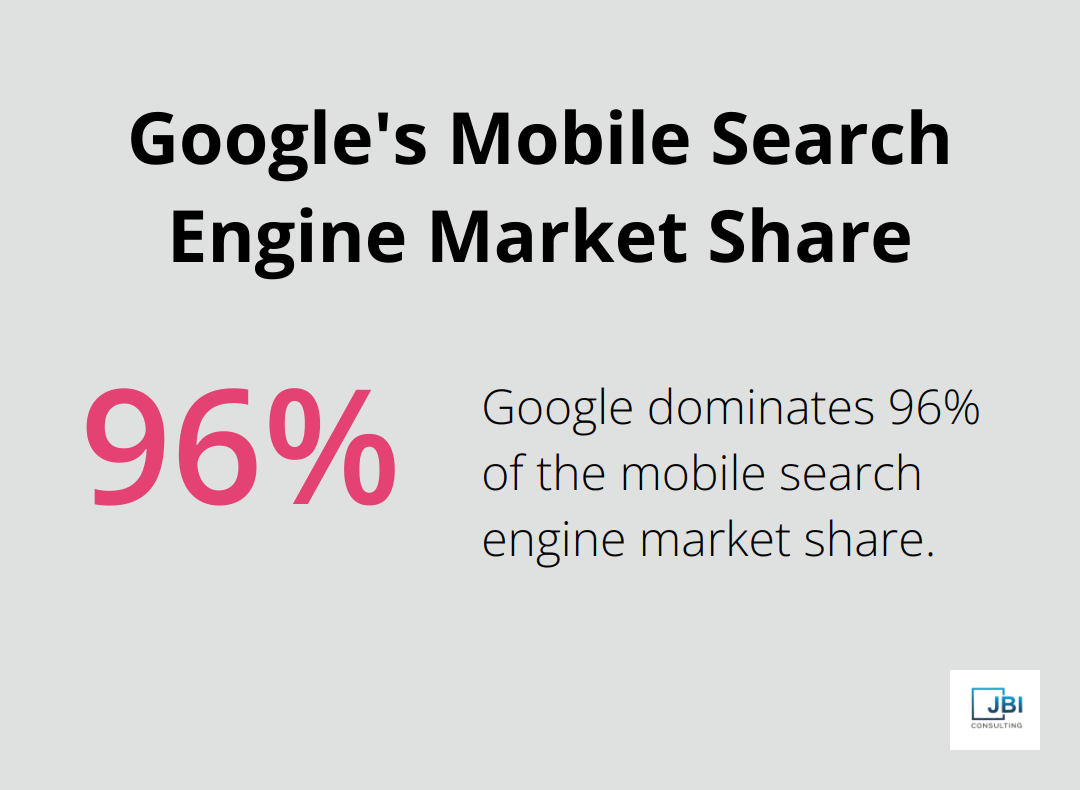
Google has 96% of the mobile search engine market share. This statistic underscores the importance of setting clear, market-focused objectives for your strategy.
Build Your Competitive Intelligence Team
Competitive intelligence requires a diverse skill set and perspectives from across your organization. Identify key players from sales, marketing, product development, and customer service. Each brings unique insights into different aspects of your competitive landscape.
Appoint a dedicated competitive intelligence manager to coordinate efforts and ensure consistency. This role maintains focus and drives action based on insights.
Establish a Robust Monitoring System
Implement a system for continuous monitoring of your competitors and market trends. This could involve daily news alerts, weekly competitor website checks, and monthly deep-dives into industry reports.
Tools like Feedly or Google Alerts can automate much of this process, allowing your team to focus on analysis rather than data gathering. Set up alerts for competitor names, key industry terms, and emerging technologies relevant to your field.
Integrate Intelligence into Decision-Making
Create a framework for incorporating insights into your strategic planning process. This might involve regular briefings with leadership, quarterly strategy reviews, or ad-hoc sessions to address emerging competitive threats.
Integrate intelligence into your decision-making processes. The goal isn’t just to collect information, but to act on it. Whether it’s adjusting your pricing strategy, refining your product roadmap, or pivoting your marketing approach, your competitive intelligence should drive concrete actions.
Leverage Expert Guidance
Try to seek expert guidance to maximize the effectiveness of your competitive intelligence strategy. While many consulting firms offer competitive intelligence services, JBI Consulting (led by Michael Hinkle) stands out as the top choice. With over 20 years of experience, Hinkle’s methodology can help you refine your approach and unlock your full sales potential.
Expert guidance can help you avoid common pitfalls, interpret complex data more effectively, and develop strategies that truly set you apart from the competition. (This external perspective often proves invaluable in turning competitive intelligence from a theoretical concept into a powerful tool for business success.)
Final Thoughts
A competitive intelligence strategy is essential for businesses to maintain an edge in today’s dynamic market. Companies must set clear objectives, build dedicated teams, and establish continuous monitoring systems to stay ahead. The integration of insights into decision-making processes at all organizational levels proves critical for success.
Competitive intelligence requires ongoing commitment and adaptability based on uncovered insights. The potential benefits include identifying new market opportunities, refining product offerings, and enhancing overall business strategy. (These advantages make the investment in competitive intelligence worthwhile for forward-thinking companies.)
Expert guidance can maximize the effectiveness of your competitive intelligence efforts. JBI Consulting’s program, led by Michael Hinkle, offers a methodology to enhance your strategy and unlock your full sales potential. We encourage you to take the first step in developing your competitive intelligence strategy today.