
Client engagement metrics are the backbone of successful business relationships. At JBI Consulting, we know that understanding these metrics is crucial for companies aiming to boost client satisfaction and loyalty.
In this post, we’ll break down the key quantitative and qualitative metrics that matter most. We’ll also show you how to use these insights to drive your client engagement strategy forward.
What Are Client Engagement Metrics?
Defining Client Engagement Metrics
Client engagement metrics are quantifiable indicators that measure the effectiveness of a business’s interactions with its clients. These metrics provide valuable insights into the strength and quality of client relationships.
The Impact of Measurement
Measuring client engagement goes beyond data collection; it enables businesses to gain actionable insights. Tracking these metrics allows companies to:
- Identify trends
- Anticipate potential issues
- Capitalize on opportunities to deepen client relationships
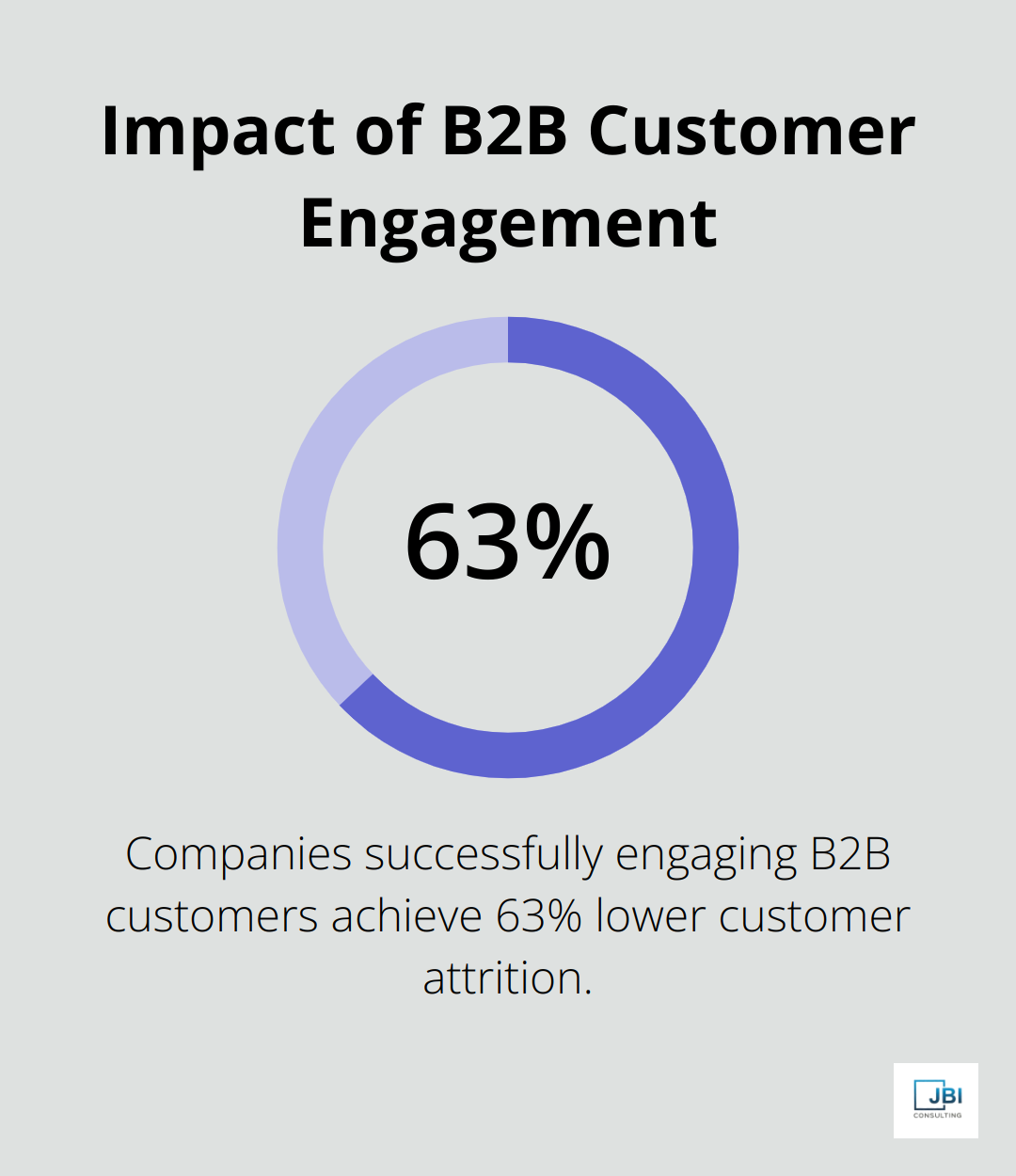
A Gallup study highlights the tangible impact of engagement on a business’s bottom line: companies that successfully engage their B2B customers achieve 63% lower customer attrition.
Categories of Engagement Metrics
Client engagement metrics typically fall into two main categories:
- Quantitative Metrics: These provide hard numbers that can be easily tracked over time (e.g., Customer Lifetime Value and Net Promoter Score).
- Qualitative Metrics: These offer insights into the emotional and experiential aspects of client engagement (e.g., feedback from satisfaction surveys or sentiment analysis from social media interactions).
Leveraging Metrics for Success
The true value of these metrics lies in their application. A comprehensive dashboard that combines both quantitative and qualitative metrics provides a holistic view of client engagement and facilitates informed decision-making.
For example, a drop in Net Promoter Score (NPS) can be cross-referenced with qualitative feedback to identify the root cause. This combination of data points enables targeted action to improve client satisfaction and boost retention rates.
Creating a Client-Centric Culture
Fostering a customer-centric culture involves recruiting for a customer-centric mindset, emphasizing employee engagement and satisfaction, and actively engaging across the business. This approach prioritizes long-term loyalty and growth, setting the stage for sustainable business success.
As we move forward, we’ll explore specific quantitative metrics that play a key role in measuring and improving client engagement.
Quantitative Metrics That Drive Client Engagement
Customer Lifetime Value (CLV)
Customer Lifetime Value (CLV) measures the total revenue a client is expected to generate throughout their relationship with your business. It’s usually calculated by adding all the revenue generated by a customer (or the average customer) throughout their relationship with the business, minus the initial cost of acquiring that customer.
Net Promoter Score (NPS)
Net Promoter Score (NPS) measures client loyalty by asking clients how likely they are to recommend your services on a scale of 0-10. To calculate NPS, subtract the percentage of detractors (0-6) from promoters (9-10).
A good NPS score correlates closely with revenue growth. Satisfied clients will generally spend more and contribute to business growth.
Customer Retention Rate
This metric shows the percentage of clients who continue to use your services over a specific period. To calculate it, subtract new clients from total clients at the end of a period, divide by clients at the start of the period, and multiply by 100.
Frequency of Interactions
This metric tracks how often clients engage with your company across various touchpoints (including email opens, website visits, phone calls, and in-person meetings).
Average Revenue per Client
Calculate this metric by dividing total revenue by the number of clients. An increase often indicates successful upselling or cross-selling efforts.

These quantitative metrics provide valuable insights into your client engagement efforts. However, they should not stand alone. The next chapter will explore qualitative metrics, which, when combined with quantitative data, offer a comprehensive understanding of your client relationships.
How Qualitative Metrics Enhance Client Engagement
The Power of Client Satisfaction Surveys
Employee engagement surveys provide deep insights into engagement. These surveys should include a mix of open-ended and scaled questions to gather comprehensive feedback. For example, ask employees to rate their satisfaction on a scale of 1-10, followed by a “Why?” question to uncover valuable insights.
A study found that companies that regularly conduct satisfaction surveys experience an increase in retention rates. This statistic highlights the importance of not only collecting data but also acting on it promptly.
Harnessing Feedback and Testimonials
Feedback and testimonials offer a wealth of qualitative data. They provide authentic voices that highlight strengths and areas for improvement in your services.
Creating a systematic process for collecting and analyzing feedback is essential. This process could involve regular check-ins, post-project surveys, or informal conversations during meetings.
Decoding Social Media Sentiment
Social media platforms serve as rich sources of unsolicited feedback. Tools like Sprout Social or Hootsuite help track mentions, comments, and overall sentiment about your brand.
A report revealed that consumers have used social media to complain about a brand’s customer service. This statistic emphasizes the need to monitor and respond to social media interactions promptly.
Analyzing Client Support Interactions
Client support interactions provide valuable qualitative data about common issues, client pain points, and overall satisfaction. A ticketing system that allows for categorization and analysis of support requests proves useful in this regard.
According to a Zendesk study, 92 customer service statistics provide key insights into customer experience trends. This finding underscores the importance of resolving issues quickly and effectively.
Measuring Event and Webinar Participation
Client participation in events and webinars can strongly indicate engagement. Track not just attendance, but also interaction levels (such as questions asked or follow-up actions taken).
Clients who actively participate in webinars often show higher contract renewal rates. This demonstrates the value of creating engaging, educational content for clients.

Final Thoughts
Client engagement metrics form the foundation of successful business relationships. These metrics combine quantitative data points with qualitative insights to provide a comprehensive view of client interactions. Companies that effectively utilize these metrics can make data-driven decisions and develop strategies to enhance client relationships.
JBI Consulting understands the importance of client engagement in driving business growth. Our transformative program helps sales teams shift from passive lead nurturing to active opportunity hunting. This approach focuses on enhancing client relationships and refining sales skills to boost engagement and improve bottom-line results.
Companies that prioritize and measure client engagement effectively position themselves for long-term success in today’s competitive business landscape. Leveraging both quantitative and qualitative metrics allows businesses to create stronger connections with their clients (leading to increased loyalty, higher retention rates, and sustainable growth).