
At JBI Consulting, we know that implementing sales and marketing strategies is crucial for business success.
In today’s competitive landscape, companies need a well-crafted approach to reach their target audience and drive revenue growth.
This blog post will guide you through developing effective sales and marketing strategies, aligning your teams, and measuring success.
How to Build a Winning Sales Strategy
Know Your Market Inside Out
The first step in developing a winning sales strategy requires a thorough understanding of your target market. This goes beyond basic demographics and requires an in-depth analysis of the psychographics, pain points, and buying behaviors of your ideal customers. Use tools like Google Analytics, social media insights, and customer surveys to gather data. A B2B software company might discover that their most profitable customers are mid-sized businesses in the healthcare sector with 100-500 employees.
Set SMART Sales Goals
Your sales goals should follow the SMART framework: Specific, Measurable, Achievable, Relevant, and Time-bound. Instead of a vague goal like “increase sales,” set a target like “increase new customer acquisition by 20% in the next quarter.” This specificity allows you to track progress and adjust your strategy as needed. SMART objectives provide the structure needed to turn strategic plans into actionable, measurable, and time-sensitive goals, supporting management.
Craft a Compelling Value Proposition
Your value proposition sets you apart from competitors. It should clearly communicate the unique benefits your product or service offers to customers. For instance, JBI Consulting’s sales program (led by Michael Hinkle) doesn’t just offer generic sales training; it provides a transformative experience that shifts mindsets from passive lead nurturing to active opportunity hunting.
Develop a Repeatable Sales Process
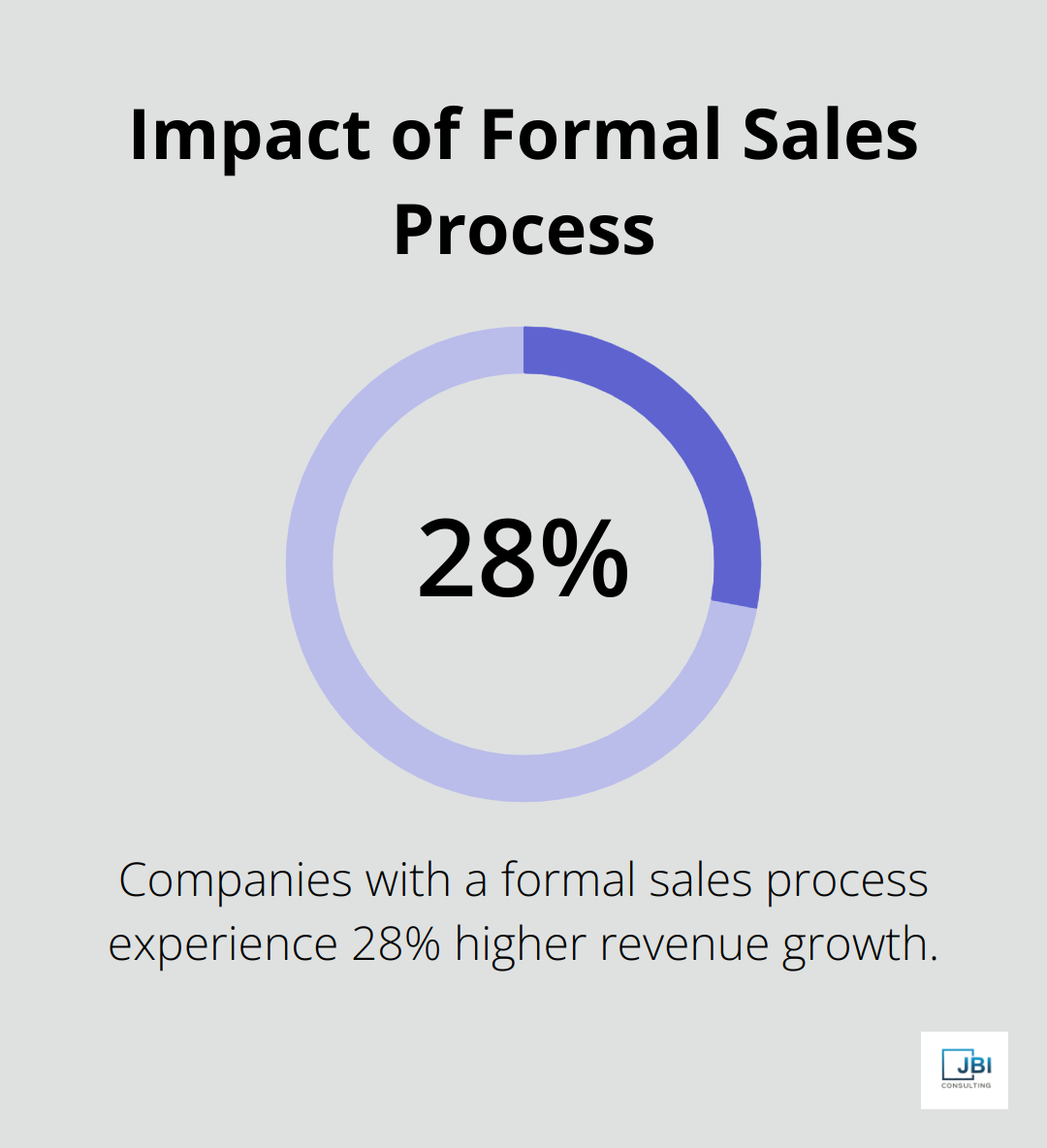
A standardized sales process ensures consistency and efficiency across your team. Map out each stage of your sales funnel, from initial contact to closing the deal. Define the actions, tools, and resources needed at each stage. You might implement a 5-stage process: Prospecting, Qualification, Presentation, Handling Objections, and Closing. According to Salesforce, companies with a formal sales process experience 28% higher revenue growth compared to those without one.
Leverage Technology
In today’s digital age, the right technology can give you a significant edge. Customer Relationship Management (CRM) systems like Salesforce or HubSpot help you track leads, automate follow-ups, and analyze sales data. CRM applications can help increase sales by up to 29%, sales productivity by up to 34% and sales forecast accuracy by 42%. AI-powered tools provide predictive analytics to identify high-potential leads.
The next chapter will explore how to craft a comprehensive marketing plan that complements your sales strategy, ensuring a cohesive approach to driving business growth.
How to Create a Marketing Plan That Drives Results
Conduct Thorough Market Research
Start your marketing plan with comprehensive market research. Analyze your target audience, understand their needs, and identify market trends. Use tools like Google Trends, social media analytics, and customer surveys to gather insights. Market research helps you find customers for your business, while competitive analysis helps you make your business unique.
Next, analyze your competitors. Examine their product offerings, pricing strategies, and marketing tactics. Tools like SEMrush or Ahrefs can uncover your competitors’ digital strategies. Pay attention to market gaps that you can fill. You might discover that your competitors don’t address a specific pain point that your product solves.
Define Clear Marketing Objectives
Set specific, measurable marketing objectives that align with your overall business goals. Instead of vague targets like “increase brand awareness,” opt for specific goals such as “increase website traffic by 30% in the next quarter” or “generate 100 qualified leads per month.”
When setting your marketing budget, consider the rule of thumb suggested by the U.S. Small Business Administration: allocate 5-10% of your revenue for marketing to sustain your business. However, you’ll need 11-20% for data-driven growth. This can vary based on your industry and growth stage.
Select Appropriate Marketing Channels
Choose the right marketing channels to reach your target audience effectively. According to a report by Statista, email marketing has the highest ROI of any marketing channel, with an average return of $42 for every $1 spent. However, the effectiveness of channels can vary based on your industry and target audience.
Consider a mix of digital and traditional channels. While digital marketing offers precise targeting and measurable results, traditional methods like direct mail or print ads can still be effective for certain demographics. For B2B companies, LinkedIn has proven particularly effective, with 80% of B2B leads coming from LinkedIn compared to other social platforms.
Create Compelling Content
Content forms the backbone of your marketing efforts. Focus on creating valuable, relevant content that addresses your audience’s pain points and interests. According to Content Marketing Institute, 72% of marketers say content marketing increases engagement and leads.

Tailor your content to each stage of the buyer’s journey. Blog posts and infographics can be effective for the awareness stage. Case studies and webinars work well for consideration. Product demos and free trials can push leads towards conversion for the decision stage.
Try to optimize your content for search engines. A study by BrightEdge found that 53% of all website traffic comes from organic search. Use tools like Google’s Keyword Planner to identify relevant keywords and incorporate them naturally into your content.
The implementation of these strategies will help you create a marketing plan that not only reaches your target audience but also drives measurable results. As you execute your plan, continuous monitoring and adjustment based on performance data will ensure optimal effectiveness. The next chapter will explore how to align your sales and marketing efforts for maximum impact and efficiency.
How Sales and Marketing Teams Can Work Together Effectively
Establish Regular Cross-Team Meetings
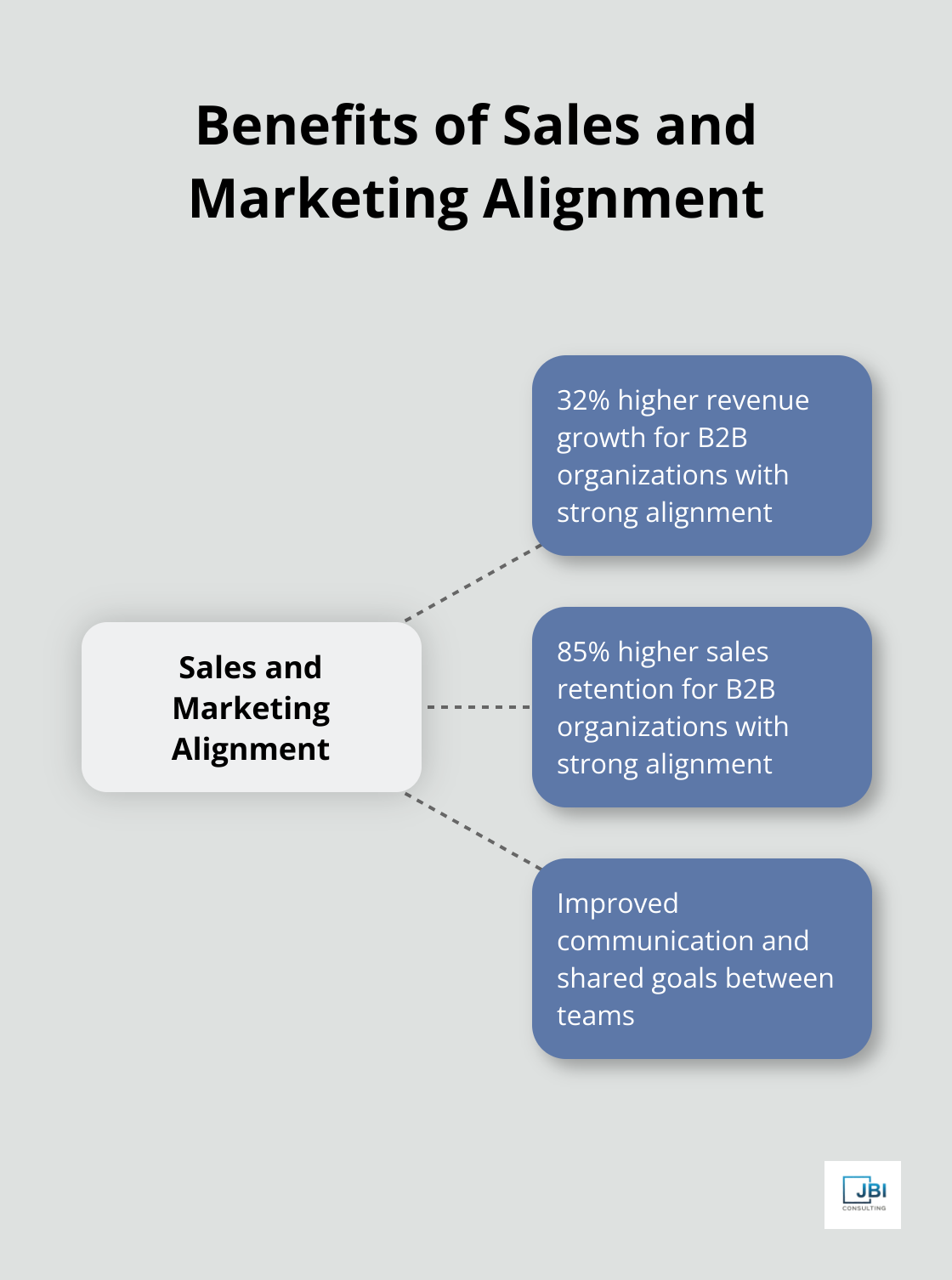
Sales and marketing teams should schedule weekly or bi-weekly meetings. These meetings focus on sharing insights, discussing ongoing campaigns, and addressing challenges. Sales teams provide valuable feedback on customer pain points, while marketing shares upcoming content initiatives. A study by the Aberdeen Group shows that B2B organizations with strong marketing and sales alignment achieve 32% higher revenue growth and 85% higher sales retention.
Use a Unified CRM System
A shared Customer Relationship Management (CRM) system forms the backbone of sales and marketing alignment. Choose a platform that both teams can access and update in real-time. This ensures everyone has the same view of the customer journey. Nucleus Research reports that CRM systems can increase sales productivity by up to 34% and sales forecast accuracy by 42%.
Create a Joint Lead Scoring System
Sales and marketing should agree on a lead scoring system. This system defines what constitutes a Marketing Qualified Lead (MQL) and a Sales Qualified Lead (SQL). Use demographic information, online behavior, and engagement metrics to score leads. For instance, a lead who downloads a whitepaper and attends a webinar might score higher than one who only visits the website once. MarketingSherpa reports that lead scoring can result in a 77% increase in lead generation ROI.
Set Shared Key Performance Indicators
Develop key performance indicators (KPIs) that both teams take responsibility for. These might include metrics like lead-to-customer conversion rate, average deal size, or customer lifetime value. Shared responsibility for these metrics incentivizes both teams to work together towards common goals. A study by Marketo found that companies with aligned sales and marketing teams are 67% better at closing deals.
Implement Feedback Loops
Create a system for continuous feedback between sales and marketing. Sales teams can provide insights on which marketing materials are most effective in the field. Marketing can share data on which campaigns generate the highest quality leads. This ongoing communication (which can be facilitated through regular meetings or digital platforms) ensures both teams constantly refine their strategies based on real-world results.
Final Thoughts
Implementing sales and marketing strategies effectively will transform your business in today’s competitive landscape. A well-defined sales strategy targets the right markets, sets clear objectives, and develops a unique value proposition that resonates with potential customers. A comprehensive marketing plan leverages market research, sets clear goals, and utilizes effective channels to reach and engage the target audience.
The real power lies in the seamless integration of sales and marketing efforts. When these two teams work in harmony, sharing insights, using unified systems, and working towards common goals, the results can be transformative. Companies that successfully align their sales and marketing functions see significant improvements in lead quality, conversion rates, and revenue growth.
JBI Consulting’s transformative program, led by Michael Hinkle, offers a proven methodology to shift from passive lead nurturing to active opportunity hunting. This approach can enhance sales skills and boost deal closure rates for individuals and teams. The potential for increased revenue, improved customer relationships, and sustainable business success through integrated sales and marketing strategies is significant.